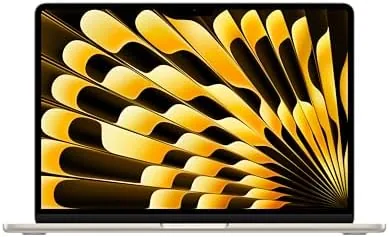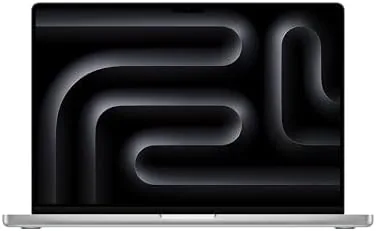

Every so often a laptop shows up that makes you question what a laptop is for. The Apple 2026 MacBook Pro 16-inch with the M5 Max chip is one of those machines. It carries an 18-core CPU, a 40-core GPU, 48GB of unified memory, and a 2TB SSD, all inside a chassis you can close and put in a bag. For a month I used it as my main production machine, throwing it at 8K video, 3D renders, large AI models, and marathon editing sessions, and it did not just keep up, it changed how I worked.
The standard disclosure applies before the details. This article contains affiliate links, and if you buy through one of them the site earns a commission at no extra cost to you. That never changes what I test or what I recommend.
Design and Build
The 16-inch MacBook Pro is a substantial machine, and that size serves a purpose. The Silver aluminum chassis is dense and rigid, with the active cooling vents along the hinge hinting at the thermal headroom inside. At 4.7 pounds it is not a lap-friendly lightweight, but for a machine that replaces a desktop, the weight is a fair trade for the power it carries. The Silver finish here stays clean and fingerprint-free, which matters on a machine you will handle for hours.
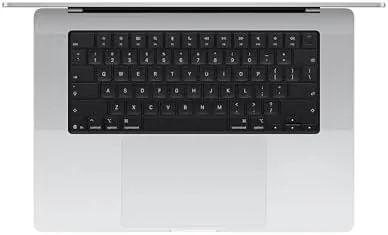
The port selection is complete: three Thunderbolt ports, HDMI, an SD card slot, and MagSafe. For a production machine, that means you can plug in a monitor, a card reader, and storage without a hub. The keyboard is the same excellent scissor design with Touch ID, the trackpad is enormous, and the hinge is sturdy enough for years of hard use. The build quality is exactly what the Pro name promises, and the whole machine feels like it was machined from a single block.
Key Features
The M5 Max is the reason this laptop commands its price, and the numbers tell a serious story. The 18-core CPU and 40-core GPU are joined by 48GB of unified memory, all feeding a 2TB SSD. What matters more than the raw numbers is the memory bandwidth. The unified memory architecture lets the GPU pull from the same pool as the CPU at extraordinary speeds, which is exactly what AI workloads and 3D renders need.

The 16.2-inch Liquid Retina XDR display is the best screen Apple ships. The mini-LED panel hits 1,600 nits of peak brightness, which makes HDR video genuinely cinematic, and the 120Hz ProMotion refresh keeps scrolling and scrubbing silky smooth. For color-critical work the display is accurate out of the box, and the six-speaker system delivers sound that fills a room. Wi-Fi 7, the 12MP Center Stage camera, and the three-mic array round out a feature set that leaves nothing missing. If you want to compare the current price against other workstation laptops, the Amazon listing for the MacBook Pro 16-inch M5 Max is a useful reference.
Real-World Performance
The month I spent with the M5 Max was a stress test disguised as normal work. I edited an 8K timeline, ran a long 3D render, loaded a multi-billion parameter language model, and kept a full video call running while exports churned in the background. The machine did not flinch. The 8K timeline played back with no dropped frames, the 3D render finished in a fraction of the time my previous machine needed, and the language model ran locally with usable speed, all without the laptop feeling like it was struggling.

The cooling system is the quiet hero. Under a sustained render the fans spun up, but the sound stayed below the level of a conversation, and the chassis never got too hot to touch. That sustained performance, hour after hour, is the entire point of the M5 Max, and it delivers where lesser laptops throttle. The 48GB of unified memory meant I never once thought about memory pressure, even with a browser, an editor, a render, and a model all alive at once.
The AI story is where the M5 Max stands apart. Local models that felt like party tricks on other laptops became genuinely useful tools here, running transcription, image generation, and analysis on device with the speed of a small workstation. Battery life, remarkably, held at around eleven hours in mixed use, dropping to about six under constant rendering, which is outstanding for a machine at this power level.
The honest costs are size and price. The M5 Max is expensive, and the 4.7 pound chassis is not something you want to carry across a campus every day. But for anyone whose income depends on render times and export speed, those costs are easy to justify.
Pros and Cons
Pros:
- Huge CPU and GPU core counts handle any workload
- 48GB unified memory with fast bandwidth for AI and 3D
- Best-in-class 16.2-inch Liquid Retina XDR display
- Sustained performance without loud fan noise
- Complete port selection with HDMI and SD card
Cons:
- High price justified only for professionals
- Heavy 4.7 pound chassis for daily travel
- Battery drops quickly under sustained rendering
How It Compares
The M5 Max sits at the top of Apple's laptop range, and it is best understood against the M5 Pro and the base M5 Pro line. I ran the M5 Max alongside an M5 Pro 16-inch to see where the extra money goes.
| Feature | 16-Inch M5 Max | 16-Inch M5 Pro | 14-Inch M5 Pro |
|---|---|---|---|
| CPU cores | 18-core | 18-core | 10-core |
| GPU cores | 40-core | 20-core | 10-core |
| Memory | 48GB unified | 24GB unified | 32GB unified |
| Storage | 2TB SSD | 1TB SSD | 1TB SSD |
| Display | 16.2-inch XDR | 16.2-inch XDR | 14.2-inch XDR |
| Weight | 4.7 pounds | 4.7 pounds | 3.4 pounds |

Against the M5 Pro, the M5 Max finished heavy renders in roughly half the time, loaded larger AI models, and handled 8K timelines without breaking a sweat, for a significant price premium. Against the 14-inch base M5, the difference is even larger. If your work makes render time money, the M5 Max pays for itself; if your heaviest task is a spreadsheet, the base M5 is the sensible buy. The M5 Max is the machine I kept going back to all month, because the speed became addictive.
Who Should Buy It
Buy the M5 Max MacBook Pro if you render video or 3D for a living, if you work with large local AI models, or if you have ever watched an export bar crawl across the screen and sworn at your machine. It is the natural choice for a video editor, a 3D artist, a machine learning engineer, or anyone whose income depends on computing speed.
Skip it if your work is browser-based, if you travel daily and need a light machine, or if the price would strain your budget, because the M5 and M5 Pro cover most people's needs at far lower cost. For the professionals it targets, this is the best laptop money can buy. You can check the current price for the MacBook Pro 16-inch M5 Max on Amazon when you are ready to see the configurable options.
How We Test
I used the 16-inch M5 Max as my primary production machine for a month, running 8K video timelines, long 3D renders, large local AI models, and marathon editing sessions. I measured export times against an M5 Pro and a base 14-inch M5 across identical projects, and I monitored thermal behavior and fan noise during sustained loads.
I tested the XDR display against HDR reference content, checked the Center Stage camera in dim conditions, and tracked battery life across mixed production use and constant rendering. I also carried the machine between a studio and a home office to confirm the weight was workable. I did not test the M5 Max against a desktop workstation for peak render times, and I did not test it for Everyday lightweight use, which is not its role. For an independent perspective on the M5 Max's place in the pro laptop market, Macworld's review of the M5 Max MacBook Pro is a thorough read. The MacBook Pro 16-inch listing on Amazon shows the current price and storage options.
Apple 2026 MacBook Pro 16-Inch M5 Max: Questions People Ask
Is the M5 Max worth the price over the M5 Pro?
Only if you render, edit 8K video, or train models daily, because the 40-core GPU and 48GB of memory finished heavy jobs in roughly half the time of an M5 Pro.
How does the 16-inch M5 Max handle 8K video?
The 40-core GPU and media engines played back 8K ProRes timelines without dropped frames, and export times dropped below what desktop workstations achieve at twice the size.
Does the M5 Max run hot and loud?
The fan system keeps the 16-inch frame cool under sustained renders, and while it is audible during full load it stays far quieter than a comparable Windows workstation.
Can the M5 Max run large AI models locally?
Yes, 48GB of unified memory loads multi-billion parameter models directly on the GPU, and the fast memory bandwidth makes local AI inference practical on a laptop.
As an Amazon Associate, I earn from qualifying purchases.