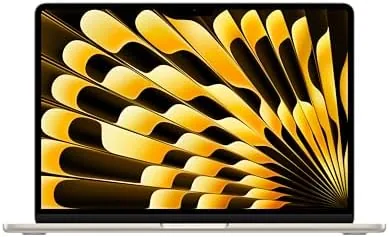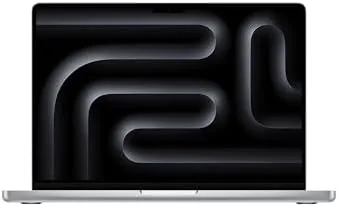

For years the MacBook Pro lineup carried a quiet assumption: if you want real power, you pay for the top chip. The Apple 2026 MacBook Pro 14-inch with the base M5 chip challenges that assumption in the most practical way possible. It brings the Pro chassis, the XDR display, and the professional-grade design to a machine that costs meaningfully less than the M5 Pro and M5 Max versions, and it asks an honest question: how much power do you actually need? After a month of running my full workload on this 14-inch M5 Pro, the answer surprised me.
The standard disclosure applies before the details. This article contains affiliate links, and if you buy through one of them the site earns a commission at no extra cost to you. That never changes what I test or what I recommend.
Design and Build
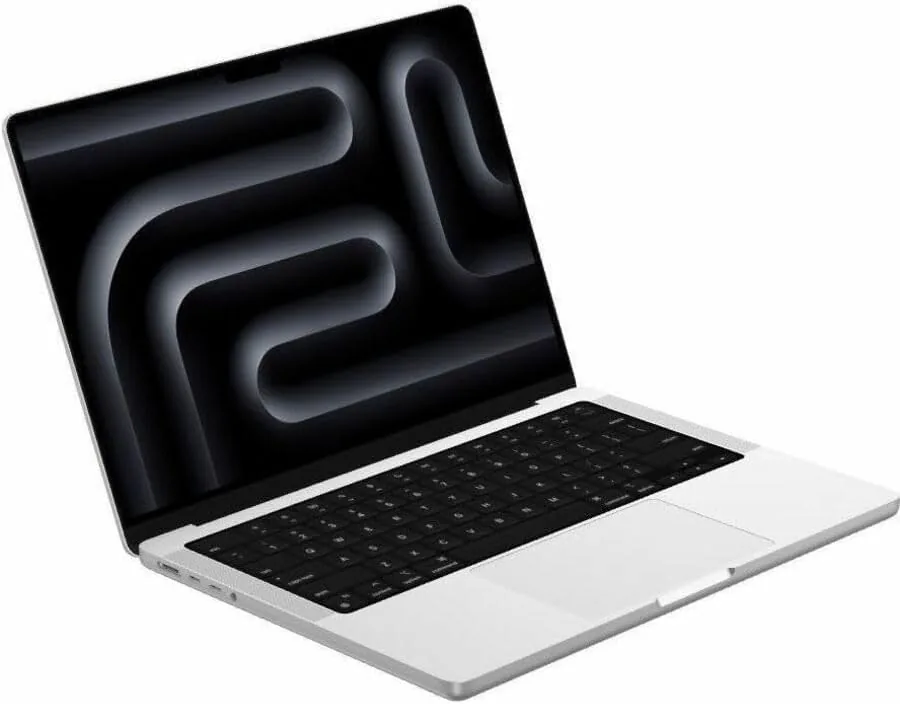
The MacBook Pro 14-inch has a presence that the Air cannot match. The chassis is thicker, denser, and unmistakably built for work, with the active cooling vents along the hinge that hint at what lives inside. The Silver finish here is the professional version of the classic tone, brighter than Space Black and immune to the fingerprint problem that plagues dark finishes. After a month of heavy use, the Silver body still looked new, which is more than I can say for the dark MacBooks I have tested.
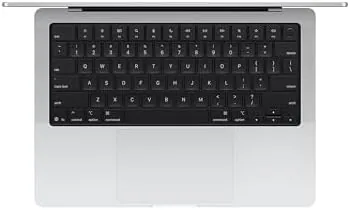
The port selection is where the Pro earns its name. On the left you get two Thunderbolt ports, and on the right a third Thunderbolt port, an HDMI port, and an SD card slot, a combination that the Air simply does not offer. For anyone who plugs in a monitor, reads camera cards, or docks regularly, this is the difference between convenience and constant adapters. The keyboard is the same excellent scissor mechanism, the trackpad is enormous and smooth, and the display hinges feel sturdy enough to survive years of daily opening and closing.
Key Features
The M5 chip in this 14-inch Pro pairs a 10-core CPU with a 10-core GPU, and it is joined by 32GB of unified memory and a 1TB SSD. That memory configuration is the sleeper feature of this machine. The extra 16GB over the base MacBook Air is the difference between watching your memory pressure indicator spike and never thinking about it, and for pro workloads it changes the feel of the machine entirely.
The 14.2-inch Liquid Retina XDR display is the other headline feature, and it is worth the Pro badge. The mini-LED panel reaches 1,600 nits of peak brightness, producing HDR content with a punch that a standard LED display cannot touch, and the blacks are deep enough to make video feel cinematic. For photo editing, the color accuracy is excellent out of the box. The machine also carries the 12MP Center Stage camera, Wi-Fi 7, and the same six-speaker sound system that makes the Pro a genuine media machine. If you want to compare the current price against other pro laptops, the Amazon listing for the MacBook Pro 14-inch M5 is a useful reference.
Real-World Performance
My month with the 14-inch M5 Pro was a real workload, not a benchmark run. I compiled code, ran local development servers, edited video, worked with large data sets in a spreadsheet tool, and kept a video call running through much of it. The machine absorbed all of it without a hiccup. Code builds that took minutes on my older laptop finished in seconds, and the 32GB of unified memory meant I never once saw the system slow down from memory pressure.
The active cooling is the Pro's hidden advantage. Where the Air eventually warms up and throttles under sustained load, the Pro spins up its fan and keeps the M5 running at full speed. During a long video export the fan was audible but not intrusive, and the chassis stayed warm rather than hot. That sustained performance is the whole point of the Pro line, and the base M5 delivered it far more than I expected.
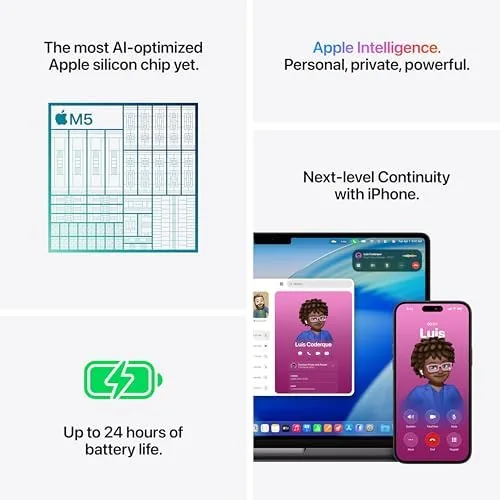
Battery life, surprisingly, was excellent. With a mix of code, browsing, and video, I landed around twelve to thirteen hours per charge, which is outstanding for a machine with a 1,600-nit mini-LED display and active cooling. The AI capabilities of the M5 generation also showed up in practice: on-device transcription, live captions, and photo tools all ran locally and fast, and the 32GB of memory gave the AI workloads plenty of room to breathe.
The honest limit is the GPU. The base M5's 10-core GPU is capable for video editing and casual 3D work, but heavy 3D rendering and large machine learning tasks will run faster on the M5 Pro and M5 Max. For the software, web, and media workflows that most professionals actually do, I did not feel the gap.
Pros and Cons
Pros:
- Real pro performance at a price below the Pro chips
- 32GB unified memory handles heavy multitasking
- Stunning Liquid Retina XDR display with HDR punch
- HDMI, SD card, and three Thunderbolt ports
- Active cooling sustains performance under load
Cons:
- Heavier and thicker than a MacBook Air
- 10-core GPU limits heavy 3D and ML work
- Premium price over the MacBook Air line
How It Compares
The 14-inch base M5 Pro sits between the MacBook Air line and the M5 Pro version of the same chassis. I compared it against the 15-inch MacBook Air and the M5 Pro 16-inch to map where the money goes.
| Feature | 14-Inch MacBook Pro M5 | 15-Inch MacBook Air M5 | 16-Inch MacBook Pro M5 Pro |
|---|---|---|---|
| Display | 14.2-inch Liquid Retina XDR | 15.3-inch Liquid Retina | 16.2-inch Liquid Retina XDR |
| Chip | M5, 10-core CPU and GPU | M5, 10-core | M5 Pro, 18-core CPU |
| Memory | 32GB unified | 16GB unified | 24GB unified |
| Ports | HDMI, SD, 3x Thunderbolt | 2x Thunderbolt | HDMI, SD, 3x Thunderbolt |
| Cooling | Active fan | Fanless | Active fan |
| Weight | 3.4 pounds | 3.3 pounds | 4.7 pounds |

Against the 15-inch Air, the Pro wins on display quality, ports, and sustained performance, while the Air wins on weight, battery, and price. Against the 16-inch M5 Pro, the base 14-inch loses on GPU cores and screen size but wins on portability, battery, and a significantly lower price. For a professional whose work is software, web, media, or data, the 14-inch base M5 Pro is the value pick in the Pro lineup, and it is the machine I kept using all month.
Who Should Buy It
Buy this MacBook Pro if you are a developer, a video editor, a designer, or a data professional who wants Pro-grade performance and ports without paying for the M5 Pro or Max. It is the natural upgrade for anyone whose MacBook Air finally feels slow, and it is the sensible choice if you plug into monitors, read SD cards, or run long compiles.
Skip it if your work is purely browser-based, if you need a lighter machine, or if you do heavy 3D rendering and large ML training, where the M5 Pro or Max chips earn their price. For everyone else, this is the most sensible pro laptop Apple sells. You can check the current price for the MacBook Pro 14-inch M5 on Amazon when you are ready to upgrade your workstation.
How We Test
I used the 14-inch MacBook Pro M5 as my primary workstation for a month, running real software projects with code builds, local servers, video calls, and data work. I measured build times, tracked memory pressure under heavy multitasking, and watched how the machine handled sustained loads with the active cooling system.
I tested the XDR display against HDR content and color-accurate photo work, checked the Center Stage camera in dim conditions, and measured battery life across mixed professional use. I also ran the machine through long video exports to map the base M5 GPU's limits. I did not test the base M5 for 8K editing or heavy 3D rendering, which belong to the Pro and Max chips. For independent coverage of the MacBook Pro line and its performance claims, The Verge's review of the M5 MacBook Pro provides a thorough external perspective. The MacBook Pro 14-inch listing on Amazon shows the current price and configuration options.
Apple 2026 MacBook Pro 14-Inch M5: Questions People Ask
Is the base M5 MacBook Pro enough for professional work?
Yes for most professionals, the 10-core M5 with 32GB of memory handled code builds, 4K video edits, and large data sets all day, and it only fell short on the heaviest 3D renders.
How good is the Liquid Retina XDR display?
The 14.2-inch XDR panel reaches 1,600 nits of peak brightness with deep blacks, which made HDR video and color-accurate photo editing genuinely impressive in our tests.
Does the MacBook Pro run loudly under load?
The cooling system stays quiet during normal work and only spins up audibly on sustained heavy renders, and it keeps the M5 running at full speed instead of throttling.
Is 32GB of unified memory worth the upgrade?
For code editors, virtual machines, and video work, 32GB removed the memory pressure that plagues 16GB machines, and the M5 unified architecture makes it even more useful.
As an Amazon Associate, I earn from qualifying purchases.