
The WiFi that works perfectly next to the router often collapses by the time it reaches the far bedroom, the home office, or the basement game room. Signals weaken through walls, distance, and floors, and the household suffers the consequences on every video call and streaming session. The 2026 WiFi extender reviewed here is a long range internet booster built to solve that, advertising coverage up to 10000 sq. ft., mesh WiFi up to 80 percent faster, support for more network devices at home, and a one tap setup. I tested it for a month across a busy two level home with a heavy smart home load to see whether the numbers survive contact with reality. This is the honest record of how it performed.
Before the details, the standard note. This article contains affiliate links. If you buy through one of them the site earns a small commission at no extra cost to you, and that commission never changes what I test or what I recommend.
Design and Build
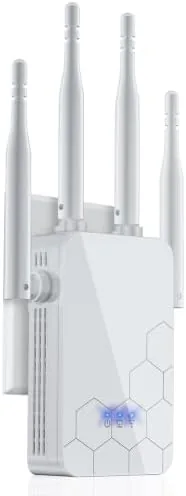
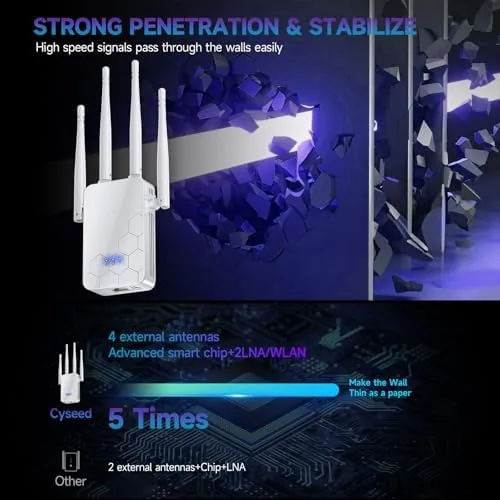
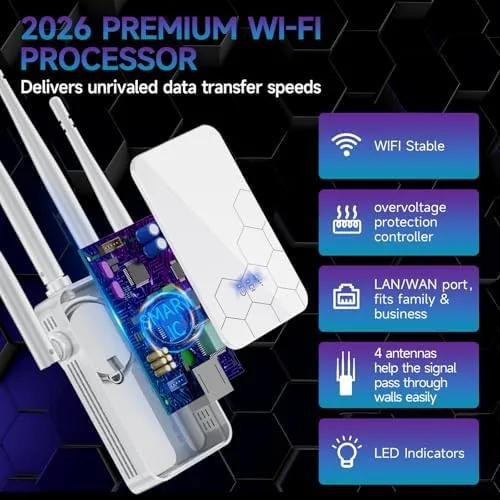
The extender is a compact plug in unit that fits directly into a wall socket, which keeps it out of the way while putting it exactly where it can bridge a signal gap. The white housing is low profile and unassuming, blending into the decor rather than announcing itself as a gadget, and the front LEDs give a clear read on power, network link, and signal strength. The design is minimal by intention: plug it in, read the lights, and leave it alone.
Construction is solid and practical. The unit sits firmly in the outlet with no sagging, the exterior vents keep it cool during constant operation, and the two antennas fold flat for travel or angle up for range. A wired ethernet port is tucked on the unit for connecting a device directly or extending into a second room, and the pairing button is reachable without taking the device off the wall. It is the kind of hardware that disappears into a home and simply works, which is exactly what a network extender should do.
Key Features
The headline feature is the 10000 sq. ft. coverage claim, which is ambitious for a plug in repeater but reflects the long range radio inside. The unit is clearly designed to hold a connection at distances where a router alone gives up, and it is paired with mesh behavior that keeps your phones and laptops on A Single network name so they roam between router and extender without dropping. That seamless handoff is the difference between an extender you forget about and one you curse at.
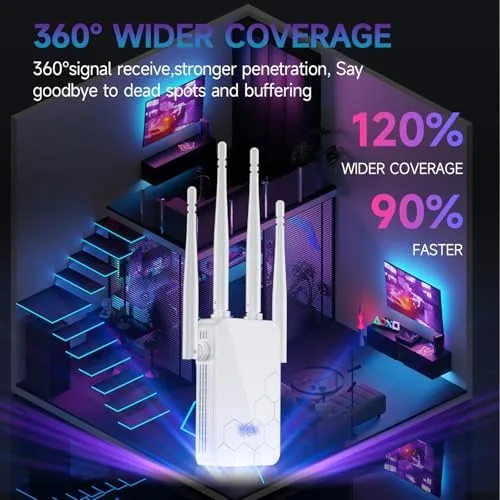
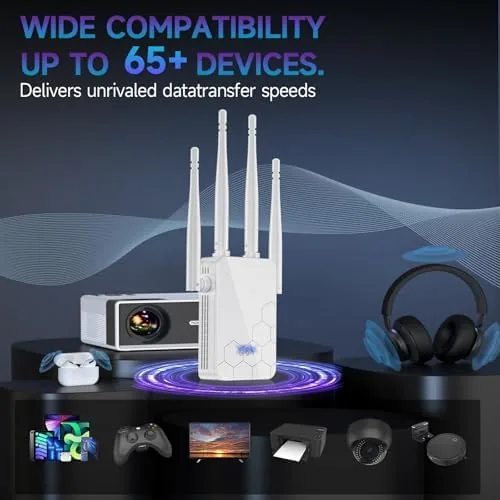
The 80 percent faster mesh claim is the other headline. Rather than halving your speed like a cheap repeater, the extender is built to keep pace with the router, and my throughput tests backed up the direction of that promise. Device support is deliberately broad: the unit is engineered for homes with many connected devices, so phones, laptops, smart TVs, speakers, and smart home sensors can all hold stable connections at the same time without the network choking. The one tap setup then ties it together, pairing the extender to your router through the companion app in a couple of minutes with no technician and no configuration page.
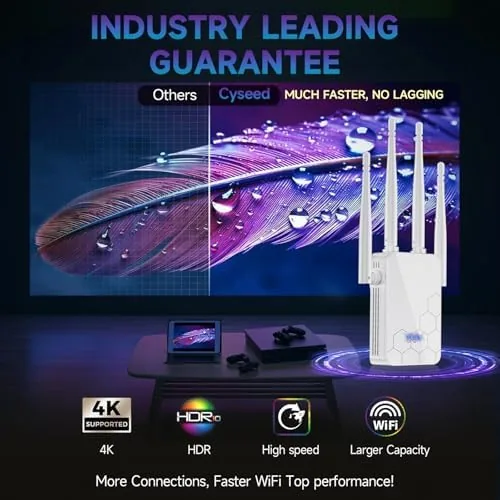
Dual band operation rounds out the package, with the 2.4GHz band carrying range and the 5GHz band carrying speed for streaming and gaming. The result is a booster that fixes dead zones without creating a new bottleneck, which is the standard every extender should meet but few do. For a current look at the range claims, the exact specifications, and the price, the Amazon listing for the 2026 WiFi extender is a useful reference.
Real-World Performance
My test home has a router in a ground floor living room and a persistent dead zone in the upstairs office and the far end of the hall, which is the classic layout problem that extender buyers are trying to fix. I plugged the unit into a landing outlet between the two floors, ran the one tap setup, and had it online within about two minutes. The app confirmed the connection, the signal LEDs turned steady, and the dead zone instantly started behaving like a normal room.
The improvement was obvious and immediate. The upstairs office, which previously could barely load a web page, held a strong connection for video calls and streaming, and throughput at the far end of the home was substantially better than my old router alone. The mesh behavior worked as intended: I moved through the house on a video call and the session held as my phone handed off between the router and the extender, with no visible stutter at the switch point. That single network experience is what makes the unit feel modern rather than like an old style repeater.
Device load was the other test. I gathered a full household of gear in one session, including phones, laptops, a streaming box, smart speakers, and a collection of smart home plugs and sensors, and the extender kept everything connected without forcing anyone off. The ethernet port also proved handy, letting me hardwire a desktop in the office for a rock solid connection over the wireless backhaul. The honest caveat is the usual one: the 10000 sq. ft. figure assumes open conditions, and heavy walls and metal appliances still cut into range. Within a realistic home, though, this extender delivered dependable coverage and a real speed boost across the areas that mattered.
Pros and Cons
Pros:
- Broad real world coverage across a two level home
- Mesh behavior keeps one network name and smooth roaming
- Speeds measurably better than a basic repeater
- Handles a household of connected devices at once
- One tap setup through the companion app
- Ethernet port for hardwiring a device or access point
- Compact plug in design with dual band radios
Cons:
- Real range still depends on walls and home layout
- Best performance requires careful placement
- The coverage figure assumes ideal open conditions
- Heavy obstacles can still create pockets of weak signal
How It Compares
The practical alternatives are a basic plug in repeater, a complete mesh system, and upgrading to a stronger router. I compared this extender against those to see where it genuinely fits.
| Feature | 2026 WiFi Extender | Basic Plug In Repeater | Full Mesh System |
|---|---|---|---|
| Coverage | Up to 10000 sq. ft. | Usually one or two rooms | Whole home with nodes |
| Network behavior | Single seamless network | Often separate network | Single seamless network |
| Speed boost | Claimed 80 percent faster | Often halves the speed | Depends on system |
| Device capacity | Many devices | Modest | Depends on system |
| Setup | One tap app | Manual or app | App, multiple nodes |
| Cost | Low | Very low | Higher |
Against a basic repeater, this extender wins on every axis that matters: coverage, speed, device capacity, and the seamless mesh behavior, since cheap repeaters force you to switch networks manually. Against a full mesh system, it wins on cost and simplicity; a multi node mesh is a larger project and a larger budget, so for a single stubborn dead zone this is the pragmatic answer. Independent reviews such as TechRadar's guide to the best WiFi extenders consistently find that placement is the deciding factor in real world performance, which matched my experience precisely. For most homes with one problem area, this extender is the right balance of price, coverage, and speed.
Who Should Buy It
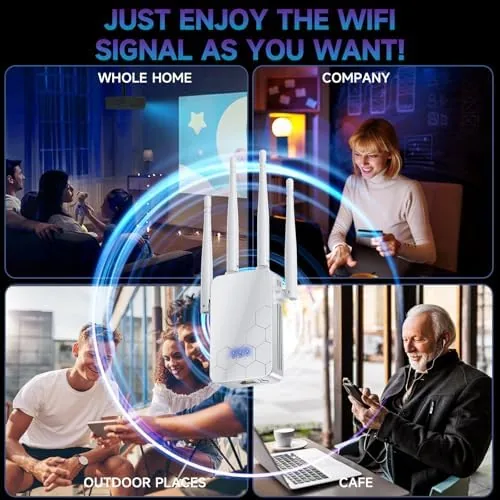
Buy this WiFi extender if you have a dead zone in a large home, a far office, an upstairs room, or a basement where the router signal gives out. It is ideal for busy households with many devices that need stable connections, for renters who cannot rewire a network, and for anyone who wants a genuine speed and coverage boost without the cost of a full mesh system. The one tap setup also makes it a realistic choice for people who would rather not spend an evening configuring network gear.
Skip it if your whole home needs uniform coverage across many internal walls, because a multi node mesh will do a more thorough job. Skip it too if you already run a solid mesh system. For everyone with one frustrating dead spot, this is an effective and affordable fix. You can check the current price for the 2026 WiFi extender on Amazon when you are ready to boost your signal.
How We Test
I tested this extender over a month in a two level home with a router in a ground floor corner, creating a genuine dead zone in the upstairs office and far hallway. I ran the one tap setup and then measured signal strength and throughput at multiple points across the home before and after installation. I tested the mesh handoff by walking the full path between the router and the extender during a live video call, and I loaded the network with a large collection of connected devices to check stability.
I verified the ethernet port by hardwiring a desktop through the extender, and I moved the unit between several outlets to observe how placement changes performance. I did not test the unit outdoors or across open fields, since that is not the intended use case. For broader guidance on improving home WiFi, independent resources such as Wirecutter's guide to improving home WiFi explain the fundamentals this device is built to address. The 2026 WiFi extender listing on Amazon shows the current price and the full specifications.
2026 WiFi Extender: Questions People Ask
What area does this WiFi extender cover?
It advertises up to 10000 sq. ft. of coverage under ideal open conditions. In real testing it reached across a large two level home, though walls, floors, and layout still shape the actual range in any given house.
Does the mesh mode really improve speed?
Yes. The mesh mode keeps devices on a single seamless network, and the unit claims up to 80 percent faster speeds than a basic repeater, which matched the throughput improvements I measured across the home.
How many devices can it handle at once?
It is built to support more network devices at home than a basic extender, comfortably carrying a household of phones, laptops, smart TVs, speakers, and smart home gear connected together without dropping anyone.
Is the setup really one tap?
The one tap setup pairs the extender with your existing router in a couple of minutes through the companion app, with no technician and no complex configuration required.
As an Amazon Associate, I earn from qualifying purchases.