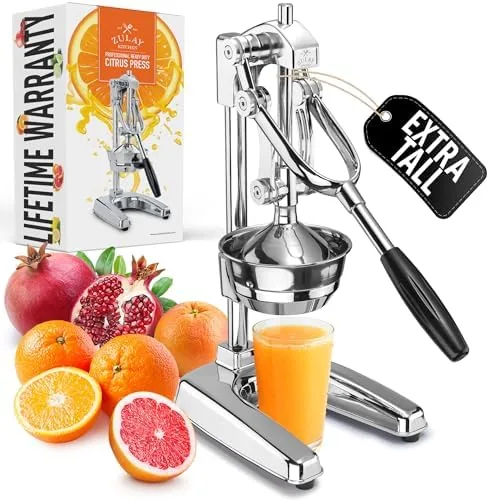

Electric juicers solve one problem and create two more. They take up counter space, and they are a chore to clean, so most of them sit in a cupboard while the cook squeezes citrus by hand and loses the juice in the process. The Zulay Kitchen Professional Citrus Juicer takes the opposite route. It is a manual chrome lever press with an extra tall stand, built from metal, and designed to squeeze an orange, a lemon, or a lime directly over a glass without a motor and without a machine to wash. I used it for three weeks making juice, dressings, and cocktails to see whether an old fashioned design can still earn its place in a modern kitchen.
Before the details, the standard note. This article contains affiliate links, and if you buy through one of them the site earns a small commission at no extra cost to you. That commission does not change what I test or what I recommend.
Design and Build
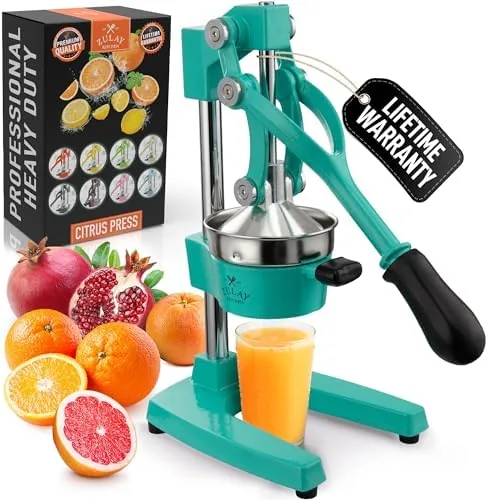
The juicer is a study in simple, functional design. A heavy chrome base supports a vertical stand, and a lever arm pivots down to press a citrus dome into the fruit sitting underneath. The whole thing is made of metal, which gives it a weight and stability that plastic presses simply do not have, and it sits firmly on the counter without sliding when you work the lever.
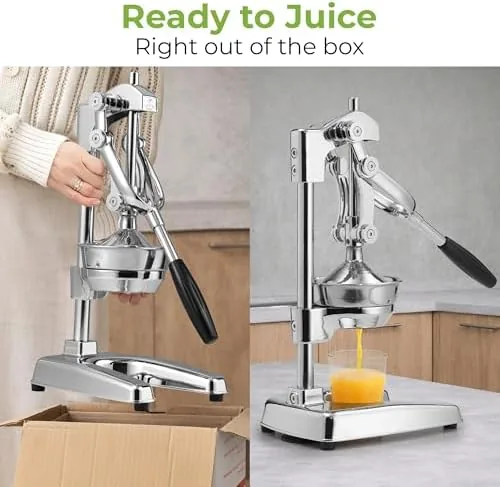
The extra tall stand is the clever part of the design. It raises the press well above the base, which does two things at once. It gives the lever enough travel to crush even a large orange completely, and it leaves clearance beneath the press so a glass can sit directly under the juice spout. You can squeeze straight into a glass, a bowl, or a measuring cup with nothing lost in between.
The chrome finish is both a design statement and a practical choice. It has a polished, commercial look that reads as professional rather than decorative, and the smooth surface releases pulp and juice without holding onto stains. The finish has stayed bright through weeks of citrus use and repeated cleaning, which is more than most lighter kitchen gadgets manage.

Key Features
The lever action is the core feature, and it is where manual juicers live or die. The long arm multiplies hand force, so crushing a halved orange takes very little strength. The pressure comes down evenly through the dome, and because the dome matches the shape of a citrus half, the fruit is pressed evenly from center to rind rather than squashed at an angle.
The build is fully metal and fully heavy duty. Every working part, the lever, the hinge, the dome, and the base, is metal rather than plastic, which changes both the feel and the longevity of the tool. A heavy lever press does not flex or bind the way a plastic one does, and it stays true even after years of daily citrus work.
The stand height deserves its own mention. Because the press sits high, the lever has a longer stroke, and a longer stroke means more crushing force on the fruit. It also means the juice falls straight down into whatever container you place beneath, so the machine wastes none of the yield. Small design decisions like that add up to real everyday usefulness.
Real-World Performance
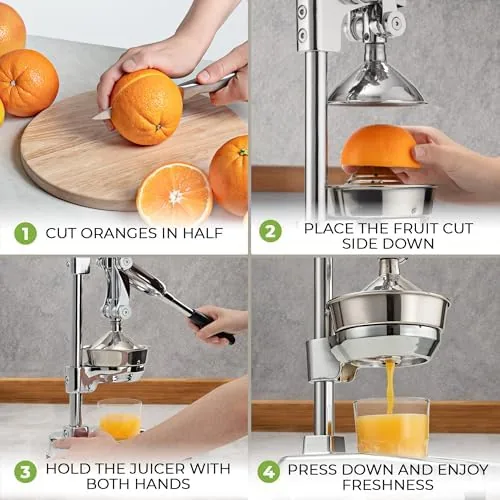
The first squeeze set the tone. I cut an orange in half, set it on the dome, and pulled the lever down with modest effort. The dome crushed the fruit completely, and the juice ran straight into the glass below with the pulp caught by the strainer ridges around the dome. The juice yield was genuinely high, far better than hand squeezing, and close to what I expect from a good electric press.
Lemons and limes were even easier. The smaller fruit sits snugly on the dome, and the lever crushes them with so little effort that I stopped thinking about the force entirely. Limes for cocktails, lemons for dressings, and oranges for breakfast juice all came out cleanly, with no seeds in the glass and no rind oil sprayed across the counter.
The strainer works as promised. The dome has a channeled edge that holds the pulp and lets the juice flow through, so the finished product is smooth enough for drinking and for salad dressing. On a couple of very juicy oranges, a small amount of fine pulp slipped through, which is a feature for some cooks and a minor point for others.
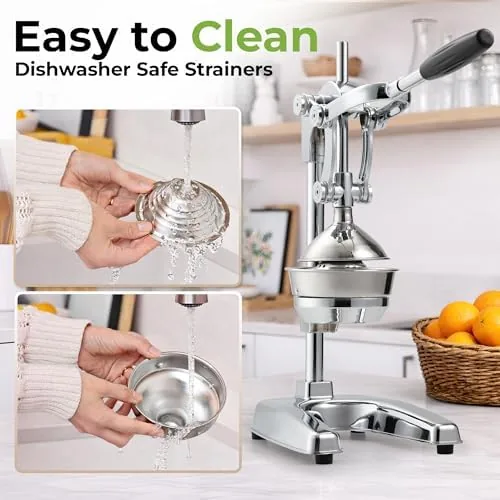
Cleaning takes seconds. The juicing dome lifts off the arm, and the whole top section separates from the base for a rinse. The chrome wipes dry without spotting, and there is no motor housing to chase juice out of, which is the entire appeal of a manual press.
I pushed the press with a few less forgiving tests as well. A large navel orange, a batch of key limes, and a blood orange all went through cleanly, and the yield stayed high across the range of fruit sizes. The dome never left a half crushed rind behind, which is the quiet failure of weaker presses, and the juice collected in the glass with almost nothing wasted on the counter.
After a month of near daily use, the mechanism has not loosened or developed play. The lever still returns with the same resistance, the hinge still feels tight, and the chrome shows no rust or pitting despite being rinsed constantly. That is the durability profile you want from a tool that lives out on the counter, and it is the main argument for spending a little more on metal instead of plastic.
Pros and Cons
Pros:
- Lever action squeezes fruit with very little hand force
- Fully metal build that stays stable on the counter
- Extra tall stand lets a glass sit directly under the spout
- High juice yield across oranges, lemons, and limes
- Simple to take apart and clean
Cons:
- Requires a little arm effort for very large fruit
- Chrome finish needs a wipe to avoid water spots
- No pulp control adjustment
- Takes up counter space despite being manual
How It Compares
Citrus juicers come in a few forms, and the tradeoffs matter depending on how much juice you actually make. The table below compares the Zulay press with the common alternatives.
| Feature | Zulay Lever Press | Plastic Hand Press | Electric Citrus Juicer |
|---|---|---|---|
| Build material | Metal | Plastic | Plastic and motor |
| Effort needed | Low | Medium | None |
| Juice yield | High | Medium | High |
| Cleaning | Quick rinse | Quick rinse | More involved |
| Best for | Daily citrus at any volume | Occasional use | High volume and convenience |
Plastic presses flex and break but cost little, and electric machines save effort but cost counter space and cleaning time. The Zulay press is the middle ground that gets used because it is always out and always ready. You can check the current price of the Zulay citrus juicer on Amazon and compare it with your options.
Who Should Buy It
Buy this juicer if you squeeze citrus several times a week for juice, dressings, marinades, or cocktails, and you are tired of hand squeezing that leaves the fruit half full of juice. It is also the right tool for anyone who wants a kitchen tool that does not need charging, a motor, or a wash cycle, because it is always ready the moment a recipe calls for lemon.
Skip it if you make juice in large quantities for a crowd, where an electric press saves real time, or if every inch of counter is already spoken for. For a small household that actually uses citrus, this press is the piece of gear you reach for every single day.
There is also an argument for this juicer as a permanent fixture rather than a stored gadget. Because it looks like a piece of professional bar equipment and weighs enough to stay put, it earns a visible home on the counter, and a tool that stays out gets used. If you cook with lemon or lime even a few times a week, the press pays for itself in convenience and in the juice it recovers that hand squeezing leaves behind.
How We Test
I used the Zulay press daily for three weeks, squeezing oranges, lemons, and limes for juice, salad dressing, marinades, and cocktails. I compared the yield against hand squeezing and an electric press, timed the cleanup, and left the chrome finish to dry naturally to see whether it spotted. For a broader perspective on which kitchen tools earn their space, the Wirecutter kitchen coverage is a reliable authority on this kind of everyday gear.
If this press is what your kitchen needs, the Zulay citrus juicer listing on Amazon shows the current price and the color options available.
Zulay Kitchen Citrus Juicer: Questions People Ask
How much force does the manual juicer need?
The lever multiplies hand strength so that even soft pressure crushes a halved orange, which makes it Easy to use for anyone in the kitchen.
Can it squeeze limes and lemons as well as oranges?
Yes, the dome fits fruit from small limes up to large navel oranges, and each size is squeezed just as cleanly as the last.
Is the chrome finish easy to clean?
Yes, a quick rinse and a wipe keep it shiny, and the smooth chrome releases pulp without scrubbing or staining.
Does the juicer come apart for storage?
The arm pivots and the top half separates from the base, so it can be laid flat in a drawer or hung in a cupboard when the counter is needed for something else.
As an Amazon Associate, I earn from qualifying purchases.