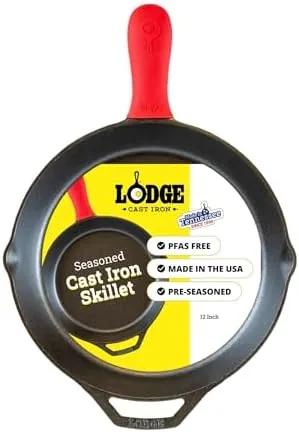

Every serious cook ends up with the same recommendation at some point: buy a cast iron skillet. The reasons are repeated until they sound like a slogan, searing power, oven safety, a surface that improves with age, and a lifespan measured in decades rather than years. The Lodge 12 inch skillet is the pan most people start with, because it arrives pre-seasoned and costs a fraction of the boutique brands. I cooked with one across a stove, an oven, a grill, and a campfire for several months, and this review covers the sears, the seasoning, the care, and the honest tradeoffs.
First, the standard disclosure. This article contains affiliate links, and the site earns a small commission if you buy through one of them. That does not change my verdict, and the skillet reviewed here was purchased and used exactly as a home cook would use it.
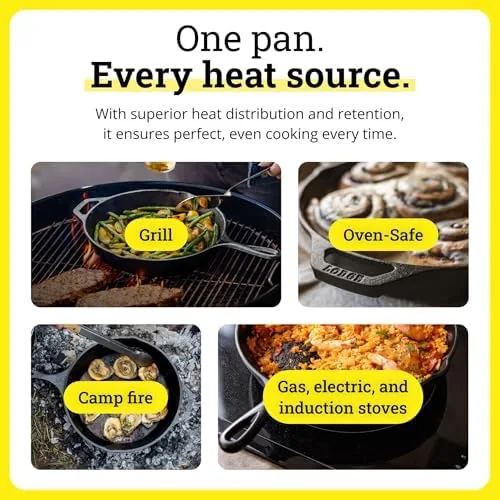
The 12 inch Lodge is the workhorse of the cast iron world, a heavy, one-piece pan with no coatings to wear off and a factory pre-seasoning that lets you cook on it the day it arrives. It goes where other pans cannot, from a gas burner to a 450 degree oven to the open flame of a campfire, and it does not care about temperature swings that would warp a stainless pan.
Design and Build
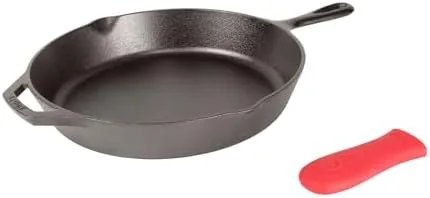
The skillet is a single slab of cast iron, about 12 inches across at the top with roughly 10 inches of usable cooking surface, and it weighs in the neighborhood of eight pounds. It has a long main handle plus a small helper handle on the opposite side, which is a detail that matters once the pan is full and hot. The cooking surface comes pre-seasoned with a vegetable oil seasoning that Lodge applies at the factory, so it is ready to use without any preparation.
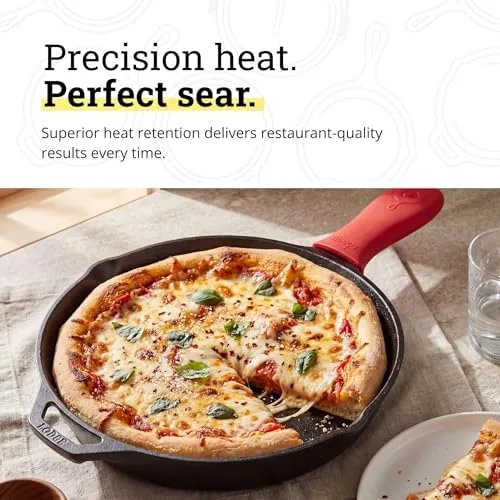
The pan also includes a silicone hot handle holder, which is the difference between a comfortable grip and a burned palm when you pull a hot skillet off the fire. The base is flat enough to sit evenly on modern stove burners, including electric and induction, and the walls are low and flared, which makes flipping and sliding food natural. Nothing about the construction is delicate, and that is the point.
Key Features
The searing power is the headline feature. Cast iron holds heat the way no thin pan can, so when you put a steak into a hot skillet, the surface temperature does not crash. The result is a deep, even crust that nonstick pans and cheap stainless simply cannot produce, and it is the reason steak lovers and home cooks alike reach for cast iron first.
The natural nonstick surface is the second feature. The pan comes pre-seasoned, which means it has a polymerized oil coating that resists sticking, and that coating builds with every use. Eggs need a little patience early on, but the pan becomes noticeably slicker after a few weeks of cooking, and it never flakes or peels the way a chemical nonstick coating eventually will.
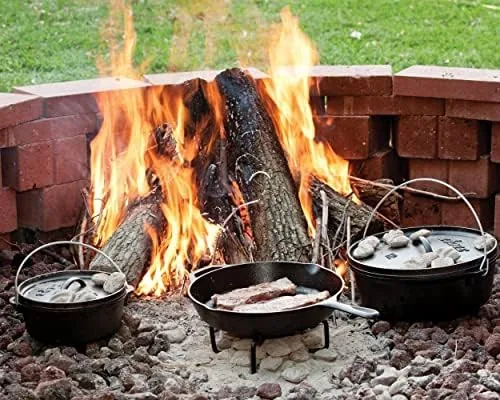
The versatility is the third defining trait. The all-metal construction is safe on the stove, in the oven, on the grill, and over an open fire, with a temperature range that handles everything from a gentle simmer to a screaming hot sear. That single pan covers a dozen cooking jobs, from cornbread to fried chicken to a frittata finished under the broiler.
Real-World Performance
The first steak was the moment the pan justified itself. I heated the skillet until the oil shimmered, laid in a thick ribeye, and did not touch it for two minutes. The crust that formed was dark, crisp, and evenly browned, and the pan held its heat through the flip and the finish. When I finished the steak in a 425 degree oven with butter and aromatics, the pan went straight from burner to oven without a thought, and the result was the best steak I have cooked at home.
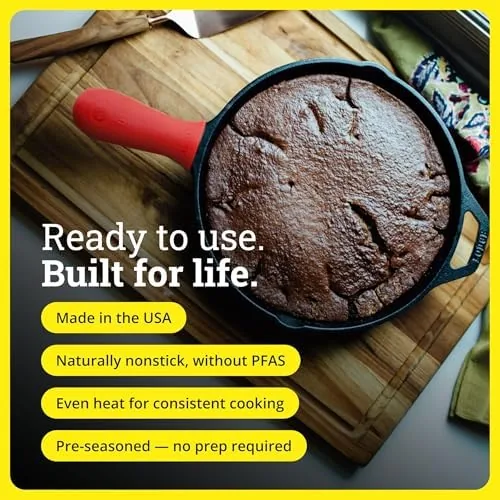
Cornbread was the second test, because it is the classic demonstration of cast iron's nonstick character. I preheated the pan with butter in the oven, poured in the batter, and baked it until the edges pulled away. The cornbread released cleanly with a golden crust all around, a result that depends on both the seasoning and the heat retention, and it convinced me the pre-seasoning is genuinely ready from the box.
The campfire test settled the durability question. The pan sat directly over wood coals, handled flames licking up the sides, and cooked a batch of bacon and eggs on a weekend trip. Cast iron shrugs off that treatment, and afterward the pan just needed a clean and a light oiling. Very few pans in a normal kitchen can claim the same without warping or losing a coating.
The limits are honest ones. At eight pounds, the 12 inch pan is genuinely heavy, and a full pan of food is hard to lift one handed, which is exactly what the helper handle is for. It is not the pan for a quick morning omelet when you are rushing, because it takes longer to heat and longer to cool than a lightweight pan. Acidic foods like tomato sauce can strip seasoning if cooked for a long time, so that is a job for a different pan.
Care is simple but firm. I cleaned the pan with hot water and a stiff brush after most cooks, dried it on the stove to drive off moisture, and rubbed in a thin layer of oil. I avoided harsh soap and never left it to soak, and in months of use the seasoning only improved. The included silicone holder made handling the hot pan safe, and the pan itself showed no rust, no warping, and no signs of wear beyond a surface that grew darker and slicker.
Pros and Cons
Pros:
- Superb searing from heavy heat retention
- Comes pre-seasoned and ready to use
- Safe on stove, oven, grill, and campfire
- Becomes more nonstick with every use
- Non-toxic, with no chemical coating to wear off
- Built to last decades with simple care
Cons:
- Heavy at around 8 pounds
- Needs proper cleaning and oiling after use
- Long-cooked acidic foods can strip seasoning
How It Compares
Cast iron competes with nonstick and stainless pans for the same everyday jobs, and each has a place. The table below lines up the main differences.
| Feature | Lodge 12 Inch Cast Iron | Nonstick Skillet | Stainless Steel Skillet |
|---|---|---|---|
| Searing | Excellent | Fair | Excellent |
| Nonstick feel | Improves with use | Good at first | Requires technique |
| Oven and campfire | Yes | Usually no | Yes |
| Care | Season and oil | Easy, short life | Easy |
| Lifespan | Decades | A few years | Decades |
Against a nonstick pan, the Lodge wins on searing, durability, and oven safety, but it loses on weight and effortless release for delicate eggs. Against stainless, it wins on natural nonstick character and pre-seasoning, while stainless pulls ahead for acidic dishes. Most kitchens keep at least one of each, and the Lodge is the one that should never leave.
Who Should Buy It
Buy the Lodge 12 inch cast iron skillet if you want a pan that sears, bakes, and travels to the campfire, and if you are willing to spend two minutes caring for it after each cook. It is ideal for steak lovers, weekend cooks, campers, and anyone who wants to buy cookware once instead of replacing it. The included handle holder makes the heavy pan safer to use right out of the box.
Skip it if you cook mostly quick, delicate eggs or you hate hand-washing heavy pans, because a lightweight nonstick skillet will serve you better for that narrow job. For everything else, this is the pan people mean when they say a pan can last generations. You can check the current price of the Lodge 12 inch cast iron skillet on Amazon when you are ready.
How We Test
I used the Lodge 12 inch skillet on a gas stove, in a convection oven, on a grill, and directly over campfire coals over several months. I seared steaks, baked cornbread, fried eggs and bacon, and cooked acidic and non-acidic dishes, tracking how the seasoning built, how the pan released food, and how it handled temperature extremes and cleaning.
I did not test the skillet on a laboratory heat source, and results depend on the stove and the care routine. For a broader look at cast iron care and what makes seasoning work, Serious Eats has a thorough guide to cast iron skillets that covers seasoning science and choosing sizes. The Lodge 12 inch skillet listing on Amazon shows the current price and available sizes.
Questions People Ask
Is the Lodge skillet nonstick right away?
It arrives pre-seasoned and cooks with a smooth release, but the seasoning improves over time, so repeated use makes it noticeably more nonstick.
How do I clean a cast iron skillet?
Wash it with hot water and a stiff brush or sponge, avoid harsh soap, dry it thoroughly, and rub in a light coat of oil after every use.
Can I use the skillet in the oven?
Yes, the all-metal construction is oven safe to high temperatures, and it is ideal for finishing steaks or baking cornbread with a crisp crust.
Is the 12 inch size too heavy for everyday use?
It is the heaviest common size at around 8 pounds, so it is better for serious cooking than for quick omelets, and the helper handle makes lifting safer.
As an Amazon Associate, I earn from qualifying purchases.