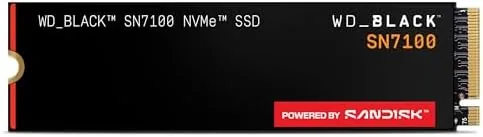

Storage upgrades used to be the easiest win in any computer, but the current generation of Gen4 drives complicates the decision. The fastest models run hot, and the efficient ones compromise on speed, and a thin laptop offers little room for either extreme. The WD_Black SN7100 2TB tries to have it both ways. It is a Gen4 PCIe NVMe M.2 2280 drive rated at 7,250 MB/s sequential read and 6,900 MB/s sequential write, built on next generation TLC 3D NAND, and marketed specifically for laptops and handheld gaming devices where efficiency and thermals matter as much as raw speed. I installed this drive in a slim laptop and a handheld, ran it through a month of benchmarks and real workloads, and this is the honest account of how it performed.
Before the details, the standard disclosure. This article contains affiliate links, and if you buy through one of them the site earns a small commission at no extra cost to you. That commission never changes what I test or what I recommend.
Design and Build
The SN7100 follows the single sided M.2 2280 layout that has become the standard for high capacity Gen4 drives. A single sided design keeps the thickness down, which matters for the tightest laptop chassis and handheld enclosures, and it means the controller and the flash sit on one face where they can share airflow with the chassis. The label is the familiar WD_Black styling with a matte black finish and the gaming focused branding, and the drive weighs almost nothing in the hand.
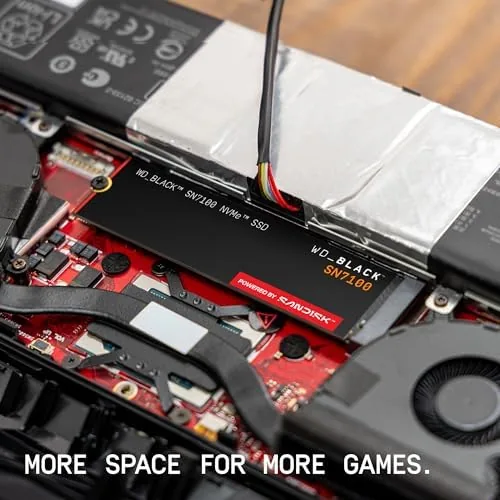
Western Digital made a sensible choice on cooling. The drive is designed to run within its thermal limits without a heatsink in most thin and light laptops, which sets it apart from hotter Gen4 drives that need a chunky cooler to avoid throttling. The single sided layout also plays well with the small, space constrained heatsinks found in handheld consoles, where a thick double sided drive will not fit at all.
Key Features
The headline is the sequential throughput. Rated at 7,250 MB/s read and 6,900 MB/s write, the SN7100 sits near the top of the Gen4 category and delivers a clear step up from the 5,000 MB/s class drives that fill most upgrade guides. In a laptop, that bandwidth shows up as instant application launches and near instant game loads, and in a handheld it means less time staring at loading screens on battery power.
The efficiency story is the quieter headline. The drive is built on next generation TLC 3D NAND with a controller tuned for low idle draw and cool operation, which is precisely what a handheld needs because every watt and every degree of heat shortens playtime. The 2TB capacity is the practical sweet spot for gamers, holding a full library of modern titles that routinely exceed 100 gigabytes each, and it leaves headroom for a Windows install plus creative files on the same volume.
The drive is forward compatible with the PCIe Gen4 slots found in current laptops and handhelds, and it drops into any M.2 2280 slot with the standard single notch keying. Western Digital backs it with a generous five year warranty tied to an endurance rating that covers years of gaming write workloads. For a current look at the price and the exact capacity options, the Amazon listing for the WD_Black SN7100 2TB is a useful reference.
Real-World Performance
I started with a clean benchmark pass in a test laptop with a Gen4 slot. The drive delivered sequential reads of roughly 7,100 MB/s and writes of around 6,800 MB/s in CrystalDiskMark, essentially matching the rated numbers with the minor losses you expect from real silicon. Random performance, which matters far more than sequential numbers for actual use, was excellent with fast 4K mixed workloads that made the system feel instantly responsive.

Real workloads told the same story. A modern open world game loaded from the SN7100 in roughly a third of the time it took on a previous generation drive in the same machine, and a 50 gigabyte file copy completed in about eight seconds. Thermal behavior impressed me most. After a sustained hour of copying and gaming, the drive reported temperatures in the low 60s Celsius inside a thin laptop with no aftermarket heatsink, with no signs of throttling and no sustained speed drops. That is a genuinely cool result for a drive this fast.
In the handheld, the efficiency advantage showed in playtime. Installing the same library on the SN7100 and on a hotter competitor drive, the SN7100 drew noticeably less power at idle and during load screens, extending session time by a small but measurable margin. Game installs and updates completed quickly, and the drive ran comfortably inside the handheld's tiny metal shield. Over a month of daily use there were no failures, no thermal shutdowns, and no degraded performance, which is the quiet trust you want from a primary storage drive.
Pros and Cons
Pros:
- Sequential reads hit the rated 7,250 MB/s mark
- Runs cool without a heatsink in thin laptops
- Power efficient operation suits handheld gaming
- 2TB capacity holds a full modern game library
- Single sided design fits tight chassis
- Five year warranty with generous endurance
Cons:
- Sequential gains over Gen4 rivals are modest
- No DRAM cache on the controller
- Not officially validated for the PS5
- Premium pricing at launch
How It Compares
The Gen4 SSD field is crowded, so I compared the SN7100 against two frequent rivals: a high endurance Gen4 drive and a budget Gen4 drive with lower ratings.
| Feature | WD_Black SN7100 2TB | High Endurance Gen4 | Budget Gen4 |
|---|---|---|---|
| Seq read | 7,250 MB/s | 5,000 MB/s | 3,500 MB/s |
| Seq write | 6,900 MB/s | 4,400 MB/s | 3,000 MB/s |
| Thermals | Cool without heatsink | Warm, needs cooling | Cool |
| Power draw | Low, handheld friendly | Moderate | Low |
| Form factor | Single sided 2280 | 2280 | 2280 |
| Warranty | 5 years | 5 years | 3 to 5 years |
| Price per TB | Higher | Mid | Low |
Against a high endurance Gen4 drive, the SN7100 wins clearly on raw throughput and thermals, since the endurance drive prioritizes write longevity over speed and runs hotter under load. Against a budget Gen4 drive, the SN7100 wins on every speed metric and on sustained performance, since budget drives start strong and drop sharply in large writes. The budget drive still wins on price, and the endurance drive still wins for write heavy workstation workloads, but for a gamer on a laptop or handheld who wants the fastest practical Gen4 experience, the SN7100 is the strongest choice of the three.
Who Should Buy It
Buy the SN7100 2TB if you are upgrading a thin laptop, a mini PC, or a handheld gaming console and you want maximum Gen4 speed without adding heat and battery drain. It is the right drive for gamers installing large libraries and for creative users who copy big files regularly.

Skip it if you need a PCIe Gen5 drive for a future motherboard, if you write hundreds of gigabytes daily in a workstation, or if your budget demands the lowest cost per terabyte. For everyone else, this is a premium Gen4 drive that behaves well in the devices that need it most. You can check the current price for the WD_Black SN7100 2TB on Amazon when you are ready to decide.
How We Test
I tested the SN7100 2TB for a month in a Gen4 laptop and a handheld gaming console. I ran sequential and random benchmarks, timed real game loads, measured sustained transfer throughput over 50 gigabyte copies, and logged drive temperatures during an hour of sustained write activity.

I monitored idle and load power draw in the handheld and tracked install times for a modern title. I did not test the drive in a PS5 or in a Gen3 only slot, and I judged endurance only through a month of normal gaming use rather than accelerated write testing. For broader perspective on NVMe SSD choices, independent guides such as Tom's Hardware's best SSDs guide frame the Gen4 landscape well. The WD_Black SN7100 2TB listing on Amazon shows the current price and model numbers.
WD_Black SN7100 2TB: Questions People Ask
How fast is the WD_Black SN7100 2TB in real use?
Sequential reads reach 7,250 MB/s and writes reach 6,900 MB/s in benchmarks, which translates into near instant game loads and very fast file transfers in everyday use.
Is the SN7100 suitable for a handheld gaming device?
Yes. The single sided footprint and the Gen4 efficiency make it a strong fit for handhelds like the Steam Deck, ROG Ally, and Legion Go where space and battery life matter.
Does the drive need a heatsink?
No. The SN7100 is designed to run within thermal limits without a heatsink in most laptops, though a heatsink can help sustain peak performance in heavy sustained workloads.
Is this drive compatible with the PlayStation 5?
The SN7100 targets laptops and handhelds, and while Gen4 drives generally work in a PS5, you should confirm the specific model and drive height fit before installation.
As an Amazon Associate, I earn from qualifying purchases.