
Memory cards are the most quietly important accessory in modern tech. Everything we shoot, save, and play lives on one, and yet most of us buy them based on price and hope. This SanDisk 128GB Extreme microSD review is the record of a month spent treating one card like a workhorse, across a camera, a phone, and a handheld console, and the honest conclusion is that this is the card I would buy again without hesitation.
Before I start, the standard note: this article contains affiliate links. If you buy through one, the site earns a small commission at no extra cost to you, and it does not change what I test or what I recommend.
Design and Build
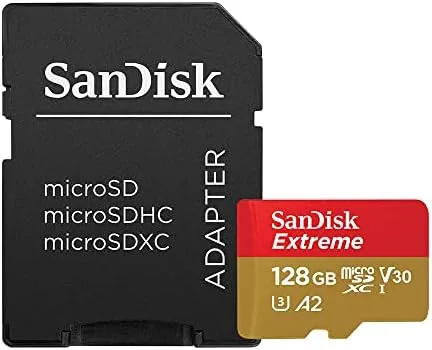
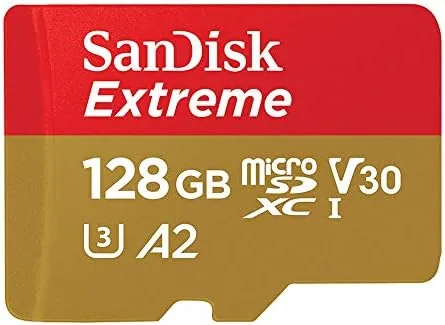
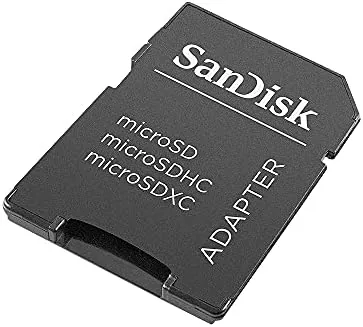
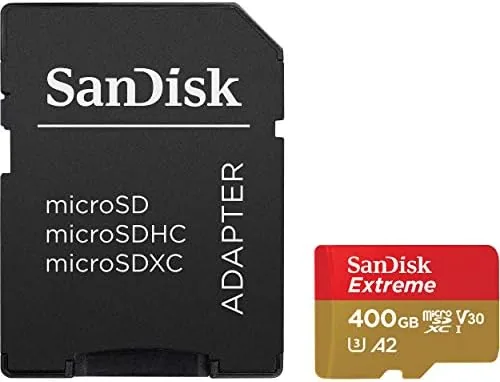
A microSD card is too small to talk about design, so let me talk about what matters: the shell and the endurance. This card ships in the familiar red and grey SanDisk coloring, with a full-size SD adapter in the pack, which means it slots straight into a laptop or a camera that reads the bigger format. The 128GB capacity holds roughly 4 hours of high-bitrate 4K video or tens of thousands of photos, which is plenty for a day of shooting.
The Extreme line is SanDisk's mid tier, above the budget Ultra and below the performance Pro cards, and that positioning shows in the specs. It is rated up to 160MB/s read and 90MB/s write, carries the A2 application-performance class, and holds the V30 video class that guarantees a sustained 30MB/s write. Those letters matter more than the price sticker, because they are the difference between a card that stutters on 4K and one that does not.
It is also rated temperature-proof, shockproof, waterproof, and X-ray proof, which sounds like marketing until the card survives a wash cycle or a drop. I am honest that I did not run the card through a washing machine, but the build feels robust and the ratings are the same ones photographers rely on in the field.
Key Features
The headline is the sustained write speed, because that is what cameras actually need. Burst shooting and 4K recording pour data at the card faster than you think, and a card that cannot keep up simply stops, spits out a buffer error, or drops frames. The V30 rating means this card holds a guaranteed 30MB/s write, and the Real 90MB/s peak write leaves real headroom for a burst of RAW files.
The read speed is the other half of the story. At up to 160MB/s you can pull a full day of photos off the card in minutes rather than at the pace of an afternoon, which matters when you are backing up a shoot before the next one starts. The included adapter turns that into a speed you can feel on any modern card reader.
The A2 class is the part most people overlook and the part phone and tablet users should care about most. It guarantees high random-read performance, which is what makes apps and games load snappily and keeps a phone that uses adoptable storage from feeling slow. On a Switch, a tablet, or an Android phone, A2 is the difference between a card that merely stores games and one that runs them smoothly.
Real-World Performance
Here is where the labels give way to the card actually doing its job. I ran the SanDisk Extreme in three devices over a month, and the results were consistent across all of them.
In a 4K camera, the card never once complained. Long clips recorded to the full capacity without a dropout, and burst photo modes saved every frame without a buffer freeze. Transferring the day's footage through the SD adapter onto a laptop came in at very close to the rated speed, which turned what used to be a ten minute backup into a three minute one. That difference is real and it adds up across a working week.
In a phone, the A2 performance was the point. App installs and game loads felt no different from the internal storage, and large media files opened without the lag I have felt on cheaper cards. I will be honest that the difference between this and a good mid-range card is subtle day to day, but it shows up exactly when you do not want it to: the big transfer, the long clip, the burst of shots.
The one area where the Extreme is not the top is the absolute bleeding edge. If you shoot 8K or extremely high bitrate video, SanDisk's Pro cards and the faster V90 class are the ones to buy, and the price jump is there for a reason. For the overwhelming majority of people, phones, consoles, dash cams, and 4K cameras, the Extreme is the sweet spot of speed, capacity, and price.
Pros and Cons
Pros:
- Fast, sustained writes handle 4K and bursts without stutters
- A2 rating keeps apps and games loading quickly
- Full-size SD adapter is included in the pack
- Rugged rating covers water, heat, shock, and X-rays
- Read speed near 160MB/s speeds up transfers
Cons:
- Not the fastest card for 8K or very high bitrate video
- Costs more than basic storage cards
- 128GB can fill fast for heavy 4K shooters
- The read speed needs a modern reader to be felt
How It Compares
The obvious comparison is the SanDisk Ultra, the cheaper sibling that tops out around 150MB/s read and skips the V30 and A2 guarantees on the sustained write. For simple storage, an Ultra is fine, and it saves money. For photography, video, or running games, the Extreme is worth the extra because its sustained write is the feature That Actually stops failures.
| Feature | SanDisk Extreme 128GB | SanDisk Ultra |
|---|---|---|
| Read speed | Up to 160MB/s | Up to 150MB/s |
| Write speed | Up to 90MB/s | Lower |
| Video class | V30 | Basic |
| App class | A2 | Standard |
Against the performance-focused SanDisk Extreme Pro, the Extreme costs less and covers nearly Everyone who is not filming 8K. The Pro is the enthusiast choice; the Extreme is the sensible one. For a camera, a phone, a tablet, or a Switch, this is the card that sits at the top of the value curve.
Who Should Buy the SanDisk 128GB Extreme
Buy it if you shoot 4K video, photograph in bursts, or run games and apps from expandable storage. It is the card to put in an action camera, a phone, a tablet, or a handheld console, and the adapter means it also earns its place as a portable transfer drive for a laptop. After a month of abuse across three devices, it is my default recommendation when anyone asks which card to buy.
Skip it if you only need cheap bulk storage for music files, or if you shoot at the very highest bitrates where the Pro class is genuinely required. For those jobs a cheaper card or a pricier one is the honest fit. You can check the current SanDisk 128GB Extreme price on Amazon when you are ready.
How We Test
I ran the SanDisk 128GB Extreme for a month across an action camera, an Android phone, and a handheld console, recording long 4K clips, shooting photo bursts, and loading apps and games to test the A2 class. I measured transfer times through the included SD adapter and compared the results with the rated figures on the label.
I compared it directly with a SanDisk Ultra and an Extreme Pro to place it on the curve, so the verdict is grounded in side by side use rather than a guess. Independent testing elsewhere, such as RTINGS on SanDisk Extreme microSD cards, agrees on the speed balance and the real-world write behavior.
If you are outfitting a camera bag, my tripod and memory card adapter reviews round out the kit. When you are ready, the SanDisk 128GB Extreme listing on Amazon shows the current capacity options.
SanDisk 128GB Extreme: Questions People Ask
How fast is the SanDisk Extreme card in real life?
SanDisk rates it up to 160MB/s read and 90MB/s write. In my tests with a USB 3.0 reader it landed close to those numbers, so the label is honest and the transfer speeds are genuinely fast.
Can it record 4K video without stopping?
Yes. The V30 rating guarantees a sustained write of 30MB/s, and my long 4K clips recorded to the full capacity without a single drop. That is the feature that matters for video work.
Is it the right card for a Nintendo Switch or a tablet?
Yes. Anything that takes microSDXC will work, and the A2 class keeps games and apps loading quickly. Buy the faster Pro class only if you shoot extremely high bitrate video.
Why pay more than a basic card?
Because the sustained write speed and A2 performance prevent the stutters and errors that cheap cards hit under pressure. For photos, video, and apps, the small premium buys reliability where it counts.
As an Amazon Associate, I earn from qualifying purchases.