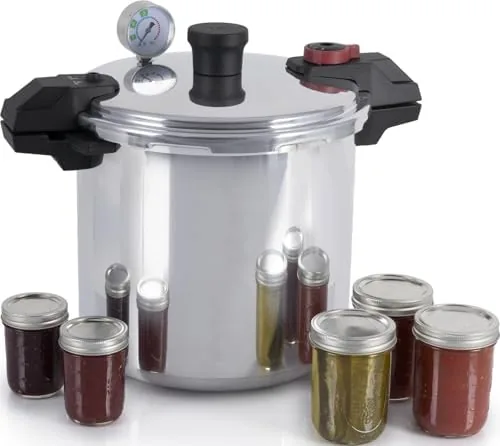

There is a point in every growing season when the counters fill faster than the cooktop can handle. Tomatoes, green beans, and a ham from the freezer all demand preserving at once, and a small pot simply cannot keep up. That is the moment a 22 quart canner earns its place in the kitchen. I spent a month putting a T-fal 22 quart aluminum pressure canner through real canning sessions, and this review covers the pressure settings, the rack, the heat behavior, and how much food it can really put on the shelf.
As always, the disclosure up front. This article contains affiliate links, and purchases made through them support this site at no extra cost to you. My testing process does not change based on that support, and the canner here was used exactly as a home canner would use it, following the guide included in the box.
The short version: this is a serious piece of home canning equipment, and it does its job well once you respect its two habits, the long heat up time and the fast heat response of aluminum. The rest of this review walks through the design, the canning guide, real batches, and who gets the most out of this size.
Design and Build
The canner is a wide, tall aluminum pot with a clamping lid and a pressure weight on top. Aluminum was the material of choice for a reason: it heats quickly, conducts evenly, and drops weight considerably compared with a stainless canner of the same capacity. That matters because a fully loaded 22 quart pot is heavy, and being able to lift it onto a burner with confidence is a genuine feature when the jars are full.
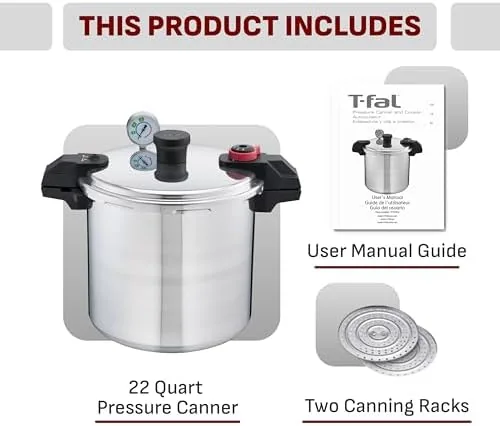
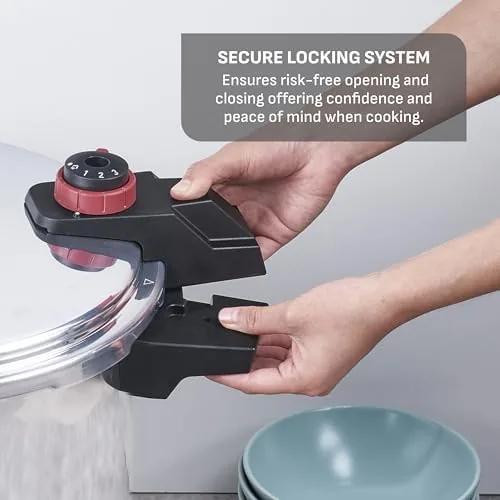
The lid seals with a turn and a clamp, and the pressure weight sits over a vent tube that runs up the center. The build is simple and robust, with no electronics to fail and no rubber gasket to replace. The included rack keeps jars off the bottom, and a small lifter in the package handles the jars without burning hands. The whole unit reads as a working tool rather than a showpiece, which is exactly right for something that will spend hours over a hot burner.
Key Features
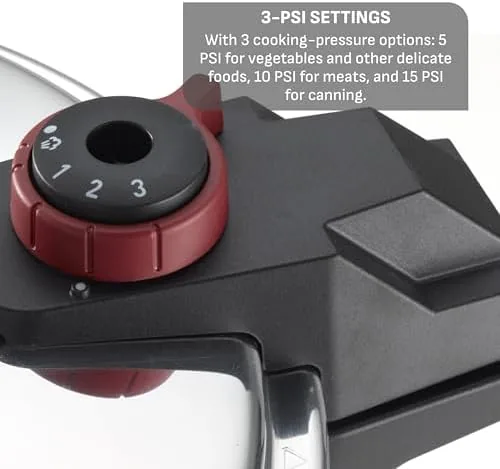
The headline feature is the three PSI settings on the pressure weight. Switching weights changes the operating pressure, so the same pot can be set for the lower pressures that suit certain recipes or the higher ones required for low acid foods like meat, seafood, and vegetables. The ability to change pressure without changing pots is what makes this a canner rather than just a big Pressure Cooker.
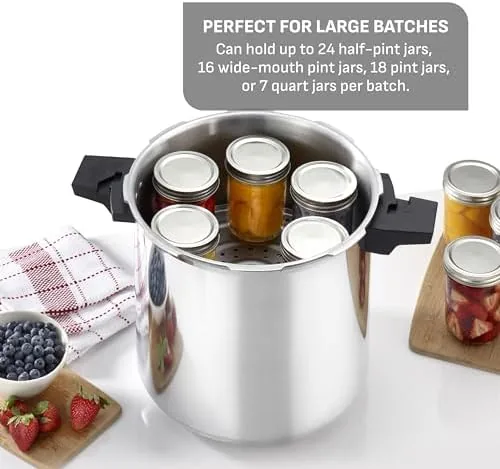
The size is the second feature. At 22 quarts, the pot swallows a full canner load of quart and pint jars in a single run, which is the practical difference between an afternoon of canning and a full day of it. The included canning guide walks through water bath and pressure runs for vegetables, meats, seafood, and fruits, and the printed recipes give a new canner a safe starting point rather than leaving them to guess at times.
Real-World Performance
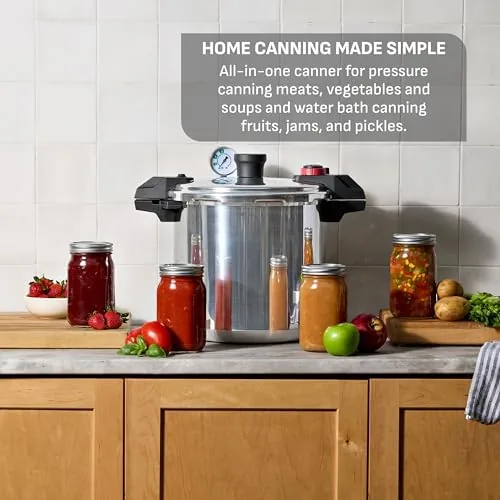
My first run was the water bath method with pickled green beans, and the pot behaved exactly as a canner should. The water came to a rolling boil, the jars sat stable on the rack, and the wide diameter let all seven quarts fit in a single batch. The aluminum body reached temperature noticeably faster than the stainless pot I had used before, and the water recovered its boil quickly after the cold jars went in, which keeps processing times honest.
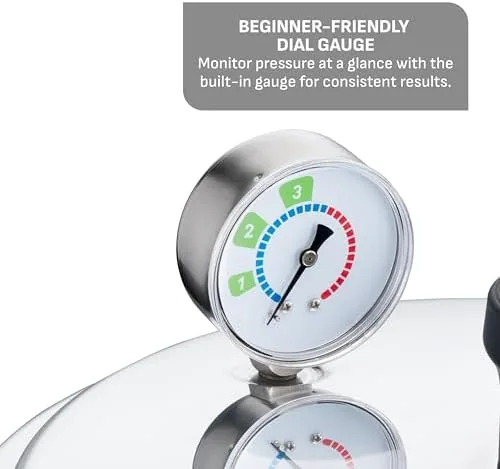
The pressure runs were where the canner proved itself. I processed a batch of green beans and a batch of broth under pressure, and the pressure weight settled into its steady rocking rhythm within a few minutes of reaching temperature. The reading was easy to trust, because the weight rocks in a clear, regular pattern that is far less ambiguous than a dial gauge. The jars sealed cleanly, the liquid level held, and the full batch came out shelf stable.
There are two honest tradeoffs. The first is heat up time, which is long on a pot this size and on a regular household burner; you will not be rushing a pressure run from cold to rocking weight. The second is that the aluminum body responds to burner changes quickly, so a pot this large wants a burner setting that holds a steady flame rather than one that is bumped up and down. Once I found the right burner zone, the canner held pressure with almost no babysitting.
A note for anyone on a modern cooktop: the aluminum base will not work on induction, and a very large canner needs a burner with a matching footprint to heat evenly. On a gas range and on a coil electric stove, the canner performed without complaint. Given the size, most homes will want to use it over a front burner where a full pot can sit securely and where the weight is easier to manage when lifting jars out.
Pros and Cons
Pros:
- 22 quart capacity processes a full canner load in one run
- Three PSI settings cover low and high pressure recipes
- Aluminum heats fast and keeps the total weight manageable
- Reliable rocking weight read instead of a finicky gauge
- Included rack and canning guide get a beginner started safely
- Works for both pressure canning and water bath canning
Cons:
- Does not work on induction cooktops
- Large pot needs a matching burner footprint and steady heat
- Heat up time is long on a big batch
How It Compares
Home canners usually choose between a large pot like this and a smaller all purpose pressure cooker. The table below shows how the two approaches differ.
| Feature | 22 Quart Canner | Pressure Cooker |
|---|---|---|
| Jars per batch | Full canner load | A few at a time |
| Pressure settings | Three PSI settings | Often preset |
| Water bath canning | Yes | Usually no |
| Best for | Seasonal preserving | Weeknight cooking |
| Heat response | Fast, needs steady burner | Faster, insulated |
A pressure cooker cooks dinner quickly but does not make a full season of preserving practical. This canner does the opposite. If your goal is putting up vegetables, meats, and broth by the case, the 22 quart size is the right tool, and the added water bath capability means fruits and pickles ride the same pot.
Who Should Buy It
Buy this canner if you preserve by the case rather than by the jar, if you grow a garden, or if you take advantage of meat sales and want to store the results. It is also a strong pick for anyone moving from water bath canning to low acid foods, because the three PSI settings and the included guide make the jump from pickles to green beans and broth a supervised, safe one.
Skip it if you only can occasionally, if you cook on an induction range, or if your kitchen simply has no spot for a very large pot, because a big canner demands storage space and a burner that can handle it. For households that preserve seriously, this is the pot that turns a weekend into a pantry full of food. You can check the current price of the T-fal 22 quart canner on Amazon when you are ready.
How We Test
I ran both canning methods in this pot: a water bath batch of pickled green beans and pressure runs of green beans and homemade broth. I tracked heat up time, how quickly the pot recovered after cold jars were added, how reliably the pressure weight held its rhythm, and how many jars sealed cleanly per batch.
I tested on a gas range, and I did not test the canner on induction because the aluminum base will not couple to that technology. For a deeper reference on pressure canning times and safety, Wirecutter has a detailed guide to pressure canners that is worth reading before the first batch. The T-fal canner listing on Amazon shows the current price and included parts.
T-fal 22 Quart Canner: Questions People Ask
Can this canner be used on an induction cooktop?
No, the aluminum body is not magnetic, so it does not work on induction cooktops and is best suited to gas, electric coil, and flat ceramic stoves.
What is the difference between pressure and water bath canning?
Water bath canning uses boiling water and works for high acid foods like fruits and pickles, while pressure canning reaches temperatures above boiling for low acid foods like vegetables and meat.
How many jars fit in the 22 quart canner at once?
The canner holds a generous batch of quart and pint jars stacked with the included rack, so a full season of produce can be handled in fewer sessions.
Do I need extra parts to get started?
No, the canner arrives with the pressure regulator and rack needed, and the included guide walks through the first water bath and pressure runs.
As an Amazon Associate, I earn from qualifying purchases.