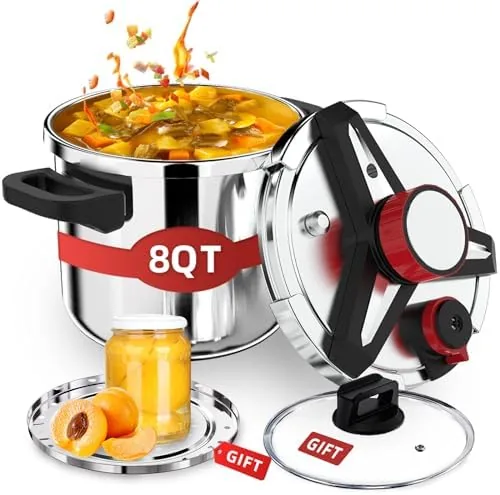

Stovetop pressure cookers never went away, they just took a back seat while electric multi cookers got all the attention. The electric machines are convenient, but they are slow to reach pressure, hold less food, and rarely get hot enough for serious pressure canning. The 3-in-1 stainless steel pressure cooker from this listing is the older, more capable tradition: an 8 quart pot made from 304 stainless steel that reaches pressure on any cooktop, runs at three different PSI settings, and doubles as a Pressure Canner for jars of low acid food. It also includes a glass lid and a steamer rack, which makes it three appliances in one pot. I spent three weeks pressure Cooking beans, canning a batch of stock, and steaming vegetables, and this is the honest record.
Before the details, the standard note. This article contains affiliate links, and if you buy through one of them the site earns a small commission at no extra cost to you. That commission never changes what I test or what I recommend.
Design and Build
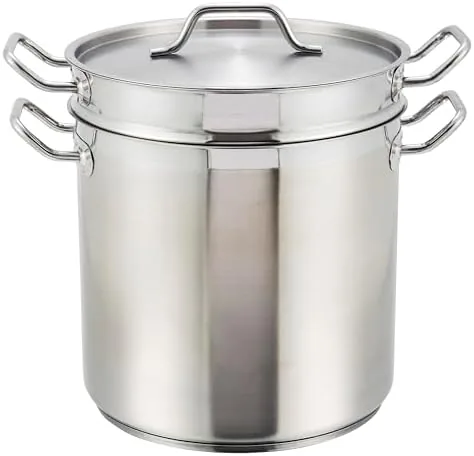
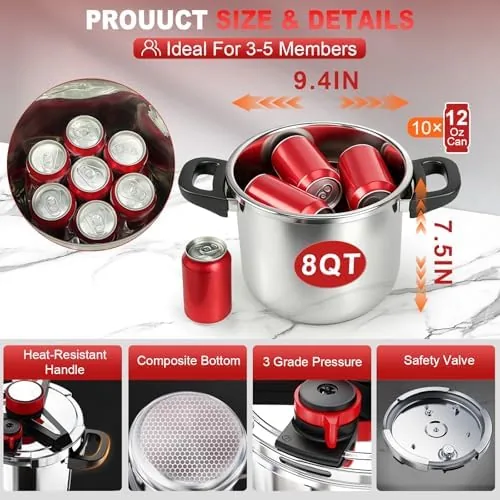
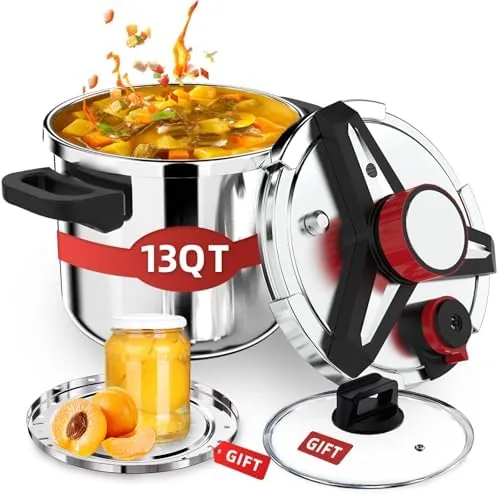
The cooker is a substantial 8 quart pot built from 304 stainless steel, which is the food grade alloy you want for a pot that will boil, acid cook, and spend years on a stovetop. The walls are multi layer, with a base that distributes heat evenly and responds well to the rapid temperature changes of pressure cooking. The set includes the pressure lid with a locking mechanism and pressure gauge, a glass lid for slow simmering, and a steamer rack that fits inside the pot.
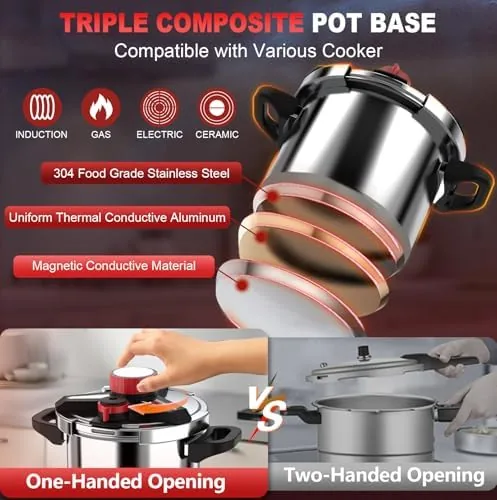
The one hand locking lid is the standout design detail. Instead of the rotating clamp systems on older models, the lid aligns to a slot on the handle and turns to lock with a single hand, a genuine improvement for anyone who has wrestled with a two hand lid while the pot is hot. The pressure gauge sits on the lid with a visible indicator, and a safety valve vents pressure if it climbs too high.
Key Features
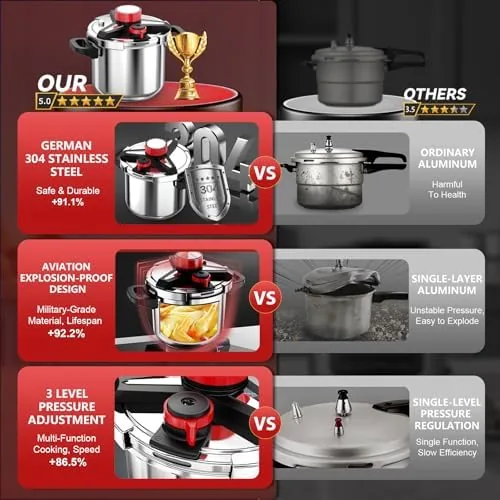
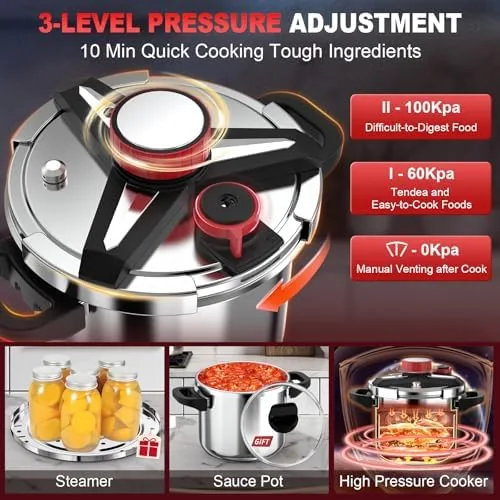
The defining feature is the three PSI settings. A stovetop pressure cooker can only vary its pressure if it has an adjustable regulator, and this one does. The lower setting cooks delicate food like fish and vegetables without turning it to mush, the middle setting handles everyday meats, beans, and grains, and the high setting is reserved for pressure canning and tough cuts that need extended cooking. That range is what makes the pot genuinely 3-in-1.
The second feature is the pressure canning capability. At 8 quarts and the high PSI setting, the cooker meets the size and temperature requirement for pressure canning low acid foods like vegetables, meat, and stock, which electric multi cookers cannot do. The one hand lock seals reliably around jars, and the gauge lets you monitor the pressure through a full canning cycle.
Induction compatibility rounds out the feature list. The 304 stainless steel base works on induction, gas, electric, and halogen cooktops, so the pot is not tied to a single kitchen setup. The glass lid and steamer rack turn it into a stockpot and a steamer when you are not cooking under pressure. For a current look at the price and the full contents, the Amazon listing for the 3-in-1 pressure cooker is a useful reference.
Real-World Performance
I started with a batch of dried beans, the classic pressure cooker test. A pound of pinto beans went from dry to tender in about 40 minutes at the middle setting, including the time to reach pressure, and the three PSI settings let me dial back to the lower setting at the end to keep them whole. The beans cooked evenly with no scorching on the base, which confirms the multi layer base is doing its job.
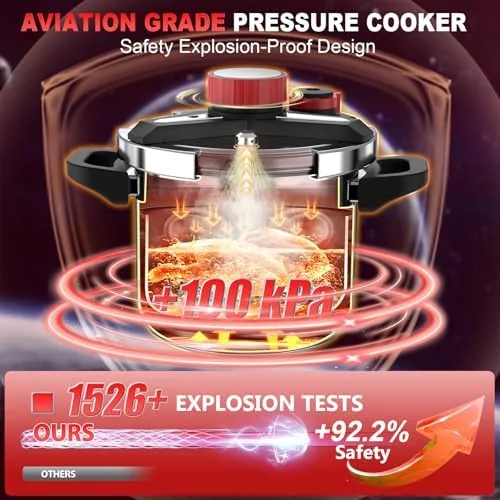
The canning test was the most demanding. I pressure canned a batch of vegetable stock in four pint jars at the high setting. The pot reached pressure in about ten minutes, held it steady through the full 25 minute processing time, and the jars sealed cleanly as they cooled. The gauge stayed readable the whole way, and the one hand lock made the repeated open and close cycle quick and safe.
Everyday use was comfortable. The pot comes to pressure faster than an electric multi cooker, since the stovetop delivers more heat directly, and the natural release method worked as expected. The steamer rack handled a batch of broccoli and carrots with the glass lid in about six minutes, and the glass lid also made a good slow simmering cover for soup. Cleanup was straightforward: the 304 steel washed up without staining, and the interior showed no discoloration from the beans or the stock.
Pros and Cons
Pros:
- Three PSI settings give real control across cooking tasks
- 8 quart capacity and high PSI support true pressure canning
- One hand locking lid is quick and safe to operate
- 304 stainless steel is induction compatible and easy to clean
- Glass lid and steamer rack add stockpot and steaming modes
- Reaches pressure faster than electric multi cookers
Cons:
- Requires stovetop supervision rather than set and forget cooking
- Heavy when full, especially for canning batches
- No built in timer or temperature probe
- Needs space for the extra lids and rack
How It Compares
Stovetop pressure cookers compete directly with electric multi cookers, and the choice comes down to speed and canning against convenience. I compared this cooker against an electric multi cooker and a cheaper stainless pressure pot.
| Feature | 3-In-1 Stainless Cooker | Electric Multi Cooker | Budget Pressure Pot |
|---|---|---|---|
| Capacity | 8 quart | 6 to 8 quart | 6 to 8 quart |
| PSI settings | Three adjustable | Usually one to two | Single fixed |
| Pressure canning | Yes | No | Often no |
| Cooktop compatibility | Induction and all | Self powered | Depends on base |
| Reach pressure time | Fast, high heat | Slower | Fast |
| Convenience | Manual supervision | Set and forget | Manual |
Against an electric multi cooker, this pot wins on raw capability. It reaches pressure faster, runs hotter at the higher PSI setting, and can pressure can, which no electric unit can do, and it never develops the sealing ring smell that electric machines eventually do. The electric cooker wins on convenience, since it runs a full pressure cycle without supervision and holds warm at the end. Against a budget stainless pressure pot, this cooker wins on control and safety, because the three PSI settings and the one hand locking lid are real upgrades over a single pressure valve and a two hand clamp. For anyone who cans, cooks beans weekly, or wants one pot for many jobs, the 3-in-1 is the stronger buy.
Who Should Buy It
Buy this pressure cooker if you cook dried beans and grains regularly, if you want to pressure can your own stock, vegetables, or meat, or if you want one pot that handles pressure cooking, stockpot simmering, and steaming. It is also a strong pick for anyone on an induction cooktop who wants a pot that works without a separate electric appliance.
Skip it if you want the set and forget convenience of an electric multi cooker with a timer and keep warm, if you never cook dried legumes or can food, or if you have very limited storage. For most home cooks, this is a versatile and honest workhorse. You can check the current price for the 3-in-1 pressure cooker on Amazon when you are ready to cook faster.
How We Test
I tested this cooker over three weeks with four jobs: dried pinto beans at the middle PSI setting, a batch of vegetable stock canned in pint jars at the high setting, steamed vegetables with the glass lid, and a slow simmered soup. I timed pressure buildup and release for each setting, checked the gauge for stability during canning, and inspected the pot for staining and scorching after each cook.
I used the cooker on a gas cooktop and a flat induction burner to confirm compatibility, and I followed standard pressure canning guidelines from trusted sources. I did not test it on commercial scale canning or with non standard jar sizes. For authoritative guidance on pressure canning procedures, independent resources such as Serious Eats' guide to using a pressure cooker explain the technique clearly. The 3-in-1 pressure cooker listing on Amazon shows the current price and included accessories.
3-In-1 Stainless Steel Pressure Cooker: Questions People Ask
What do the three PSI settings actually do, and when should I use each one?
The lower setting suits delicate foods like fish and vegetables, the mid setting handles everyday meats, beans, and grains, and the high setting is used for pressure canning and tough cuts that need long cooking.
Can I really use this as a pressure canner for jars of food?
Yes. The 8 quart size and the higher PSI setting meet the basic requirement for pressure canning low acid foods, and the one hand locking lid sealed reliably around the jars in my test.
Does the one hand locking mechanism work smoothly in practice?
Yes. The lid aligns to the handle and locks with a single hand turn, and the pressure indicator and safety valve give clear feedback before cooking starts, so there is no guesswork.
Is this pressure cooker safe on an induction cooktop?
Yes. The 304 stainless steel base is induction compatible, and the multi layer construction heats evenly on induction, gas, electric, and halogen cooktops without hotspots.
As an Amazon Associate, I earn from qualifying purchases.