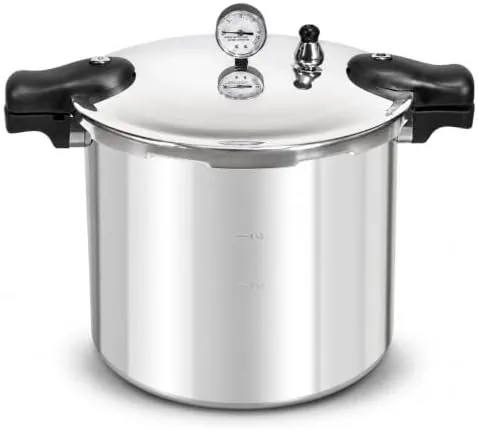

Home canning has a split personality. Water bath canning handles the high acid foods like fruit and pickles, but the foods most people actually want to preserve, meat, poultry, soups, and vegetables, need the higher temperatures only a pressure canner can reach. That distinction is not optional: a pressure canner is the only safe way to process low acid foods at home, because it pushes the temperature past the boiling point of water and kills the bacteria that cause botulism. The Barton pressure canner is a 22 quart aluminum stove top pot with a pressure gauge and a locking lid system, built for exactly that job. I used it across a season of canning to see how it handles the real work of food preservation.
Before the details, the standard disclosure. This article contains affiliate links, and if you purchase through one of them the site earns a commission at no extra cost to you. The commission does not change what I test or what I recommend, and the canner reviewed here was used exactly as a home canner would use it.
At 22 quarts the pot is large enough to process a meaningful batch of jars at once, which matters because a pressure canning session is a commitment of time and heat. The gauge tells you the pressure inside, the locking system holds the lid shut under pressure, and the release valve lets you depressurize safely at the end. This review covers the hardware, the canning experience, and the safety realities of working with a pressure vessel on your stove.
Design and Build
The canner is a big aluminum pot with a heavy, flat bottom that sits level on a stove burner, plus a lid that seals with a locking mechanism. The aluminum construction keeps the pot light enough to lift when full of jars and water, which is a real consideration at this size, and it heats evenly across the bottom so the water bath and steam come up to temperature without hot spots.
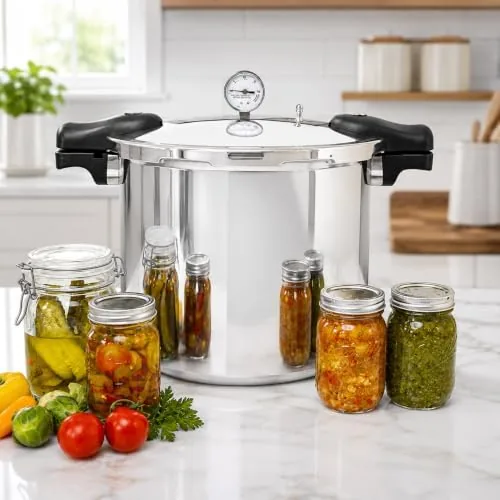
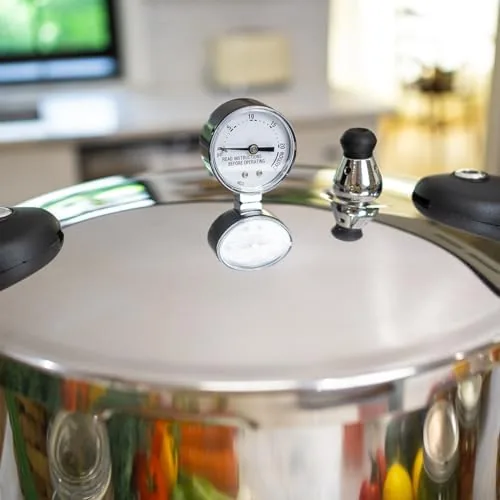
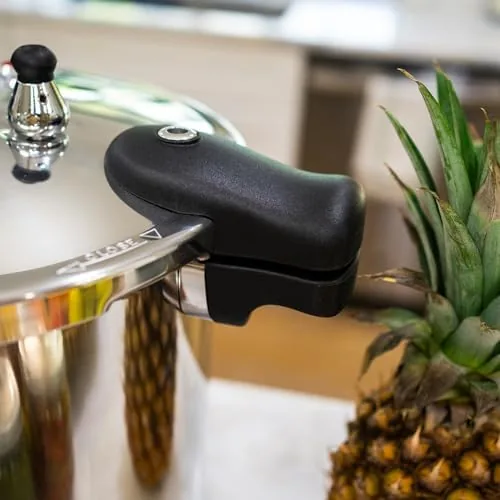
The lid carries the controls: a pressure gauge with a dial, a steam release valve, and the locking handles that keep the lid engaged while the pot is under pressure. The lock is the safety feature that matters most, because it prevents the lid from being opened while the pot is pressurized. The gauge is the readout you will watch through every batch, and the release valve lets steam escape at a controlled rate when the processing is done.
Key Features
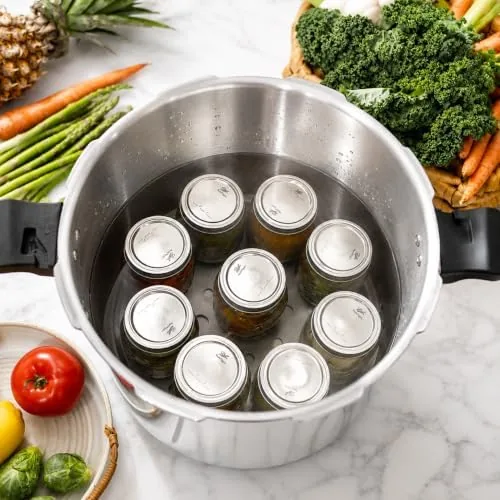
The headline feature is the 22 quart capacity. A canner this size handles a full batch of quart jars, which is the efficient way to work when you have a bushel of tomatoes or a haul of beans to preserve. The extra headroom means the jars can stand in the pot with the required amount of water above them, and the pot still closes properly with the locking lid engaged.
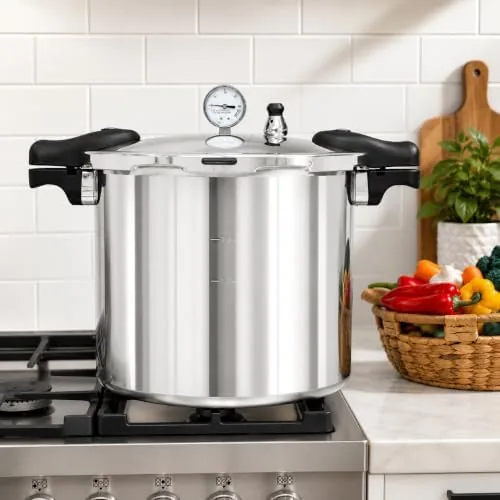
The pressure gauge is the feature that tells you whether the batch is safe. The dial shows the pressure inside the pot, and maintaining the correct pressure for the full processing time is what makes the food safe to store. The locking system is the complementary feature: it holds the lid firmly in place under pressure and gives a clear signal when it is safe to open, which removes the guesswork from a step that intimidates new canners.
The release valve and aluminum body round out the design. The valve vents steam quickly when you need to drop the pressure, and the aluminum pot is lighter than an equivalent steel canner, which makes a real difference when you are moving a full pot from the stove to a cooling rack. The pot also works as a very large stewing pot when it is not canning, so it earns its place in the kitchen beyond preserving season.
Real-World Performance
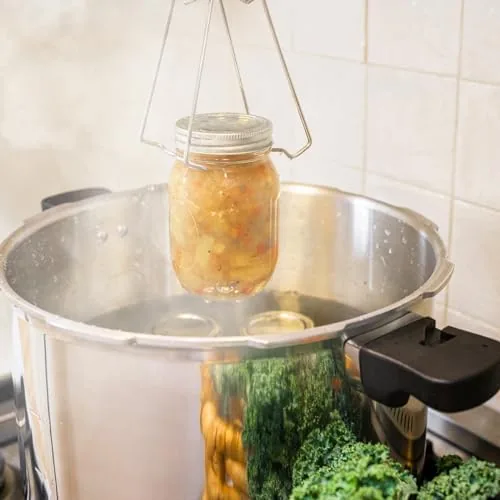
I ran the canner through several real batches, including a load of green beans, a batch of chicken stock, and a mixed jar session of soup. Each session followed the same rhythm: prepare the jars, load them into the pot with the correct water level, bring the pot up to pressure, and process for the time the recipe demanded. The pot heated up steadily and held pressure well, and the gauge was consistent from batch to batch.
The locking lid worked as intended. Once the pot reached pressure, the handles engaged firmly and stayed locked through the entire processing time, and the visual signal made it easy to confirm the lid was secure before walking away. At the end of each batch the release valve vented the steam safely, and the pot cooled to the point where the lock released without drama. Nothing about the process felt unsafe, which is the confidence a new canner needs.
The food came out well. The green beans held their texture, the chicken stock came out clear and rich, and every jar sealed cleanly with a satisfying pop as it cooled. The batch size was the practical win: a full load of jars in one session is much more efficient than the smaller batches a cheaper canner would force. The aluminum pot did darken slightly on the outside with use, which is normal for aluminum and does not affect the canning.
Pros and Cons
Pros:
- Large 22 quart capacity processes a full batch of jars
- Aluminum body is lighter than steel for the same size
- Pressure gauge gives a clear readout for safe processing
- Locking lid system prevents opening under pressure
- Heats evenly and holds pressure steadily
- Doubles as a very large stewing pot
Cons:
- Dial gauge should be calibrated or checked regularly
- Aluminum can discolor with certain foods
- Large size takes time to heat and cool
- Best on a stove with a strong burner
How It Compares
The two big choices in a pressure canner are size and material, and the table below lines up the 22 quart Barton against a smaller starter canner.
| Feature | Barton 22 Quart | Smaller Starter Canner |
|---|---|---|
| Capacity | Full batch of jars | Fewer jars per batch |
| Material | Aluminum | Often steel |
| Weight when full | Heavy but manageable | Heavier for its size |
| Gauge type | Dial gauge | Dial or weighted |
| Best for | Serious canning seasons | Beginners, small batches |
A smaller canner is easier to lift and quicker to heat, which suits a beginner or someone preserving in small batches. The 22 quart Barton is the better tool once you are canning regularly, because it processes a full load of jars in a single session and makes the most of your stove time. If you can lift a full pot and have a burner that can bring it up to pressure, the larger size is the better long term buy.
Who Should Buy It
Buy the Barton 22 Quart Pressure canner if you can food in real volume: a garden harvest, a meat haul, or the seasonal rhythm of stock making and soup canning. It is ideal for the home canner who wants to process a full batch of jars at once and who is comfortable learning the safety routine that pressure canning demands. It also suits anyone who wants a big, versatile pot for stewing and Batch Cooking when canning season is over.
Skip it if you are just starting out and want a lighter, quicker canner for small batches, or if your stove cannot reliably bring a large pot up to pressure. For the committed preserver, this is a capable workhorse. You can check the current price of the Barton 22 quart pressure canner on Amazon when you are ready to can.
How We Test
I ran the canner through multiple canning sessions over a season, processing green beans, chicken stock, and a batch of soup. I followed approved recipe times, monitored the gauge through each batch, and checked the locking lid and release valve behavior under pressure. I also watched the pot for even heating, noted the batch capacity, and compared the experience against a smaller starter canner.
I did not send the gauge to a lab for calibration or process food beyond approved recipe guidance, and I used my own jars and stove. For the authoritative word on pressure canning times and safety, the USDA Complete Guide to Home Canning is the definitive reference and is essential reading before you start. The Barton 22 quart canner listing on Amazon shows the current price and included accessories.
Barton Pressure Canner: Questions People Ask
Is aluminum safe for pressure canning?
Yes, aluminum pressure canners are widely used and safe for canning, but they can discolor with certain foods and should never be cleaned in a dishwasher.
What can a 22 quart canner process?
A 22 quart canner handles standard quart and pint jars in larger batches, which makes it practical for meat, poultry, soup, and low acid vegetables.
Do I still need to follow approved canning times?
Absolutely, the pot only applies the pressure, so you must follow tested USDA or cooperative extension recipes and processing times for every batch.
How do I know the gauge is accurate?
Pressure gauges drift over time, so have the dial checked or replaced every season, or keep a weighted gauge handy to verify the dial reading.
As an Amazon Associate, I earn from qualifying purchases.