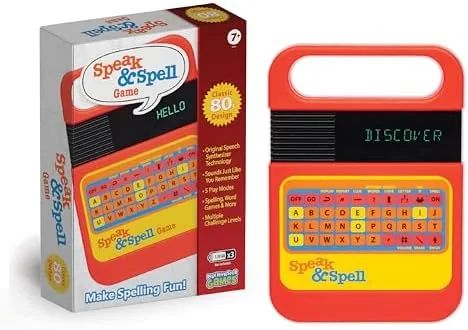

Few toys have a sound as instantly recognizable as the Speak & Spell. The robotic, cheerful voice that asks a child to spell a word, then congratulates a correct answer or gently corrects a mistake, is baked into the memory of anyone who grew up in the 1980s. The revival of this retro handheld keeps that voice and that mission intact. It is a spelling game in a yellow plastic shell that needs no screen, no Wi-Fi, and no app store, just a child, a word list, and a growing set of letters. I spent two weeks using it with an elementary age speller to find out whether the classic still earns its place in a modern toy box.
Before the letter games, the usual note. This review contains affiliate links. If you buy through one of them, the site earns a Small commission at no extra cost to you, and that does not change what I test or what I recommend.
Design and Build
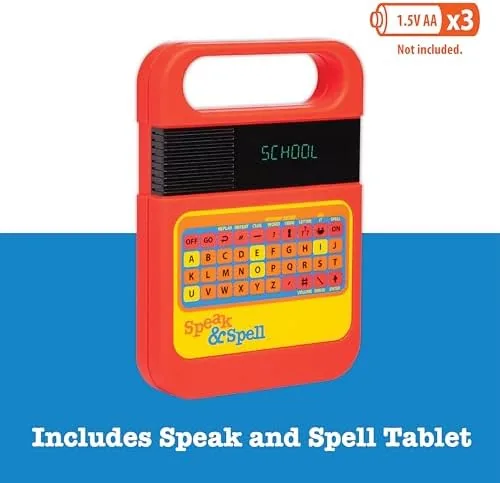
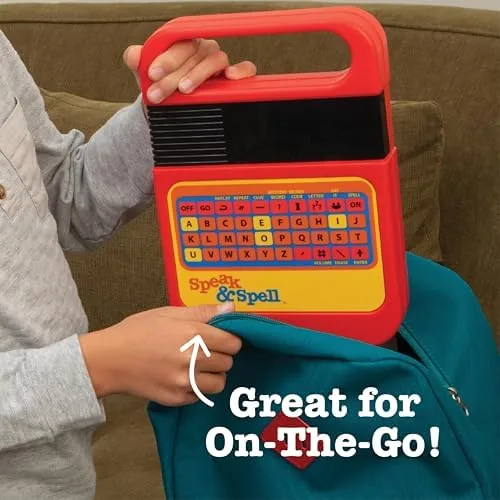
The revival is a faithful nod to the original. It keeps the same chunky yellow body, the oversized keypad with letters arranged in the familiar grid, and the small display screen that shows the letters you press. The whole unit is built from durable plastic with a heft that says toy rather than disposable gadget, and it feels like it could survive being dropped off a bunk bed, which is exactly what the original was known for.
The buttons are the star of the design. Each letter key is large, clearly labeled, and responds with a satisfying click, which makes them easy for small fingers to find without looking. The speaker sits behind a grille on the face, and the volume is adequate for a living room, with a control that lets you quiet it down for quieter moments.
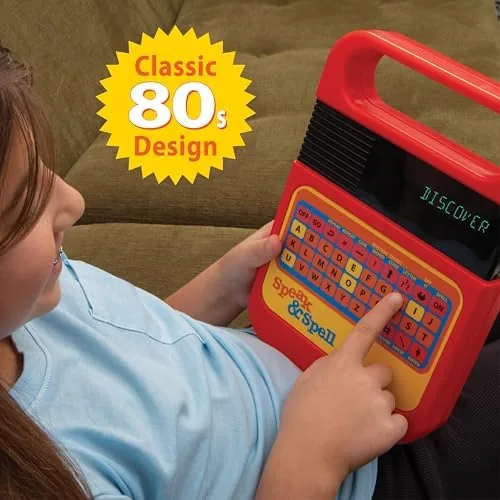
The simplicity of the design is the point. There is no bright screen flashing ads, no microphone collecting data, and no internet connection to worry about. It runs on batteries and sits ready to play, and for a parent that combination is worth more than any fancy packaging.
Key Features
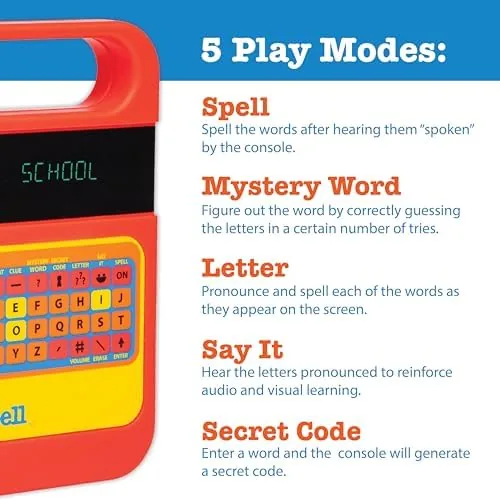
The core feature is the speech itself. The Speak & Spell uses a synthesized voice to say a word out loud, and the child then spells it one letter at a time on the keypad. The device announces each letter as it is pressed, confirms when the word is complete, and responds with praise for a correct spelling or a patient correction when a mistake slips through.
The toy includes the classic game modes that made the original famous. In one mode, the device speaks a word and waits for the full spelling. In another, it gives the player a sequence of letters to memorize and repeat, a memory and sequencing challenge that works a different part of the brain. A third mode mixes things up with a set of words at different difficulty levels, so the challenge grows as the child improves.
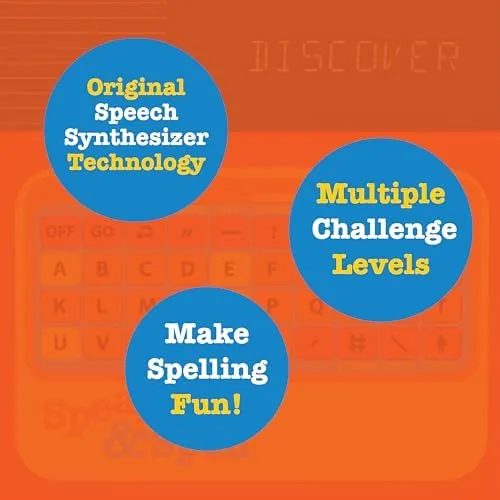
There is a genuinely educational structure underneath the retro packaging. The words are grouped by difficulty, the spoken prompts reinforce letter sound connections, and the immediate feedback loop, hear, spell, confirm, is exactly the pattern that spelling practice needs. It is a toy that teaches without looking like homework, which is the rarest combination in children's electronics. For a look at the current price and the exact Games included, the Amazon listing for the Speak & Spell is a handy reference.
Real-World Performance
My testing partner was a seven year old working through a school spelling list, and the toy's performance was a surprise on several fronts. The first session ran nearly forty minutes, which is a long stretch for a child who usually reaches for a tablet. The spoken words were clear and easy to understand, and the synthetic voice, while retro, was never garbled or hard to follow.
Correct answers got a cheerful response that visibly pleased the player, and wrong answers were corrected without embarrassment, which mattered more than I expected. The child returned to it on her own the next day without being asked, which is the highest compliment a learning toy can earn. The one surprise was the word selection: while many of the words were classic school list staples, some were old enough to be unfamiliar to a modern first grader, so a parent's help was occasionally welcome.
For older players, the toy works just as well as a nostalgia piece. The voice and the keypad sound are so close to the original that adults in the room found themselves spelling along, and the Memory Game has a genuine challenge even for grown ups. Across two weeks of daily use, the batteries held up, and the unit showed no wear beyond a few fingerprints on the glossy keypad surround. The single volume speaker also kept the sound clear in a noisy living room, and the display showed every letter the child pressed without any lag or missed input.
Pros and Cons
Pros:
- Genuine spelling practice with a clear, encouraging voice
- Screen free and offline, with no app or Wi-Fi needed
- Durable plastic build that survives heavy kid use
- Multiple difficulty levels and game modes keep it fresh
- Nostalgic 80s design that appeals to parents too
- Immediate feedback loop builds letter sound skills
Cons:
- Word list includes some dated words unfamiliar to modern kids
- Batteries are required and not included
- No way to add custom word lists
- Volume control is limited and the voice is retro by design
How It Compares
Spelling practice for kids today usually means an app on a tablet, a paper workbook, or a toy like this one. I compared the Speak & Spell against a popular spelling app and a traditional workbook to see where the retro handheld actually wins.
| Feature | Speak & Spell | Spelling App | Paper Workbook |
|---|---|---|---|
| Screen required | No | Yes | No |
| Spoken prompts | Yes, built in | Yes | No |
| Offline use | Yes | Depends | Yes |
| Custom words | No | Often yes | Yes |
| Parental oversight | Easy | Needed | Needed |
| Distraction risk | Very low | High | Low |
Against a spelling app, the Speak & Spell wins on focus: there is no YouTube suggestion, no in app purchase, and no bright animation pulling attention away from the word. The app wins on custom word lists and adaptive difficulty. Against a workbook, the toy wins on audio, since a book cannot say the word out loud, and the voice feedback makes independent practice possible. For screen free learning, the Speak & Spell sits comfortably ahead of both alternatives in most home settings.
Who Should Buy It
Buy the Speak & Spell for a child in early elementary school who is learning letter sounds and first spellings, for a family that wants to cut down on screen time without cutting out practice, or for anyone who wants to share a genuinely beloved piece of 80s tech with the next generation.
Skip it if your child needs fully custom spelling lists tied to a specific school curriculum, or if you are looking for something with a modern touchscreen interface. For most families, this is a durable, effective, and surprisingly charming way to practice spelling. You can check the current price for the Speak & Spell on Amazon when you are ready to add it to the toy box.
How We Test
I tested the Speak & Spell over two weeks with a seven year old speller working through a school word list, plus several adult sessions on the memory mode. I tracked session length, engagement, and whether the child returned to the toy on her own, and I checked battery life, volume, and response accuracy across daily use.
I did not test every word in the built in library, and I did not measure the toy against formal reading assessments. For context on how classic educational toys fit into modern learning, coverage from TechRadar at techradar.com has explored retro gadgets and their enduring appeal. The Speak & Spell listing on Amazon shows the current price and shipping details.
Speak & Spell: Questions People Ask
What spelling games does the Speak & Spell include?
It includes the classic modes from the original, where the device says a word, the player spells it one letter at a time, and it responds with encouraging or correcting speech.
Is the Speak & Spell good for children with autism?
Many families use it as a screen free learning toy because the clear spoken prompts, predictable response, and single button feedback suit structured practice and sensory friendly play.
Does the new Speak & Spell use batteries?
Yes. The handheld runs on standard batteries, and it stays true to the original low power, durable design with no charging cable required.
Who is the Speak & Spell appropriate for?
It suits early elementary spellers who are learning letter sounds, as well as older kids and adults who want the nostalgic 80s experience.
As an Amazon Associate, I earn from qualifying purchases.