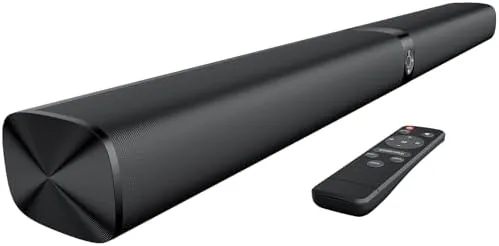

Modern flat screen TVs produce sound that barely deserves the name. The speakers are thin, rearward facing, and easily drowned out by a busy room, and the problem gets worse the cheaper and slimmer the panel is. A sound bar is the usual answer, but most bars lock you into a single fixed length that looks odd under a projector or beside a computer monitor. This one takes a different approach. It is a two in one detachable sound bar: a single bar for a TV, or two separate speakers pulled apart for a wider stereo spread in a room, on a desk, or with a projector. I connected it to a smart TV, a desktop PC, and a portable projector, and I spent two weeks judging whether the detachable design earns its keep.
Before the details, the standard note. This article contains affiliate links, and if you buy through one of them the site earns a small commission at no extra cost to you. That commission never changes what I test or what I recommend.
Design and Build
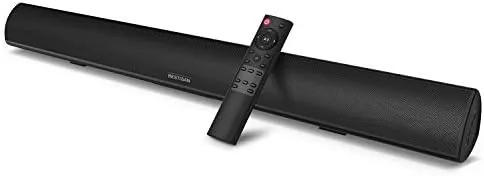
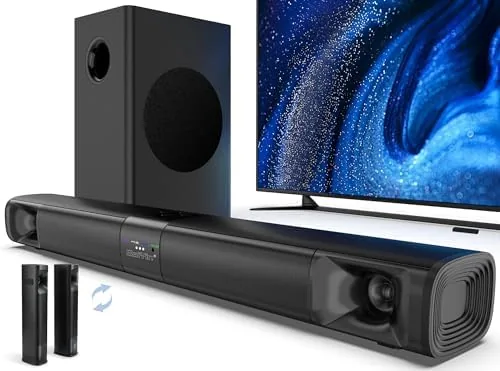
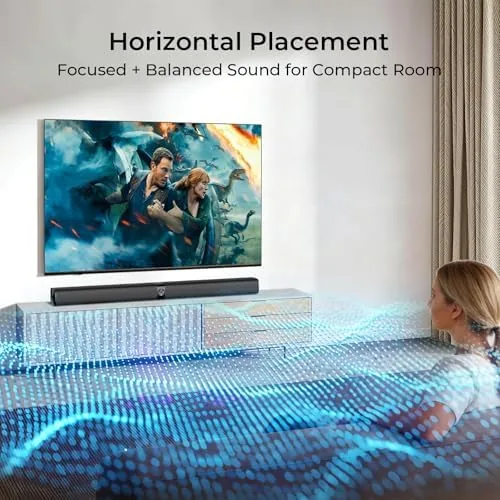
The bar is built around two speaker modules joined at the center. In its joined state it looks like a conventional compact sound bar, roughly the width you would pair with a 40 to 55 inch television, and the whole unit sits on a desk or shelf on its rubberized feet. The detachable design is the headline feature: each half carries its own drivers and the two pieces separate cleanly at the center joint, with the halves acting as independent left and right speakers.
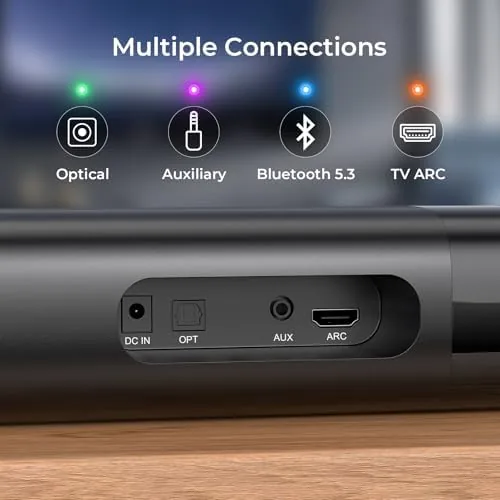
The enclosure is a matte black plastic with a fabric or grille front, and the finish does a good job of hiding fingerprints. The buttons on top control power, volume, and input, and the small LED indicators show which source is active. On the rear sit the ports you actually need: an HDMI ARC connection, an Optical input, an AUX jack, and a USB port for power or media, plus the Bluetooth pairing button. The remote control is a slim unit with clearly labeled buttons, and it covers volume, mute, equalizer modes, and source selection.
Build quality is respectable for the price bracket. The two halves lock together firmly with a positive click, there is no rattle when the bar is carried, and the grille feels well attached. The main limitation is size. The drivers are small, which is true of nearly every budget bar, and the design favors clarity over raw bass.
Key Features
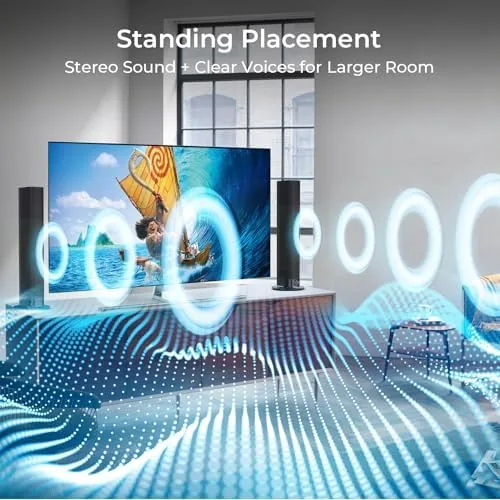
The detachable design is the feature that sets this bar apart. Pull the two halves apart and you can place them at the edges of a room or a desk for a genuinely wider stereo image, then snap them back together to fit under a television. It is a simple idea that adds real flexibility, especially for people who move between setups.
Connectivity covers everything most people need. HDMI ARC lets a smart TV control the bar with the TV remote and keeps audio in sync. Bluetooth streams music from a phone or tablet without cables. The Optical input works with older TVs that lack ARC, and the AUX jack accepts any source with a headphone output, which is how I connected my projector and a desktop PC. Auto volume boost is a clever addition: it levels out loud and quiet passages, so dialogue stays audible without constant remote adjustments. Three equalizer modes, usually labeled something like music, movie, and voice, tune the tonal balance for the content you are watching.
For a sound bar in this range, the feature set is generous. You can check the full spec list for this detachable sound bar on Amazon for the exact driver sizes and output ratings.
Real-World Performance
I started with the simplest test: a smart TV connected over HDMI ARC. The bar powered on with the TV, the TV remote controlled volume with no fuss, and the difference from the panel speakers was immediate. Dialogue that used to muffle under music became clear, and the bar filled a medium sized living room with sound that was comfortable at moderate volume, though it began to strain when pushed near maximum.
On my desktop PC I used the AUX input for gaming and the Bluetooth connection for music. As a single bar the stereo image was decent, but detaching the halves and placing them at each side of the monitor transformed the experience. Footsteps and direction cues in games gained a real sense of placement, and stereo music opened up noticeably. The auto volume boost proved most valuable in games where quiet ambient audio sits under sudden sound effects.
With the portable projector, Bluetooth was the star. I paired my phone, set the bar on a shelf beside the screen, and got a clean movie soundtrack with zero cable clutter. The equalizer modes made a real difference here: the movie mode widened the presentation, the voice mode sharpened dialogue, and the music mode added a bit of air on top of tracks.
The weaknesses are the ones you expect from compact drivers. Bass is present but shallow, so action films and hip hop lack the physical rumble of a bar with a dedicated subwoofer. Maximum loudness is fine for a bedroom or a small apartment but not for a large open plan living room. If you watch mostly dialogue driven content in a modest room, neither of these will bother you.
Pros and Cons
Pros:
- Detachable halves give a genuinely wider stereo image when separated
- Bluetooth, ARC, Optical, and AUX cover nearly every source
- Auto volume boost keeps dialogue audible without remote tinkering
- Three equalizer modes tailor the sound to music, movies, or voice
- TV remote integration over ARC is clean and reliable
- Compact size works under a TV or beside a projector
Cons:
- Shallow bass with no subwoofer for rumble heavy content
- Limited maximum loudness for very large rooms
- Detached halves each need their own power or cable to run
- No Wi Fi or voice assistant built in
How It Compares
Sound bars for a TV sit in three camps: single body bars with a subwoofer, full home theater systems, and compact portable bars like this one. I compared this detachable bar against a single body bar with a separate wireless subwoofer to see where the trade offs land.
| Feature | Detachable Sound Bar | Bar with Subwoofer | Home Theater System |
|---|---|---|---|
| Bass depth | Shallow | Deep and punchy | Deep, room filling |
| Connectivity | Bluetooth, ARC, Opt, AUX | ARC, Optical, Bluetooth | HDMI, optical, surrounds |
| Detachable stereo | Yes | No | Yes, rear speakers |
| Ease of setup | Simple, few cables | Moderate, subwoofer cable | Complex, many speakers |
| Footprint | Very small | Medium plus sub box | Large |
| Price | Low | Mid | High |

Against a bar with a subwoofer, this unit loses on bass and sheer volume, and movie nights with heavy action will feel flatter without the rumble. It wins on flexibility, footprint, and price. The subwoofer bar is a better pick for a dedicated home theater corner, while this detachable bar is the better choice for anyone moving between a TV, a desk, and a projector, because it adapts to each space. For bedrooms, offices, and apartment living rooms it is more than enough.
Who Should Buy It
Buy this sound bar if you watch TV in a small to medium room and want clear dialogue without a big speaker setup, if you game at a desk and want directional audio with minimal clutter, or if you run a portable projector and want a compact speaker you can pair wirelessly anywhere.
Skip it if you want floor shaking bass for action films, if you have a large open plan room that needs serious output, or if you already own a subwoofer and only want a better bar. For everyone else this is an unusually flexible sound bar that earns its place across multiple rooms. You can check the current price for this detachable sound bar on Amazon when you are ready to upgrade your audio.
How We Test
I tested this sound bar in three setups over two weeks. First, a smart TV connected over HDMI ARC for streaming and broadcast content. Second, a desktop PC using the AUX input for gaming and Bluetooth for music, with the bar both joined and detached. Third, a portable projector paired over Bluetooth from a phone for movie playback.

I judged dialogue clarity, stereo imaging, maximum volume, bass depth, and connection stability across each equalizer mode, and I tested whether the bar held a Bluetooth connection through walls and across a room. For perspective on what a sound bar can realistically deliver, professional reviews such as TechRadar's best sound bars roundup are a useful reference. The detachable sound bar listing on Amazon shows the current colors and included accessories.
Detachable Sound Bar: Questions People Ask
Can the sound bar split into two separate speakers?
Yes. The bar comes as a single unit in the middle that can detach into left and right halves, which lets you space the speakers wider for a more distinct stereo image in larger rooms.
Which connections does the sound bar support?
It supports Bluetooth for wireless audio, ARC over the included HDMI cable for TV control, Optical for older TVs, and AUX for anything with a headphone jack, such as a PC or a projector.
Does the auto volume boost help with quiet dialogue?
The auto volume feature evens out loud and quiet moments, which noticeably improves clarity for dialogue heavy shows and news, so you are not reaching for the remote during quiet scenes.
Is the sound bar easy to set up with a projector?
Yes. With a projector you can connect via Bluetooth or the AUX input, which makes the bar a practical companion for portable projector setups where an ARC connection is not available.
As an Amazon Associate, I earn from qualifying purchases.