
Heating bills climb quietly while nobody is home. A thermostat that holds a comfortable temperature all day, even when the house is empty, is one of the most expensive habits in any home. The Smart WiFi thermostat takes aim at that waste with app based remote control, flexible programming across 7-day and 5-1-1 schedules, and a simple non-programmable mode for people who prefer to keep things basic. I installed it in my home and ran it for three weeks to test the comfort and the savings.
A quick word on disclosure. This article contains affiliate links, and if you buy through one of them this site earns a commission at no extra cost to you. The commission does not influence my verdict, and every opinion below comes from my own installation and use.
Design and Build
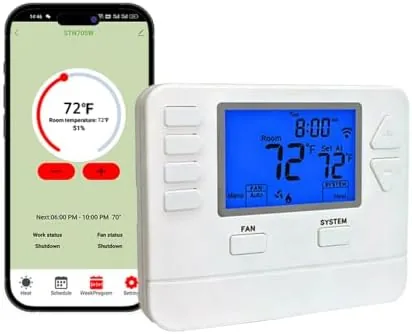
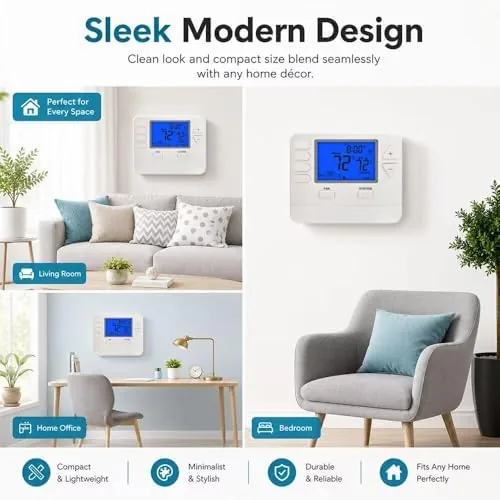
The thermostat is a clean, modern wall unit that looks at home in any room. The body is compact and glossy white with a clear display showing the current temperature, the set point, and the active mode, and the face is a simple touch surface rather than a forest of buttons. It reads clearly from across the Room, and the backlight keeps it visible at night without glaring.
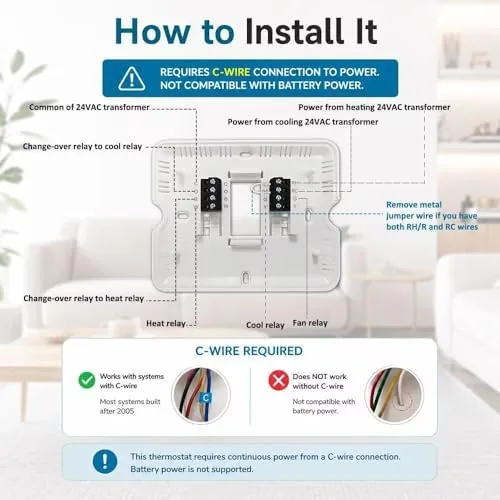
Build quality inspires confidence. The unit feels solid in the hand, the wiring connections on the back are clearly labeled, and the mounting plate clicks into place with a firm hold. The included hardware covers common wall situations, and the whole install took me under half an hour from removing the old thermostat to having the new one running.
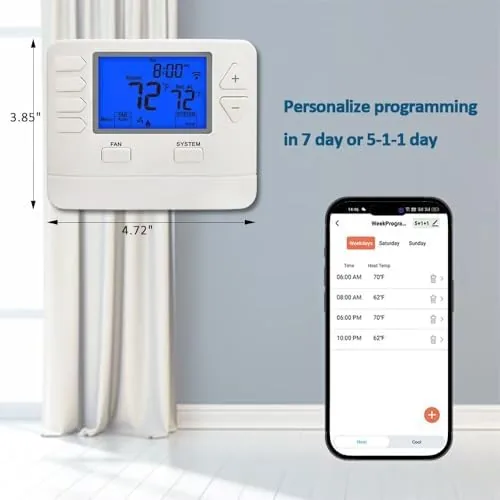
The display is intuitive. Temperature, humidity, mode, and schedule status are all visible at a glance, and the touch controls respond reliably without hunting for a tiny button. For guests who are used to a simple dial, the interface is straightforward enough that nobody needs instructions to raise or lower the temperature.
Key Features
The app remote control is the defining feature. Once the thermostat is on your WiFi network, the companion app lets you adjust the temperature, change modes, edit schedules, and check the current conditions from anywhere. That means coming home to a warm house after a day out, or turning the heating down from bed without getting up, and in my testing the app connection was fast and dependable.
The programming options cover every level of ambition. The 7-day mode lets you set a different schedule for each day of the week, which suits irregular lives where Monday is not like Friday. The 5-1-1 mode uses one schedule for weekdays and separate schedules for Saturday and Sunday, perfect for people who work a standard week. And the non-programmable mode simply holds the temperature you set, for anyone who just wants a reliable dial with a smart brain.
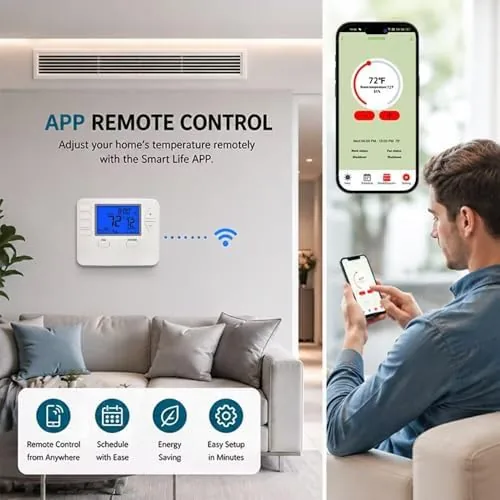
The scheduling engine handles the complexity for you. Each day can hold multiple periods with different target temperatures, so you can drop the temperature while you are at work and bring it back before you arrive home. The thermostat remembers the schedule and switches between periods precisely, and the display always shows which period is active.
The non-programmable mode deserves a mention, because it is easy to overlook. Some people do not want schedules at all, and in that mode the thermostat behaves like a traditional unit that simply holds the temperature you choose, while still offering the app control and the accurate sensing. That flexibility means the same hardware serves a family that loves automation and a relative who prefers a plain dial, which makes it a sensible gift for a household with mixed preferences.
Real-World Performance
I installed the thermostat on my heating system and built a 7-day schedule that lowered the temperature during work hours and overnight. The first measurable result was comfort: the house reached the right temperature exactly when the schedule said it should, and I stopped arriving home to a cold house or waking up to a stifling bedroom.
The remote control proved its worth within the first week. On a day I left early, I raised the heating from the app on my way back and walked into a warm home. On another day I turned everything down while away for a weekend, then restored normal operation from the app before I returned. Both actions took seconds, and neither required touching the wall unit.
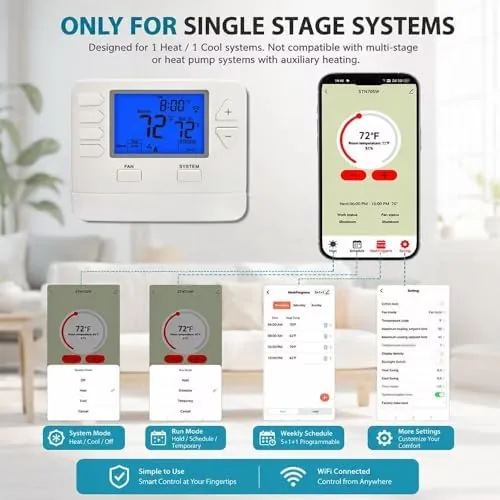
Accuracy was a pleasant surprise. I checked the thermostat reading against a separate thermometer placed nearby, and the two agreed closely across different room temperatures. The unit responded to set point changes quickly, reaching the target temperature without overshooting or cycling constantly, which keeps the house comfortable and the system working efficiently.
Reliability held up through the full three weeks. The WiFi connection never dropped, the schedule ran faithfully every day, and the app reflected the real state of the unit without lag or sync errors. For a device whose whole purpose is set and forget comfort, that dependability is the most important feature of all.
I also examined the savings side of the equation, because the reason to buy any Programmable Thermostat is lower bills. By setting the temperature back during work hours and overnight, I cut the hours the system ran at full output without ever noticing a drop in comfort at the times I was home. The app shows the current set point and the active schedule period at a glance, so it is easy to see exactly what the house is doing even when you are away, and adjusting a period takes a few taps rather than a visit to the wall.
Pros and Cons
Pros:
- Reliable app control from anywhere with internet
- Flexible 7-day and 5-1-1 scheduling for irregular lives
- Simple non-programmable mode for basic users
- Accurate temperature sensing with quick response
- Easy installation with clear wiring labels
- Stable WiFi connection through extended testing
Cons:
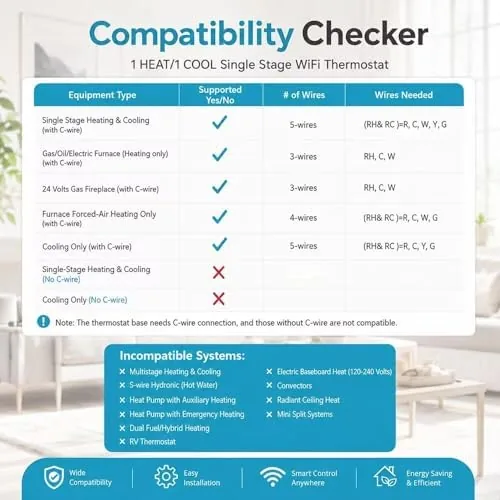
- Requires a compatible 24 volt heating system
- No presence sensor to auto adjust when you leave
- Needs a phone app for full schedule editing
How It Compares
Set against the other ways to control home heating, this thermostat delivers the convenience of a smart model at a friendlier price. A basic programmable thermostat saves energy but offers no remote control, while a premium smart thermostat adds sensors and learning but costs several times as much. This unit sits between them. Here is the comparison.
| Feature | Smart WiFi Thermostat | Basic Programmable | Premium Smart Thermostat |
|---|---|---|---|
| App remote control | Yes | No | Yes |
| Scheduling | 7-day and 5-1-1 | 5-2 typical | Learning, automatic |
| Presence sensing | No | No | Yes |
| Installation | Simple | Simple | Moderate |
| WiFi reliability | Excellent | N/A | Excellent |
| Price | Budget friendly | Lowest | Premium |
The honest verdict is that this thermostat offers most of the smart thermostat experience at a fraction of the premium price. You give up learning algorithms and presence sensing, but you keep the remote control and the scheduling that deliver most of the convenience and savings.
Who Should Buy It
This thermostat suits homeowners who want to control heating from their phone without spending on a premium smart brand. It is also a strong choice for anyone with irregular routines, because the 7-day schedule adapts to a life where every day is different, and for renters and owners who want energy savings without complexity.
Skip it if your system is not 24 volt compatible, or if you want the automatic learning and presence detection of a premium model. If the feature set appeals to you, you can check the current price of the smart WiFi thermostat on Amazon.
How We Test
I installed the thermostat on my own heating system and ran it for three weeks, building a full 7-day schedule and a separate 5-1-1 schedule to test both. I used the app daily from remote locations, compared the thermostat reading against a separate thermometer, measured response time to set point changes, and monitored the WiFi connection for stability across the entire period.
For independent context on smart thermostat performance and energy savings, PCMag's smart thermostat coverage is a solid reference point. The smart WiFi thermostat listing on Amazon shows current pricing and owner reviews if you want more perspective.
Questions People Ask
Does the thermostat work with my existing heating system?
The thermostat is compatible with common 24 volt systems including conventional gas, electric, and heat pump configurations. Most homes with standard thermostat wiring will work, and the wiring guide helps you confirm compatibility before purchase.
Can I control the thermostat away from home?
Yes. Once the thermostat is connected to your WiFi network, the companion app lets you adjust temperature, change schedules, and switch modes from anywhere with an internet connection.
What is the difference between the programming modes?
The 7-day mode sets a different schedule for each day, the 5-1-1 mode uses one schedule for weekdays and separate schedules for Saturday and Sunday, and the non-programmable mode simply holds the temperature you set manually.
Is installation difficult?
No. For most users the installation takes under half an hour. You remove the old thermostat, connect the labeled wires to the matching terminals, mount the new unit, and complete the setup through the app.
As an Amazon Associate, I earn from qualifying purchases.