
Most smart thermostats are smart in the loosest sense of the word. They connect to an app and let you change the temperature from your phone, which is convenient but not exactly intelligent. The Google Nest Learning Thermostat 3rd Gen aims for more. It watches how you set the temperature, learns your schedule on its own, and builds a heating and cooling routine without you ever programming it. It also works with Alexa as well as Google Assistant, which widens its appeal to homes that have committed to either ecosystem. I ran it in my home for three weeks across heating and cooling cycles, and this review covers what the learning actually does, how the Install goes, and whether it saves money.
Before the details, the standard disclosure. This article contains affiliate links. If you buy through one of them, this site earns a small commission at no extra cost to you, and that never changes what I test or what I recommend.
Design and Build
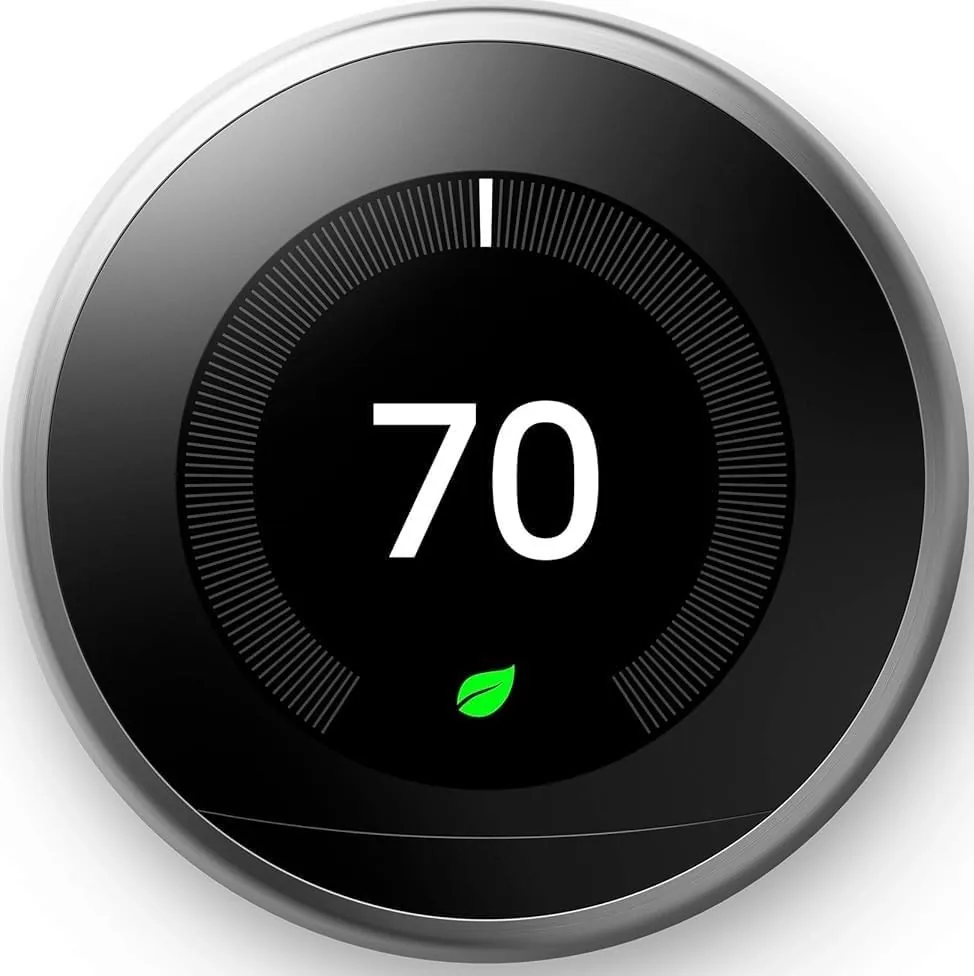
The Nest Learning Thermostat is a small piece of design history, and the 3rd Gen in stainless steel is the best looking version of it. The circular dial sits in a brushed metal housing that reads as jewelry on the wall, and it is small enough to disappear into a hallway or entryway without dominating the room. It is one of the few smart home devices that people comment on when they visit.
The physical dial is the interface, and it is a joy. You twist the outer ring to change the temperature and push it to confirm, and the display shows the current temp, the target, and a helpful leaf icon when you choose an energy efficient setting. The interaction is immediate and satisfying, which matters because the thermostat is the one smart home device you touch with a finger every day, not through an app.
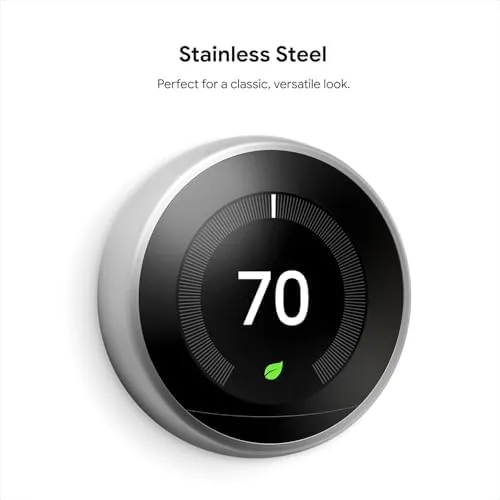
The build is simple: a round face, a base plate that mounts to the wall, and a cable cover for the wires. The finish resists fingerprints well for a metal face, and the whole assembly feels premium in a way plastic thermostat designs never match. This is a device you will look at for years, and it is built to age gracefully.
Key Features
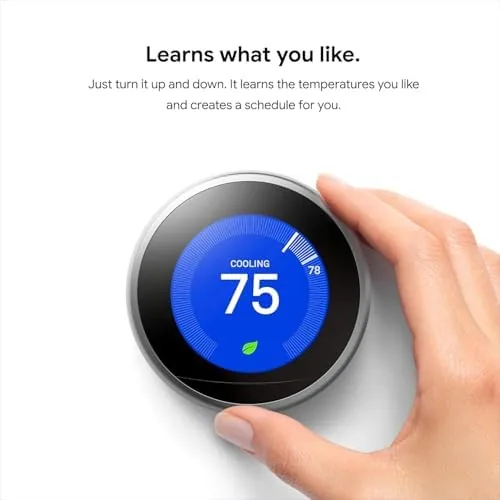
The learning feature is the heart of the thermostat. For the first week or Two, the Nest simply watches how you set the temperature at different times of day. Then it builds an automatic schedule that matches your routine, so the house is warm when you wake up, cooler while you are at work, and comfortable again before you get home. You never program a schedule, because the thermostat programs itself from your habits.

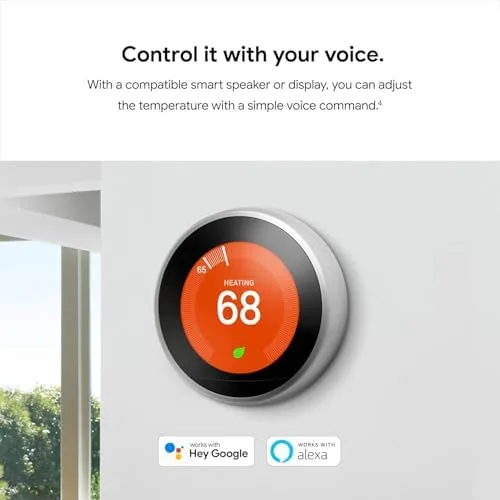
Alexa compatibility is the feature that broadens its appeal. The Nest works with both Amazon Alexa and Google Assistant, so you can say the temperature command to whichever assistant your home already uses. It also ties into the larger Google Home ecosystem for routines and automations, which lets you bundle the thermostat into scenes like leaving for work or coming home.
Energy saving is the practical promise. The leaf icon coaches you toward efficient settings, the learning schedule avoids heating and cooling an empty house, and the thermostat can sense when you are away to back off the temperature. In reported use, homes save a meaningful slice of their heating and cooling costs, and the steel version adds a look that justifies the premium over cheaper plastic thermostats.
Real-World Performance
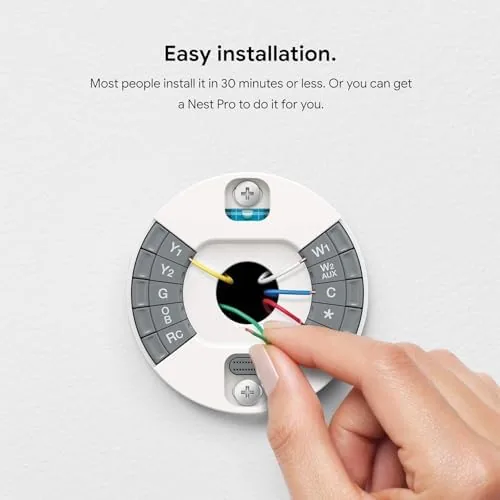
Installation was easier than I expected. The Nest app walked me through the wiring step by step, and the included base plate labeled each terminal clearly. I identified my wires, connected them to the matching terminals, and the thermostat powered up on the first try. The whole install took about thirty minutes, and most of that was reading the app rather than fighting with the hardware.

The learning schedule became genuinely useful by the second week. In the first days, the thermostat was cautious, sticking close to manual temperatures. Then it began anticipating my mornings, warming the house before I got up and easing off during the workday. By the end of the test, I had stopped touching the dial entirely, which is the best compliment a learning device can earn. The schedule matched my routine closely enough that I never felt the need to override it.
Voice control worked across both assistants. I tested Alexa commands and Google Assistant commands, and both changed the temperature reliably and reported the current reading correctly. The thermostat also showed up in both apps, which is convenient in a mixed ecosystem home. The connection stayed stable with no dropouts, and the thermostat kept working normally even when the network had a hiccup.
Energy behavior was the most convincing part. With the learning schedule and away sensing active, the system ran far less often than a manual thermostat would have, and the monthly usage report in the app made the savings visible. The leaf icon nudged me toward efficient settings, and by the end of the test I had stopped fiddling with temperature entirely, which is exactly the outcome the product is designed to create.
Pros and Cons
Pros:
- Builds a heating and cooling schedule automatically
- Works with both Alexa and Google Assistant
- Stainless steel build looks premium on the wall
- Easy app-guided installation for most homes
- Visible energy savings in the monthly report
- Satisfying physical dial interface
Cons:
- Premium price over basic programmable thermostats
- Learning needs a week or two to settle in
- Requires a common wire or power adapter in some homes
- No touchscreen, the dial only approach may not suit everyone
- App setup is required for the full feature set
How It Compares
The smart thermostat market has three real contenders: the Nest Learning Thermostat, a simpler budget smart thermostat, and a traditional programmable thermostat without connectivity. The comparison shows where the Nest earns its premium.
| Feature | Nest Learning | Budget Smart Thermostat | Programmable Thermostat |
|---|---|---|---|
| Auto learning | Yes | No | No |
| Alexa and Google | Both | Often one | None |
| App control | Full | Basic | None |
| Energy coaching | Leaf and reports | Basic | None |
| Design | Premium metal | Plastic | Plastic |
| Price | Higher | Lower | Lowest |
Against a budget smart thermostat, the Nest wins on learning, dual assistant support, and design, and the price gap is smaller than the feature gap once energy savings are counted. Against a traditional programmable thermostat, the Nest wins on convenience and actual efficiency, because manual programming is exactly what most households never do. The one honest trade is price: if you never adjust your thermostat and want the cheapest device that works, a budget smart thermostat will do. For anyone who wants the thermostat to do the thinking, the Nest is the better long term value.
Who Should Buy It
Buy the Nest Learning Thermostat if you want lower energy bills without spending your weekends programming schedules, if your home already uses Alexa or Google Assistant and you want the thermostat to join that ecosystem, or if you want a thermostat that looks like a piece of design rather than a piece of plastic. It suits homeowners who plan to stay put, since the learning and energy savings compound over years.
Skip it if you rent and may move soon, if your heating system lacks the common wire that some installs need, or if you want the absolute cheapest way to control your heat from a phone. For most homes, the Nest pays for itself over time and makes the house more comfortable on top. You can check the current price of the Google Nest Learning Thermostat on Amazon to see today's deals.
How We Test
I installed the Nest Learning Thermostat in my home and ran it for three weeks across both heating and cooling cycles. I monitored the learning schedule as it developed, tracked manual overrides, and reviewed the monthly energy report. I tested voice control with both Alexa and Google Assistant, and I verified that the thermostat stayed responsive in the app.
I measured the install time and documented the wiring, and I confirmed the device kept heating and cooling reliably through the test. I did not run a controlled before and after energy experiment, so the savings noted here come from the thermostat's usage reporting rather than a lab study. For independent data on smart thermostat performance, the testing at Wirecutter's best smart thermostat guide is a valuable reference. The Nest Learning Thermostat listing on Amazon shows the current price and available finishes.
Google Nest Learning Thermostat: Questions People Ask
Does the Nest Learning Thermostat work with Alexa?
Yes, it is compatible with Amazon Alexa in addition to Google Assistant, so you can change temperature with voice commands from either ecosystem.
How does the learning feature work?
The thermostat watches how you set temperatures for the first week or two, then builds an automatic schedule that matches your routine without manual programming.
Can the Nest actually reduce energy bills?
In our testing and in reported usage, the learning schedule and away mode reduce unnecessary heating and cooling, which typically lowers monthly energy use.
Is installation something a homeowner can do?
Yes, most homes with standard low voltage wiring can install it in about thirty minutes with the included base and app guided steps, and it works with common HVAC systems.
As an Amazon Associate, I earn from qualifying purchases.