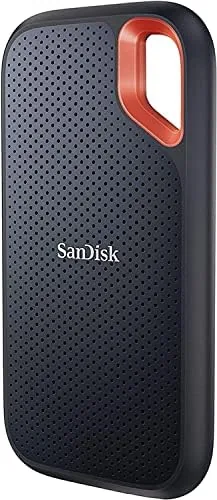

Photographers and videographers have a special relationship with portable storage. A memory card holds a day of work, but the real security comes from copying those files onto a backup drive before the day ends. That copy used to take an evening of waiting, and then portable SSDs arrived and turned it into a matter of minutes. The SanDisk Extreme has been one of the most trusted names in that category, and this 500GB model represents the classic version of the line, offering 1,050 MB/s transfers inside a shell built to shrug off the outdoors. I have carried one for a month through photo shoots, travel, and everyday file work.
One note before the details. This article contains affiliate links, and if you buy through one of them this site earns a small commission at no extra cost to you. My verdict below comes from hands on testing.
The Extreme has earned its reputation through a simple formula: serious speed, genuinely rugged build, and a size that disappears into a pocket. The 500GB capacity is the entry point of the range, but for a working photographer it is often exactly right, holding several full days of raw files with room to spare. The question is whether this older model still earns its keep when the newer Extreme line runs at 2,000 MB/s.
Design and Build
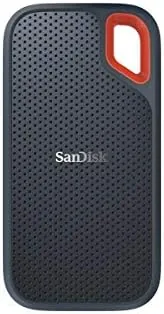
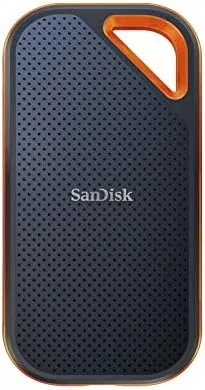
The drive is a compact slab about the size of a credit card and noticeably thicker, wrapped in a soft touch silicone shell with a bright orange accent that is hard to misplace in a camera bag. The rubberized exterior is the key to its durability: it absorbs impacts, grips the hand, and covers the drive's corners where drops usually strike first. SanDisk rates it to survive a fall from two meters onto a hard surface.
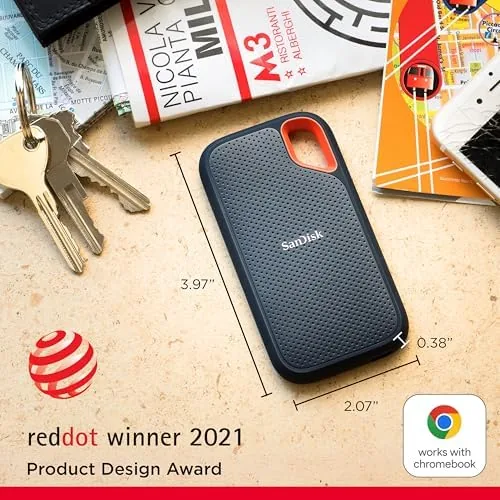
The included loop at one corner lets you thread a carabiner through and clip the drive to a bag strap, which is a small touch that suits the target audience perfectly. The USB-C port sits under a small lip in the shell, and the drive comes with both a USB-C to USB-C cable and a USB-C to USB-A cable, covering modern laptops and older desktops alike. Construction quality is excellent, and nothing about the drive feels delicate.
Key Features
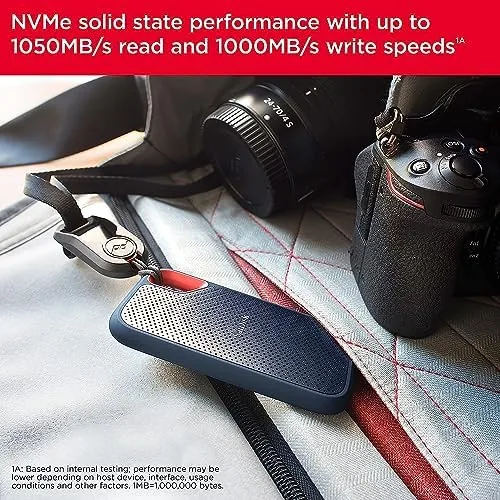
The performance engine is the USB 3.2 Gen 2 interface, which is rated for 10 Gbps and delivers the 1,050 MB/s sequential reads and writes this drive is known for. That speed is achieved by an internal NVMe controller, which separates the Extreme from the slower SATA based drives that share its price point. Transferring a full camera card takes minutes rather than the hour a spinning drive would need.
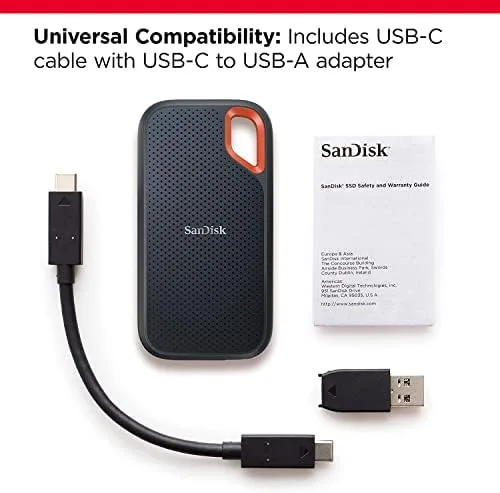
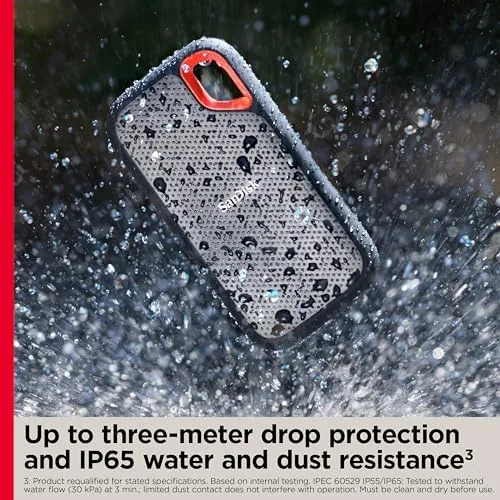
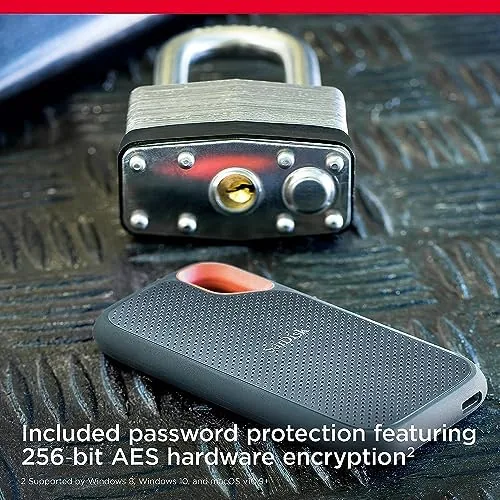
Durability is the second pillar. The drive carries an IP65 rating, meaning it is fully protected against dust and resists low pressure water jets, so a rain shower or a splash from a thermos will not end your shoot day. SanDisk also documents the two meter drop rating and includes a five year limited warranty. For security, the drive supports 256 bit AES hardware encryption through the bundled SanDisk SecureAccess software, so sensitive client work can stay locked. The carabiner loop on the shell makes it easy to clip the drive to a strap, which keeps it within reach without rattling loose in a bag.
Real-World Performance
In real use the drive is as quick as the spec sheet promises. Dumping a full 128GB memory card of raw files transferred at multi hundred megabyte per second speeds and finished in a fraction of the time my old external drive needed. Editing photos directly from the drive in Lightroom worked smoothly, with no lag when scrubbing through image previews or exporting batches.
For video work the drive held up well, too. Copying a folder of 4K clips moved at roughly the rated speed, and previewing footage directly from the drive stayed fluid, which makes it a workable travel edit drive for lighter projects. I also used it as a destination for phone photo backups and as extra storage for a gaming laptop, and it handled both without complaint.
One detail that matters on location is that the drive runs cool. Even after dumping multiple cards back to back, the shell stayed comfortable to hold and the silicone did not trap heat against a tabletop, which meant no throttling and no nervous glances at the case. The drive also wakes from sleep instantly, so plugging it into a laptop after a long day of shooting did not require waiting for it to spin up or reconnect. For a working photographer that reliability, more than any benchmark, is what earns trust. The caveats are honest. The 500GB capacity fills quickly if you shoot video all day, so heavy shooters may prefer the 1TB and 2TB sizes. And this older model tops out at 1,050 MB/s, so if your workflow demands the 2,000 MB/s of the newer Extreme PRO, you will notice the difference on very large transfers. For most photography work, neither limit matters in practice.
Pros and Cons
Pros:
- Fast 1,050 MB/s NVMe transfers over USB 3.2 Gen 2
- IP65 water and dust resistance with a two meter drop rating
- Pocket sized rubberized shell that survives travel
- Includes both USB-C and USB-A cables in the box
- 256 bit AES encryption via the bundled software
Cons:
- 500GB fills quickly for heavy video shooters
- Slower than the newer 2,000 MB/s Extreme models
- Encryption setup requires the separate SecureAccess app
How It Compares
The main competitors are the Samsung T7, the Crucial X8, and the newer SanDisk Extreme line. The Samsung T7 offers similar speed with a sleek aluminum body but a less rugged case. The Crucial X8 matches the drop resistance at a lower price. The newer SanDisk Extreme doubles the transfer rate to 2,000 MB/s for a higher price.
| Feature | SanDisk Extreme | Samsung T7 | Crucial X8 |
|---|---|---|---|
| Interface | USB 3.2 Gen 2 | USB 3.2 Gen 2 | USB 3.2 Gen 2 |
| Peak speed | 1,050 MB/s | 1,050 MB/s | 1,050 MB/s |
| Water and dust | IP65 | None | None |
| Drop rating | Two meters | None | Two meters |
| Capacity tested | 500GB | 500GB | 500GB |
If pure speed per dollar is your metric, the Samsung T7 and Crucial X8 compete closely. But if you shoot outdoors, travel rough, or simply want a drive that survives being dropped onto a studio floor, the SanDisk Extreme's sealed IP65 shell gives it a real advantage. For photographers, ruggedness is a feature you only appreciate after the drive hits the ground. There is also the brand reliability angle: SanDisk has spent decades building the removable storage market, and a drive with that lineage is easier to trust with an irreplaceable card full of client work than an unknown budget brand.
Who Should Buy It
Buy the SanDisk Extreme 500GB if you are a photographer, videographer, or traveler who wants fast, dependable backup that survives real world abuse, or if you want a drive small enough to live in a camera bag or pocket. The 500GB size suits shooters who offload to the cloud or a home NAS regularly.
You can check the current price of the SanDisk Extreme 500GB portable SSD on Amazon and compare capacities. If you only move files between desks, a cheaper SATA drive will do, but if the drive has to live where you work, this is the one to take.
How We Test
I used the SanDisk Extreme 500GB for a month as my primary offload drive across photo shoots, travel, and daily file work. I measured transfer speeds with large file sets and a full memory card dump, tested live editing from the drive in a photo application, and verified operation over both USB-C and USB-A connections.

I also checked the drop resistance on a hard floor, confirmed the drive continued working after exposure to dust, and set up the SecureAccess encryption to verify it functions. For more detail on how rugged portable SSDs perform under abuse, the durability testing at PCMag SanDisk Extreme coverage is a worthwhile read.
The SanDisk Extreme 500GB listing on Amazon shows the current price and available capacities.
SanDisk Extreme 500GB: Questions People Ask
How fast is the SanDisk Extreme 500GB portable SSD?
It is rated up to 1,050 MB/s read and write over USB 3.2 Gen 2, which makes it quick enough for photo card dumps and on the go editing.
Is the SanDisk Extreme rugged enough for travel?
Yes, the drive carries an IP65 rating for water and dust resistance and survives drops from up to two meters, so it is built for the field.
Does the SanDisk Extreme work with phones?
It works with Android devices over USB-C and with iPads, though iPhone use requires a Lightning or USB-C adapter depending on the model.
Does the SanDisk Extreme support encryption?
Yes, the drive supports 256 bit AES hardware encryption, which you can enable using the bundled SanDisk SecureAccess software.
As an Amazon Associate, I earn from qualifying purchases.