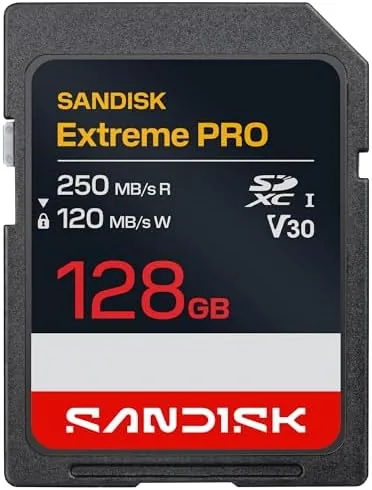

A camera is only as fast as its memory card, and nothing ends a shoot faster than a buffer that will not clear or a card that drops frames in the middle of a clip. I tested the SanDisk 128GB Extreme PRO SD card with its claimed 250MB/s read speed and 120MB/s write speed through a month of 4K video, raw bursts, and long timelapses in a mirrorless camera. This review covers the real world speed, the V30 rating, and whether this card earns its place as the dependable standard for creators.
Before the details, the standard note. This article contains affiliate links, and if you buy through one of them the site earns a small commission at no extra cost to you. That commission does not change what I test or how I judge the card, and everything in this review comes from real shooting sessions on real cameras.
The Extreme PRO is the card you buy when the shot cannot afford to wait, and the rest of this review walks through the design, the features, the performance, and how it compares to the cheaper Ultra line.
Design and Build
The 128GB version is a standard full size SDXC card with a UHS-I interface, marked U3 and V30, which are the ratings that guarantee it can sustain the write speeds a 4K camera demands. The red and black shell is the familiar SanDisk look, and the gold contacts are clean and well made. In hand it feels no different from any other card, but the ratings printed on the label tell the real story, because V30 is the line between a card that buffers and a card That Records.
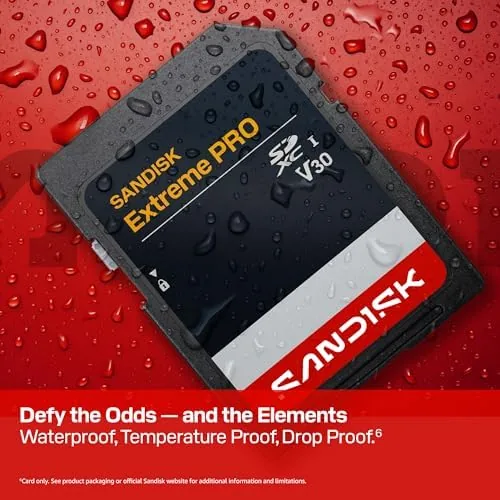
The card is built for demanding conditions, and SanDisk rates it to handle the temperature swings you meet in a car dashboard or a long outdoor shoot. The write protect switch on the side is a small detail that matters when you hand the card to an editor, because it keeps footage safe from accidental deletion.

Key Features
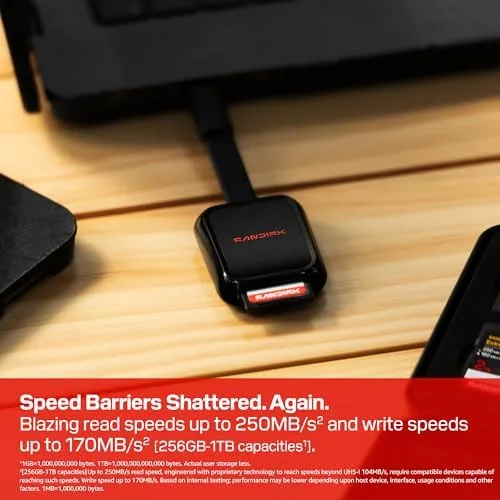
The headline numbers are a 250MB/s read speed and a 120MB/s write speed. The read speed matters when you transfer a memory card full of photos to a laptop, and the write speed matters every single time the shutter fires or the record button is pressed. In practice, the card kept up with continuous 4K UHD recording and high speed burst shooting without a single buffer moment in my Testing.
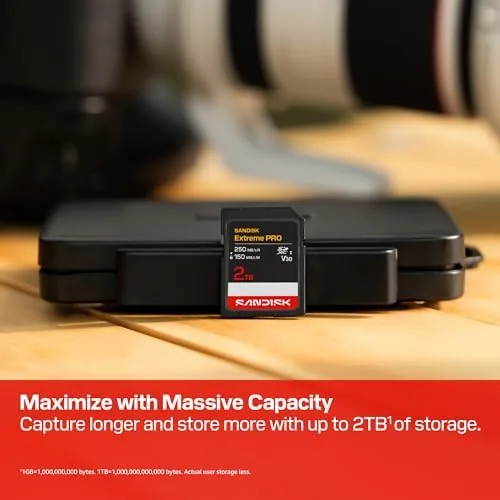
The 128GB capacity is the sweet spot for a working photographer. It holds thousands of raw and JPEG stills, or well over an hour of high bit rate 4K footage, and it gives you room to shoot all day with a spare card in the bag. The UHS-I format means it works with virtually every modern camera, from mirrorless bodies to DSLRs to drones, without a firmware surprise.
The 128GB size also keeps you shooting when you cannot offload, which is the situation every event photographer knows. A wedding, a race, or a long day out can burn through smaller cards fast, and this capacity covered a full event with room to spare before I needed a second card in the bag.
Real-World Performance
I shot with the card in a mirrorless camera for a month, mixing 4K video, raw bursts, and long timelapses. The write speed was the feature that made itself obvious. Bursts of raw frames cleared Instantly, 4K clips recorded without the buffer indicator blinking, and timelapses ran until the battery died rather than the card. When I pulled the card and transferred the day shoot to a laptop, the 250MB/s read speed moved several gigabytes in a fraction of the time of an older card.
The V30 rating held up under the stress tests that matter. I recorded continuous 4K at the camera highest bit rate for extended stretches, and the card never dropped a frame. I also shot rapid bursts until the card was nearly full, and the write speed only eased at the very end, which is normal behavior for any card. The card ran warm after long sessions, which is expected, and there were no errors, no corrupted files, and no surprises.
The honest limits are about the card position in the range. It is a UHS-I card, so it does not chase the fastest UHS-II speeds that high end cards reach, and if you shoot in the rare camera that supports UHS-II, a faster card is available. For the vast majority of cameras and creators, the Extreme PRO delivers everything you can throw at it, and the price for a 128GB capacity sits well below the premium tier.
The card also spent a weekend inside a drone, where write speed and reliability are non negotiable because a dropped frame is a lost clip. It recorded flight after flight at 4K without a single buffer warning, and the footage came out clean on every card read. For hybrid shooters the flexibility shows too, because I could fill the card with stills on one shoot, format it, and shoot 4K video the next day without a hiccup.
Pros and Cons
Pros:
- Fast 250MB/s read and 120MB/s write speeds
- V30 and U3 ratings for smooth 4K recording
- Handles raw bursts without buffer waits
- Works in mirrorless cameras, DSLRs, and drones
- 128GB capacity covers a full day of shooting
- Dependable in heat and heavy use
Cons:
- UHS-I speeds trail premium UHS-II cards
- Runs warm during long 4K sessions
- Premium price over the Ultra line
How It Compares
Most creators weigh the Extreme PRO against the cheaper Ultra line, and the table below lines up the two.
| Feature | Extreme PRO | Ultra Line |
|---|---|---|
| Read speed | Up to 250MB/s | Up to 195MB/s |
| Write speed | Up to 120MB/s | Modest, Full HD class |
| Video rating | V30, 4K UHD | V10, Full HD |
| App rating | A2 | A5 |
| Best for | Cameras, drones, 4K work | Phones, tablets, general use |
| Price | Higher | Budget friendly |
The Ultra line is a fine everyday card for phones and Full HD work. The Extreme PRO is the card you want the moment your camera shoots 4K or your burst rate matters, because the faster write speed and V30 rating remove the buffer from the equation. If you have outgrown a slow card, this is the upgrade that makes itself known on the very first shoot.
Who Should Buy It
Buy this card if you shoot 4K video, use burst mode with a modern mirrorless or DSLR, fly a drone, or simply want a card that never makes you wait on the camera. It is also the right pick for hybrid shooters who switch between stills and video in a single session, because it handles both without a second thought.
Skip it if you only need a cheap card for a phone or a Full HD action camera, where the Ultra line is plenty, or if your camera supports UHS-II and you want the absolute fastest transfer times. For creators at every level below that, the Extreme PRO is the dependable standard. You can check the current price of the SanDisk 128GB Extreme PRO SD card on Amazon when you are ready.

How We Test
I shot with the card in a mirrorless camera for a month, recording continuous 4K video, raw bursts, and long timelapses, and I transferred the card to a laptop on a fast reader to measure real read speeds. I ran the card until nearly full to confirm the write speed stays steady, and I checked every file for corruption after each session.
I also left the card recording in warm conditions to confirm the heat rating holds up in practice. For a deeper look at SD card speed classes and what V30 actually means, PCMag has a guide to the best SD cards that explains the ratings in plain terms. The SanDisk 128GB Extreme PRO SD card listing on Amazon shows the current price.
SanDisk 128GB Extreme PRO SD: Questions People Ask
What write speed can I expect from this card in a camera?
The card is rated for 120MB/s write speed and V30, so it records 4K UHD video and high speed bursts without buffering in most cameras and drones.
Will this card work with my mirrorless camera or DSLR?
Yes. The UHS-I SDXC format works with virtually every modern camera that accepts SD cards, and the 128GB capacity holds thousands of stills and long 4K clips.
How does it compare to the Ultra line from SanDisk?
The Extreme PRO writes much faster and carries the V30 and U3 ratings, so it is built for continuous 4K recording, whereas the Ultra line is aimed at Full HD and general use.
Is a 128GB capacity enough for 4K video work?
For a day of hybrid shooting it is a comfortable middle ground, holding well over an hour of high bit rate 4K footage plus thousands of raw stills before you need a second card.
As an Amazon Associate, I earn from qualifying purchases.