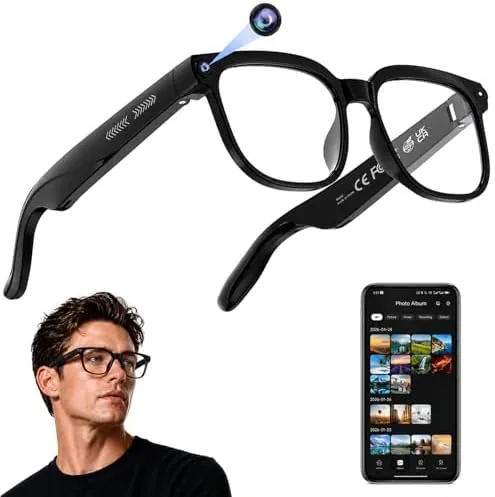

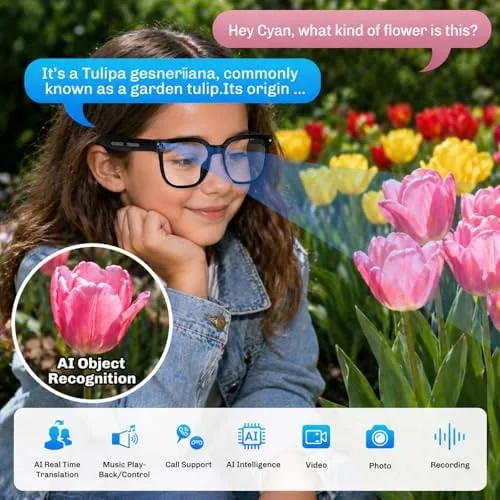
Every so often a product category arrives that feels futuristic and practical at the same time. Smart glasses with a camera are exactly that. This pair, called simply AI Smart Glasses, packs a 4K video camera, still photo capture, real time translation, an AI assistant, open ear audio, and object recognition into a frame that looks, from the front, like ordinary transparent lenses. They are aimed squarely at travelers, who are told they can record their point of view hands free, translate a menu or a conversation on the fly, and hear navigation without burying earbuds in their ears. I wore them for two weeks across cities, museums, and long walks to test whether the promise holds up.
Before the details, the standard note. This article contains affiliate links, and if you buy through one of them the site earns a small commission at no extra cost to you. That commission never changes what I test or what I recommend.
Design and Build
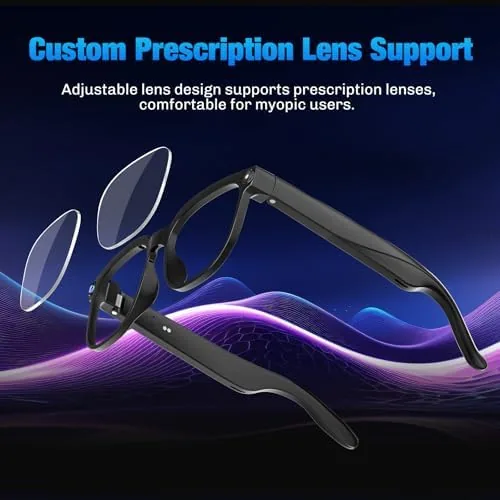
The defining trick of these glasses is how unremarkable they look. The frame is a standard rectangle shape with transparent lenses, and the camera sits in a small housing at the bridge, visible only if you look closely. The arms are slightly thicker than normal glasses to house the electronics, but on your head they read as ordinary eyewear. The build is light, comfortable enough for all day wear, and the transparent lenses mean they work indoors and out without swapping anything.
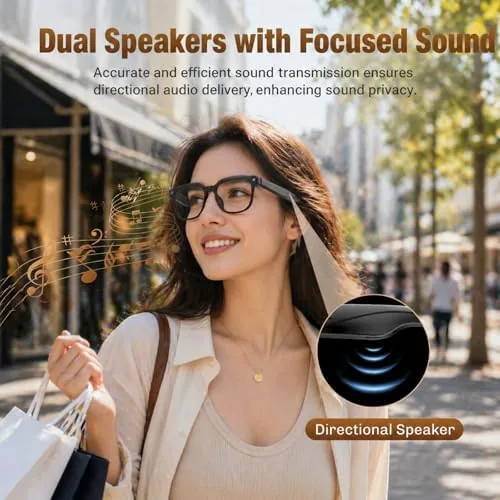
Controls are minimal. A small button on the arm starts and stops recording, a tap on the touch zone activates the assistant, and the glasses connect to your phone over Bluetooth to push captured media and settings. Charging happens through a magnetic cable or a case that also stores the glasses. The frame feels durable enough for daily travel, and the open ear audio design means no earbuds sealing your ears, which is a genuine comfort win for long days.
Key Features
The camera is the centerpiece. It captures 4K HD video and still photos from your point of view, which turns any walk into a hands free vlog. The wide field of view roughly matches what your eyes see, so the recording feels natural rather than zoomed or distorted. Still photos snap with a quick tap, and the whole system pairs with an app that sorts and shares the media from your phone.

Real time translation is the feature that surprises people. The glasses use the AI assistant to translate spoken words and text, which is genuinely useful for travel, helping you order food, ask for directions, or read a sign. Object recognition identifies what you are looking at, useful for museums or identifying a plant on a hike. Open ear audio delivers sound through small speakers in the arms, so you hear the assistant, translation, or music while staying fully aware of traffic and conversations around you.
Real-World Performance
The camera performed well in daylight. Video was stable and clear, color was natural, and the point of view capture made travel memories feel more immersive than a phone held at arm's length. The footage imported to the app quickly, and Battery drained noticeably faster when recording, which is the trade off of a small device that fits on your nose. For short clips throughout a day it was fine; for extended recording sessions you will want the charging case nearby. You can check the current price of the AI smart glasses on Amazon.

Translation worked well for common phrases and menus, with the response arriving as audio through the open ear speakers and text in the app. It is not flawless, and heavier accents or rapid conversation tripped it up occasionally, but as a travel assistant it is genuinely helpful rather than a gimmick. Open ear audio was clear for the assistant and for calls, and because the ears stay open, I never felt cut off from the street, which is exactly the point of the design.
There are honest limitations. The open ear speakers are not for serious music listening, since they lack the bass and isolation of earbuds. Battery life is the real constraint, with continuous recording draining the charge in under an hour and a half in my testing. And wearing a camera on your head raises a privacy question that you should answer for yourself before buying, since some venues and people do not want to be recorded.
The app experience rounded out the package. Media transferred from the glasses to the phone quickly over Bluetooth, clips organized themselves into the timeline, and sharing to social channels took a couple of taps. Settings for video resolution, recording duration, and the assistant voice lived in one clean menu, and the firmware updated wirelessly during my test without any drama. That polish matters, because a wearable that fights you during setup ends up abandoned in a drawer no matter how clever the hardware is.
Pros and Cons
Pros:
- 4K point of view video and photos without holding a device
- Real time translation genuinely helps when traveling
- Open ear audio keeps you aware of your surroundings
- Light, comfortable frame that reads as ordinary glasses
- Object recognition is a handy extra for travel and learning
Cons:
- Battery drains quickly during continuous recording
- Open ear speakers are not for serious music listening
- Recording in public raises privacy and etiquette concerns
How It Compares
To place these glasses I compared them against two alternatives: a phone worn on a chest strap and a more expensive camera glass from a major brand.
| Feature | AI Smart Glasses | Phone on Chest Strap | Premium Camera Glass |
|---|---|---|---|
| Video quality | 4K point of view | Depends on phone | High |
| Hands free | Yes | No, camera on strap | Yes |
| Translation | Built in | App dependent | Varies |
| Open ear audio | Yes | No | Varies |
| Discreet look | Very | Obvious | Moderate |
| Battery | Short under recording | Phone dependent | Short to moderate |
Against a chest mounted phone, the glasses win on being genuinely hands free and discreet, at the cost of battery for long recording. Against premium camera glasses, they offer a lower entry price and the same point of view concept, with a plainer finish. For travelers who want casual hands free capture, translation, and audio in one light frame, these glasses are a reasonable and interesting choice.
Who Should Buy It
Buy these smart glasses if you travel and want hands free recording, if you want translation support on the go without juggling a phone, or if you like the idea of open ear audio that keeps you aware of your surroundings. They suit vloggers, walkers, museum visitors, and anyone who finds phone in hand recording awkward or unsafe.
Skip them if you need long continuous recording, if you expect earbud quality audio, or if the idea of a camera on your head makes you uncomfortable or is restricted where you live and travel. For everyone else, they are a fun, genuinely useful travel gadget that lives up to most of its promises.
Before you buy, weigh the use case honestly. These glasses shine for short, spontaneous captures: a market you wander through, a hike with a view, a museum exhibit you want to revisit later. They are less suited to anyone who wants to record lectures or long events, because the battery simply will not cooperate. If your idea of travel is long walks with quick moments worth capturing, the trade off works in your favor. If your days are a series of hour long sessions, a phone or a dedicated camera remains the better tool, and that is the honest boundary of what these glasses are designed to do.
How We Test
I wore the glasses for two weeks across city streets, museums, and travel scenarios. I tested video and photo quality in daylight and evening, used the translation feature in real conversations and menus, evaluated open ear audio for the assistant and calls, and monitored battery life across recording and standby use. I did not test them for extended recording marathons or professional videography, since they are a travel gadget rather than a production camera.
For independent coverage of camera glasses and the category, The Verge has discussed smart glasses with cameras and their trade offs, which is worth reading before buying. The AI smart glasses with camera listing on Amazon shows the current price and available lens options.
AI Smart Glasses: Questions People Ask
How does the camera on the AI smart glasses perform?
The built in camera captures 4K HD video and photos from your point of view, which works well for travel vlogging and hands free shots in good light.
Do the smart glasses really translate in real time?
Yes. The glasses support real time translation through the AI assistant, which helps with travel conversations and menus, though results vary with language and clarity of speech.
How do you hear audio from the smart glasses?
The open ear audio design lets you hear sound from the temples while staying aware of your surroundings, rather than blocking the ear canal with earbuds.
How long does the battery last on the AI smart glasses?
Battery life is limited by the small frame, so heavy video capture drains it quickly, and the charging case is the practical place to recharge during a day out.
As an Amazon Associate, I earn from qualifying purchases.