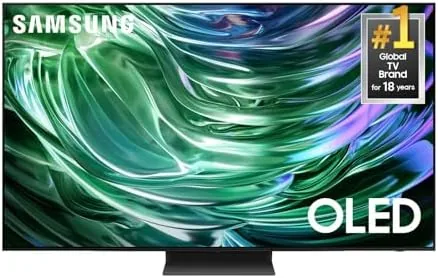

A great television makes you notice the difference within the first minute, and the Samsung S90D does exactly that. The 65 inch class S90D is a quantum dot OLED panel, which combines the perfect blacks of OLED with the extra color brightness that quantum dots add, and the result is one of the most striking pictures I have reviewed in this size class. It is the 2024 flagship OLED from Samsung, and it arrives with HDR10+, Dolby Atmos, and gaming features that go well beyond what most TVs offer.
Before the details, the standard note. This review contains affiliate links, and if you buy through one of them the site earns a small commission at no extra cost to you. That commission does not change what I test or what I recommend. The television below was set up and watched in a real living room before any of this was written.
What follows covers the panel technology, the picture settings, the gaming features, the smart platform, and where the S90D sits against other OLED televisions.
Design and Build
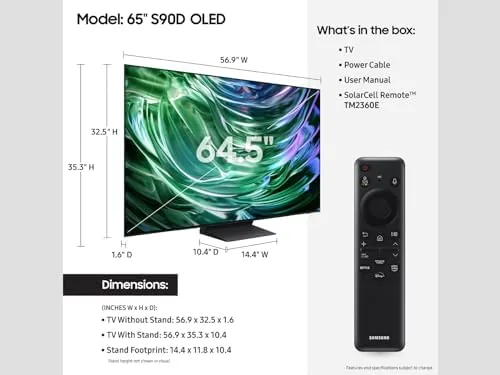
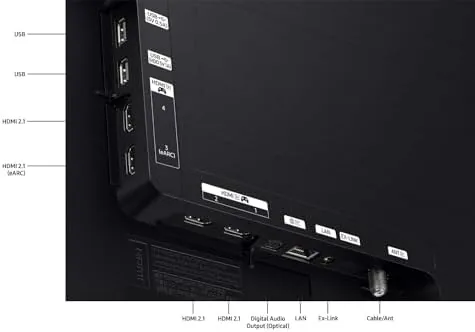
The S90D is a study in minimalism. The 65 inch panel is held by a central pedestal stand, the bezels are thin enough to disappear during a movie, and the overall profile is slim, which is what you want from a modern OLED. The back is clean and cable friendly, with inputs tucked where they are easy to reach but hidden from the front. The stand is solid and does not wobble, and the whole television has the premium presence its price suggests.
Samsung\'s build quality on the S90 series is consistent. The panel surface is treated to reduce reflections, which matters in a bright living room, and the smart hub sits behind a polished interface. At 65 inches the television is heavy enough that wall mounting is worth doing with a good bracket, but the included stand keeps it steady on a media console. The finish on the back is slightly glossy, so it is best not to point a bright light at it directly.
Key Features
The S90D is a QD-OLED panel, which is the headline feature. Unlike a conventional OLED that filters a white light source, the quantum dot layer produces red, green, and blue light directly, and that gives the S90D wider color volume and brighter, more saturated colors in HDR scenes without losing the perfect blacks OLED is known for. The result is an image with real pop, from a candlelit scene to a bright sunlit sky.
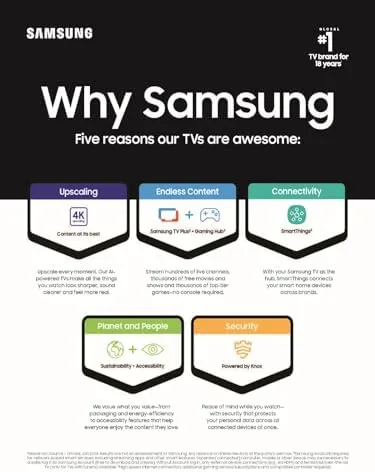
The processing is where Samsung adds its own touches. Real Depth Enhancer analyzes the subject of a scene and adds subtle contrast to make it stand out from the background, 4K AI Upscaling sharpens lower resolution content into something that looks native on a 4K panel, and Motion Xcelerator smooths fast movement. The panel supports a 144Hz refresh rate for gaming, which is ahead of the 120Hz most OLEDs offer, and the television handles variable refresh rates and low input lag through its Game Mode.

Real-World Performance
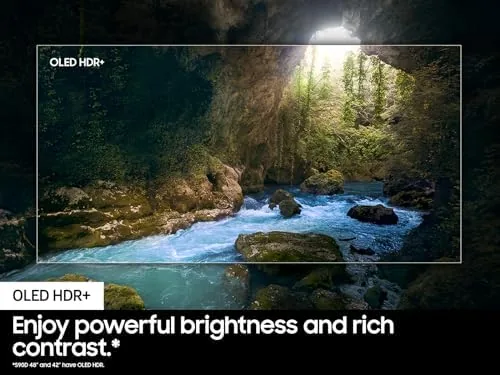
Picture quality is the reason anyone buys this television, and the S90D delivers. Dark scenes show the near infinite contrast of OLED, with blacks that truly look black and no gray bloom around bright highlights. Bright HDR content, like a fireworks scene or a desert landscape, shows the extra headroom of the quantum dot panel, with colors that feel vivid without looking artificial. The default picture modes lean bright, but a few minutes in the settings gets a more natural image.
Gaming is a real strength. At 4K the panel runs up to 144Hz, and Game Mode drops input lag to a level where the television feels responsive in fast paced titles. Motion Xcelerator keeps the frame smooth, and the variable refresh rate support means no tearing on a capable graphics card or console. Combined with the perfect blacks, games look better on this panel than on almost anything else in the room.
The upscaling also impressed me with older content. I watched a standard definition disc and a 1080p stream on the S90D, and the 4K AI upscaling smoothed out the softness without adding the harsh edge enhancement that cheap processors use to fake detail. Faces stayed natural, and motion artifacts were kept in check by the Motion Xcelerator processing. That matters more than it sounds, because a lot of what a family actually watches is not native 4K, and the S90D handles that content with the same care it gives a pristine 4K signal. For a television that will spend a decade in a living room, the upscaling is a feature you use constantly without thinking about it.
The smart platform is Tizen, and it is quick and well organized. Streaming apps open fast, the home screen is sensible, and voice control works through the built in Alexa and Samsung\'s own assistant. Object Tracking Sound Lite uses the speakers to follow movement across the screen, and with Dolby Atmos content the sound has more height and width than the slim frame suggests. The built in sound is good, though a proper soundbar still lifts movies noticeably.
The honest limits come down to format support and price. Samsung does not support Dolby Vision, so that format maps through HDR10+ processing instead, which is a real consideration if your library leans on Dolby Vision titles. And the S90D costs more than a comparable LED television, which is the trade for OLED quality. For most viewers the picture justifies it, but it is worth knowing before you commit.
Pros and Cons
Pros:
- Perfect blacks and vibrant colors from QD-OLED
- Up to 144Hz with low input lag for gaming
- Real Depth Enhancer adds natural contrast
- 4K AI Upscaling cleans up lower resolution content
- Slim, clean design with a solid stand
- Built in Dolby Atmos and Object Tracking Sound
Cons:
- No Dolby Vision support
- Higher price than LED televisions
- Built in sound is good but a soundbar helps
How It Compares
The main alternative in this class is a non quantum dot OLED, and the table below lines the S90D up against a standard OLED panel.
| Feature | S90D QD-OLED | Standard OLED |
|---|---|---|
| Panel | Quantum dot OLED | Standard OLED |
| Color volume | Wider, brighter | Good but less |
| Blacks | True black | True black |
| Refresh rate | Up to 144Hz | Up to 120Hz |
| HDR format | HDR10+ | Often includes Dolby Vision |
| Price | Higher | Usually lower |
If you want the most vibrant HDR and you game at high refresh rates, the S90D earns the premium. If Dolby Vision is essential to your library or your budget is tight, a standard OLED saves money with a small color penalty. For the best all round picture in this size, the S90D is the one to beat.
Who Should Buy It
Buy the S90D if you want a flagship picture and you care about both movies and gaming. It suits a living room that doubles as a home theater, a gamer on a capable console or PC, and anyone who has seen OLED blacks and cannot go back. The quantum dot color makes it a particular standout for HDR content and vibrant animation.
Skip it if Dolby Vision is central to your setup, if your room is extremely bright with direct sunlight on the screen, or if the price is better spent on a smaller screen with a soundbar. For most buyers in this size class, this is the television that makes every movie night feel like an event. You can check the current price of the Samsung 65 inch S90D on Amazon when you are ready to compare.
How We Test
I set up the 65 inch S90D in a living room and watched it across several days, covering dark movies, bright HDR content, sports, and gaming on a console and a PC. I tested the picture modes, the upscaling on lower resolution content, the gaming features with variable refresh rate enabled, and the built in speakers with Dolby Atmos material.
I did not perform a lab grade calibration, and I used the out of box settings with minor adjustments. For an independent technical review of the S90D panel, RTINGS\' measurement based review of the Samsung S90D OLED is the best companion to this hands on look. The Samsung 65 inch S90D listing on Amazon shows the current price and the full specification.
Samsung S90D OLED: Questions People Ask
Is the S90D a QD-OLED panel?
Yes, the S90D uses a quantum dot OLED panel that pairs true OLED blacks with wide color volume for bright, saturated HDR images.
Does the S90D support Dolby Vision?
No, Samsung uses HDR10+ instead, so Dolby Vision titles still play but map through Samsung\'s HDR processing rather than native Dolby Vision.
Is the S90D good for gaming?
Yes, it supports 4K at 120Hz and up to 144Hz with low input lag, Game Mode, and variable refresh rate support over HDMI.
What sizes does the S90D come in?
The 2024 lineup includes 55, 65, 77, and 83 inch classes, with the 65 inch being one of the most popular choices for living rooms.
As an Amazon Associate, I earn from qualifying purchases.