
Competitive gaming mice used to live behind a simple barrier: the best wireless performance cost enough that most players accepted a wire. The Razer Viper V2 Pro Hyperspeed helped tear that barrier down. It pairs an ultra light frame, a flagship Focus Pro 30K optical sensor, and Razer's low latency Hyperspeed Wireless into a mouse that weighs so little it nearly disappears in the hand. This particular unit is a renewed example, which means it carries the same pro grade pedigree at a lower price, along with the honesty of knowing the box has been opened before. I spent three weeks gaming and working with it to judge whether the flagship magic survives the renewed process.
Before the details, the standard note. This article contains affiliate links, and if you buy through one of them the site earns a small commission at no extra cost to you. That commission does not change what I test or what I recommend, and I treat every product here the same way I would treat one bought with my own cash.
Design and Build
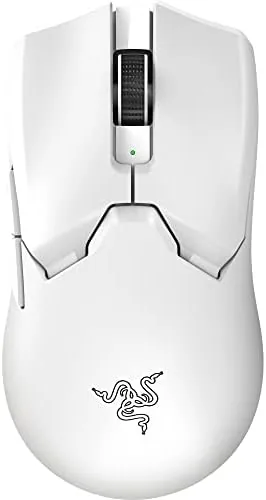
The Viper V2 Pro Hyperspeed has the symmetrical shape that has made the Viper line a staple in esports. It is designed for claw and fingertip grips, with a low profile that keeps the hand low over the desk for rapid flicks and precise corrections. The white finish on this unit is clean and matte, with a subtle grip texture on the sides that stays grippy during long sessions without collecting grime the way rubberized coatings do.

The defining physical trait is the weight. At roughly two ounces, the mouse is among the lightest wireless gaming mice you can buy, and the difference is immediately obvious the first time you lift it. Swiping across the mousepad feels like moving nothing at all, which is exactly what competitive players want, and the lightweight frame never feels flimsy. The shell is rigid, the clicks are crisp, and there is no flex or creaking under pressure.
The renewed condition matters here in a concrete way. My unit arrived with the expected signs of a refurbished product: the box was a generic replacement, and the surface had no major cosmetic damage but showed faint signs of handling. Everything that matters, the buttons, the scroll wheel, the sensor, and the wireless connection, worked as new. The lesson of renewed Razer gear is simple: the internals are what you are buying, and the cosmetics come with small caveats.
Key Features
The Focus Pro 30K optical sensor is the heart of this mouse. It tracks up to 30,000 DPI with 99.8 percent resolution accuracy, and it is tuned to work across glass, fabric, and uneven surfaces without jitter. In practice that means you can lift the mouse, swipe across an unusual surface, and still get reliable tracking, which is the kind of margin that matters in a tournament setting where you cannot swap your mousepad mid-match.

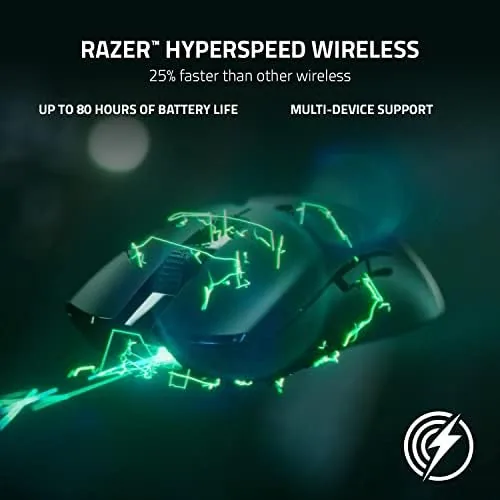
Razer Hyperspeed Wireless is the connection standard that lets this mouse compete with wired latency. It uses a 2.4GHz connection through the included receiver, with Razer's proprietary protocol keeping input lag low enough that even professional players cannot feel the difference from a cable. The mouse also offers a wired mode over USB-C when you need it, and it supports high polling rates for players who want the absolute smoothest tracking on compatible systems.
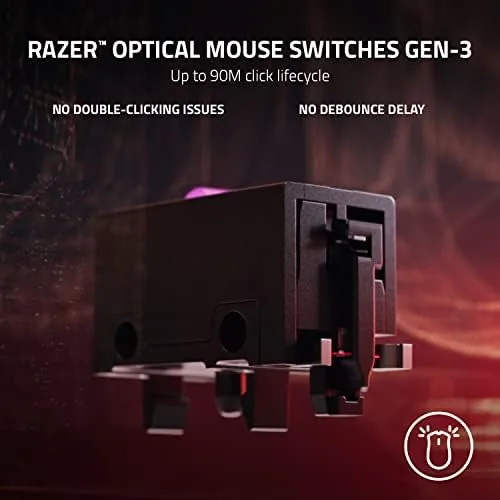
The switch design is a quiet highlight. The mouse uses Razer optical switches, which trigger on light instead of mechanical contacts. That gives them a snappy, defined feel, faster actuation, and a much longer rated lifespan, because there is no metal contact to wear down. Combined with the light frame and the precise sensor, the whole package is engineered around one goal: moving the cursor exactly where you intend, as fast as you can think.
Real-World Performance
In three weeks of competitive shooters, the Viper V2 Pro Hyperspeed performed exactly as its reputation promises. The light weight made flick shots feel effortless, the optical switches registered every click instantly, and the Hyperspeed wireless connection never dropped or stuttered once, even in sessions with heavy wireless traffic from a keyboard, headset, and phone nearby. I could not tell I was playing on a wireless mouse, which is the highest compliment the connection can receive.
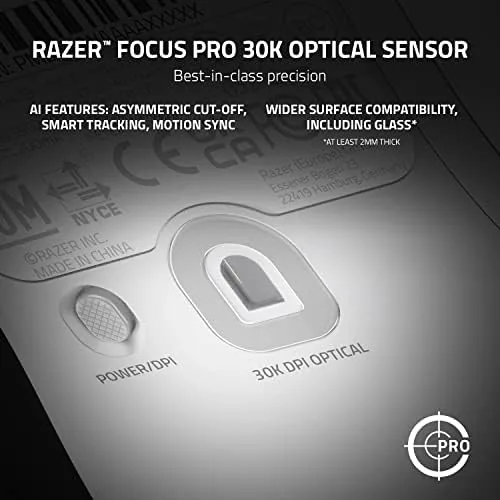
The sensor's accuracy shows up in the details. Tracking felt stable across a cloth pad and a hard pad, with no spinouts during fast movements, and the DPI steps in Razer Synapse let me dial in a sensitivity that transferred cleanly between games. Battery life comfortably covered days of play between charges, and the USB-C charging cable doubled as the wired mode cable, so I was never left waiting for the mouse to top up.
The honest trade offs come from the esports focused design. There is no RGB lighting, which is a deliberate weight saving, and the symmetrical shape has only two side buttons on the left side, which will not suit left handed players looking for mirrored buttons. The mouse is also relatively low, so palm grippers with large hands may find it small. For claw and fingertip players, these are non issues; for everyone else, they are worth knowing before you commit.
Pros and Cons
Pros:
- Ultra light frame that disappears in the hand
- Flagship Focus Pro 30K optical sensor
- Low latency Hyperspeed wireless, indistinguishable from wired
- Crisp optical switches with a long rated lifespan
- Renewed price makes pro grade performance affordable
Cons:
- No RGB lighting, to save weight
- Left side only side buttons, for right handed use
- Low profile shape suits claw and fingertip grips best
- Renewed units may carry cosmetic blemishes
How It Compares
The Viper V2 Pro Hyperspeed sits among the elite ultra light wireless mice, and the comparison usually turns on weight, sensor, and price. Here is how it stacks up against the main rivals in the category.
| Feature | Razer Viper V2 Pro | Logitech G Pro X | Pulsar X2 | Budget wireless mouse |
|---|---|---|---|---|
| Weight | About 2 oz | About 2.5 oz | About 2 oz | About 3.5 oz |
| Sensor | Focus Pro 30K | Hero 2 | PAW3395 | Basic optical |
| Wireless tech | Hyperspeed | Lightspeed | 2.4GHz | Bluetooth or 2.4GHz |
| Switch type | Optical | Optical | Optical | Mechanical |
| Typical price | Mid | Mid to high | Mid | Lowest |
The Logitech G Pro X is a direct rival with similar weight and a slightly different shape, the Pulsar X2 undercuts on price with comparable internals, and a budget wireless mouse saves money but brings noticeable weight and less responsive sensors. The Viper V2 Pro Hyperspeed lands squarely in the competitive tier, and the renewed pricing makes it a genuine bargain against all of them for players who want tournament grade performance without the new retail premium.
Who Should Buy It
The renewed Viper V2 Pro Hyperspeed is for competitive players who want a pro grade wireless mouse without paying flagship retail. It suits FPS and esports players, claw and fingertip grippers, and anyone who has been holding onto a heavier wireless mouse and wants to feel the difference a two ounce frame makes. The renewed price also makes it a smart pick for a first serious gaming mouse, because the performance is the flagship experience at a friendlier cost.
Skip it if you prefer a palm grip with a fuller mouse, if you are left handed and need mirrored buttons, or if the caveats of a renewed unit, like a plain replacement box and possible cosmetic marks, would bother you. For everyone else, this is the lightest, fastest way to upgrade your aim at a price that makes the pro tier feel reachable. You can check the current Razer Viper V2 Pro Hyperspeed price on Amazon when you are ready to buy.
How We Test
I used the renewed Viper V2 Pro Hyperspeed as my primary gaming mouse for three weeks, playing a mix of competitive shooters and slower strategy titles. I focused on the properties that matter to competitive players: weight, click response, tracking accuracy, and wireless reliability.
I tested the sensor across cloth and hard surfaces at multiple DPI settings, pushed the wireless connection through sessions surrounded by other 2.4GHz devices, and measured how long the battery lasted between charges. I also inspected the renewed unit closely for wear, cosmetic damage, and any sign that the refurbishment had affected the buttons, scroll wheel, or shell.
For an independent and detailed assessment of this mouse, Tom's Guide's Razer Viper V2 Pro review is a solid read before you buy. My own verdict after three weeks is that this renewed unit delivered the full flagship experience, with the honest caveats that come with any refurbished product.
The Razer Viper V2 Pro Hyperspeed listing on Amazon shows the current price and the condition details.
Razer Viper V2 Pro Hyperspeed: Questions People Ask
Is the Razer Viper V2 Pro Hyperspeed wireless reliable?
Yes. The mouse uses Razer Hyperspeed Wireless, which provides low latency, reliable connectivity with no noticeable input delay in competitive play.
What sensor is inside the Razer Viper V2 Pro Hyperspeed?
The mouse uses the Razer Focus Pro 30K optical sensor, which tracks precise movement across a wide range of surfaces and sensitivities.
What does renewed mean for this Razer mouse?
Renewed means the mouse was inspected, tested, and refurbished to work like new, often with cosmetic blemishes, and it is typically offered at a lower price than the new unit.
Is the Razer Viper V2 Pro Hyperspeed worth buying renewed?
Yes, if the lower price matters to you and the unit passes inspection. It is a pro grade mouse, but renewed condition means you should check the unit when it arrives.
As an Amazon Associate, I earn from qualifying purchases.