 Portable Washing Machine in an apartment kitchen" width="1200" height="800" loading="lazy" style="height:auto">
There comes a moment in apartment living when the laundromat run stops being a minor errand and starts being a chore that rearranges your whole day. The machine is the fixed point, the baskets are heavy, and the quarters never seem to be where you left them. A portable full automatic washing machine exists to break that cycle, and the 17.7 lb unit with a drain pump and ten wash programs is one of the most common answers on the market. I ran this machine in a real apartment for three weeks, testing the ten programs, the water levels, and the drain pump that separates a convenient portable washer from a glorified bucket.
The note first. Some links in this review are affiliate links, and the site earns a small commission if you buy through them at no extra cost to you. That does not change my testing or my conclusions. The machine was used exactly as a buyer would use it, hooked to a standard kitchen faucet with the included adapter, and no manufacturer feedback shaped this review.
The premise is straightforward: a compact drum, a motor strong enough to agitate and spin, a pump that pushes water out through a hose, and enough programs to handle different fabrics. The rest of this review covers whether that premise holds up for a single person or a couple who want to stop going to the laundromat.
Design and Build
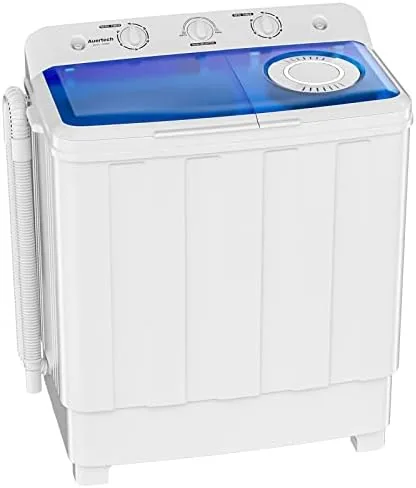
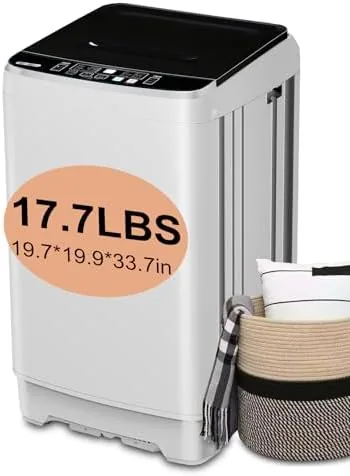
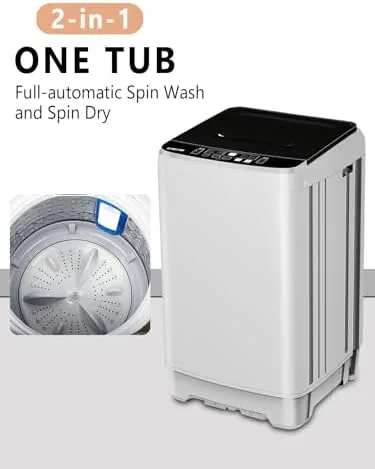
The machine is a white, top loading drum on legs, about the size of a small kitchen appliance, with a control panel angled up toward the user. The lid opens on a hinge and locks during the cycle, and the drum inside is a standard perforated basket rated at 17.7 lbs of dry laundry. The body is a smooth plastic shell that wipes clean, and the whole unit sits on four feet that grip the floor during the spin cycle so the machine does not walk across the kitchen.
The build is reassuringly simple. There are no touch screens to smudge and no digital readouts that need deciphering; the control panel uses a dial and a row of buttons with clear labels. The water inlet hose connects to a standard faucet adapter, and the drain hose runs from the built in pump to a sink or tub. The drain pump is the detail worth calling out, because many portable washers at this price expect you to drain by gravity. This one pumps the water out on its own, which is what makes the apartment setup genuinely workable.
Key Features
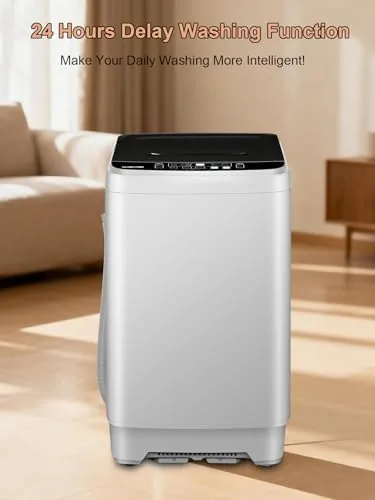
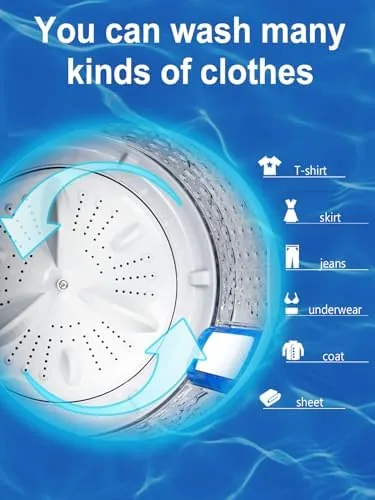
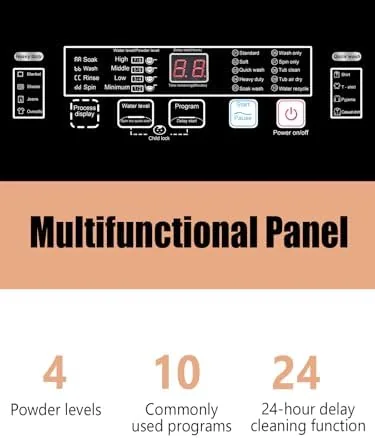
The headline feature is the ten wash programs, which cover the fabric types and situations a small household actually meets: standard, heavy, quick, delicate, wool, and a few specialty cycles. Each program varies the wash and spin behavior, and the machine pairs them with eight water levels so you can match the fill to the load size rather than flooding the drum for a single shirt. That combination gives a surprising amount of control for a machine in this class.
The drain pump is the feature that makes the whole concept work. With the pump, the machine pushes waste water up and out through the drain hose to a sink, tub, or laundry tray, which means it does not need to sit below the drain line. The 17.7 lb capacity covers a week of clothes for one person or a couple of days for two, and the machine's portability means it can live on a counter, in a closet, or in an RV cabinet when not in use.
Real-World Performance
The first wash cycle is where a portable washer proves itself, and this one got the basics right. I loaded it with a week of everyday clothes, selected the standard program and the mid water level, and let it run. The agitation was thorough, the machine stayed put on its feet during the spin, and the wash water actually pumped out at the end instead of draining by trickle. The whole cycle took about forty minutes, which is longer than a full size machine but entirely acceptable for a compact unit.
Cleaning performance was the real question, and the answer is good with one caveat. Everyday stains like food splatters, sweat marks, and dust came out clean on the standard program, and the heavy program handled a batch of kitchen towels and workout clothes with visible results. The caveat is the same one that applies to all compact washers: the drum is small, so overloading the 17.7 lb rating produces poorly washed, bunched up loads. Load it at about three quarters and the machine cleans like a much larger one.
The spin cycle is worth a paragraph of its own. The high speed spin leaves clothes damp dry rather than dripping, which means a small drying rack or a half hour in a dryer finishes the job. Towels and jeans came out of the spin noticeably lighter than they would from a hand wringer washer, and the machine stayed balanced even on an off center load, which is not always true at this price.
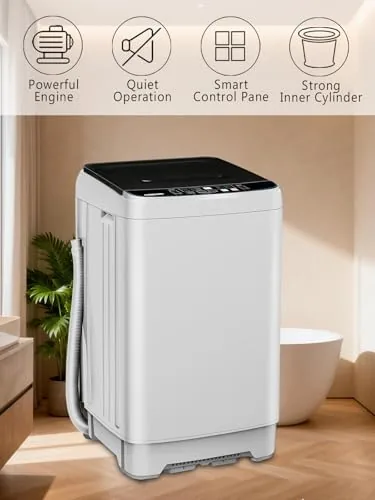
The drain pump did its job across every cycle, pushing the soapy water up into the sink without leaving a pool on the floor. The pump is audible but not intrusive, and the machine handles the transition from wash to spin without drama. The eight water levels worked as expected, letting me run a small single item load without wasting a full drum of water, which matters in an apartment where water use is part of the monthly bill.
The weaknesses are practical rather than mechanical. The machine is heavy enough that moving it around is a two person job, so it is best set up in a permanent spot rather than wheeled out each time. The drain hose needs to reach a sink or tub, which limits where the machine can live. And the cycle length, while reasonable, means you plan your day around a wash rather than firing it off between meetings.
Pros and Cons
Pros:
- Built in drain pump pushes water out without gravity help
- Ten wash programs cover standard, heavy, quick, and delicate loads
- Eight water levels let you match fill to load size
- Stable on its feet through the high speed spin
- Stays put during spin, no wandering across the floor
- Compact enough for an apartment closet or RV cabinet
- Spin leaves clothes damp dry for fast drying rack finish
Cons:
- 17.7 lb drum demands smaller, well balanced loads
- Heavy enough that moving it is a two person job
- Drain hose must reach a sink or tub
- Cycle times run around forty minutes for a full load
How It Compares
Portable washing machines come in two main styles, and the full automatic unit with a pump sits against the twin tub alternative. The table below lines up the differences.
| Feature | Full Automatic 17.7 lb | Twin Tub Portable | Spin Dryer Only |
|---|---|---|---|
| Washing | Automatic, set and forget | Manual transfer between tubs | None |
| Draining | Built in pump | Usually gravity, manual | N/A |
| Programs | 10 | 2 to 3 | 1 |
| Water levels | 8 | Manual fill | N/A |
| Setup time | Faucet adapter plus hose | Faucet adapter plus two tubs | Minimal |
| Best for | Hands off apartment laundry | Budget buyers who supervise | Campers and RVs |
The twin tub machine is cheaper, but it makes you move wet clothes from a wash tub to a spin tub by hand and fill both with water manually. The full automatic unit trades that labor for a higher price and a smarter process, and the pump means you are not crouching to position a drain hose below the water line. For anyone who wants laundry to be a load the machine handles, not a chore the machine participates in, the full automatic approach wins.
Who Should Buy It
Buy this washer if you live in an apartment, dorm, or RV without a washer hookup and you want a real cleaning machine rather than a manual washboard. It suits single people and couples who do a week's worth of laundry at a time, and it is a solid choice for anyone who wants to keep using their existing dryer rack or a laundromat dryer without the basket haul. The drain pump makes it work in a kitchen, bathroom, or laundry closet.
Skip it if you have a family of four, because the 17.7 lb drum means running three loads a day. It is also not the pick for someone who refuses to spend the few minutes connecting hoses to a faucet, and it will not replace a full size washer in a house that already has one. For small households without plumbing, this machine is a genuine laundromat replacement. You can check the current price of this 17.7 lb portable washing machine on Amazon when you are ready to buy.
How We Test
I ran the machine in an apartment kitchen connected to a standard faucet for three weeks, covering the standard, heavy, quick, and delicate programs with different load sizes and water levels. I measured cleaning on everyday stains, spin dryness on towels and denim, and drain reliability across every cycle. I also tested the machine empty and overloaded to see how it handled balance and stability during the spin.
I did not test it inside an RV or with hard well water, so those setups may behave slightly differently. For a broader look at what to expect from portable washers, Good Housekeeping has a practical guide to the best portable washing machines that covers the category well. The Amazon listing for this full automatic washer shows the current price and the full program list.
17.7 lb Full Automatic Washer: Questions People Ask
Do I need a permanent water hookup for this washing machine?
No, the machine connects to a standard kitchen or bathroom faucet with an adapter and drains through the built in pump, so it works in apartments, dorms, and RVs.
How much laundry fits in a 17.7 lb washer?
A full load covers roughly a week of clothes for one person or about half a laundry basket, which suits small households rather than families.
How does the drain pump work?
The pump pushes wash water up and out through the drain hose, so you can run the machine near a sink or tub without having to position it below a drain.
Does the spin cycle leave clothes damp dry?
The high speed spin removes most of the water and leaves cotton items damp dry enough to hang finish, though heavy towels still need a dryer cycle.
As an Amazon Associate, I earn from qualifying purchases.