
Color variants of a great controller are usually a simple exercise in marketing. The hardware stays the same, a new shade hits the shelf, and anyone who already owns the original has no reason to look twice. The Starlight Blue DualSense is that kind of release, but it is also a reminder of why the base controller is worth discussing at all. Sony took the white DualSense that shipped with the PS5, swapped the shell for a soft, light blue, and left everything else untouched. That is exactly what I expected, and it is exactly what makes this variant easy to recommend to someone buying their first DualSense or looking for a fresh look in their setup. This review covers the finish, the features, the real-world performance, and whether Starlight Blue earns a place on your shelf.
One housekeeping note before the review. This article includes affiliate links, and purchases made through them support the site at no extra cost to you. My opinions are based on hands-on testing rather than commissions. You can check the current Starlight Blue DualSense price on Amazon if you want to shop around.
Design and Build
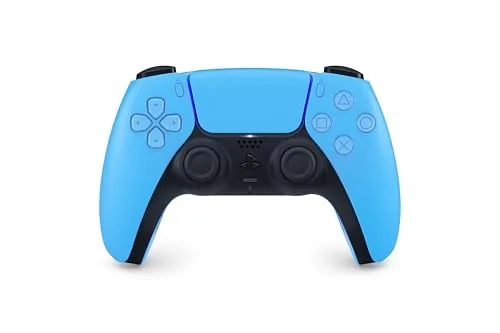
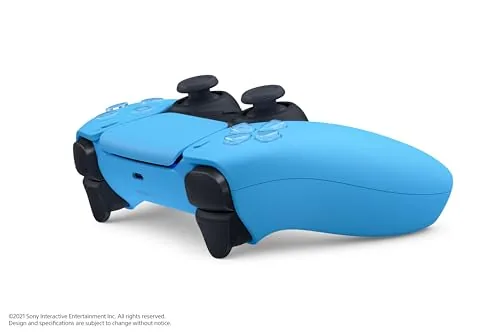
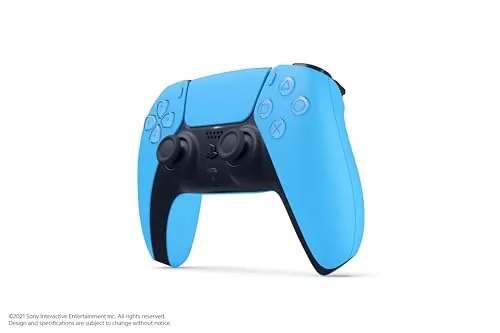
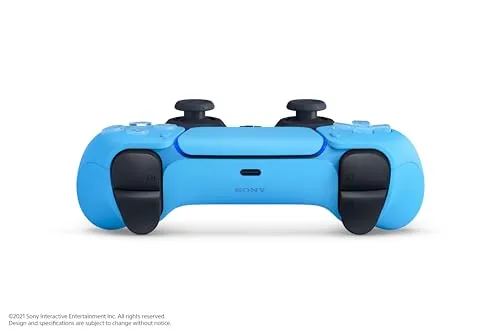
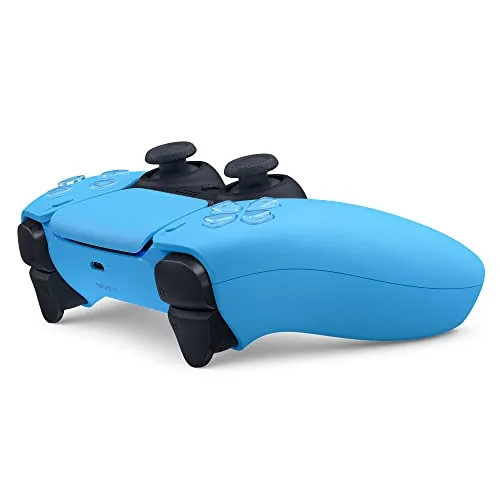
Starlight Blue is a pale, almost powder blue that sits between the stark white of the launch model and the bolder colors in Sony\'s catalog. It reads as calm and slightly retro, a color that feels at home in a bright living room or a tidy desk setup. The face of the controller carries the blue, while the grips and the button cluster stay dark, and that two-tone treatment gives the pad a layered, premium look. The light bar on the rim of the touchpad glows against the soft blue shell and looks especially sharp in a dim room.
The finish is matte across the entire body, which keeps fingerprints to a minimum and gives the controller a soft, grippy texture. I noticed a few light smudges after heavy sessions, but they wiped off instantly and never built up into the glossy mess you get with the white model. Build quality matches the standard DualSense exactly: dense plastic with no creaks, crisp face buttons, smooth sticks, and a touchpad that clicks cleanly. Sony\'s manufacturing consistency across colorways is impressive, because this pad feels identical in the hand to the launch unit I still own.
Ergonomics are unchanged, which means excellent. The controller is larger than a DualShock 4 with deep, well-rounded grips, the weight of about 280 grams keeps it planted in your palms, and the asymmetrical sticks and shallow d-pad follow the layout modern players expect. Whether you are holding it for a quick session or an all-day marathon, the Starlight Blue pad sits comfortably and stays put.
Key Features
Under the blue shell, this is the complete DualSense feature set. The centerpiece remains haptic feedback, delivered by two linear actuators that replace the traditional rumble motor. Instead of a constant shake, the controller produces layered sensations: the patter of rain, the grit of gravel, the thud of a heavy landing. Games built for the PS5 use these effects thoughtfully, and even ports benefit from the improved feedback.
The adaptive triggers round out the flagship experience. Motors inside the L2 and R2 buttons generate variable resistance, so the right trigger can grow heavier as you aim, a bowstring can build tension as you draw, and a brake pedal can press back against your finger in a racing game. These effects feel physical rather than cosmetic, and they remain the clearest reason to choose a DualSense over most rivals.
Everything else carries over as well. The built-in microphone and speaker support headset-free chat, the Create button replaces the old Share button for captures, and the touchpad doubles as a clickable surface and a mouse when connected to a PC or Mac. Motion sensing via gyroscope and accelerometer covers tilt controls, the USB-C port handles charging and wired play, and the 3.5 millimeter jack passes audio to a headset. Battery life sits at roughly ten to twelve hours with haptics and triggers enabled.
Real-World Performance
I rotated the Starlight Blue DualSense into my daily rotation for several weeks, and it performed exactly as the standard model does, which is to say very well. On a PS5, first-party titles delivered the full haptic and trigger experience, and the controller maintained a stable connection with no dropped inputs during long sessions. The light blue shell drew compliments from guests, which is a small delight that no spec sheet can capture.
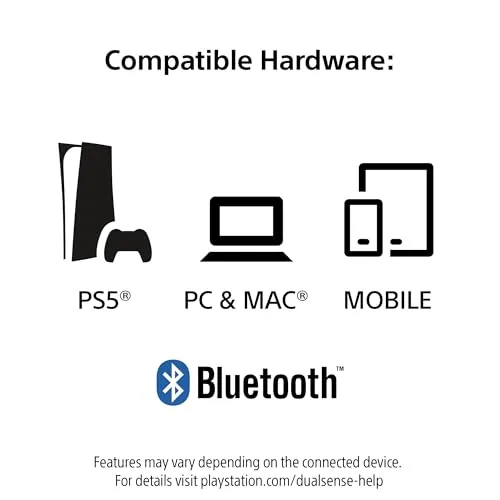
Cross-platform use is a strong suit. On a Windows PC, the pad paired over Bluetooth instantly, Steam recognized it without configuration, and the touchpad worked as a mouse on the desktop. On a Mac, pairing was painless and the controller worked in every title I launched. On an Android phone, it connected over Bluetooth and handled both streaming and native games with low latency, which makes it a solid companion for cloud gaming. Native haptic and trigger support on PC depends on the game, but the controller itself always functions correctly.
The weaknesses are the same ones I found on every DualSense. Battery life of ten to twelve hours trails several competitors, and the microphone, while usable in a quiet room, picks up background noise that a headset would filter out. Neither issue is a dealbreaker, but both are worth knowing before you commit.
Pros and Cons
Pros:
- Soft, appealing Starlight Blue finish
- Identical performance to the standard DualSense
- Excellent haptic feedback and adaptive triggers
- Comfortable, well-built shell for long sessions
- Works across PS5, PC, Mac, and Android
- Matte texture keeps fingerprints mostly at bay
Cons:
- Battery life remains modest at ten to twelve hours
- Color adds no functional difference
- May not suit setups that prefer neutral tones
How It Compares
Starlight Blue sits in the same segment as the other DualSense colors, the DualSense Edge, and the Xbox Wireless Controller. Since every DualSense shares the same internals, the comparison focuses on finish, price, and where each pad fits best.
| Feature | Starlight Blue DualSense | Midnight Black DualSense | DualSense Edge |
|---|---|---|---|
| Shell finish | Matte light blue | Matte dark black | Matte white |
| Haptic feedback | Yes | Yes | Yes |
| Adaptive triggers | Yes | Yes | Yes |
| Rear paddles | No | No | Yes |
| Battery life | 10-12 hours | 10-12 hours | 6-8 hours |
| Price tier | Mainstream | Mainstream | Premium |
Between the standard white, Midnight Black, and Starlight Blue, the choice is purely visual, because the hardware is identical. Starlight Blue stands out the most of the three, which is a plus if you want your gear to feel personal and a minor issue if you prefer subtle hardware. The Edge remains the pick for competitive players who want back buttons, while the standard colorways are the sensible choice for everyone else.
Who Should Buy It
Starlight Blue is for the buyer who wants the best-feeling mainstream controller on the market with a color that does not look like everyone else\'s. It suits PS5 owners, PC players who want haptics and adaptive triggers in supported games, and anyone building a controller setup around a brighter, more playful aesthetic.
If you already own any DualSense, Starlight Blue only makes sense when you genuinely want the color, because the performance is identical. If you need longer battery life or a smaller pad, other options serve you better. For everyone else, this is a lovely version of a proven controller, and you can find the Starlight Blue DualSense on Amazon to compare current pricing.
How We Test
I tested the Starlight Blue DualSense over several weeks across a PS5, a Windows PC, a Mac, and an Android phone. On the PS5 I played first-party titles that showcase haptics and adaptive triggers, plus shooters, racers, and platformers for general comfort and input consistency. On the PC and Mac I confirmed Bluetooth pairing, Steam recognition, touchpad-as-mouse behavior, and game compatibility, and on Android I tested streaming and native titles over Bluetooth. I measured battery life across multiple charge cycles and checked the microphone in quiet and noisy environments.
For independent perspective, coverage from PCMag on the DualSense lineup has consistently praised the haptics and build quality, and my weeks of testing point to the same strengths and the same battery trade-off.
DualSense Starlight Blue Controller: Questions People Ask
Is the Starlight Blue color a limited edition?
The Starlight Blue shell is part of Sony\'s standard color lineup rather than a short-run exclusive, so availability has been steady since launch.
Does the light blue finish show dirt and fingerprints?
The matte Starlight Blue surface hides prints better than glossy white, though light smudges can appear with heavy use and wipe off easily.
Are the features identical to the white DualSense?
Yes, the Starlight Blue controller has the same haptics, adaptive triggers, microphone, and touchpad, so the only difference is the shell color.
Does the Starlight Blue controller work wirelessly with a Steam Deck?
It pairs over Bluetooth and works with Steam Deck input, though adaptive triggers and haptics depend on the game and its controller support.
As an Amazon Associate, I earn from qualifying purchases.