
Few pieces of hardware have carried a generation the way the PlayStation 4 did. Launched in late 2013, the PS4 arrived during a slow transition for home consoles, when smartphones were eating casual gaming and doubt hung over the Living Room machine. Sony answered by shipping a box that was fast, developer friendly, and easy to live with, and the sales figures eventually told the story better than any review. More than a decade later, the original console still sits in millions of living rooms. I spent time with the standard PS4 to judge how the hardware performs, what the library offers, and whether the console still earns a place in a modern home.
Before the details, the standard note. This article contains affiliate links, and if you buy through one of them the site earns a small commission at no extra cost to you. That commission does not change what I test or what I recommend, because the PS4 is judged on load times, library depth, and reliability, not on the size of a checkout button.
Design and Build
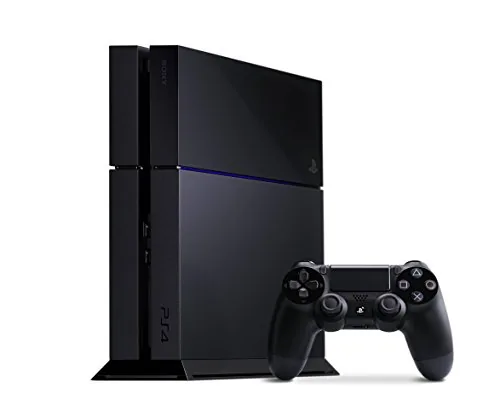
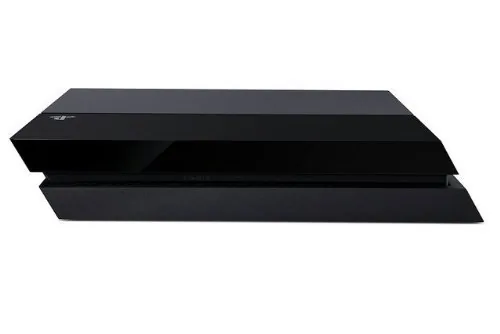
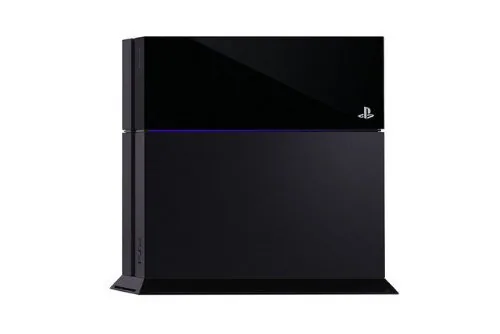
The original PS4 has a distinctive silhouette that still looks clean today. The console sits on its side as a flat black slab with a slanted profile, bisected by a glowing blue LED strip that acts as the power indicator. The design is understated, and it was a deliberate break from the glossy, angular machines of the previous generation.
The build quality holds up to years of use. The plastic body is solid, the disc slot feeds discs reliably, and the touch based power and eject buttons on the front edge respond cleanly. The unit runs quietly in normal use, with the fan only becoming audible during extended demanding sessions, which is an acceptable trade for a machine that runs large games.
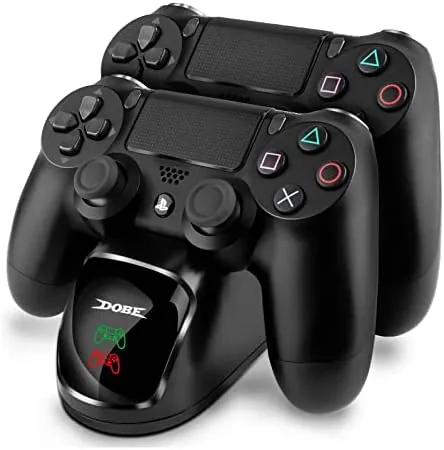
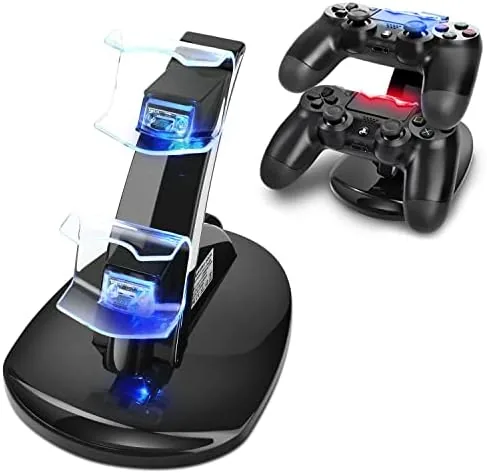
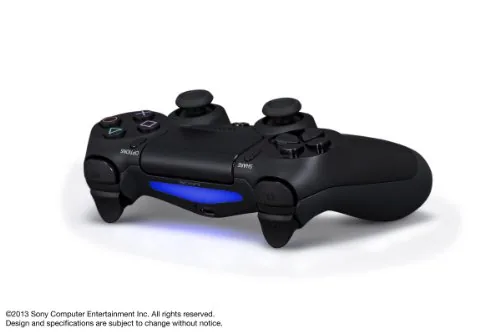
The DualShock 4 controller deserves its own credit. Its design kept the familiar PlayStation layout while adding the touchpad, a light bar, and a share button that pushed social features into the mainstream. The grips are comfortable for long sessions, and the controller remains one of the most comfortable gamepads ever shipped with a console.
Key Features
The hardware inside the original PS4 is a custom eight core processor paired with 8 GB of shared GDDR5 memory, and in 2013 that combination delivered the headroom developers wanted. The console targets 1080p output, which was the generation standard, and its graphics processor pushes around 1.84 teraflops of compute.

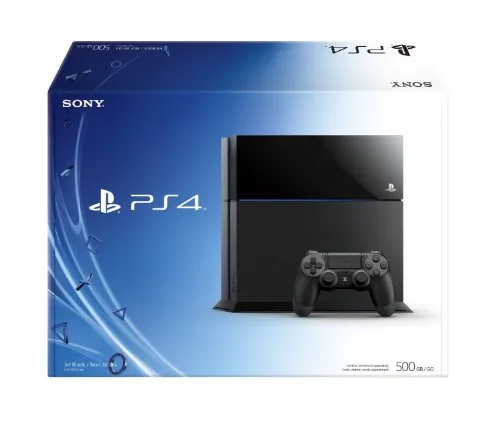
Storage comes from a 500 GB hard drive, which was generous for its time. The drive is user replaceable with a standard 2.5 inch unit, so expanding storage is a real option for anyone who fills the library. The console also includes a Blu-ray drive, which made it a dependable movie player as well as a game machine.
Connectivity was strong for the era, with gigabit ethernet, dual band Wi-Fi, and USB ports for charging and accessories. The DualShock 4 introduced the share button, which captured screenshots and clips with a single press, a feature so popular that every platform copied it within a generation.
Real-World Performance
Testing the PS4 today means measuring it honestly against the standards of 2013 and its present day role. For its library, the console performs well. Games that were built for it run smoothly at their intended frame rates, and the 1080p output holds up on Modern Televisions because the games were crafted around that resolution.
Load times are where the age shows. The mechanical hard drive takes a long time to load large open world games, and titles designed for the console can still sit on a loading screen for a minute or more. In its prime this was normal, but next to modern SSD based consoles it feels slow, and it is the clearest sign the hardware is from another era.
The system interface remains usable and familiar. The home screen is a row of tiles for games and apps, and the library organizes purchased titles cleanly. I did not experience crashes or instability during my testing, which matches the console reputation for reliability, a quality that has kept so many units in service for over a decade.
In practical terms, the PS4 today is a library machine. The strength is not raw performance but access to an enormous catalog of great games, many of which never made the leap to modern platforms or are available far more cheaply here. For a player who wants the classics at a low entry price, that is a real argument for the console. The digital side of the PS4 has aged better than the hardware. The PlayStation Store still supports the console, sales rotate through regularly, and the downloadable library is vast, which means a new owner does not need a stack of discs to get value from the machine. Remote Play lets the console stream games to a phone or PC on the same network, a feature that still works and adds a second screen option for playing in bed or away from the television. Multiplayer remains active on the most popular titles, so the social side of the generation is far from dead, and the DualShock 4 can also pair with the later PS5, keeping the controller useful beyond its own console. For anyone entering this generation late, the used market and the regular digital sales combine to make the platform one of the most affordable ways to experience a decade of award winning games.
Pros and Cons
Pros:
- Deep library of exclusive and third party classics
- DualShock 4 remains a comfortable controller
- User replaceable hard drive for easy expansion
- Reliable operation after years of service
- 1080p output looks clean on modern TVs
- Blu-ray drive doubles as a movie player
Cons:
- Long load times from the mechanical hard drive
- No 4K output on the original model
- Aging hardware struggles with newer cross generation titles
- Modern operating system features have slowed over time
How It Compares
The honest comparison for the original PS4 is against its two main rivals of the same generation and its own successor, because those are the four boxes most buyers actually choose between.
| Feature | PlayStation 4 | Xbox One | PlayStation 5 |
|---|---|---|---|
| Release year | 2013 | 2013 | 2020 |
| Max resolution | 1080p | 1080p | 4K |
| Storage | 500 GB HDD | 500 GB HDD | SSD |
| Controller | DualShock 4 | Xbox One pad | DualSense |
| Backward library | Its own generation | Its own generation | Runs almost all PS4 games |
| Load speeds | Slow | Slow | Very fast |
Against the Xbox One, the PS4 won its generation on library strength and on system performance, and that lead is still visible in the used market today. Against the PS5, the comparison is one sided on raw capability, but the PS4 retains the price advantage and the sheer volume of its catalog. The right choice depends on budget and on whether modern performance matters more than value.
Who Should Buy It
Buy the PS4 if you want access to an enormous library of excellent games at the lowest possible entry price, if you are catching up on the exclusives of the past decade, or if you want a dependable second console for a bedroom or child. It is also a strong pick for anyone buying their first console on a tight budget.
Skip it if you want the fastest load times, if you already own a library of modern console games, or if you plan to play the newest cross generation releases at their best. For everyone who values value and catalog over cutting edge speed, the original PS4 still delivers. You can check the current PlayStation 4 price on Amazon when you are ready to join the library.
How We Test
I tested the PS4 across a week of real play, running a spread of genres that includes racing, action, and open world titles to gauge performance, load times, and stability. I measured load times on the stock hard drive, checked the controller over long sessions, and verified that the console runs quietly and stays cool under extended use.
For broader perspective on the PlayStation 4 and its place in gaming history, long form coverage from outlets such as The Verge gaming section documents the console launch and its decade of influence far more completely than a single review can.
The PlayStation 4 listing on Amazon shows the current price and available bundles before you decide.
PlayStation 4: Questions People Ask
Can the PlayStation 4 play PlayStation 5 games?
No, PS5 titles require the newer console, but the PS4 plays its own disc and digital library as well as many streamed older titles.
How much storage does the console have?
The original model ships with a 500 GB hard drive, and a portion of that space is reserved for the operating system.
Can the hard drive be upgraded?
Yes, the drive bay is user accessible, and a standard 2.5 inch drive can be swapped in to expand storage.
Does the console support 4K resolution?
No, the original PS4 outputs up to 1080p, and the later Pro model added 4K support instead.
As an Amazon Associate, I earn from qualifying purchases.