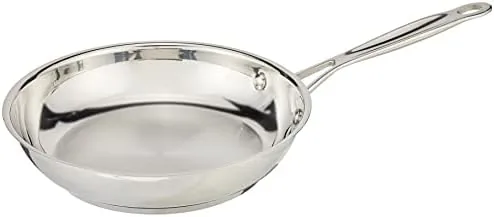

Some of the best cooking in a kitchen happens in the smallest pans. A single fried egg, a quick sauté of mushrooms, a pair of pancakes, a personal size omelet, a fillet of fish, these are all jobs that a big pan makes awkward and a small one makes easy. The Cuisinart 8-inch open skillet, the stainless steel version with the encapsulated base, is built for those jobs, and it has been a mainstay of kitchen stores for years because it does them without drama. I used mine every day for a month, from first eggs in the morning to seared fish at night, and this review is the record of what it did well and where its limits sit.
Before the details, the standard note. This article contains affiliate links, and if you buy through one of them the site earns a small commission at no extra cost to you. That commission does not change what I test or what I recommend.
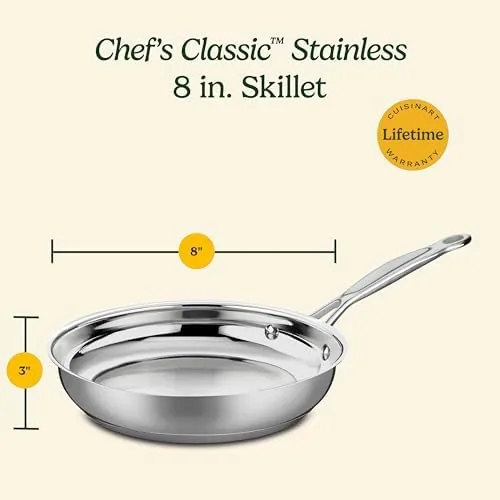
The skillet is an 18/10 stainless steel pan with an aluminum core encapsulated in the base, which spreads heat evenly across the cooking surface and prevents the hot center that plagues cheap pans. It has no lid, hence the open in the name, and a single long handle riveted on with two solid joints. At 8 inches across, it is the smallest full size pan in Cuisinart's stainless line, sized for one or two portions, and it is the pan you reach for when the task does not need a 12 inch surface.
Design and Build
The first impression is weight and stability. The encapsulated base gives the pan a low, heavy center of gravity, so it sits flat on the burner and does not tip when you tilt it. The stainless steel is polished on the outside and brushed on the cooking surface, which is a thoughtful detail, because the brushed interior hides the fine scratches that metal utensils leave over time.
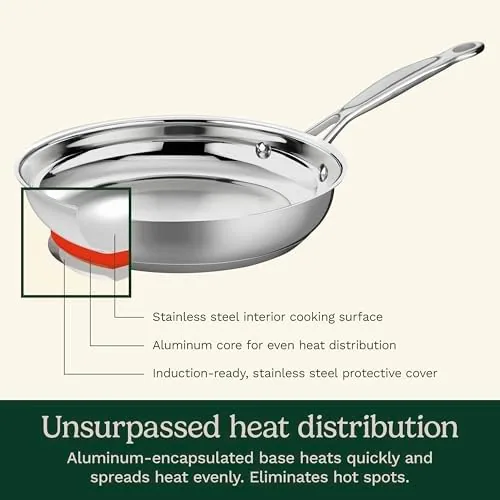
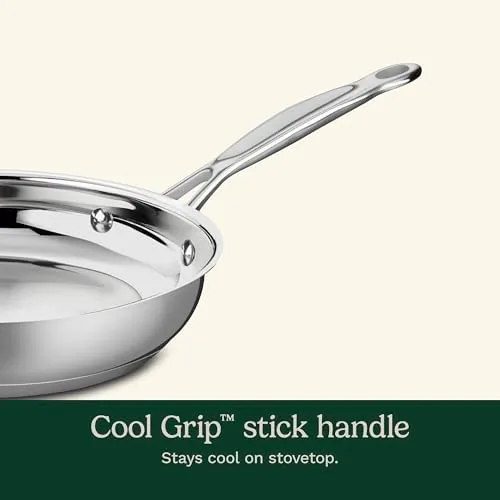
The handle is the second thing you notice. It is a double riveted stay cool handle, the same Cool Grip design Cuisinart uses across its stainless line, and it stays noticeably cooler than the pan body during cooking. After a month of daily use, the rivets remained tight and the handle never loosened, even after the pan spent time in the oven at high heat. The balance is good enough that you can flip A Small Pancake with one hand, though the weight means you will usually use both for anything heavier.
Build quality held up through the whole month. I used the pan on gas and electric, moved it to the oven, and ran it through the dishwasher, and the base stayed flat, the surface stayed smooth, and the rivets stayed firm. There is a mild learning curve to stainless steel that I will cover in performance, but the pan itself is built like a tool that is meant to last for years rather than a season.
Key Features
The encapsulated aluminum base is the defining feature. It pulls heat from the burner and spreads it across the full 8 inch surface, so the edges cook at nearly the same rate as the center. That even heating is what lets the pan sear a fish fillet with a proper crust or cook a pancake evenly, and it is the feature that separates this pan from the thin stainless skillets that scorch in the middle.
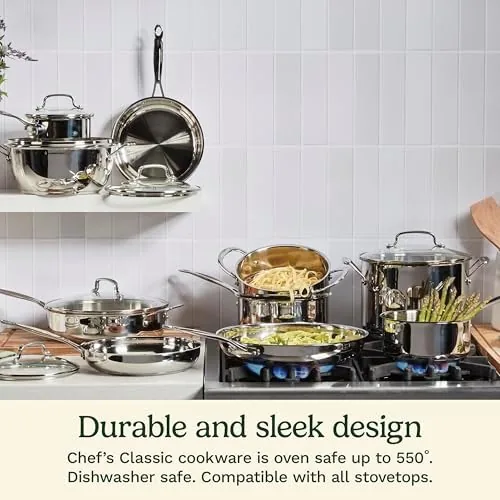
Two ratings expand the pan beyond the stovetop. It is oven safe to 550 degrees Fahrenheit, which means you can sear a pork chop or fish fillet on the burner and slide the whole pan into the oven to finish, without transferring to another dish. It is also induction compatible, so it works on the magnetic cooktops in newer kitchens, along with gas, electric, and glass stoves. For a small pan, that flexibility is a real advantage.
The open design keeps things simple. Without a lid or a second handle, there are no extra parts to store, and the single handle means it stacks easily with other skillets. The polished exterior wipes clean, and the brushed cooking surface resists the fine scratching that would mar a mirror finish.
Real-World Performance
The daily test started with eggs. A fried egg in a well preheated stainless pan, with a little butter, releases cleanly and gets a crisp lace edge that a nonstick pan cannot match. Once I learned the pan's timing, eggs became a morning ritual, and the 8 inch surface was the right size for one egg or two without crowding. The even base meant the whites cooked through at the same rate as the center.
Sautéing was where the pan really earned its keep. Mushrooms went in dry, and the even heat drew out their moisture and browned them properly instead of steaming them in a puddle. A fillet of white fish seared with a golden crust in the pan, then finished in the oven for two minutes, and the single pan made the whole job feel effortless. Pancakes cooked evenly with no dark center and pale edges, and a personal omelet slid out onto the plate with the edges browning from the stainless surface.
The oven transfer worked as advertised. I seared a chicken thigh on the burner, moved the pan into a 400 degree oven to finish, and the handle stayed cool enough to grab with a folded towel. Cleanup was simple for the same reason the pan is durable: stainless steel wipes down with a sponge, and stubborn spots lift with a little deglazing or a stainless scrubber without damaging the surface.
There is a learning curve worth naming honestly. Stainless steel is not nonstick, and the first time you use it, eggs will stick if the pan is not preheated properly. The technique is simple: preheat the pan on medium for a couple of minutes, add fat, then add the food, and the food releases when it is properly seared. Once that becomes habit, the pan is as easy as any nonstick, and it gives better browning in exchange. The other tradeoff is the same as any polished stainless: it shows fingerprints and heat marks, and a rainbow tint develops over time, all of which is cosmetic and easily polished out.
Pros and Cons
Pros:
- Aluminum encapsulated base heats evenly with no hot center
- Oven safe to 550 degrees for sear then finish cooking
- Induction, gas, electric, and glass cooktop compatible
- Double riveted stay cool handle stays firm and cooler
- Brushed interior hides minor scratching over time
- Durable stainless steel that lasts for years
Cons:
- Stainless is not nonstick and needs proper preheating
- 8 inch size only suits one or two servings
- No lid, so it is not ideal for simmering with cover
- Polished exterior shows fingerprints and heat marks
How It Compares
The 8 inch stainless skillet competes with Nonstick Skillets and cast iron in the small pan category, so I lined it up against both to show where each one earns its place.
| Feature | Cuisinart 8-Inch Stainless | Nonstick Skillet | Cast Iron Skillet |
|---|---|---|---|
| Heating | Encapsulated aluminum base | Varies, often thin | Slow but even once hot |
| Surface | 18/10 stainless | Nonstick coating | Seasoned iron |
| Oven safe | Up to 550 F | Usually 350 to 500 F | Very high |
| Induction ready | Yes | Depends on model | Yes |
| Browning | Excellent | Good | Excellent |
| Weight | Light to medium | Light | Heavy |
Against a nonstick skillet, the Cuisinart gives up the effortless release of fragile eggs but gains durability, oven safety, and the deep browning that nonstick coatings cannot produce. Nonstick wears out in a few years and caps out in the oven, while the stainless pan will outlive the rest of your cookware. Against cast iron, the Cuisinart wins on weight and responsiveness, heating quickly and cooling quickly, while cast iron takes longer to come to temperature and weighs more. Cast iron holds heat longer, which matters for a heavy sear, but the 8 inch stainless is the more practical everyday pan. For most kitchens, this is the better small skillet to own, and it is the one that stayed on my stove after the month ended. You can check the current price of the Cuisinart 8 inch skillet on Amazon.
Who Should Buy It
Buy this skillet if you cook for one or two and want a pan that sears, sautés, and fries with real browning, if you use an induction cooktop and need stainless steel compatibility, or if you want a pan that will move from the stovetop into the oven without a thought. It is a natural fit for anyone who cooks eggs, fish, and vegetables most days, and for cooks who want one durable pan rather than a drawer of short lived nonstick ones.

Skip it if you want a pan for fuss free fragile eggs with zero technique, where a good nonstick pan is kinder, or if you cook for a family and need a larger cooking surface. For one or two portion cooking, this is one of the most versatile pans a kitchen can hold.
How We Test
I used the skillet daily for a month on gas and electric cooktops, frying eggs, sautéing mushrooms and vegetables, searing fish and chicken, and cooking pancakes and omelets. I moved it to the oven to finish proteins, checked the handle temperature during long sessions, and ran it through the dishwasher. I also tested it on an induction cooktop to confirm the base worked with magnetic heat.
I did not test heavy batching for large families, and I did not attempt recipes that require a lid, since this is an open skillet by design. For a deeper look at the stainless steel technique this pan rewards, Serious Eats has tested stainless skillets thoroughly and explains the preheating method. The Cuisinart 8 inch skillet listing on Amazon shows the current price and availability.
Cuisinart 8-Inch Skillet: Questions People Ask
Can the 8 inch Cuisinart skillet be used in the oven?
Yes. The skillet is oven safe up to 550 degrees Fahrenheit, so you can sear on the stove and finish in the oven without changing pans.
Is the open skillet dishwasher safe?
Cuisinart lists the pan as dishwasher safe, though hand washing keeps the stainless finish shinier and avoids the mild etching dishwashers can cause over time.
Does the skillet work on induction cooktops?
Yes. The aluminum encapsulated stainless base is fully induction compatible, along with gas, electric, and glass stoves.
What is the handle material on the Cuisinart skillet?
It uses a double riveted stay cool handle that keeps the grip comfortable on the stove and supports oven use, attached with stainless steel rivets.
As an Amazon Associate, I earn from qualifying purchases.