 Inch Cast Iron Skillet on a gas stove with a steak searing" width="1200" height="800" loading="lazy" style="height:auto">
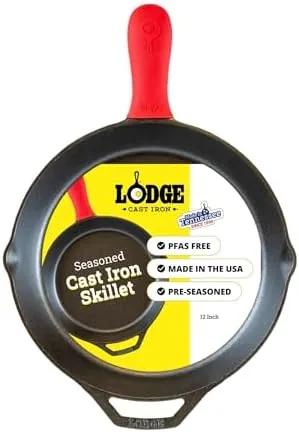
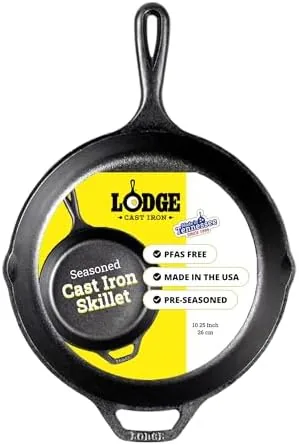
Ask a chef what the most versatile pan in the kitchen is, and more often than not you will hear one answer: cast iron. It sears, it bakes, it fries, it roasts, and it moves from the stovetop into the oven without complaint. The Lodge 10.25 inch Seasoned Cast Iron Skillet is one of the most affordable and most trusted versions of that idea, and it arrives already seasoned, so you can start cooking the moment it reaches your kitchen. After a month of heavy use, I understand why this pan is a legend.
The usual disclosure first. This review contains affiliate links, and a purchase through one of them earns the site a small commission at no extra cost to you. That commission does not affect my verdict, and the Lodge skillet I tested has cooked more meals than most pans see in a year.
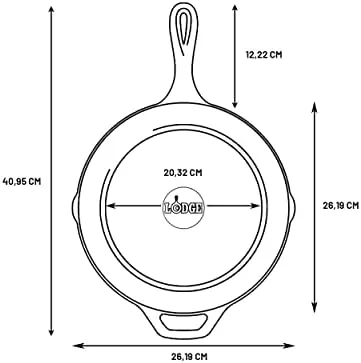
The 10.25 inch size is the sweet spot for most households. It is large enough for a couple of steaks, a full skillet dinner, or a pan of cornbread, yet small enough to handle comfortably and store without dominating the cabinet. This is the pan you reach for when you want a proper sear, and it is the pan you hand down to your children because it simply does not wear out.
Design and Build
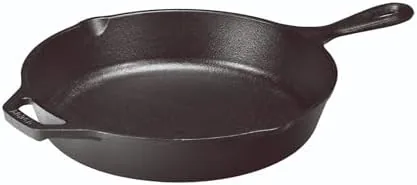
There is nothing complicated about the Lodge skillet, and that is precisely its strength. It is a single piece of cast iron, sand cast in the United States, with a smooth cooking surface and a pair of pour spouts on either side. The 10.25 inch cooking surface sits on a base with a helper handle, so two hands can lift it even when it is full.

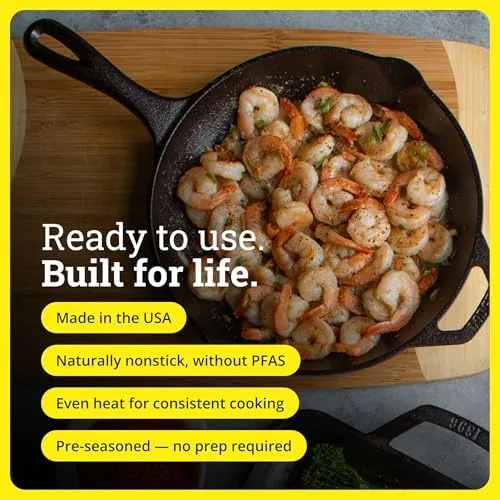
The skillet arrives pre-seasoned with 100 percent natural vegetable oil. That seasoning is what makes the pan naturally nonstick, and because it is oil rather than a chemical coating, the pan is free of PFAS and other synthetic materials. It is a cookware choice that is genuinely non toxic and safe for everyday cooking.
The weight is honest. A 10.25 inch cast iron skillet weighs several pounds empty, and you feel it. That weight is what gives the pan its heat retention and its ability to hold a sear, but it also means you need two hands to move it when full. Anyone with limited wrist strength should consider this before buying, because cast iron is not light.
Key Features
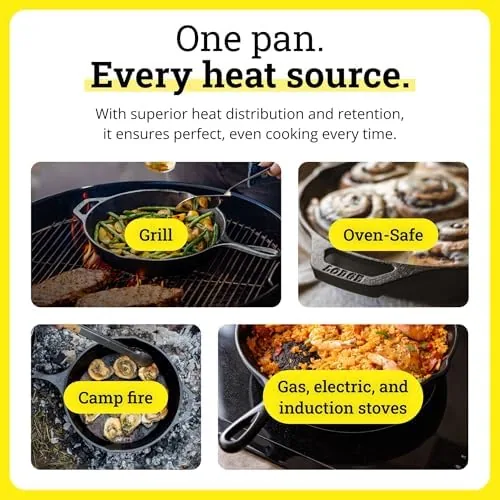
The headline feature is versatility. The Lodge 10.25 inch skillet works on a stove, in an oven, on a grill, and over a campfire, and it is oven safe to 500 degrees Fahrenheit. That range of use is rare in cookware, and it is what lets you sear a steak on the stovetop and finish it in the oven without changing pans.
The pre-seasoning is the feature that removes the intimidation from cast iron. Older cast iron arrived bare and required you to season it yourself, a messy process that scared off newcomers. Lodge delivers it ready to cook, and as you use the pan, the seasoning builds and improves with every meal.
The naturally nonstick surface is worth emphasizing in a world of PFAS laden coatings. The seasoning is built from oil and heat rather than chemicals, which makes it a safe choice for those who want to avoid synthetic nonstick surfaces. With proper care, the nonstick performance improves over time as more layers of seasoning develop.
Real-World Performance
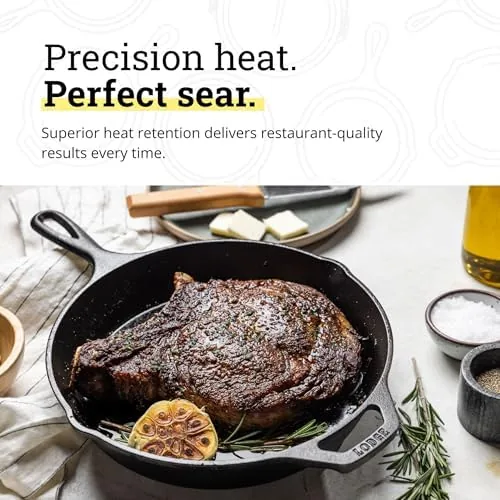
I used the Lodge skillet for nearly every style of cooking I could think of, and it handled all of it. The sear on a steak was the standout moment. I preheated the pan until it was smoking, added the steak, and got a deep, brown crust that a nonstick pan simply cannot produce. The heat retention kept the pan hot even with a cold steak added.
The pan baked cornbread beautifully, producing a crisp, golden crust that released cleanly from the pan. It roasted vegetables with char and flavor that sheet pans do not match, and it fried eggs without sticking after a small amount of oil. Each use built a better surface, and by the end of the month the pan was noticeably slicker than the day it arrived.
There are real things to know about cast iron care. The pan must be washed by hand, dried thoroughly, and given a thin coat of oil after use. That routine takes about a minute, and after a week it becomes automatic. The reward is a pan that keeps getting better instead of wearing out.
I found the care routine far less demanding than many people fear. A splash of hot water, a stiff brush, a thorough dry on the burner, and a few drops of oil wiped around the surface is all it takes. The pan does not require special soaps or rules about what it can touch, and a little common sense handles the rest. Within days the routine felt natural, and the cooking surface only improved as I used it.
The one limitation is acidity. Cooking long braises of tomato sauce or wine in a freshly seasoned pan can strip some seasoning and leave a metallic taste. Short cooking with acid is fine, but for a long acidic braise, you may want a different pan. This is a real consideration, not a deal breaker, for most home cooks.
Pros and Cons
Pros:
- Pre-seasoned and ready to cook immediately
- PFAS free and non toxic natural seasoning
- Oven safe to 500 degrees and works on stove, grill, and campfire
- Superb heat retention for searing and even cooking
- Builds a better nonstick surface with every use
- Built to last generations at a budget price
Cons:
- Heavy, and hard to move one handed when full
- Requires hand washing, drying, and oiling after use
- Acidic ingredients can strip seasoning during long cooks
How It Compares
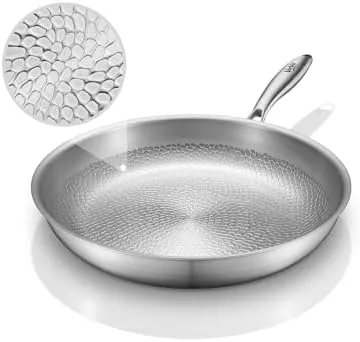
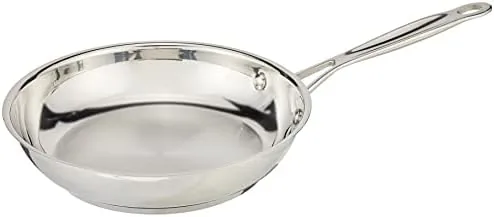
To put the Lodge in context, I compared it against two popular alternatives: a stainless steel skillet and a ceramic nonstick pan. The table below shows where each one lands.
| Feature | Lodge Cast Iron | Stainless Skillet | Ceramic Nonstick |
|---|---|---|---|
| Heat retention | Excellent | Good | Fair |
| Searing | Superb | Very good | Fair |
| Nonstick | Builds over time | Poor | Good at first |
| Oven safe | 500 degrees | High | Varies |
| Care | Hand wash and oil | Easy | Easy |
| Durability | Generations | Decades | Years |
Stainless steel is lighter and easier to care for, but it sticks badly without technique and lacks the heat retention for a serious sear. Ceramic nonstick is easy to clean at first, but the coating wears out after a few years and cannot handle high heat or the oven the way cast iron can. The Lodge wins on longevity, searing, and value, at the cost of some maintenance effort.
Who Should Buy It
Buy the Lodge 10.25 inch skillet if you want a pan that will outlast you, if you love a proper sear, or if you want cookware free of PFAS and synthetic coatings. It is the ideal first cast iron pan because it arrives ready to use and teaches you the care routine gradually.
Skip it if you need lightweight cookware, if you want zero maintenance, or if you cook long acidic braises as a daily habit. For everyone else, this is the pan to build a kitchen around. You can check the current price of the Lodge 10.25 inch cast iron skillet on Amazon and add it to your kitchen.
How We Test
I tested the Lodge skillet over a month of daily cooking across gas and electric stovetops, the oven, and a grill. I seared steaks and chicken, baked cornbread and pies, fried eggs, roasted vegetables, and cooked skillet dinners, tracking how the seasoning developed with each use.
I also tested acidic cooking to see how the seasoning held up, and I compared the pan head to head against a stainless skillet and a ceramic nonstick pan on the same tasks. The verdict is based on genuine daily use and consistent methodology. For guidance on caring for cast iron, resources like America's Test Kitchen cover the same best practices in depth.
Questions People Ask
Is the Lodge skillet already seasoned when it arrives?
Yes. It is pre-seasoned with 100 percent natural vegetable oil, so it is ready to cook immediately after a quick rinse and thorough dry.
Can the 10.25 inch skillet go in the oven?
Yes. The skillet is oven safe to 500 degrees Fahrenheit, so you can start a dish on the stove and finish it in the oven without changing pans.
Is Lodge cast iron PFAS free and non toxic?
Yes. The seasoning is made from natural vegetable oil, and the pan contains no PFAS, PTFE, or other synthetic nonstick coatings.
How do you clean and maintain a cast iron skillet?
Wash it by hand with hot water and a stiff brush, dry it thoroughly, and apply a thin layer of oil after each use to protect the seasoning.
The Lodge 10.25 inch skillet on Amazon is the rare product that genuinely pays for itself over a lifetime, and it has earned its place as the most used pan in my kitchen.
As an Amazon Associate, I earn from qualifying purchases.