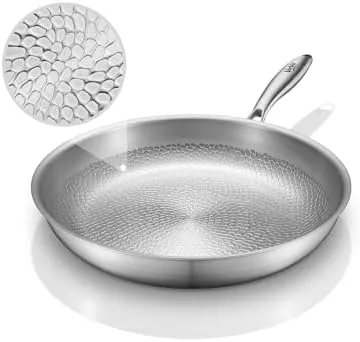

Most cookware gets heavier as it gets better. Stainless steel pans are dense, cast iron is famously heavy, and even premium nonstick builds pack in layers of cladding. Titanium flips that logic on its head. The VocVoi 12-inch skillet is made from uncoated hammered pure titanium, which means it is featherweight, completely free of PFOA, PFAS, and PTFE, and built to survive decades of use. The trade is that you, the cook, must provide the technique: preheat it properly, use a little oil, and let the pan do its work. I spent two weeks testing that bargain across searing, oven finishing, and everyday frying.
This article contains affiliate links. If you purchase through one of them, the site earns a small commission at no extra cost to you, and that arrangement does not change what I test or what I recommend. With that note aside, here is the complete record of my time with the pan.
Design and Build
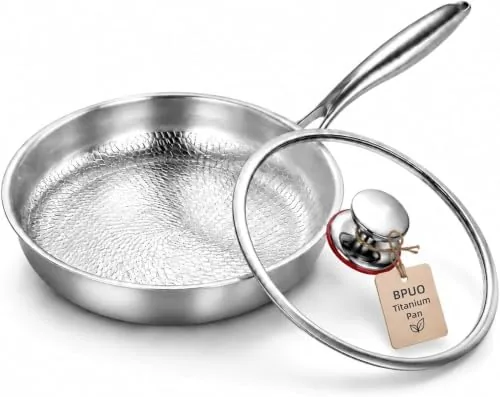
The first thing you notice is the weight. The 12-inch pan feels lighter than most 8-inch pans, which is the signature benefit of pure titanium. You can toss vegetables one handed, lift a loaded pan for plate service, and store it without straining the rack. The hammered finish is visible across the entire surface, and it is not just decoration: the texturing adds a little grip that helps a spatula slide food rather than skate, and it gives the metal character that plain stamped pans lack.
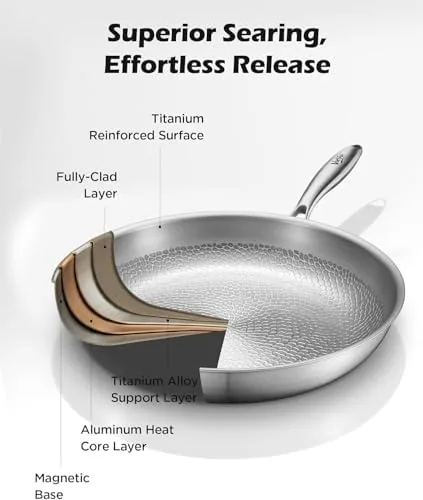
The handle is riveted and sits at a comfortable angle, staying cool enough during stovetop work that a quick grab without a mitt is safe for short stretches. The base is flat and sits squarely on any burner, and the pan is rated for induction, gas, electric, and ceramic cooktops. Because there is no coating, there is nothing to chip, peel, or off-gas, and the pan carries no PFAS at all, which is the main reason cooks seek titanium in the first place. The construction is simple, honest, and built to be repaired rather than replaced.
Key Features
The defining feature is the uncoated surface. There is no ceramic layer, no PTFE, and no anodizing: just hammered pure titanium. That makes it one of the few true no-coating skillets that still counts as nonstick-adjacent cookware, because a well seasoned titanium surface releases eggs and fish with the right technique. The pan is oven safe, so it moves from a burner sear to a broiler finish without a change of vessel.
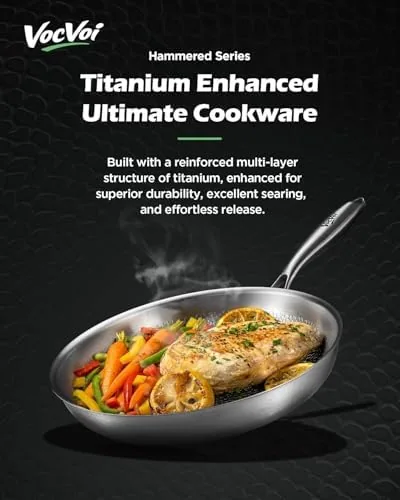
For a 12-inch pan, the capacity is generous: it fits two chicken breasts, a full pan of vegetables, or a stack of pancakes, and the low walls make flipping and plating easy. The hammered texture holds a whisper of oil in its dimples, which is what turns a bare metal surface into a reliable release surface over time. If you want to compare current pricing against other titanium pans, the Amazon listing for this VocVoi titanium pan is a useful reference.
Real-World Performance
Titanium is a different animal from nonstick, and the first morning proved it. A cold pan with a cold egg sticks, so I learned to preheat on medium, add a thin film of oil, and then cook. Done right, a fried egg slides out with a gentle shake. Scrambled eggs came out silky when I moved them early and gently, and the pan did not punish me the way stainless steel would for a lapse of attention.
Where the pan truly shined was searing. A steak went into a properly hot pan and developed a deep, even crust without steaming, because titanium responds to heat input almost instantly. The same responsiveness meant the pan cooled quickly when I pulled it off the burner, which is a real advantage for delicate sauces. Vegetables got a good char with a modest amount of oil, and the hammered surface kept them moving instead of sticking to the base.
The oven test was where the pan proved its durability. I started a skillet of vegetables on the stovetop, then transferred the whole thing under the broiler to melt cheese and char the edges. The pan came through with no warping, no discoloration beyond a normal patina, and no change to the release behavior. A titanium pan shrugs off the temperature swings that would destroy a coated pan, and that resilience is the core value of the material.
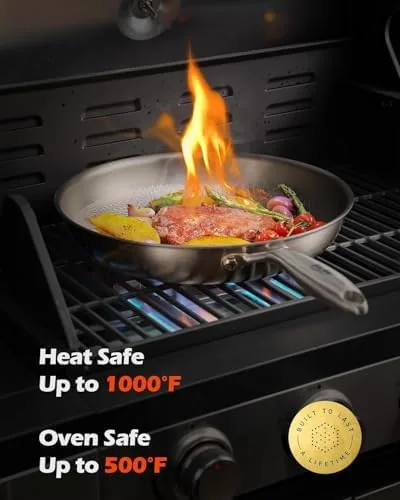
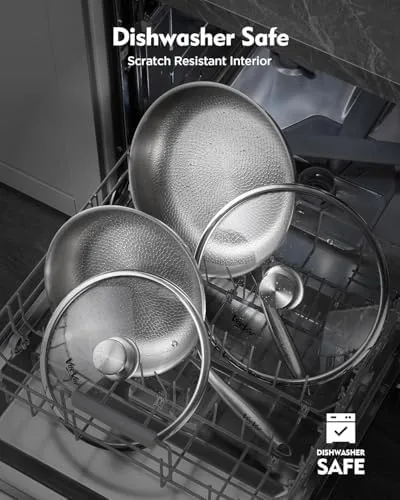
Cleaning is straightforward once you accept the nature of the metal. A quick soak in warm water loosens residue, and a sponge handles the rest without any worry about scratching the finish, because there is no finish to scratch. Stubborn bits lift with a gentle scrape from a metal spatula, which is a luxury no coated pan offers. The pan develops a light seasoning with use, and that seasoning improves release with every session. The one thing I could not do was treat it like a nonstick pan on low expectations; technique earns every clean release, and the payoff is cookware that will outlast the rest of your kitchen.
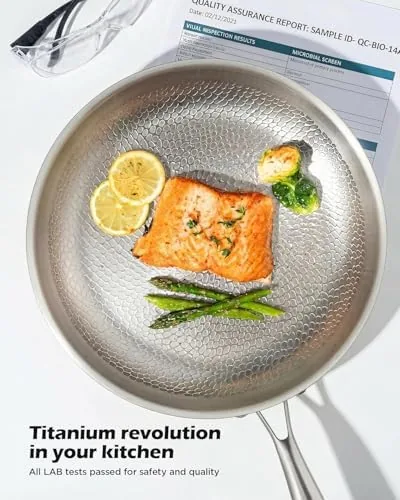
I also worked through the classic titanium learning curve with fish, the food that frightens most home cooks. A skin-on salmon fillet went into a preheated pan with a thin layer of oil, and it released cleanly when the crust had set, sliding off without leaving a strip of skin behind. The same session produced a quick pan sauce from the fond left in the base, something a coated pan would not allow. That combination of sear quality and deglazing freedom is what separates this pan from its nonstick cousins, and it rewards the extra attention at the start.
Pros and Cons
Pros:
- Remarkably light for a 12-inch pan
- Completely uncoated, with no PFOA, PFAS, or PTFE
- Excellent heat response for searing and pan sauces
- Oven safe and comfortable under the broiler
- Scratch-resistant surface that allows metal utensils
- Works on induction and all cooktop types
Cons:
- Requires proper preheating and oil to release food
- Not a drop-in replacement for a coated nonstick pan
- Lightweight metal can feel odd to cooks used to heavy pans
How It Compares
Titanium pans compete against two very different traditions: coated nonstick skillets and bare stainless steel pans. I compared the VocVoi against both in my kitchen.
| Feature | VocVoi Titanium Pan | Coated Nonstick Pan | Stainless Steel Pan |
|---|---|---|---|
| Surface coating | None, pure titanium | PTFE or ceramic | None, bare steel |
| Weight at 12 inches | Very light | Light to moderate | Heavy |
| Release without oil | Requires seasoning and oil | Excellent | Requires technique |
| Searing performance | Excellent | Poor at high heat | Excellent |
| Metal utensils | Yes | No | Yes |
| Oven safe | Yes | Handle dependent | Yes |
| Lifespan | Decades | Years | Decades |
Against a coated nonstick pan, the VocVoi trades instant release for longevity, heat tolerance, and zero chemical coatings. Against stainless steel, it wins on weight and nimbleness while matching searing quality. The decision comes down to what you value: if you want to set and forget, buy a coated pan; if you want one skillet that will still be perfect in twenty years, titanium is the answer.
Who Should Buy It
Buy this pan if you want cookware without any nonstick coating, if you cook over high heat and keep burning through coated pans, or if you carry your pans around enough that weight matters. It is a strong fit for outdoor cooks, campers, and anyone who wants a single durable skillet that does searing, sautéing, and oven work without complaint.
Skip it if you want a fuss-free nonstick surface for delicate eggs every morning, or if you do not want to adjust your technique. For cooks who enjoy the craft, this is one of the most rewarding skillets available. You can check the current price for the VocVoi titanium pan on Amazon when you are ready to try it.
How We Test
I cooked with the pan daily for two weeks across eggs, seared steak, sauteed vegetables, and a broiler-finished skillet dish. I tracked heat response on gas and induction, monitored the handle temperature, and tested the pan under a high-heat broiler to confirm the oven rating. I used metal spatulas freely to test scratch resistance, and I soaked and scrubbed the pan to confirm that cleaning is as forgiving as the material promises.
I did not test the pan over a campfire, though its construction suggests it would survive. Independent guidance such as the Wirecutter guide to the best frying pans is a helpful reference for how different pan materials perform over time. The Amazon listing for this VocVoi titanium skillet shows the latest price and shipping details.
VocVoi Titanium Pan: Questions People Ask
Is this titanium pan truly uncoated?
Yes. The cooking surface is hammered pure titanium with no nonstick coating of any kind, so it contains no PFOA, PFAS, or PTFE.
Does food stick to an uncoated titanium pan?
Titanium does not release food the way a coated pan does. Proper preheating and a little oil are needed, and the surface builds a light seasoning over time.
Can the pan be used in the oven?
Yes. The pan is oven safe, and it handled a high-temperature broiler test in my kitchen without any issue.
Is the pan compatible with induction cooktops?
Yes. The pan works on induction and on gas, electric, and ceramic cooktops alike, so it adapts to any kitchen.
As an Amazon Associate, I earn from qualifying purchases.