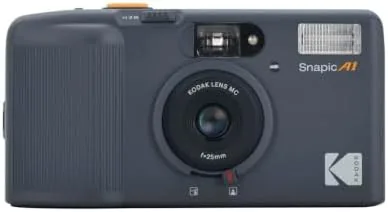

Film photography has made a strange and wonderful comeback. After a decade of everyone chasing sharper digital sensors, a generation has discovered that the grain, the color, and the wait of analog shots make them feel more like memories than files. The catch has always been price and complexity: serious film cameras are expensive, and fully automatic point and shoot cameras keep climbing in price on the used market. The KODAK Snapic A1 is built for this moment, a lightweight, reusable 35mm camera with two zone focus and a compact body that aims to make analog photography approachable again.
I shot several rolls of 35mm film with the Snapic A1 in rhino grey over a few weeks of daylight, evening, and indoor use. I tested the two zone focus, the flash, and the manual film advance, and I compared the results with what a phone produces. This review covers the design, the key features, the real world performance, and who this camera is actually for.
Before the details, the standard note. This article contains affiliate links, and if you buy through one of them the site earns a small commission at no extra cost to you. That commission never changes what I test or what I recommend.
Design and Build
The Snapic A1 is small and light in the hand, which is exactly what a travel film camera should be. The rhino grey body is understated and modern, with clean lines and a comfortable grip that makes one handed shooting easy. It slips into a jacket pocket or a small bag without adding bulk, and the lightweight construction means you will actually carry it with you rather than leaving it at home.
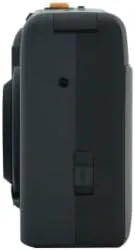
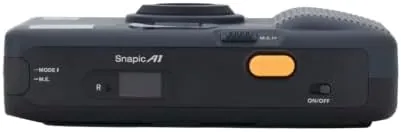
The controls are deliberately simple. The shutter release sits naturally under your finger, the film advance wheel turns smoothly after each shot, and the rewind mechanism releases cleanly when the roll is done. The viewfinder is bright enough to frame a shot in most lighting, and the top mounted flash pops up for indoor and evening work.
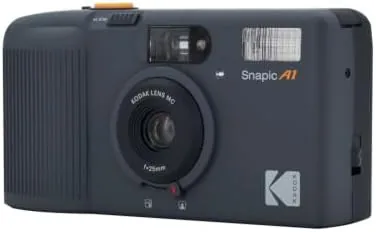
Build quality is good for the price. The plastic body feels solid rather than flimsy, the back door latches securely to keep light out, and the lens sits recessed and protected. KODAK has clearly built this to be a working camera, not a shelf ornament, and it survives being thrown into a bag and carried around.
Key Features
The two zone focus system is the defining feature. Instead of the finicky manual focusing rings of an old SLR, the Snapic A1 offers two simple focus positions: one for close subjects and one for distance. You slide the focus selector to match your subject, press the shutter, and the camera handles the rest. It is a deliberate simplification that removes the biggest barrier to entry in film photography.
The fixed focus 35mm lens is the other headline feature. It is wide enough for everyday scenes, groups, and street photography, and the exposure system is automatic, so you simply load film, set the focus zone, and shoot. The camera is reusable, which is the crucial point, a disposable camera costs money every single roll, while the Snapic A1 is a one time purchase that takes roll after roll.
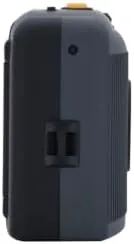
The flash is built in and simple to use. It pops up for indoor and low light shots, and it produces enough output to light a subject a few meters away. The camera needs a single AAA battery to power the flash, while the film advance and rewind are fully manual, which means the camera keeps working even when the battery runs flat.
Real-World Performance
The shots from my test rolls were genuinely pleasing. In bright daylight the Snapic A1 produced the warm, slightly nostalgic color that people chase when they switch back to film, with grain that adds character rather than noise. A roll shot at a park with friends came back with the kind of photos you want to print and put on a fridge, which is the whole appeal of this camera.
The two zone focus worked well once I understood it. At the close setting, subjects a meter or two away stayed sharp, and at the distance setting, landscapes and group shots came out in focus across the frame. There were occasional misses when I guessed the zone wrong or shot a subject at the boundary between the two, but the learning curve is short and the payoff is worth the practice.
In indoor and evening conditions the flash becomes essential. With the flash up, the camera produced properly exposed Shots of people at close range, and the automatic exposure handled the mixed lighting without much fuss. Without the flash, low light shots came out dim and soft, which is expected from a camera in this class and not a real criticism. The manual advance and rewind worked reliably across every roll I shot.
Pros and Cons
Pros:
- Lightweight and compact enough for daily carry
- Simple two zone focus removes the hard part of film photography
- Reusable body pays off over many rolls
- Pleasing warm film color in daylight
- Built in flash covers indoor and evening shots
- Manual advance keeps working without a battery
Cons:
- Film and AAA battery are not included
- Low light shots without flash are soft
- Two zone focus requires a little practice
- Ongoing cost of film and processing adds up
How It Compares
The reusable 35mm camera market breaks down into disposables, fully automatic compacts, and simplified cameras like the Snapic A1. I compared the Snapic A1 against a disposable camera and a classic automatic point and shoot to show where it fits.
| Feature | KODAK Snapic A1 | Disposable Camera | Automatic Compact |
|---|---|---|---|
| Reusable body | Yes | No, single use | Yes |
| Focus control | Two zone | Fixed | Automatic |
| Ongoing cost | Film and processing only | Full cost each roll | Film and processing only |
| Weight | Lightweight | Lightweight | Heavier |
| Best for | Beginners and daily carry | One off events | Serious enthusiasts |
Against a disposable camera, the Snapic A1 wins on every long term measure, because the reusable body means the second roll already starts saving money. Against an automatic compact, the Snapic A1 gives up autofocus and exposure sophistication, but it costs far less and keeps the shooting experience simple and tactile. You can check the current price on the KODAK Snapic A1 listing on Amazon.
Who Should Buy It
Buy the Snapic A1 if you are curious about film photography, if you want a camera you can carry everywhere, or if you want an affordable alternative to the climbing prices of used film cameras. It is ideal for people who like the idea of shooting a roll, waiting for the scans, and getting back photos that feel like an event.
Skip it if you want serious manual control, interchangeable lenses, or the kind of sharpness a modern digital camera produces. For a first film camera or a lightweight everyday companion, the Snapic A1 delivers exactly the charm people buy film cameras for. Check the current price for the KODAK Snapic A1 on Amazon and pick up a roll of film to go with it.
How We Test
I shot several rolls of 35mm film with the Snapic A1 across a few weeks, covering daylight scenes, indoor events, and evening outings. I practiced the two zone focus in each condition, tested the flash in low light, and advanced and rewound the film manually on every roll to confirm the mechanism held up.
I compared the developed scans against what a phone camera produces for the same scenes, and I weighed the camera to confirm the lightweight claim. For a broader look at choosing a film camera, the PCMag roundup of film cameras is a useful independent reference. The KODAK Snapic A1 on Amazon shows the current price and delivery options.
KODAK Snapic A1: Questions People Ask
What film does the KODAK Snapic A1 use?
The Snapic A1 is a 35mm camera that takes standard 35mm film rolls, which are widely available, and the film is not included in the box.
Is the Snapic A1 good for beginners?
Yes, the two zone focus and simple exposure controls make it very forgiving, and most of the shots from my test rolls came out well exposed and in focus.
Does the Snapic A1 need a battery?
The camera needs one AAA battery to operate the flash, and the battery is not included in the box, while the film advances manually.
How much does it cost to shoot with the Snapic A1?
The ongoing cost is the film roll plus processing and printing, and the reusable body is a one time purchase that lasts for many rolls.
As an Amazon Associate, I earn from qualifying purchases.