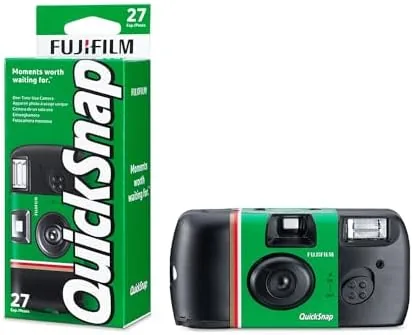

Every photo you take with a smartphone is instantly reviewable, endlessly edited, and quickly forgotten. A disposable film camera offers the exact opposite experience. You take a shot, you cannot see it, you cannot retake it, and you wait days for the lab to reveal what you captured. That delayed surprise is a big part of why the Fujifilm QuickSnap Flash 400 keeps selling year after year. It is a single 35mm one-time-use camera loaded with 27 exposures of ISO 400 film and a built in flash, made for travel, events, and the kind of everyday moments people now frame on the wall instead of scrolling past. I carried one for a month of daily life and a family trip, and this review is the honest account of what came back from the lab.
Before the details, the standard note. This article contains affiliate links. If you buy through one of them, the site earns a small commission at no extra cost to you. That commission never changes what I test or what I recommend.
Design and Build
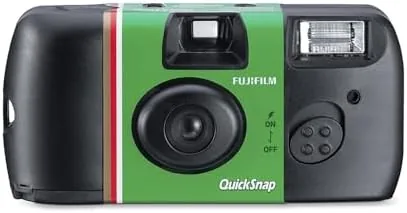
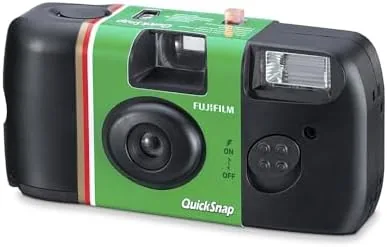
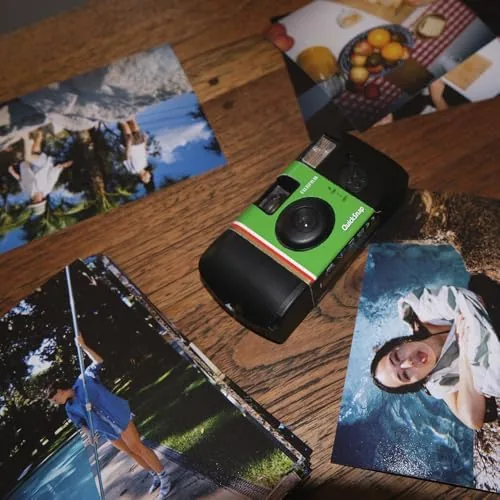
The QuickSnap is gloriously simple. A cardboard shell wraps a fixed focus plastic lens, a shutter button, a thumb wheel for advancing film, and a flash unit in the top corner. There are no buttons for settings, no batteries to install, and no manual to read, because there is nothing to configure. You raise the camera, aim, press the shutter, and advance to the next frame.
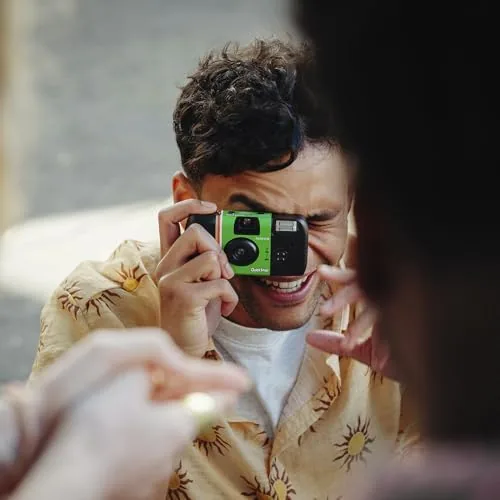
The simplicity makes it extraordinarily practical for the places I actually took it. At a birthday party, the camera passed from hand to hand without a single question about how it worked. On a hike, it survived a day in a backpack pocket. The shell is light enough to forget you are carrying it, and the fixed focus means there is no way to take an out of focus shot within its range of roughly three feet to infinity.
Key Features
The film inside is the real engine. Fujifilm's 400 speed color negative stock is a classic travel film, balanced for daylight but forgiving enough for shade and indoor scenes. It produces warm skin tones, pleasant greens, and a gentle grain that people now pay money to fake with filters. At this sensitivity, you can shoot on overcast days and in well lit rooms without the camera asking for help.
The built in flash rounds out the camera's usefulness. It fires on every shot unless you slide the small cover over the flash to disable it, and its effective range is about ten feet. That design is perfect for its purpose: indoor event photos are properly lit without the photographer having to think about it, and for daytime outdoor shots you simply cover the flash and let the ISO 400 film do the work.
Twenty seven exposures is a deliberate amount. It is enough for a wedding or a day at the amusement park, but it also forces a kind of economy that makes each shot matter. Every frame counts, and that mindset changes the way you compose. For a look at current pricing, the Amazon listing for the Fujifilm QuickSnap Flash 400 is a useful reference.
Real-World Performance
My first roll went to a family birthday party, half indoors under the flash and half on a sunny porch with the flash covered. The indoor shots came back with that crisp, bright flash look that makes faces pop, and the porch shots were warm and natural, with the ISO 400 film handling the bright daylight without blowing out highlights. The grain was gentle enough that the photos looked like something you would proudly frame.
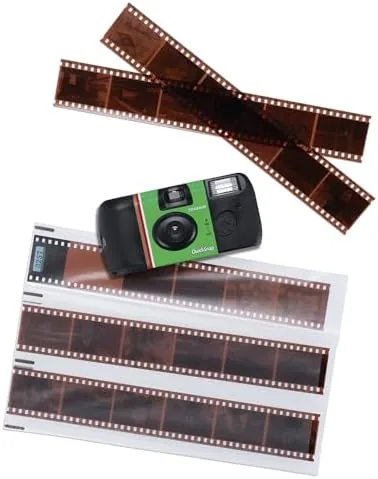
The second stretch of the roll went on a weekend trip, with shots of architecture, a riverfront, and dinner in a dim restaurant. The daylight architecture shots were sharp and colorful, and the dinner shots with the flash lit the table well at close range. The camera showed its limits exactly where physics says it should: in a dark corner of the restaurant, a subject more than ten feet away came out shadowed, because no disposable flash can reach that far.
What impressed me most was the ritual of it. Handing the camera to a niece, waiting a week for development, and then spreading the prints across a table produced a shared moment that no camera roll on a phone has ever matched. The images are imperfect in ways phones never are, and those imperfections are precisely the point.
The value question is simple to answer. A single disposable camera is a small purchase, and when you divide the cost across 27 shots the price per image still compares well with a fancy coffee. The moment you realize the camera forces you to slow down, to compose before you press the shutter, and to hand the device to the people you are with, the price feels almost beside the point. That is a rare quality in a product, and it is why the QuickSnap keeps a devoted following.
Pros and Cons
Pros:
- Authentic film look with warm Fujifilm color
- Completely self contained and ready to use
- Built in flash lights indoor scenes up to ten feet
- Simple enough for any age to use
- Light and tough enough for travel and bags
- 27 exposures encourage thoughtful composition
Cons:
- No control over focus, exposure, or zoom
- Flash cannot reach beyond roughly ten feet
- No way to preview shots until development
- Developing the film is an added cost
How It Compares
Shoppers choosing between a disposable film camera, a reusable point and shoot film camera, and a retro filter app face a genuine trade off. I compared the three to make the decision clearer.
| Feature | QuickSnap Flash 400 | Reusable Film Camera | Phone with Filters |
|---|---|---|---|
| Shots included | 27 exposures | Buy film separately | Unlimited |
| Upfront cost | Low | Higher | None |
| Learning curve | None | Moderate | None |
| Authentic film character | Yes | Yes | Simulated |
| Worry about loss | Low | Medium | High |
| Best occasion | Events and trips | Regular shooting | Daily |
Compared with a reusable film camera, the QuickSnap is cheaper per event and needs no instruction, while the reusable camera is more economical if you shoot many rolls each year. Compared with a phone filter app, the QuickSnap delivers a genuine film result and removes the risk of handing a precious phone to a child or a guest. For one time use on a specific occasion, the disposable remains the most sensible and the most fun option of the three.
Who Should Buy It
Buy the QuickSnap Flash 400 if you are heading to a wedding, reunion, birthday, or vacation and want real film photos without buying a camera. It makes a thoughtful gift for a young relative, and it is the perfect companion for anyone who wants to step away from screens and slow down the way they take pictures.
Skip it if you shoot frequently and would be better served by a reusable camera, if you need to review shots before leaving a location, or if the combined cost of the camera and development is a concern. For a single special occasion, this is still one of the best small pleasures photography offers. You can check the current price for the Fujifilm QuickSnap Flash 400 on Amazon when you are ready to buy.
How We Test
I shot the full 27 exposure roll over a month of real use, covering an indoor birthday party with the flash, a sunny porch, a weekend trip with architecture and riverfront shots, and dinner scenes in a dim restaurant. I had the film developed at a standard commercial lab and judged color, sharpness, exposure balance, flash reach, and the look of the final prints and scans.
I did not test the camera in extreme weather or underwater, and lab processing can change results slightly, so my findings reflect standard development. For independent reading on why disposable film cameras endure, the film photography coverage from PCMag provides helpful context on the category. The Fujifilm QuickSnap Flash 400 listing on Amazon shows the current price.
Fujifilm QuickSnap Flash 400: Questions People Ask
How many exposures does the QuickSnap Flash 400 have?
The camera is loaded with 27 exposures of Fujifilm ISO 400 color negative film, which is enough for a day trip or a full event without running out of shots.
Is the flash always on?
The flash fires automatically for every shot unless you slide the cover over the flash unit to force it off, which is useful for bright outdoor daylight scenes where you do not need it.
What kind of photos does ISO 400 film produce?
ISO 400 film captures warm, colorful images with fine grain, and it handles overcast days, shade, and well lit indoor scenes better than slower film stocks do.
Where can I get the QuickSnap developed?
Most photo labs, drugstores, and camera stores offer disposable camera developing, and many will return both prints and digital scans of your images for easy sharing.
As an Amazon Associate, I earn from qualifying purchases.