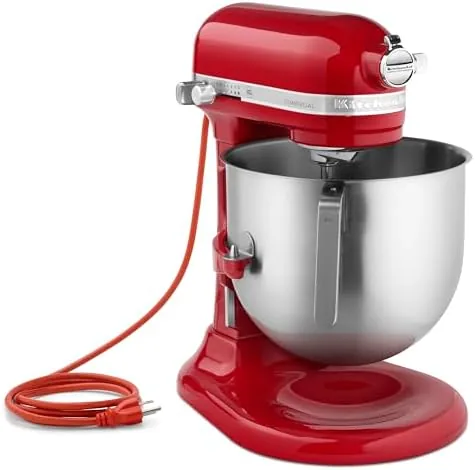

There are two kinds of Stand Mixers in the KitchenAid lineup, and the difference between them changes how you bake. The tilt head mixer tips forward so you can scrape the bowl, and the bowl lift mixer raises the bowl up on an arm to meet the beaters. Most home bakers never touch a bowl lift model, because for cookies and cakes the tilt head does the job. But if you have ever watched a bread recipe crush a tilt head machine, you know the moment when the bowl lift starts to look like the serious choice. The KitchenAid KSM8990 is that serious choice: an 8-Quart Bowl Lift Mixer from the Commercial Series with a full horsepower motor and NSF certification. I spent a month baking with it to answer one practical question: does the bowl lift design justify the premium over the classic tilt head?
As always, the disclosure comes first. This article contains affiliate links. If you buy through one of them, I receive a commission at no extra cost to you, and it does not influence what I recommend.
Design and Build
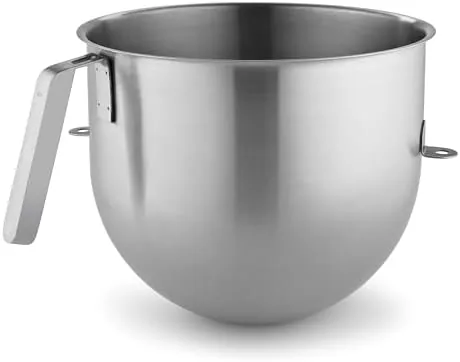
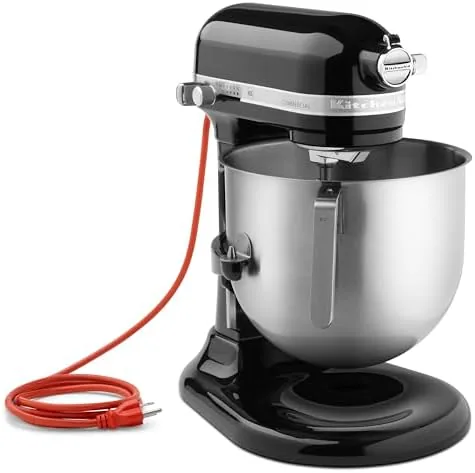
From the first glance, the KSM8990 announces that it is not a kitchen toy. The body is a blocky, die-cast metal form with a matte finish, and the 8-quart stainless steel bowl sits on a heavy base plate. The bowl lift mechanism is the design centerpiece. A lever on the side operates a steel arm, and the bowl slides up and down with a smooth, mechanical action that feels engineered rather than sprung. When the bowl locks into the raised position, the head and the arm form a rigid frame, and that rigidity is exactly why this mixer can knead dough that would shove a tilt head machine sideways.
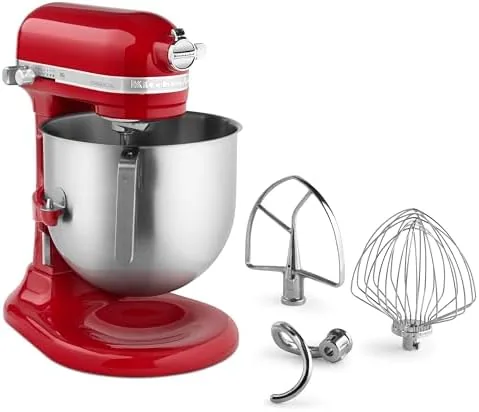
The build quality extends to every part. The beaters are heavier than standard KitchenAid accessories, the bowl has a sturdy handle and a convenient pouring spout, and the base does not flex when you press down on the rim of the bowl. The mixer comes with a flat beater, a dough hook, and a wire whip in the commercial scale, and the front attachment hub accepts the entire KitchenAid attachment line. Everything about the physical design says this machine was made to be used hard, cleaned, and used again for years.
Key Features
The headline feature is the bowl lift itself, and it earns its place on every heavy batch. When the bowl rises into the beaters, the head stays locked to the vertical arm, so there is no tipping, no rocking, and no need to hold the head in place while the machine works. That stability changes the way you bake: you can walk away from a long knead with the same confidence you would have with a commercial machine. The other headline is the 1.0 horsepower motor, which drives the heavier loads with a deep, steady note rather than a straining whine.
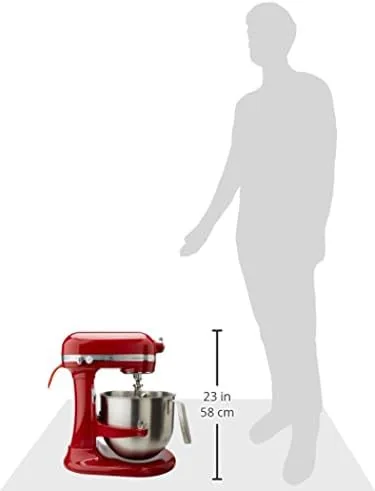
Capacity follows the size. The 8-quart bowl fits up to 14 cups of flour, which translates to six loaves of bread in a single batch or roughly 32 cups of cake batter. The speed control is the classic ten-position slider, and a DC motor makes the machine quieter than older AC mixers at the same power. The NSF certification is a meaningful detail rather than a sticker: it means the mixer is built to commercial sanitation and durability standards, which is the kind of third-party verification that matters if you are baking for others. You can check the current KSM8990 price on Amazon to see the full specification list.
Real-World Performance
The bowl lift proves its worth most clearly with stiff doughs. I made a triple batch of a dense rye dough that had defeated a 5-Quart Tilt Head in an earlier test session. In the KSM8990, the hook powered through it at speed two with no strain, and the locked head never once felt like it was going to lift off the bowl. The extra power is not wasted on soft work either: a batch of chocolate chip cookie dough with a full two pounds of butter creamed quickly and evenly, and the flat beater scraped the bottom of the bowl clean without manual intervention.
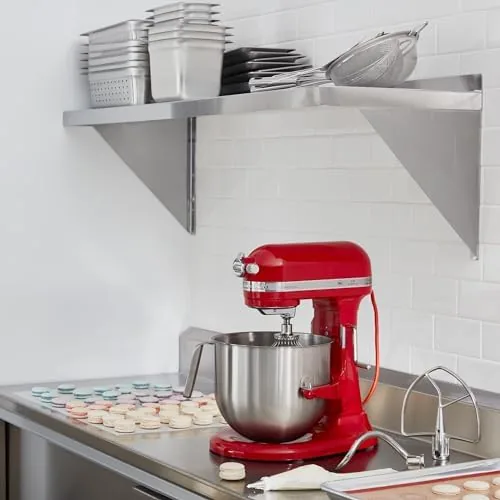
The wire whip is where the machine shows its manners. Meringue reached glossy, stiff peaks in under five minutes, and whipped cream went from liquid to soft peaks so fast I had to watch the bowl carefully. The DC motor keeps the speed consistent even under load, which matters for delicate foams. The one practical adjustment is habit: scraping the bowl with the lift in place requires either lowering the bowl or working around the arm, and it took me a few sessions before the motion felt natural. It is a small price for the stability, but it is worth knowing before you buy.
Pros and Cons
Pros:
- Bowl lift design locks the head steady for heavy doughs
- 1.0 horsepower DC motor powers through stiff batches
- 8-quart capacity handles double and triple recipes
- NSF certification for commercial-grade construction
- Full attachment hub compatible with the whole KitchenAid line
Cons:
- Premium price over a 5-quart tilt head mixer
- Large footprint and heavy weight for small kitchens
- Scraping the bowl takes some practice with the lift mechanism
- Overkill for bakers who rarely exceed a single batch
How It Compares
The bowl lift vs tilt head debate deserves a direct comparison, so I ran the KSM8990 against a 5-quart tilt head and a 7-quart bowl lift model through the same baking routine. The table below shows where the machines diverge.
| Feature | KSM8990 8-Quart Bowl Lift | 5-Quart Tilt Head | 7-Quart Bowl Lift |
|---|---|---|---|
| Motor Power | 1.0 horsepower | 0.5 horsepower | 0.85 horsepower |
| Bowl Capacity | 8 quarts | 5 quarts | 7 quarts |
| Head Stability | Locked, no flex | Tips under load | Locked |
| NSF Certified | Yes | No | No |
| Bread Batch | Up to 6 loaves | Up to 2 loaves | Up to 5 loaves |
| Noise Level | Quiet DC motor | Louder AC motor | Quiet DC motor |
Against the 5-quart tilt head, the KSM8990 wins on power, stability, and capacity, and it costs significantly more for that advantage. The tilt head is the right tool for occasional baking, and for a household that makes cakes and muffins it is a better value. Against the 7-quart bowl lift, the KSM8990 adds one more quart, a stronger motor, and the NSF rating, which matters mainly to people baking at scale. For anyone who has pushed a tilt head to its limit, the KSM8990 is the upgrade that removes the limit.
Who Should Buy It
Buy the KSM8990 if bread is your main baking project, if you routinely double recipes, if you sell baked goods from home, or if you simply want a mixer that will never be the weak link in the kitchen. It is built for people who measure success in loaves and cooling racks, not in the occasional birthday cake. For those bakers, the KSM8990 on Amazon is the practical choice.
Skip it if your baking is mostly single batches, if you prefer a mixer that takes up minimal counter space, or if the price feels out of proportion to how often the machine will run. The bowl lift is a solution to a problem that only serious bakers have, and there is no shame in staying with a tilt head. For everyone else, this is one of the most capable home mixers money can buy, and it will still be going long after lighter machines have been retired.
How We Test
I tested the KSM8990 over a full month of regular baking. I ran triple batches of rye and white bread dough to measure head stability and motor strain, a two-pound-butter cookie dough batch for creaming performance, meringue and whipped cream for whip quality, and a full cake batter to check the flat beater at scale. I recorded noise levels at each speed, tested the bowl lift mechanism hundreds of times, and evaluated how easily the bowl and attachments cleaned between sessions.
I did not test the mixer in a commercial bakery, so the NSF rating is my guide to its long-term durability rather than personal experience with years of daily use. For independent context on how bowl lift and tilt head machines compare, Wirecutter's stand mixer testing is a strong reference. The KSM8990 listing on Amazon has the current price and availability.
KitchenAid 8-Quart Mixer: Questions People Ask
How many cups of flour does the 8-quart bowl hold?
The bowl fits up to 14 cups of all-purpose flour, which works out to a recipe using roughly 14 cups of flour and up to six loaves of bread in one pass.
Why do commercial mixers use a bowl lift?
Lifting the bowl into the beater keeps the head locked to the arm under heavy load, so thick dough cannot tip the machine, which is why bakeries use the design.
Is the KSM8990 noisy?
It is quieter than most older AC motor mixers because the DC motor delivers torque smoothly, though heavy dough still makes a steady working sound at speed two.
Can you use all KitchenAid attachments on it?
Yes. The power hub on the front runs the full line of attachments, from pasta rollers and grinders to spiralizers and a food processor, at a slower driven speed.
As an Amazon Associate, I earn from qualifying purchases.