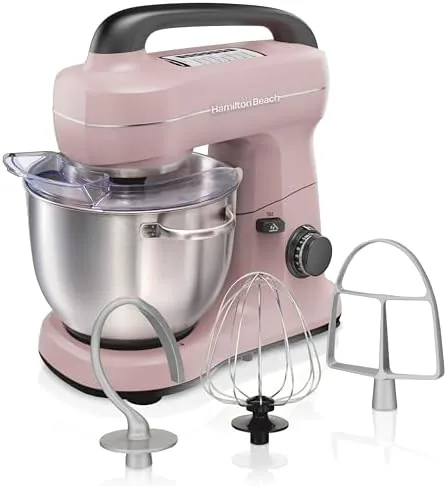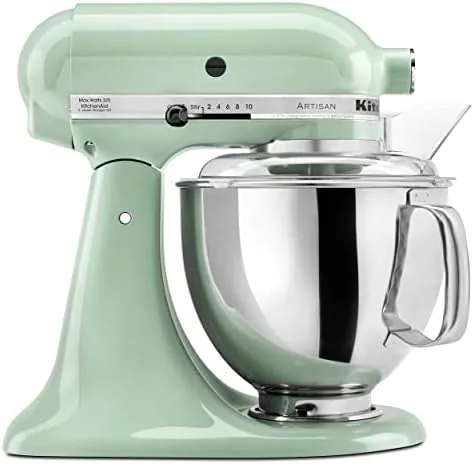

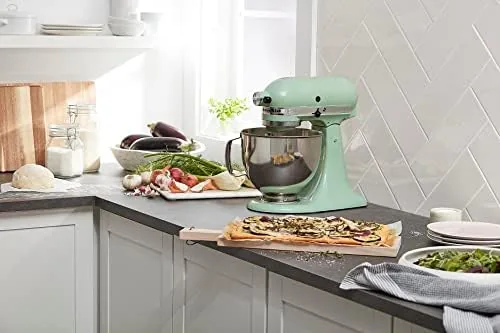
There are kitchen appliances, and then there are kitchen institutions. The KitchenAid Artisan stand mixer belongs in the second category. It is the machine that has sat on grandmother counters, appeared in every bakery photo shoot, and earned its place as the most gifted kitchen appliance in America. The 5 quart tilt head model, here in a bright pistachio finish, is the version most people picture when they imagine the brand, and this review is the record of what happens when that iconic machine actually gets worked for a living in a home kitchen.
A disclosure before the first batch of cookies. This article contains affiliate links, and if you buy through one of them the site earns a small commission at no extra cost to you. That commission does not change what I bake or what I recommend, and the mixer reviewed here was tested exactly the way a home baker would use it.
The Artisan is the most famous stand mixer in the world for a reason. Its tilt head design lets you lift the head away to add ingredients and swap attachments, its 5 quart bowl fits the majority of home recipes, and its 10 speeds cover everything from a slow fold to a fast whip. This review covers the build, the mixing performance, the accessories, and whether the Artisan lives up to its legendary status.
Design and Build
The KitchenAid Artisan is a striking piece of hardware. The metal body is heavy, roughly 25 pounds, and that weight is part of the design, because a mixer that does not walk across the counter while kneading stiff dough is a mixer you can trust. The pistachio finish is a soft, pale green that reads as both retro and modern, and the chrome accents on the bowl band and attachment hub give it a polished, collectible feel.
The build quality is exactly what the reputation promises. The tilt head mechanism locks into place with a firm, positive motion, and the lever that releases it operates smoothly. The bowl locks into the base with the signature twist action, the attachments seat securely on the shaft, and the whole machine feels solid enough to last decades, which matches the reputation of mixers still running from the 1970s.
Key Features
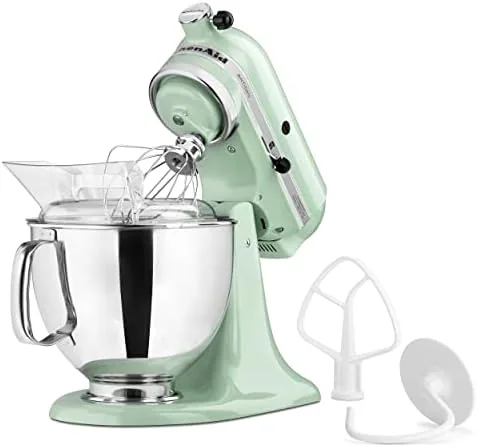
The tilt head design is the signature feature. With the head lifted, the bowl is completely exposed, which makes it easy to add flour, scrape the sides, and see what is happening inside. It also makes attachment changes painless, since the head swings out of the way instead of forcing you to reach around it. The head locks down firmly, and the whole assembly moves as one unit during mixing.
The 5 quart stainless steel bowl is sized for the home baker, comfortably handling most standard cookie, cake, and bread recipes. The 10 speed settings span a wide range, from a gentle stir at speed 1 to a rapid whip at speed 10, and the flat beater, wire whip, and dough hook cover the three essential jobs of mixing. The pouring shield is the practical extra, a clear plastic ring that fits over the bowl and lets you pour in dry ingredients while the mixer runs without flinging flour across the kitchen.
Real-World Performance
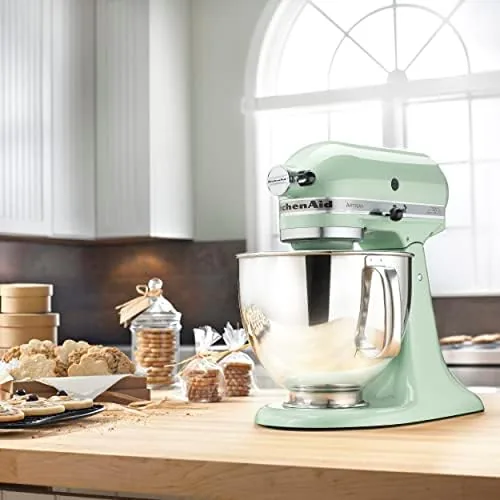
The real test of a stand mixer is a stiff bread dough, so that is where I began. I mixed a double loaf batch of whole wheat dough and ran the Artisan on the dough hook at speed 2. The machine kneaded with steady confidence, working the dough into a smooth, elastic ball in about eight minutes without the head wobbling or the base walking across the counter. The dough came out properly developed, and the resulting loaves had the open crumb that comes from real kneading.
From there I worked through the rest of the stand mixer canon. A batch of chocolate chip cookies creamed to a light, fluffy state in minutes. A triple layer cake batter came together with no lumps and no over mixing. Whipped cream at speed 8 reached soft peaks in about ninety seconds, and egg whites for a meringue went to stiff, glossy peaks without drama. The mixer handled each task with the same calm competence, and the pouring shield proved its worth by keeping flour contained while I added cup after cup.
The 5 quart size showed its limits in the obvious way. A recipe that calls for a dozen egg whites or a quadruple cookie batch pushes against the capacity, and the bowl is a little too tall for some ingredients to be folded by hand without moving to a separate bowl. For the standard home recipe, though, the size is right, and the tilt head made scraping and checking the bowl a quick, one handed operation.
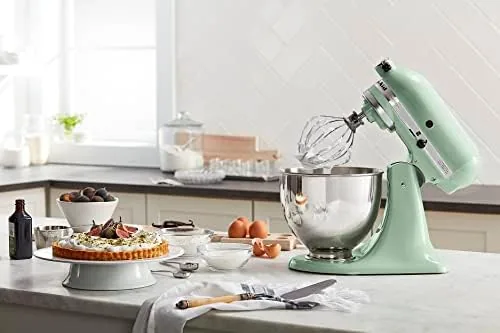
Cleanup was simple. The bowl, beater, whip, and hook are all dishwasher safe, and the pouring shield rinsed clean in seconds. The machine body wiped down with a damp cloth, and the metal finish showed no smudges or fingerprints after a week of regular use. Over the full testing period, the Artisan never strained, never overheated, and never left an ingredient unmixed, which is the definition of an appliance that does its job without being noticed.
Pros and Cons
Pros:
- Powerful motor handles stiff bread dough with confidence
- Heavy metal body that stays planted on the counter
- Tilt head design makes adding ingredients and swapping attachments easy
- 5 quart bowl suits most home baking recipes
- 10 speeds from gentle stir to fast whip
- Dishwasher safe bowl, beater, whip, and hook
Cons:
- Heavy and takes up meaningful counter space
- 5 quart capacity limits very large batches
- Pistachio color is not for every kitchen palette
- Small quantities need a hand mixer or manual folding
How It Compares
The Artisan sits in a well defined market, and the main comparison is against the larger bowl lift KitchenAid models and cheaper stand mixers. The table below lines up the three.
| Feature | Artisan 5 Qt | Bowl Lift Model | Budget Stand Mixer |
|---|---|---|---|
| Capacity | 5 quart | 6 to 7 quart | 4 to 5 quart |
| Head design | Tilt head | Bowl lift | Varies |
| Power | Strong home use | Higher for heavy duty | Lower, cheaper motor |
| Build | Metal body | Metal body | Mostly plastic |
| Best for | Everyday home baking | Large and frequent batches | Budget and occasional use |
If you bake for a large family or run a small bakery operation, the bowl lift models give you more capacity and more motor. If you bake occasionally on a budget, a cheaper mixer will do. The Artisan is the best choice for the everyday home baker who wants a beautiful, capable machine that will last for decades. You can check the current price of the KitchenAid Artisan stand mixer on Amazon.
Who Should Buy It
Buy the KitchenAid Artisan if you bake bread, cakes, cookies, or meringues on a regular basis, if you want a single appliance that handles mixing, whipping, and kneading, or if you want the machine that has proven itself over generations of home kitchens. It is also the right choice if you want a mixer that looks as good as it works, because the pistachio finish is genuinely lovely on a counter.
Skip it if you bake only occasionally and cannot justify the price, or if you regularly need the capacity of a 6 or 7 quart bowl. For the home baker, the Artisan is the classic for a reason, and it earns its counter space every single time you use it.
How We Test
I used the KitchenAid Artisan over several weeks of daily baking, kneading whole wheat bread dough, creaming cookie batter, whipping cream and egg whites, and mixing cake layers. I tested the tilt head mechanism, the pouring shield, the 10 speed range, and the dishwasher safety of the attachments, and I watched for any wobble or strain during heavy loads.
I did not test the mixer with the many optional attachments, and I did not exceed the 5 quart capacity. For a deeper look at how stand mixers compare, Wirecutter has a thorough guide to the best stand mixers that is worth reading. The KitchenAid Artisan listing on Amazon shows current pricing and available colors.
KitchenAid Artisan 5 Quart Stand Mixer: Questions People Ask
Is the KitchenAid Artisan 5 quart mixer big enough for bread dough?
Yes, the 5 quart bowl handles standard home bread recipes, typically up to about 8 cups of flour, though very large double batch recipes may need a bigger model.
What is the pouring shield used for?
The pouring shield sits around the bowl opening and lets you add flour, sugar, or liquids while the mixer runs, which reduces splatter and mess during mixing.
Can the Artisan mixer knead stiff dough without overheating?
The motor is powerful enough for home bread dough, and the mixer includes a dough hook designed for the task, so stiff dough is handled without strain in normal use.
Why choose the tilt head design over a bowl lift mixer?
The tilt head lifts the bowl out of the way so you can add ingredients and scrape the bowl easily, while a bowl lift model is better for heavy duty jobs and very large batches.
As an Amazon Associate, I earn from qualifying purchases.