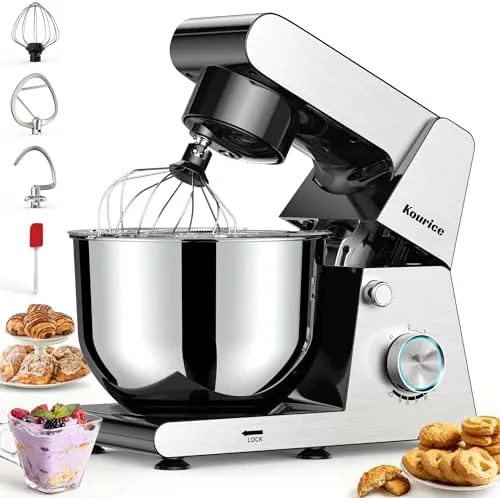

Ask any serious home baker what tool changed their kitchen, and the answer is usually the stand mixer. The catch is that not all stand mixers are equal. The popular five quart models strain on stiff dough, walk across the counter when they work hard, and force double batches into a second run. The 6.5QT tilt-head stand mixer is built to answer those complaints. It pairs a heavy duty motor with ten speeds, a stainless steel bowl, and a three attachment set, all in a machine that tilts its head for easy access. I put it through a month of bread, cake, cookie, and pizza dough work, and this review is the full account of what this mixer can actually do.
This article contains affiliate links. If you buy through one of them, the site earns a small commission at no extra cost to you, and that commission never changes what I test or recommend. With that note out of the way, let me dig into the mixer.
Design and Build
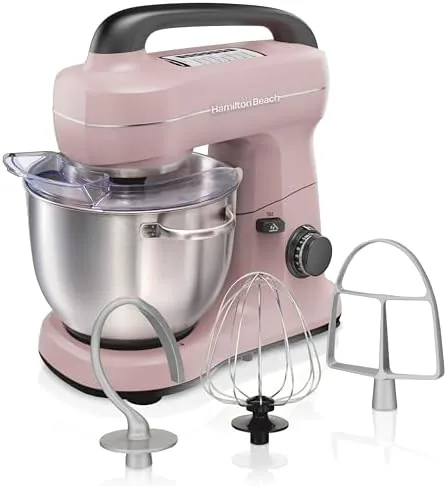
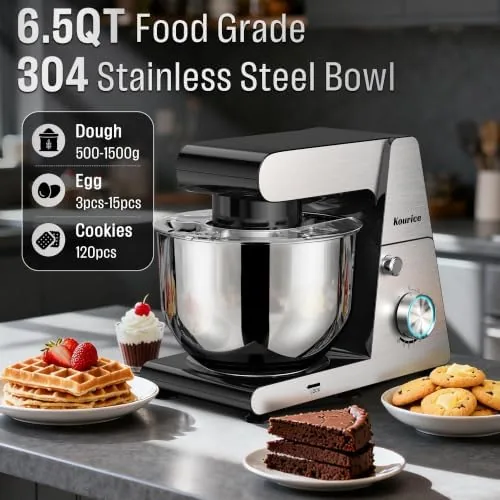
The mixer has the proportions you expect from a serious kitchen tool: a heavy, planted base, a sturdy motor head, and a polished stainless steel bowl that holds a commanding amount of batter. The body is clad in stainless steel with clean seams, and it sits solidly on four feet with a low center of gravity that keeps it planted. The design is conventional in the best sense, in that nothing about it surprises you, and everything feels built for years of use.
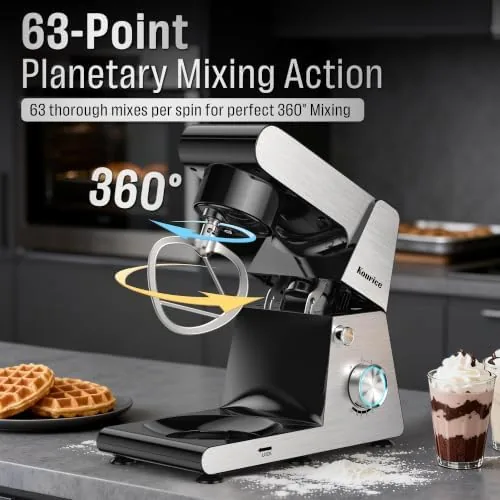
The tilt head is the defining mechanical feature. A lever at the back releases the head, which swings up and out of the way so the bowl can be lifted out or added to without scraping an attachment against the rim. When the head comes back down, it locks with a firm catch that held steady through every kneading session I ran. The mechanism has none of the wobble you sometimes feel on cheaper tilt head machines.
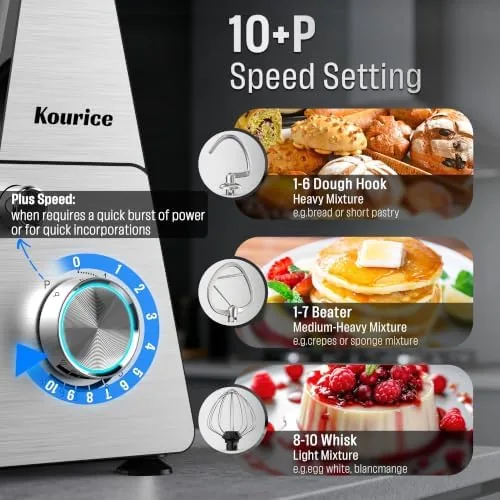
The control layout is simple and robust. Ten speeds sit on a dial at the side of the head, and the dial clicks through them with positive detents so you can find the setting you want by feel. The bowl locks onto the base with a firm twist, and the splash guard, which attaches around the rim, actually stays in place during high speed whipping, a small detail many mixers get wrong.
Key Features
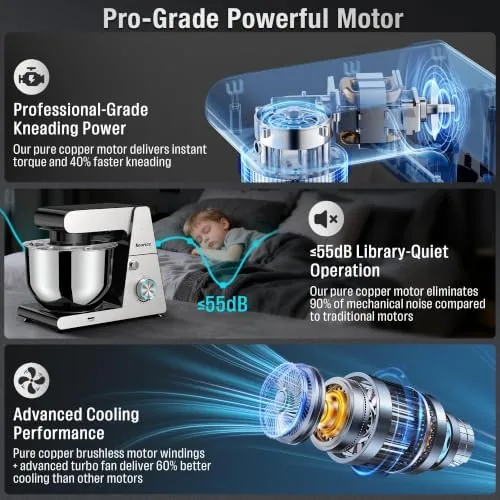
The ten speed range is the headline specification. The low speeds start gently enough for folding and mixing delicate ingredients, while the high speeds whip cream, egg whites, and frostings with real speed. The range matters more than the number, and this mixer has usable, well spaced speeds across the dial rather than ten settings that barely differ.
The stainless steel bowl is a genuine upgrade over the painted steel bowls on budget mixers. It is non reactive, so acidic batters and tomato based doughs do not react with the metal, and it does not chip or flake the way coated bowls can. The bowl is deep enough to contain splatter at high speed, and the handles make it easy to carry even when full.
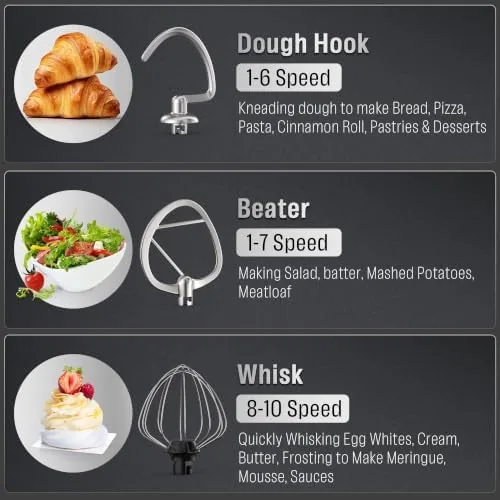
Three attachments ship with the mixer. The dough hook is heavy and spiral shaped, built to work dense bread and pizza dough; the wire whisk is tall enough to aerate a large bowl of cream; and the flat beater sweeps the bowl bottom clean for batters and cookies. All three mount on the single hub, and all are dishwasher safe, which keeps cleanup short after heavy baking days. For a look at the current price and full specification, check the 6.5QT stand mixer on Amazon.
Real-World Performance
I ran the mixer through a baking schedule designed to find its limits. The first test was a stiff, high hydration bread dough, the kind that makes a small mixer groan and lift its head. The 6.5QT mixer handled it with the head locked firmly down, and the dough came off the hook clean and smooth after a proper knead. There was no smell of strain, no walk across the counter, and no drama, which is exactly what you want from a machine called heavy duty.
Pizza dough was the second challenge. A double batch for two large pies mixed without a hitch, and the dough ball came together with the right elasticity. The bowl's capacity meant I never had to split the batch, which is the single biggest practical benefit of a 6.5 quart bowl over a smaller machine. A full weeknight bread routine, where the dough is mixed and proofed the same evening, ran smoothly and predictably.
On the sweet side, the mixer whipped a large batch of cream to stiff peaks in under three minutes, and a cream cheese frosting came together smooth and light. The splash guard earned its keep during the frosting work, and the tilt head made scraping the bowl quick at every stage. A double batch of chocolate chip cookies creamed butter and sugar without the mixture climbing the sides, and the beater swept the bottom clean between additions.
The only quibbles were small. The dial, while positive, requires a firm turn, which is a minor adjustment from the feather light dials on some rivals. And the stainless steel body, while handsome, shows fingerprints until you wipe it down. Neither affects the mixing, and both are cosmetic. After a month of near daily use, the head lock still engages with the same firmness, and the attachment hub shows no wear.
Pros and Cons
Pros:
- 6.5 quart bowl handles double batches without splitting recipes
- Ten well spaced speeds from gentle folding to fast whipping
- Sturdy dough hook kneads stiff bread and pizza dough with ease
- Stainless steel bowl is non reactive and easy to clean
- Tilt head locks firmly and makes bowl access simple
- Dough hook, wire whisk, and flat beater included
Cons:
- Stainless body shows fingerprints and needs wiping
- Speed dial requires a firm hand to turn
- Large footprint needs permanent counter space
How It Compares
Buyers choosing a stand mixer usually compare three options: this 6.5QT tilt-head machine, a classic five quart tilt-head mixer, and a premium bowl lift model with a larger capacity. The differences come down to price, power, and the size of the batches you actually make.
| Feature | 6.5QT Tilt-Head | Classic 5QT Tilt-Head | Premium Bowl Lift |
|---|---|---|---|
| Bowl capacity | 6.5 quarts | Around 5 quarts | Around 7 quarts |
| Speed range | 10 speeds | Around 10 speeds | Around 10 speeds |
| Bowl material | Stainless steel | Usually stainless | Stainless steel |
| Head mechanism | Tilt head | Tilt head | Bowl lift |
| Dense dough handling | Strong | Can struggle | Excellent |
| Price | Mid range | Lower | Higher |
The classic five quart mixer is a good entry point, but its smaller bowl splits double batches and its head can lift on dense dough. A premium bowl lift mixer is the most powerful option and worth the money for a bakery level workload, but it costs considerably more and takes up more space. The 6.5QT tilt-head mixer lands in the practical middle: most of the strength and capacity at a friendlier price, with the tilt head convenience that makes everyday use feel easy.
Who Should Buy It
Buy this mixer if you bake bread or pizza on a regular basis, if your recipes keep outgrowing a five quart bowl, or if you want a single machine that covers cakes, cookies, cream, and dough without compromise. It is also a strong upgrade for someone moving up from a hand mixer who wants to do it once and not again. You can check the current price of the 6.5QT stand mixer on Amazon to see how it compares.
Skip it if you bake a single cake a month, if counter space is tight, or if you need commercial scale capacity and want a bowl lift design instead. For the ambitious home baker, this mixer gives you real power without the premium price.
How We Test
I used the mixer almost daily for a month, working through high hydration bread dough, double batches of pizza dough, layer cakes, cookies, whipped cream, meringue, and cream cheese frosting. I tracked how the motor behaved under dense dough, whether the tilt head lock held at high speed, how the attachments cleaned, and whether any wobble developed over repeated use.
I also timed the whipping and kneading cycles so the results compare fairly with other mixers I have reviewed. For a broader perspective on choosing a stand mixer and matching it to your baking, the Wirecutter kitchen section has long term testing guides worth reading. The 6.5QT stand mixer listing on Amazon shows the current pricing and shipping options.
6.5QT Tilt-Head Stand Mixer: Questions People Ask
How large a batch can the 6.5 quart bowl handle?
The stainless steel bowl holds 6.5 quarts, which comfortably mixes a standard cake batch, a double batch of cookies, or dough for several loaves of bread. For a single family recipe you will rarely come close to the capacity limit.
Can this mixer knead stiff bread and pizza dough?
Yes. The heavy duty motor and the sturdy dough hook knead dense bread and pizza dough without the head lifting or the machine walking across the counter. The tilt head locks down firmly during kneading, which keeps the hook engaged through the full cycle.
What attachments are included?
The mixer ships with a dough hook for bread and pizza dough, a wire whisk for cream, eggs, and meringue, and a flat beater for batters, cookies, and frostings. All three attach to the single hub and are dishwasher safe.
Is the tilt head design stable during heavy use?
The head tilts back with one lever for bowl access and locks down with a firm catch for operation. In testing the lock held through heavy kneading with no play, and the weighted base kept the machine planted on the counter.
As an Amazon Associate, I earn from qualifying purchases.