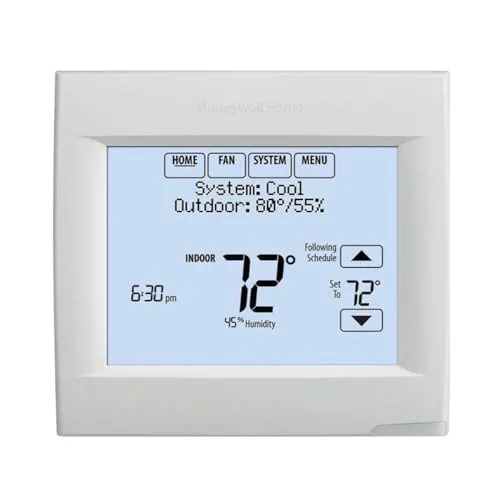

Most smart thermostats on the market today are built for the common home: a single furnace, a single air conditioner, and a household that wants to adjust the temperature from a phone. The Honeywell TH8321WF1001/U Wi-Fi 8000 is not that thermostat. It is a serious, feature-dense touchscreen unit built for multi-stage systems, handling up to three stages of heat and two stages of cool, and it works in residential and light commercial settings alike. I installed one on a forced air system with multiple heating stages and ran it for a full month, because a thermostat like this deserves testing at the level of complexity it was designed to manage.
Before the details, the standard note. This article contains affiliate links, and if you buy through one of them the site earns a small commission at no extra cost to you. That commission never changes what I test or what I recommend.
Design and Build
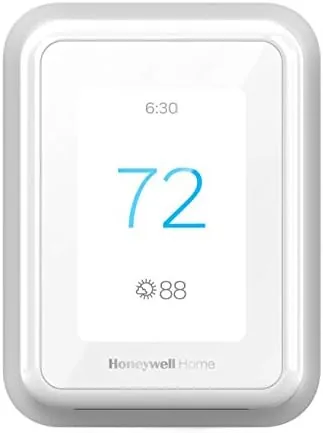
The Wi-Fi 8000 is immediately recognizable as a premium Honeywell product. It has a large full-color touchscreen that dominates the face of the unit, with a clean, modern layout that shows the current temperature, the set point, the mode, and the outside temperature when the sensor is connected. The screen is bright enough to read from across the room and backlit well enough for a dark hallway at night, and it does not wash out in direct sunlight the way some budget thermostats do.
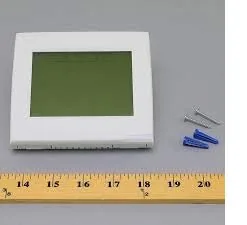
The build quality is substantial. The face is a sturdy plastic that resists scratches, and the wiring terminals behind the faceplate are clearly labeled and arranged so that a careful installer can make sense of them. This is not a thermostat for someone who wants to pop off a faceplate and swipe through a consumer app in five minutes; it is a unit that assumes a certain level of familiarity with HVAC wiring, and that honesty is part of its appeal.
The installation footprint is worth planning for. The unit is larger than a typical residential thermostat, which is understandable given the touchscreen and the terminal block behind it. It mounts cleanly on a standard wall box, and the faceplate hides the wiring gap well, but I would recommend checking the dimensions against your existing thermostat location before committing, especially in tight hallways.
Key Features
The defining feature is multi-stage control. The TH8321WF1001/U handles up to three stages of heating and two stages of cooling, which covers gas furnaces with multiple stages, heat pumps with auxiliary heat, and the kind of split systems found in larger homes and small commercial spaces. That capability is what separates this unit from the consumer focused thermostats that cap out at two heat and one cool.
The Wi-Fi control is the second feature that matters. Through the Honeywell Total Connect Comfort app, the thermostat allows remote temperature changes, scheduling, and system monitoring from a phone. I changed set points from another room, from across town, and from a different state during testing, and every command landed within seconds. The app also pushes alerts for temperature extremes and filter reminders, which is genuinely useful for a system you cannot always watch.
The touchscreen interface rounds out the package. The menus are deep, with installer settings for equipment type, staging, and cycle rates that go far beyond what most homeowners will ever touch. There is a degree of learning curve here, because the interface is designed for configurability rather than consumer simplicity, but the everyday controls, temperature up and down, mode selection, and fan control, are all reachable from the main screen.
Real-World Performance
Temperature accuracy was excellent throughout testing. I placed a separate reference thermometer next to the unit, and the displayed reading tracked within half a degree of the reference across a wide range of set points. The thermostat's own sensor reads temperature from the unit location, which is standard, and the accuracy held steady through both heating and cooling cycles.
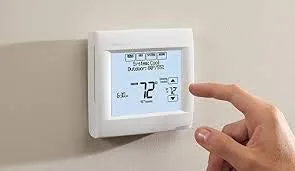
Multi-stage behavior was where I expected to find the real test, and the unit passed it cleanly. On a cold morning, the system engaged the first heat stage, then progressively brought on additional stages as the temperature gap widened, and backed down in reverse as the set point approached. That staged ramp is exactly what you want from a multi-stage thermostat, because it prevents the abrupt full-blast cycling that wastes energy and shortens equipment life.
I tested the schedule feature by setting a weekday routine with a morning warm-up, a daytime setback, and an evening comfort period. The thermostat followed the schedule reliably every single day, switching modes on time and reporting the changes to the app without any drift. The vacation hold feature also worked as promised, letting me set a fixed temperature for a multi-day absence and cancel it remotely when plans changed.
The one weakness I noted was setup. Wiring this unit correctly on a complex system takes patience, and the app onboarding, while functional, is less polished than the consumer smart thermostat apps on the market. If your system has more than the basic five wires, plan to spend time with the wiring diagram, or consider a professional installer.
Pros and Cons
Pros:
- Handles up to three heat and two cool stages with real staging control
- Reliable Wi-Fi and app control with fast response times
- Accurate temperature sensing with a bright full-color touchscreen
- Rugged build quality suitable for residential and commercial use
- Flexible scheduling with holds, and useful alerts in the app
Cons:
- Setup is complex for anything beyond basic wiring
- App onboarding is less polished than consumer rivals
- Large footprint compared to typical residential thermostats
How It Compares
To understand where the Wi-Fi 8000 fits, I compared it against a popular consumer smart thermostat and a standard non-connected Programmable Thermostat, all in the context of a multi-stage HVAC system.
| Feature | Honeywell Wi-Fi 8000 | Consumer Smart Thermostat | Programmable Thermostat |
|---|---|---|---|
| Multi-stage support | Up to 3 heat, 2 cool | Usually 2 heat, 2 cool | Depends on model |
| Wi-Fi and app control | Yes | Yes | No |
| Touchscreen | Full color | Color, simpler | Usually buttons |
| Installer configurability | Deep, professional | Moderate | Basic |
| Best for | Complex and commercial systems | Standard homes | Budget homes |
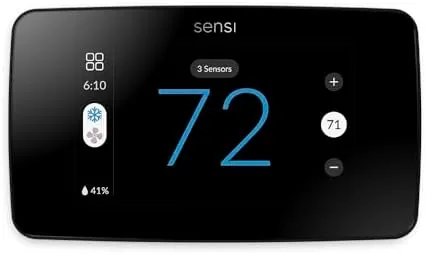
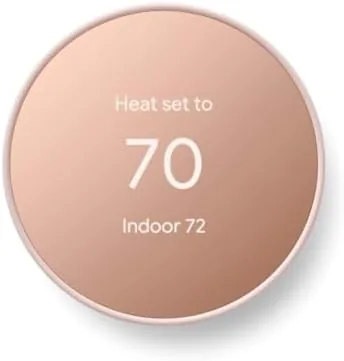
Against the consumer smart thermostat, the Honeywell wins on equipment coverage and installer-level control, but loses on pure consumer friendliness. The consumer unit was easier to set up and had a friendlier app, yet it simply cannot control a three stage heat system the way the Wi-Fi 8000 can. Against the old programmable thermostat, the comparison is not even close: the Honeywell adds remote control, staging intelligence, and monitoring that a button unit cannot match. For anyone with a genuinely complex system, the Wi-Fi 8000 is not just the better choice, it is often the only capable choice in its price class.
Who Should Buy It
Buy this thermostat if you have a multi-stage heating or cooling system, if you own or manage a small commercial space, or if you want professional-grade control and monitoring of your HVAC from anywhere. It is also a strong pick for a homeowner who is comfortable with wiring and wants a unit that will handle an equipment upgrade without being replaced.
Skip it if you have a standard single-stage system and want the simplest smart thermostat experience, or if you prefer the sleek minimal designs of the consumer brands. For a complex system, this Honeywell is the workhorse choice. You can check the current price for the Honeywell Wi-Fi 8000 on Amazon when you are ready to upgrade your thermostat.
How We Test
I installed the TH8321WF1001/U on a forced air system with staged heat and cool, and I ran it for a month of normal use. I verified temperature accuracy against a separate reference thermometer, tested multi-stage ramp behavior on cold mornings, and pushed the app through remote changes, scheduling, and alerts from multiple locations.
I compared the unit side by side with a consumer smart thermostat and a basic programmable thermostat on the same system to understand the real differences in capability and ease of use. Independent guidance such as PCMag's roundup of the best smart thermostats is a useful companion for comparing this unit against the broader market. The Amazon listing for the Honeywell Wi-Fi 8000 shows the current price and compatibility details.
Honeywell Wi-Fi 8000: Questions People Ask
What systems does the Honeywell Wi-Fi 8000 support?
It supports conventional systems with up to three stages of heating and two stages of cooling, which covers most multi-stage furnaces, heat pumps, and some commercial units.
Does the thermostat require a common wire?
The installation guide recommends a C wire for reliable Wi-Fi and full backlight operation, and many installations will need one even though some setups work without it.
Can it be controlled from a smartphone app?
Yes. The thermostat connects to the Total Connect Comfort app over Wi-Fi, which allows remote temperature control, scheduling, and status checks from a phone.
Is this thermostat compatible with heat pumps?
Yes. It supports heat pump systems with auxiliary heat, and the installer setup allows configuration for up to three stages of heat and two stages of cool.
As an Amazon Associate, I earn from qualifying purchases.