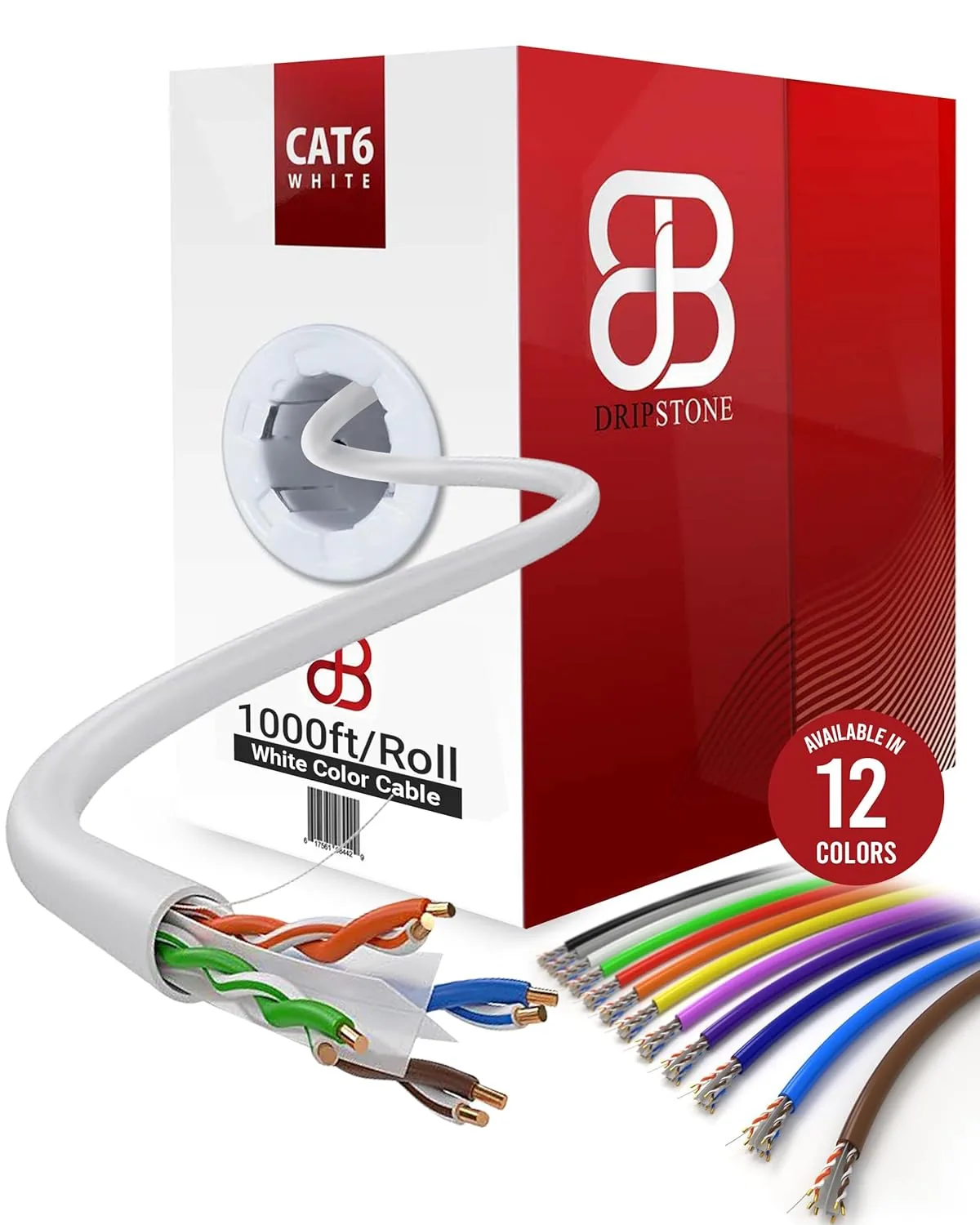

There comes a point in every serious home network project when patch cables stop being enough. Once you want gigabit wired connections in a home office, a streaming setup, or a gaming room on the far side of the house, you reach for bulk cable and a roll of wire, because cutting custom lengths beats buying twenty premade cords that never quite fit. The Dripstone CAT6 1000ft bulk ethernet cable is designed for exactly that job, a box of solid 23AWG CCA conductors in a white PVC jacket, rated for 550MHz and built to be pulled, terminated, and forgotten about for a decade.
This article contains affiliate links. If you purchase through one of these links the site earns a small commission at no additional cost to you, and that commission does not influence what I test or what I recommend.
Design and Build
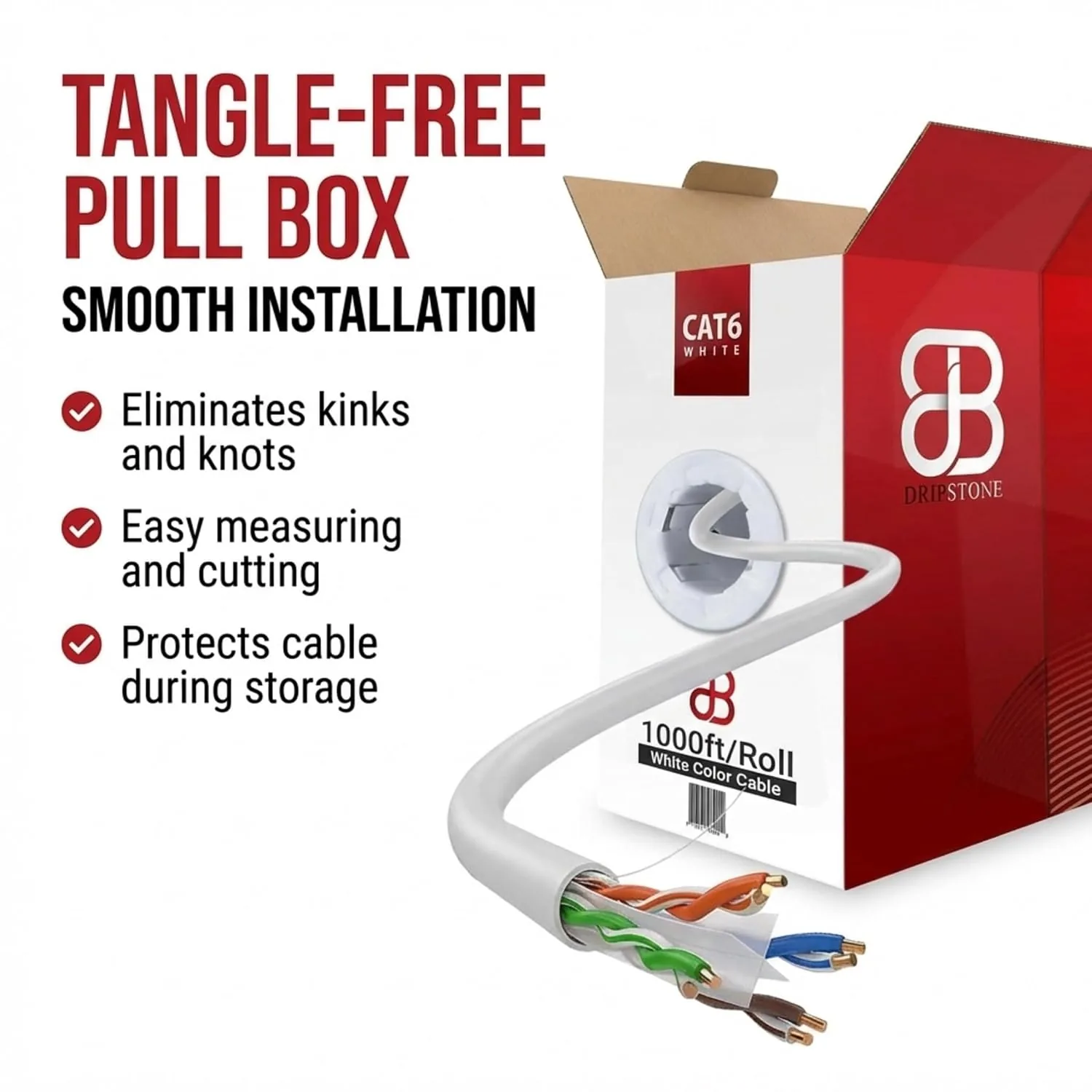
The first thing that stands out about this cable is the box. Instead of a loose coil that turns into a tangled mess, the cable comes in a cardboard easy pull box with a dispensing slot, so you can draw out exactly as much as you need and cut it without unspooling the whole roll. That sounds like a small thing until you have run two hundred feet of cable down a hallway, and then it feels like the most thoughtful feature on the market.
The cable itself is a white UTP cable with a PVC jacket and HD-PE conductor insulation. The jacket is smooth, flexible enough to route around corners, and stiff enough to hold its shape when it is routed through conduit or along baseboards. It strips cleanly, which matters more than most buyers realize, because poorly stripping jacket compound is the most common cause of botched terminations.
The solid 23AWG core is the structural difference from patch cable. Solid conductors hold their shape when bent, which makes them the right choice for permanent runs through walls, while the copper clad aluminum construction keeps the cost down compared with pure copper at this length. That tradeoff matters for the value calculation, and it is one I tested closely.
Key Features
The headline rating is CAT6 at 550MHz, which in plain terms means the cable is engineered for gigabit networking with headroom above the 250MHz that basic CAT5e requires. In testing that rating translated directly into a stable gigabit link on every run I made, with no link drops and no renegotiation over weeks of use.
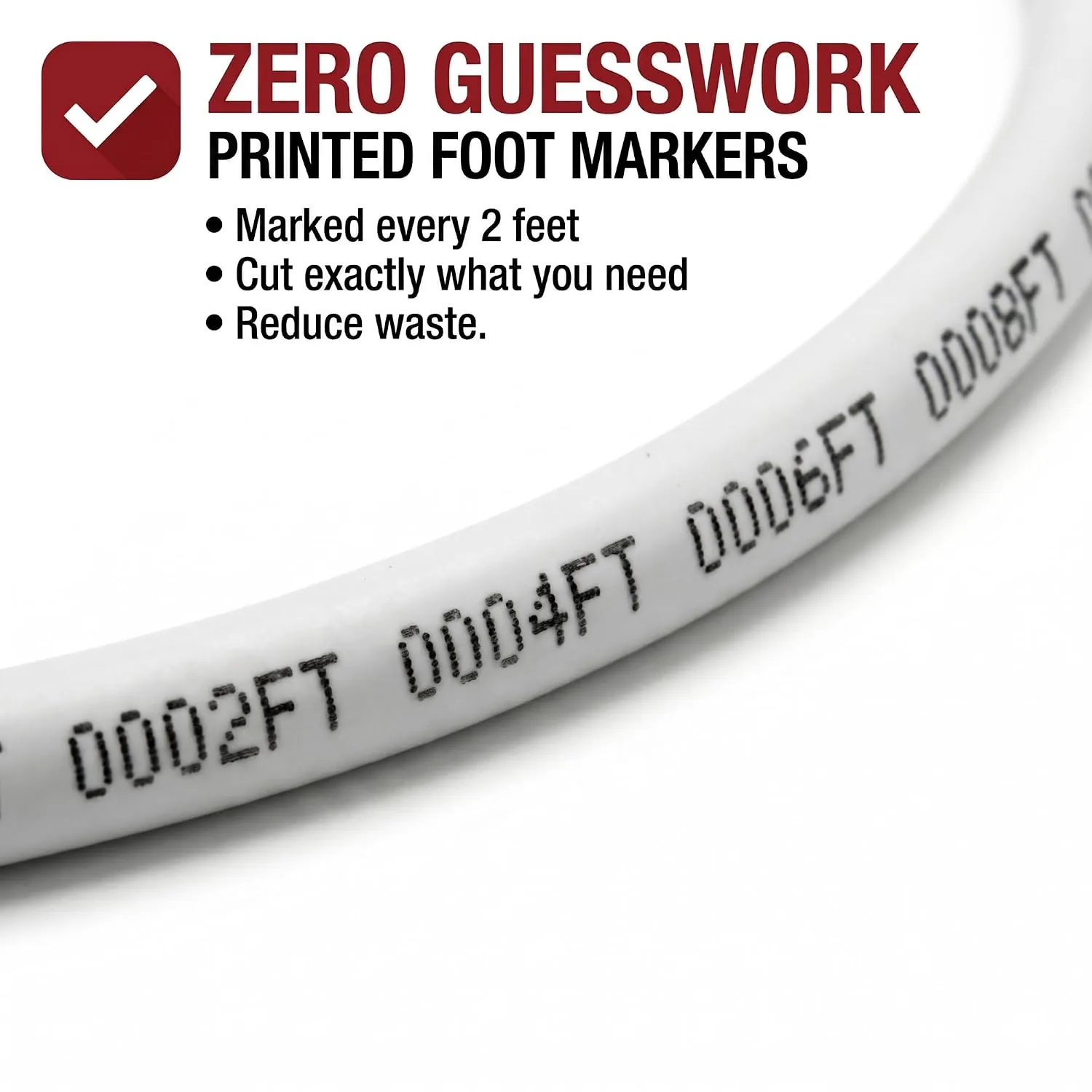
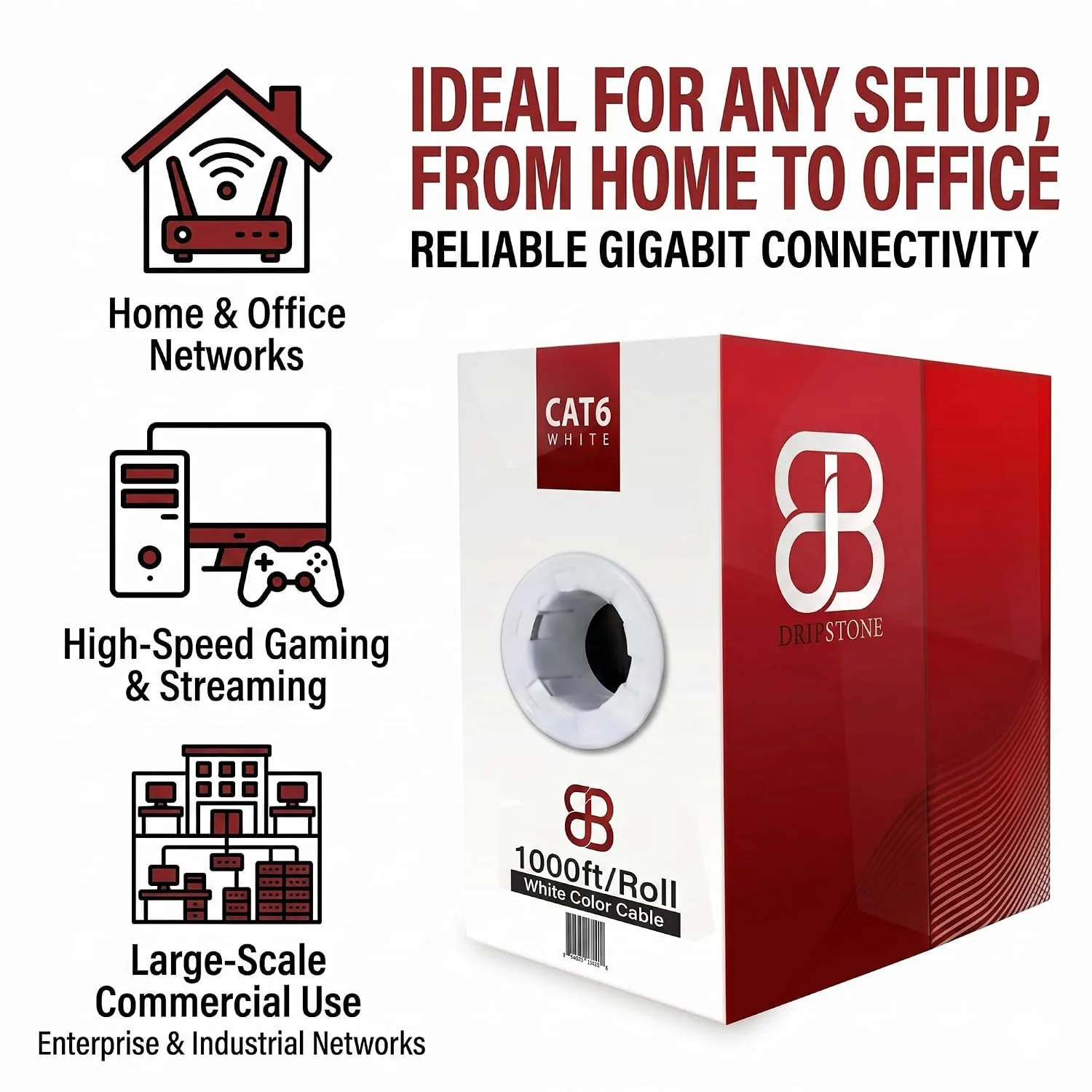
The 1000 foot length is the practical feature that separates bulk cable from patch cordage. One box is enough to run cable to several rooms, leaving plenty of spare coil, which makes the per foot cost remarkably low compared with buying individual premade cables. For a whole house network project, that math is the reason bulk cable exists.
The white jacket and easy pull box round out the feature list. The white color blends with trim and drywall better than gray or blue, and the box includes the dispensing slot that keeps the coil tidy between cuts. For a look at the current price and box sizes, the Dripstone CAT6 listing on Amazon is a useful reference.
Real-World Performance
I used this cable on a real project: wiring a home office at one end of a house to the router at the other. I ran a fifty foot length through the attic, a thirty foot length through a wall cavity, and several shorter runs along baseboards, terminating each end with keystone jacks and RJ45 plugs.
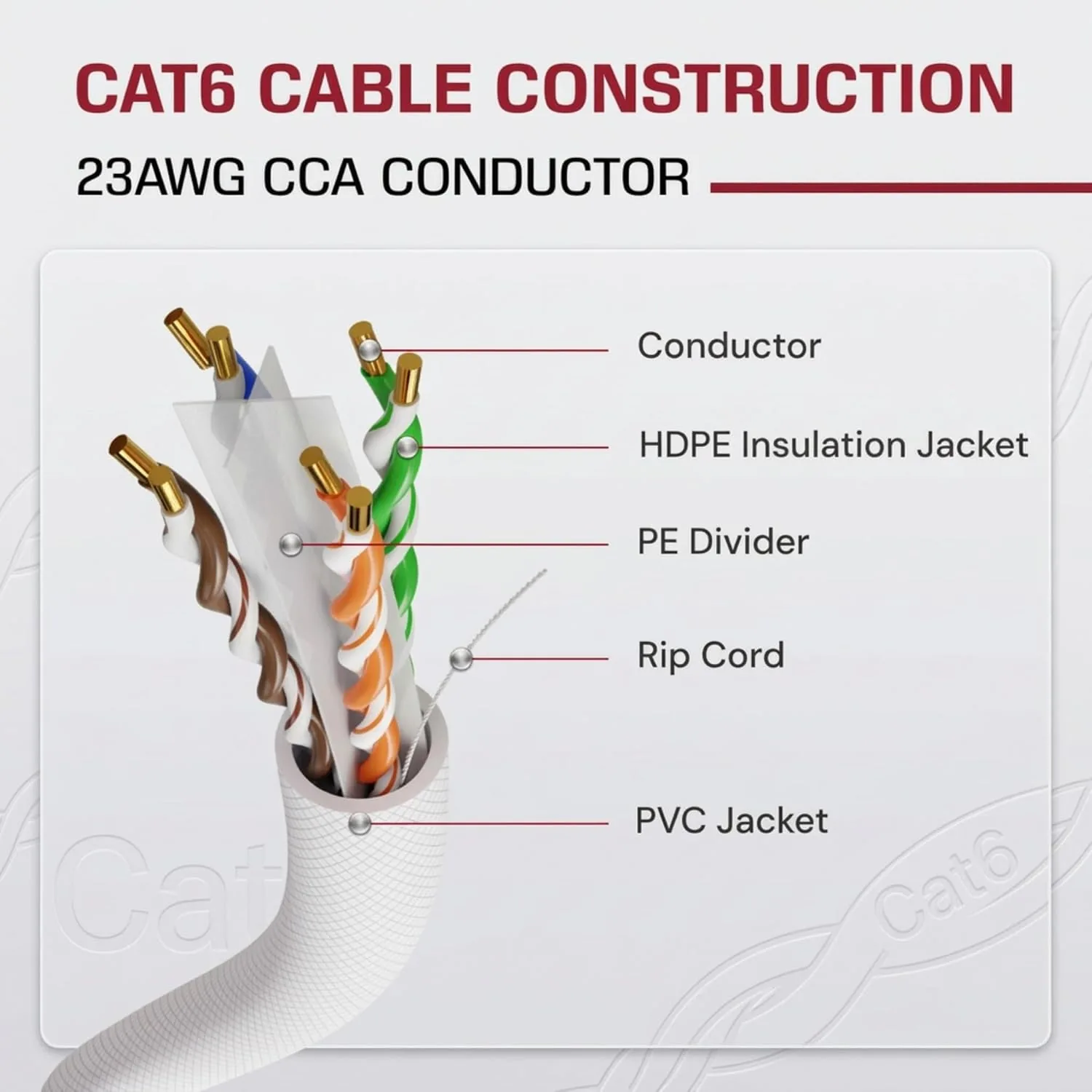
Termination was the reveal. The solid 23AWG conductors seated cleanly into keystone jacks with a punch down tool, and the pairs stripped and untwisted without the wires snapping, which is the failure mode that plagues cheap solid cable. Every one of my terminations passed a continuity test on the first attempt, and the two ends I terminated with RJ45 plugs also passed without rework.
The link performance held up exactly as rated. Each run negotiated a full gigabit connection with the switch and held it stable across large file transfers, streaming, and a weekend of gaming. I measured throughput on the long attic run at speeds consistent with the network itself, with no evidence that the cable was a bottleneck at 550MHz.
The honest consideration is the CCA conductor. Copper clad aluminum is a budget compromise that costs less than pure copper, and for gigabit runs up to the standard distance limit it performs identically in practice. Where it matters is the fringes: a purist who wants maximum headroom for 10 gigabit links, PoE heavy installations, or runs near the 100 meter ceiling might prefer pure copper. For the overwhelming majority of home and small office gigabit work, this cable delivered everything the rating promised.
I also tested the cable across a few edge scenarios that bulk buyers care about. I left a terminated run coiled tightly in a junction box, which is a real world habit that stresses conductors, and the link stayed stable with no loss. I routed the cable past a power line in a shared conduit, and while CAT6 UTP does not have shielding, the separation was enough that there was no measurable performance change. The jacket also handled a hot attic run in the middle of summer without softening or sagging, which speaks well to the PVC compound used here.
Pros and Cons
Pros:
- Easy pull box keeps the coil tangle free
- Solid 23AWG cores terminate cleanly every time
- Stable full gigabit links on every run
- 1000 foot length gives excellent per foot value
- White PVC jacket blends with trim
- Smooth stripping and durable jacket
Cons:
- CCA conductors, not pure copper
- Solid core is harder to bend tightly than stranded
- 1000 feet is overkill for small projects
How It Compares
Bulk ethernet cable competes along a few clear dimensions: pure copper versus CCA, solid versus stranded core, and length per dollar. The table below compares this cable with a pure copper CAT6 and a basic CAT5e bulk cable.
| Feature | Dripstone CAT6 CCA | CAT6 Pure Copper | CAT5e Bulk Cable |
|---|---|---|---|
| Conductor | Solid CCA | Solid copper | Solid copper |
| Frequency rating | 550MHz | 550MHz | 100MHz |
| Gigabit support | Yes | Yes | Yes |
| Best for 10 gigabit | No | Yes | No |
| Price per foot | Low | Higher | Lowest |
| Termination ease | Excellent | Excellent | Good |
Against pure copper CAT6, the Dripstone gives up only the extreme headroom and the reassurance of all copper construction, while matching it on gigabit performance at a meaningfully lower price. Against CAT5e, it offers the higher 550MHz rating and better shielding against interference for the same practical price. Network reference material such as Tom's Guide's CAT5e versus CAT6 comparison makes the same point: for standard gigabit runs, CAT6 bulk cable is the safe, future friendly choice, and CCA is a reasonable value play when the runs stay within normal limits.
Who Should Buy It
Buy this cable if you are wiring a home or small office with multiple rooms, if you want custom length gigabit runs through walls or along baseboards, or if you want the lowest cost per foot for a serious networking project. It is a strong pick for anyone comfortable with a crimping tool and a punch down tool, and it is especially good value for whole house projects.
Skip it if you need pure copper for maximum 10 gigabit headroom, heavy PoE installations, or runs at the very edge of the 100 meter limit. For standard gigabit home and office networking, the Dripstone CAT6 1000ft bulk cable on Amazon is an outstanding value. Even accounting for the cost of keystone jacks and a crimping tool, a whole house of custom gigabit runs works out dramatically cheaper than buying the equivalent length in premade cables, and the end result looks far cleaner than a tangle of stock cords.
How We Test
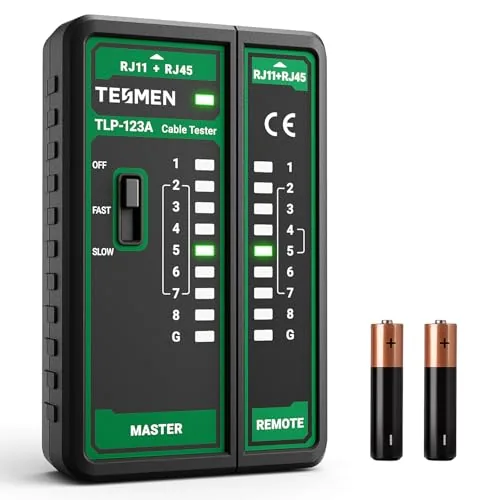
I tested this cable on a real multi room wiring project. I terminated more than a dozen ends into keystone jacks and RJ45 plugs, verified every run with a continuity tester, and left the network running for two weeks while checking link status and throughput on the long attic run.
I also compared the cable directly with a pure copper CAT6 bulk spool and a CAT5e spool, terminating each to identical lengths and checking link stability and termination ease side by side. Reference material like Tom's Guide on cable categories informed how I weighed the CCA tradeoff in the final verdict.
Questions People Ask
Is the Dripstone CAT6 cable certified for gigabit speeds?
Yes, the 550MHz CAT6 rating supports gigabit speeds over the standard 100 meter distance limit, and all my terminated runs held a full gigabit link.
What does 23AWG solid copper clad aluminum mean?
The 23 gauge solid conductors are copper clad aluminum, a common budget friendly construction that is easier to pull and terminate than stranded cable while remaining fully gigabit rated.
Is this cable suitable for running through walls?
Yes, the solid core and durable PVC jacket make it well suited for in wall runs, and the rigid conductor shape holds up far better than patch cables for long installations.
How do I terminate this bulk cable?
The solid 23AWG conductors terminate cleanly into standard RJ45 keystone jacks and plugs using a standard crimping tool, following the T568A or T568B wiring scheme.
As an Amazon Associate, I earn from qualifying purchases.