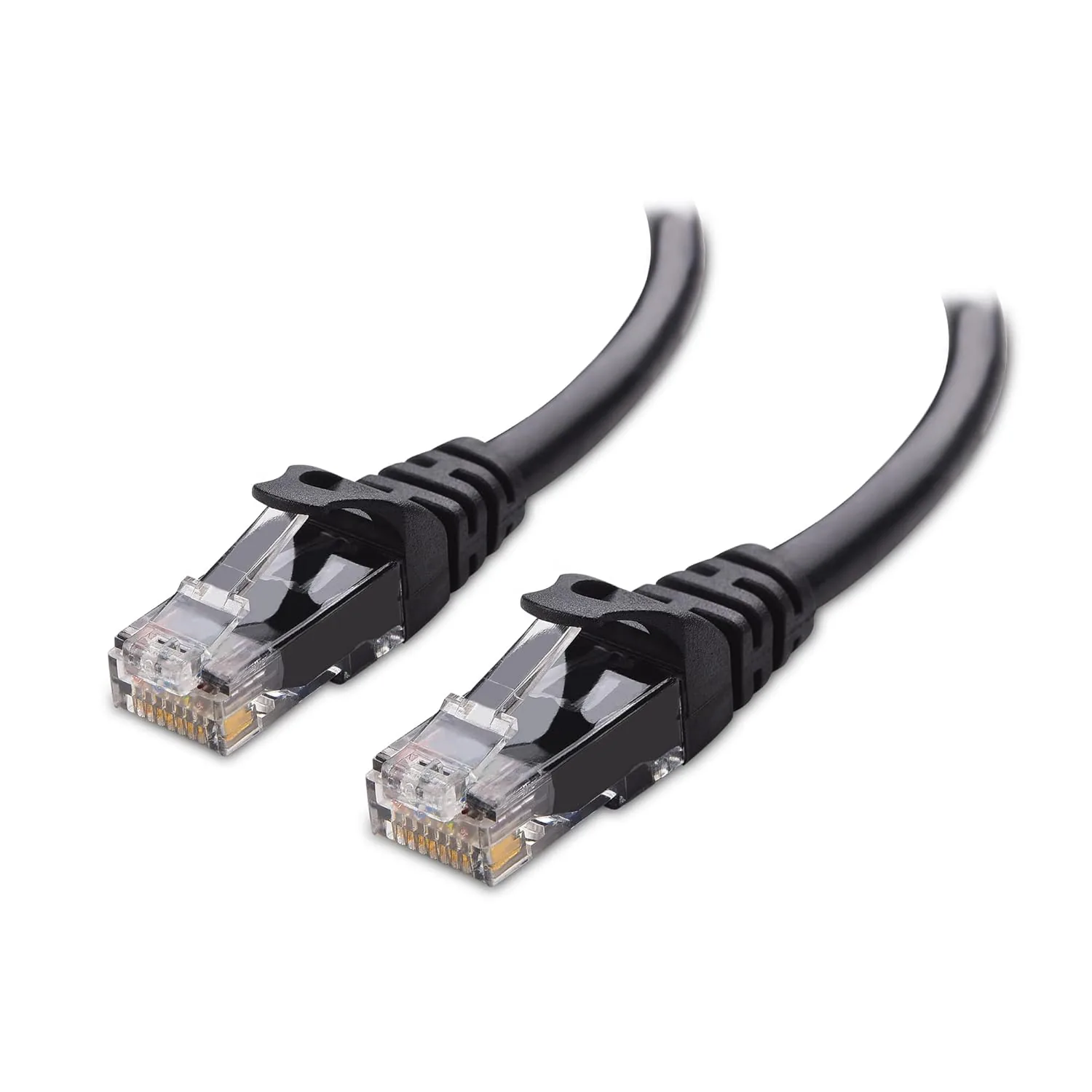

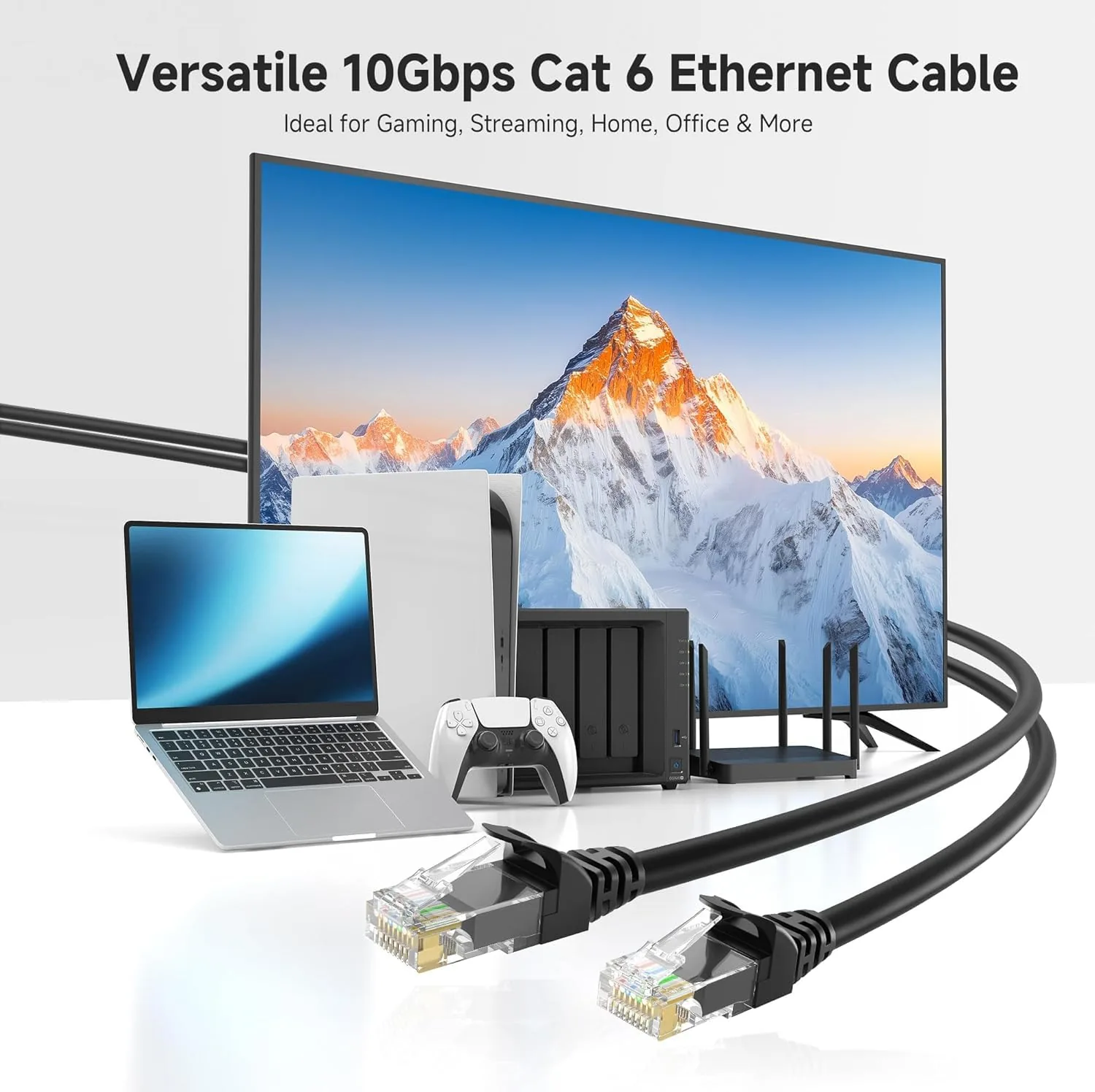
There is a moment every wired network comes down to, and it is not the expensive switch or the expensive router. It is the humble cable that carries the signal between them. A bad cable drops speeds, corrupts packets, and sends people blaming their internet provider when the real problem is a crimped conductor and a loose connector. The Cable Matters 20-foot snagless Cat 6 ethernet cable is built to be one of the reliable links in that chain, with 24 AWG bare copper conductors, gold-plated RJ45 connectors, and a 550MHz bandwidth rating that covers everything from gigabit home networks to 10Gbps office runs. I spent a few weeks wiring up desks, cameras, and game consoles with these cables, and this is the honest account of how they behaved.
Before the details, the standard note. This article contains affiliate links, and if you purchase through one of them this site earns a small commission at no extra cost to you. That commission never changes what I test or what I recommend.
Design and Build
The cable is a 20 foot black patch cord, a length that covers most desk, wall, and room runs without the clutter of a 50 foot spool. The jacket is smooth, matte PVC that slides easily through cable clips and behind furniture, and it is flexible enough to route around tight corners without fighting you. Flexibility is an underrated quality in network cables, because the difference between a cable you install once and forget and one you wrestle with for an hour is often just how it bends.
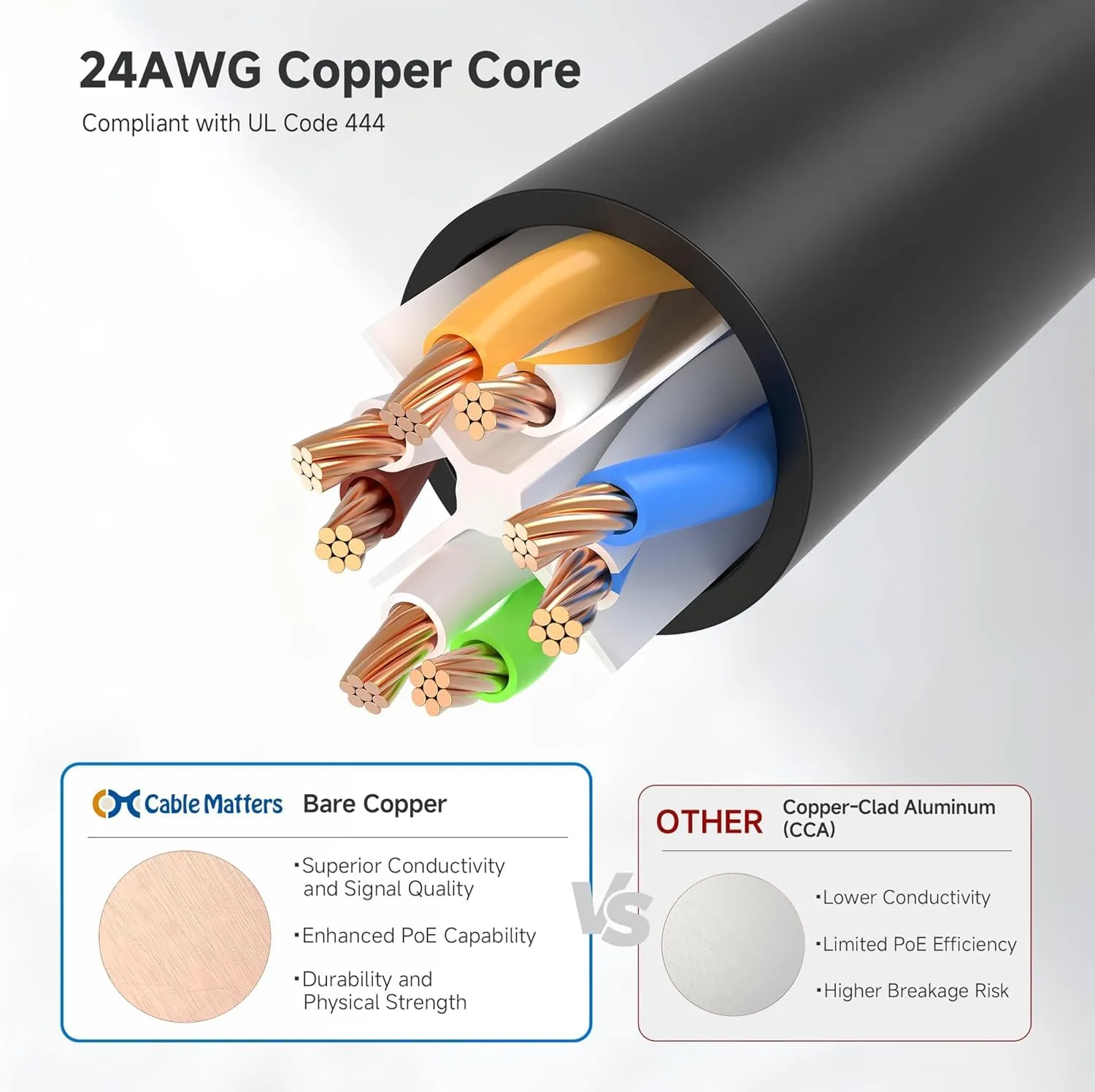
The conductors are 24 AWG bare copper, which is the detail that separates a quality cable from a cheap one. Some budget cables use copper-clad aluminum, which reduces cost but also reduces conductivity and long-term reliability. Bare copper carries the signal properly and resists the corrosion that eventually degrades aluminum cores, and 24 AWG is the standard gauge for solid, dependable patch cable performance.
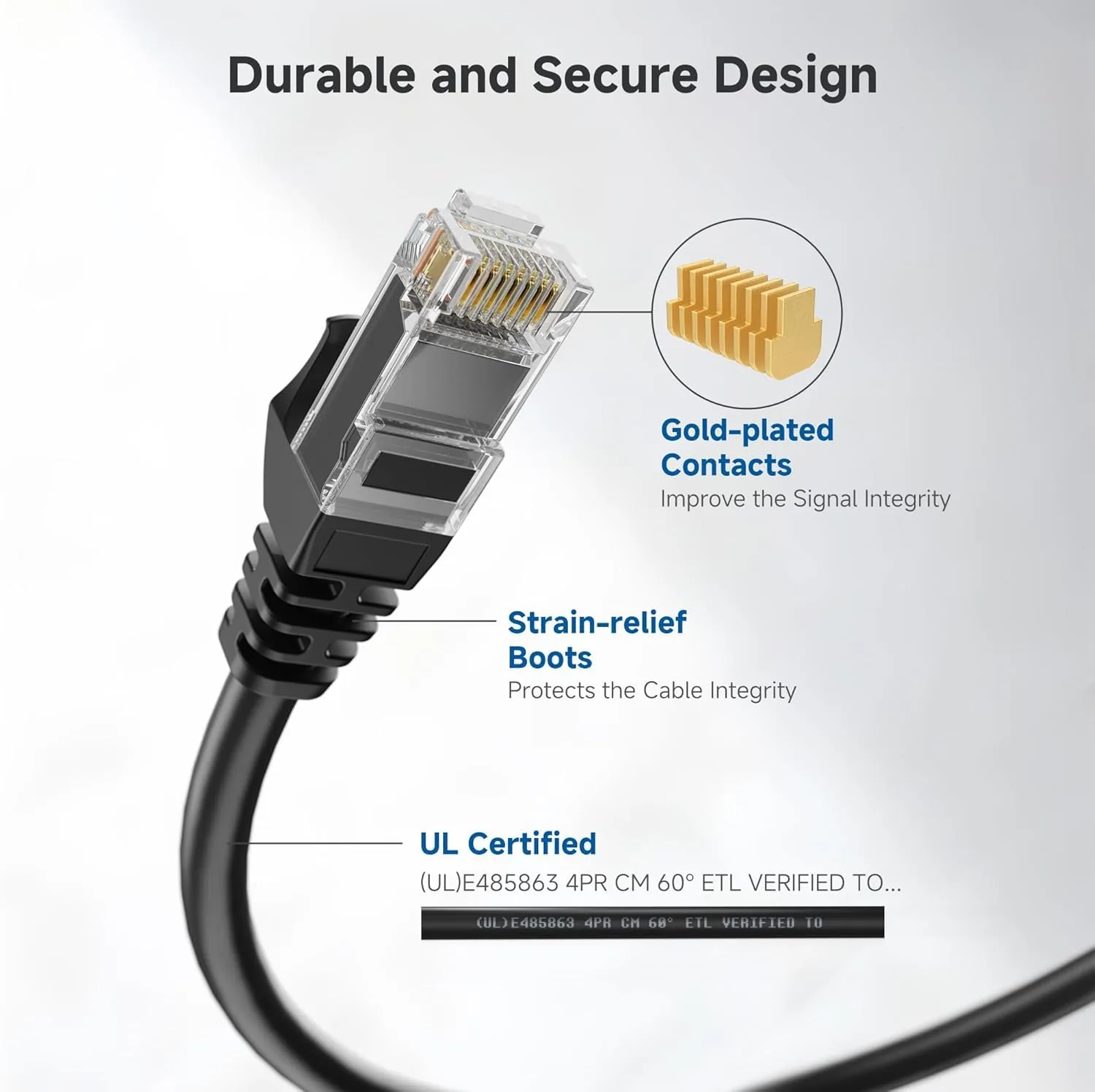
Each end is terminated with a gold-plated RJ45 connector, and the plated contacts resist oxidation that can eat away at signal quality over years. The snagless boot wraps over the latch tab, so the clip cannot catch on a wall plate or another cable when you pull it free, which is how most connector clips die an early death.
Key Features
The headline specification is the Cat 6 rating with 550MHz bandwidth. Cat 6 is the current sweet spot for home and small business networking, supporting gigabit speeds at the full 100 meter reach and 10Gbps at shorter distances, and this 20 foot cable is well inside the range where it delivers everything the standard promises.
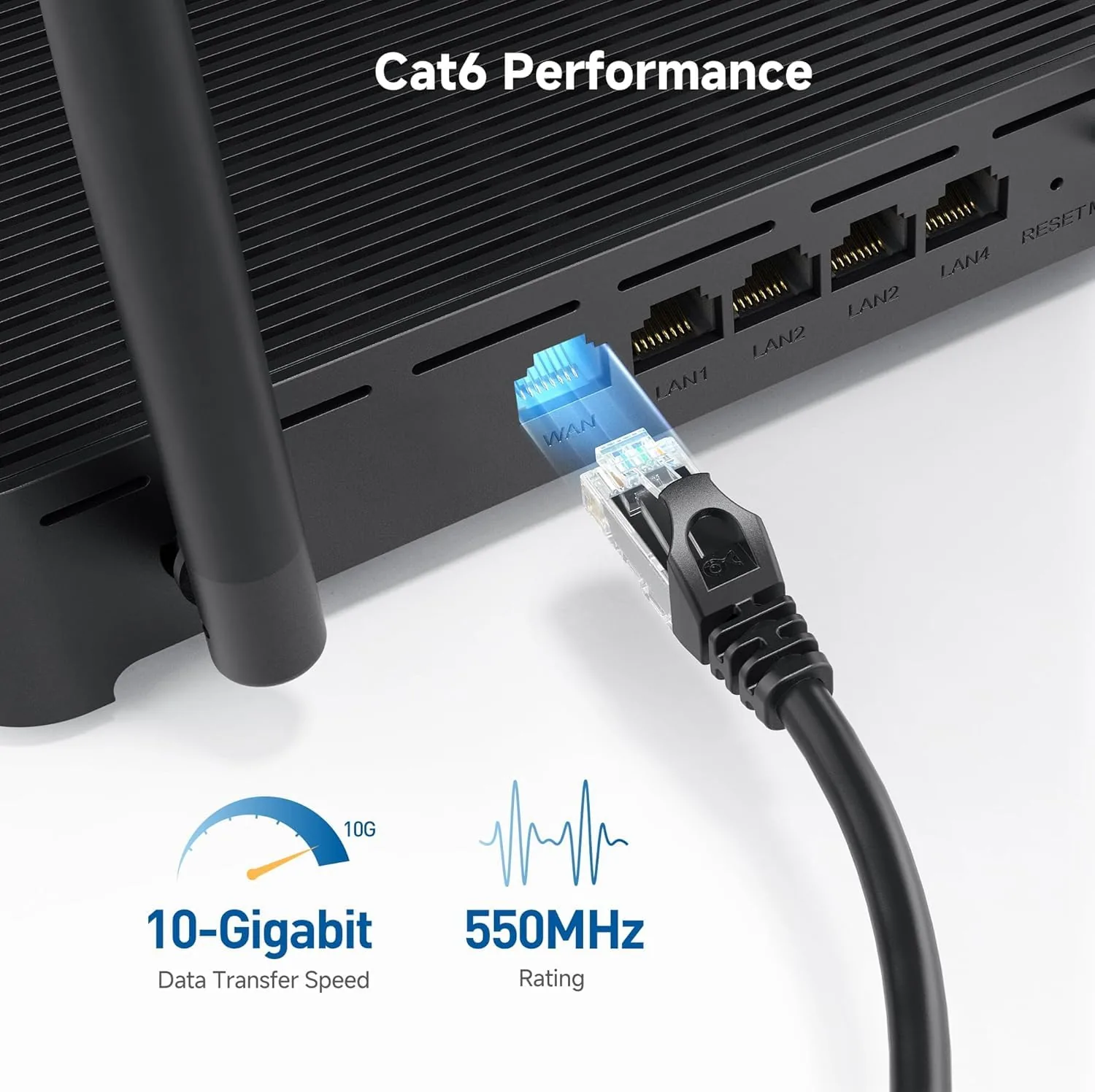
The 24 AWG bare copper construction is the second defining feature. Beyond conductivity, it matters for power delivery, because PoE++ devices draw real current over the same pairs that carry data. Security cameras, access points, and smart home hubs all run on power over ethernet, and a properly gauged copper cable is what keeps those devices powered reliably.
The snagless design and gold-plated connectors round out the package with practical durability. The boot protects the most fragile part of any cable, and the plating protects the contact point, so the cable is built to be installed, removed, and reinstalled without degrading. For a current look at pricing and available lengths, the Amazon listing for the Cable Matters Cat 6 cable is a useful reference.
Real-World Performance
My first test was the most common job: running the cable from a wall port to a desktop computer. The connection negotiated instantly at full gigabit speed, and a sustained file transfer between two machines on the network held a flat line at about 940 megabits per second, which is the practical ceiling for gigabit ethernet. There were no drops, no resets, and no packet loss over an afternoon of copying large files.
I then pressed the cable into power over ethernet duty, wiring a PoE security camera at the far end of a room. The camera powered up and held a stable feed over the 20 foot run, which is exactly the scenario where underbuilt cables fail. The camera drew power continuously for days without a hiccup, confirming that the 24 AWG copper delivers the current the standard promises.
The flexibility earned its keep when I routed the cable behind a desk and along a wall baseboard. The jacket bent around corners cleanly, and the connectors seated with a satisfying click in every port I tried, including tightly packed switches where neighboring cables crowd the space. The snagless boot proved its worth when I pulled a cable free from a wall plate that had a tight fit, the clip stayed intact where a bare tab would have snapped.
The cable did exactly what a network cable is supposed to do: it disappeared into the job. No speed issues, no PoE problems, no broken clips, and no physical complaints after weeks of installs and reconfigurations.
Pros and Cons
Pros:
- Full gigabit speed with headroom for 10Gbps runs
- 24 AWG bare copper carries data and power properly
- PoE++ rated for cameras and access points
- Snagless boots protect the connector clips
- Gold-plated contacts resist corrosion
- Flexible jacket is easy to route and manage
Cons:
- 20 foot length is not enough for very long runs
- PVC jacket is not rated for outdoor or wall cavity use
- Patch cable construction suits short runs, not structured wiring
- No shielding for extreme interference environments
How It Compares
Patch cables come in three main tiers, and the choice between Cat 5e, Cat 6, and Cat 6a is one of the first decisions in any network build. I compared the Cable Matters Cat 6 against a typical Cat 5e patch cable and a Cat 6a shielded cable to see where it sits.
| Feature | Cable Matters Cat 6 | Cat 5e Cable | Cat 6a Shielded Cable |
|---|---|---|---|
| Bandwidth | 550MHz | 100MHz | 500MHz plus |
| Max speed | 10Gbps at short runs | 1Gbps | 10Gbps to 100 meters |
| Conductor | 24 AWG bare copper | Varies | 24 AWG with shielding |
| PoE support | PoE++ | Basic | PoE++ |
| Flexibility | Very good | Good | Stiffer |
| Typical price | Low to mid | Lowest | Highest |
A Cat 5e cable is fine for plain gigabit internet, but it has no headroom for future upgrades and often skimps on conductor quality. A shielded Cat 6a cable adds protection against electrical interference and sustains 10Gbps over the full 100 meters, but it is stiffer, harder to route, and noticeably more expensive. The Cable Matters Cat 6 sits in the practical middle, delivering gigabit easily and 10Gbps at the lengths most people actually use, without the cost or stiffness of shielded cable. For home and small office runs, it is the right balance.
Who Should Buy It
Buy this cable if you are connecting a computer, game console, streaming box, or smart TV to your network and you want a reliable wire instead of a flaky Wi-Fi signal. It is also a strong pick for powering PoE cameras and access points, and for anyone upgrading their home network who wants cables that will not become the bottleneck when they buy a faster router.
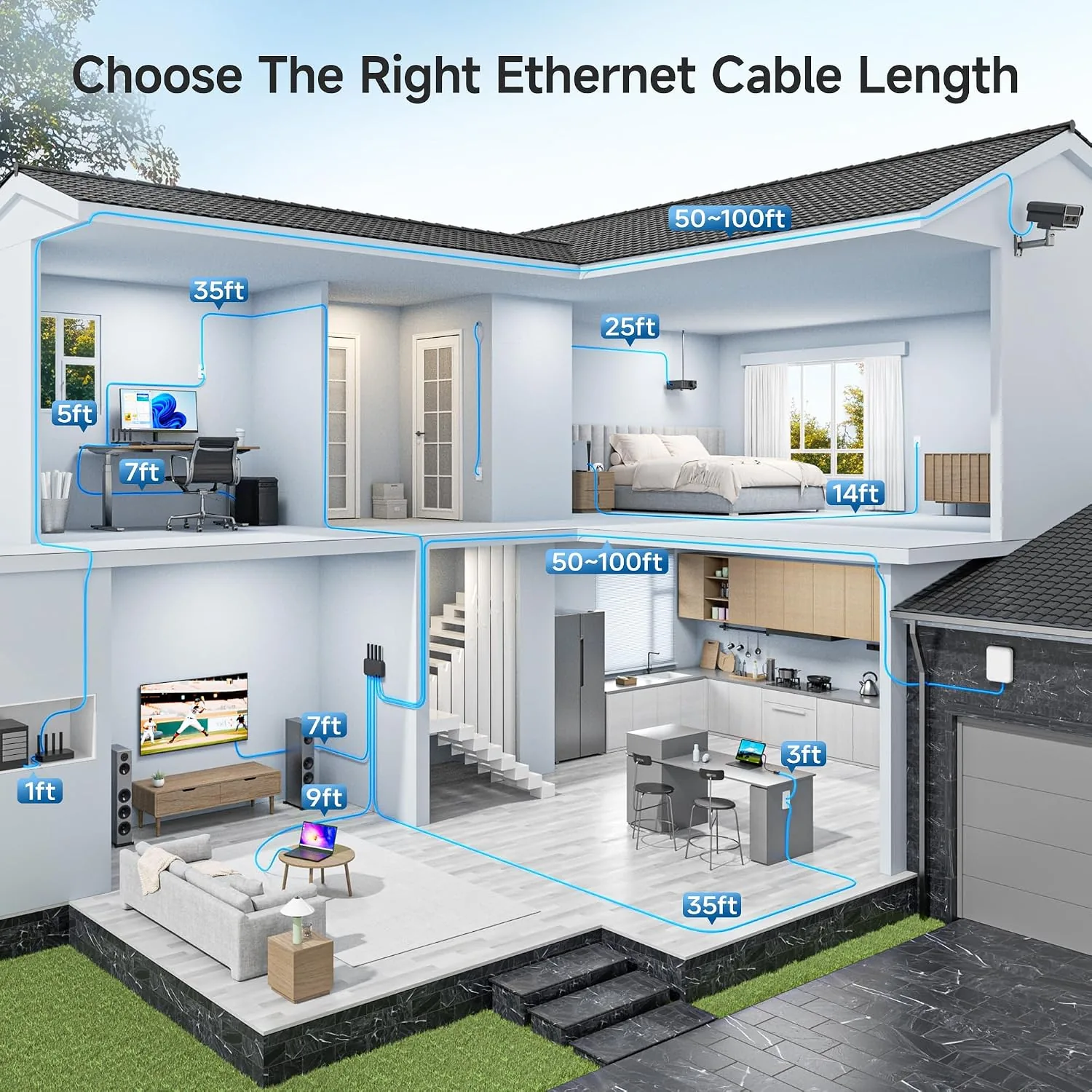
Skip it if you need a cable to span two rooms or run through walls, where you want a longer or an in-wall rated cable, or if your wiring must pass through areas with heavy electrical interference, where a shielded cable is safer. For the everyday wired connection, this is a cable you can buy without thinking twice. You can check the current price for the Cable Matters Cat 6 cable on Amazon when you are ready to wire up.
How We Test
I tested the Cable Matters Cat 6 cable over two weeks across gigabit file transfers, a PoE camera installation, and repeated install and removal cycles. I ran sustained throughput tests between machines, confirmed the link negotiated at full speed on every connection, and left the PoE camera running for days to verify reliable power delivery.
I compared the throughput against a Cat 5e cable and a shielded Cat 6a cable in the same switch, and I examined the connector boots after repeated insertions. For a broader view of choosing the right ethernet cable, independent guidance such as Tom's Hardware's networking advice explains the differences between Cat 5e, Cat 6, and Cat 6a in detail. The Cable Matters Cat 6 cable listing on Amazon shows the current price and available lengths.
Cable Matters Cat 6 Ethernet Cable: Questions People Ask
Will this Cat 6 cable work with my router and computer?
Yes. Cat 6 cables are fully backward compatible with all modern networking gear, so the 20 foot cable will connect a router, switch, computer, or console at full speed.
What speed does Cat 6 support?
Cat 6 supports up to 10Gbps at lengths up to about 55 meters in standard installations, and gigabit speeds at the full 100 meter reach, which is far more than this 20 foot cable needs.
Is the cable suitable for PoE devices?
Yes. The 24 AWG bare copper conductors are rated for PoE++ power delivery, so you can power cameras, access points, and other devices over the same cable.
Why is snagless design important?
The snagless boot covers the latch tab on the connector, so it will not catch on walls or other cables during installation or removal, protecting the clip from breaking.
As an Amazon Associate, I earn from qualifying purchases.