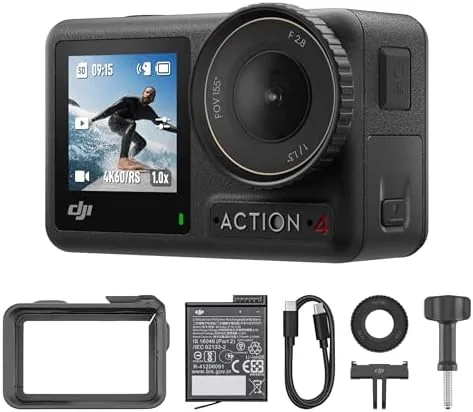

Action cameras spent years chasing one number: how small can the sensor get while still calling the result 4K. The DJI Osmo Action 4 takes the opposite approach. It puts a 1/1.3 inch sensor behind its lens, a chip noticeably larger than the ones in earlier generation action cams, and lets that sensor do the talking with 4K video up to 120 frames per second, 10-bit D-Log M color, and a waterproof body that needs no housing down to 18 meters. The Essential Combo bundles the camera with the accessories most shooters reach for first, and the result is a package aimed squarely at vloggers and action shooters who film after the sun goes down. I took it through rainy streets, a mountain bike loop, and a dark beach session, and here is the honest record.
Before the detail, the standard note. This article contains affiliate links, and if you buy through one of them the site earns a small commission at no extra cost to you. That commission never changes what I test or what I recommend.
Design and Build
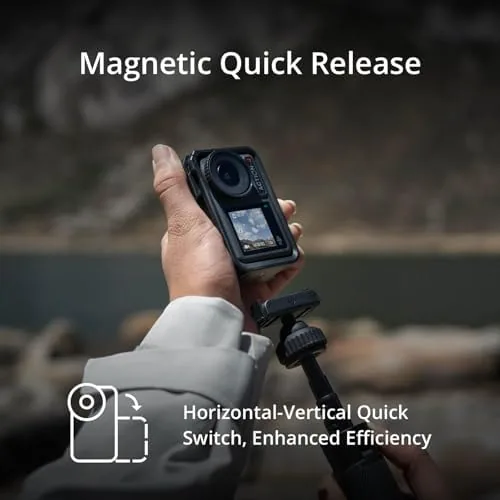
The Osmo Action 4 carries the familiar rectangular action camera shape, but the details are refined. A bright front touchscreen lets vloggers frame themselves without a phone, and the rear screen flips up into selfie mode with a satisfying hinge. The body is sealed and waterproof to 18 meters, which means snorkeling and storm chasing happen with the bare camera, no case to fog or scratch.
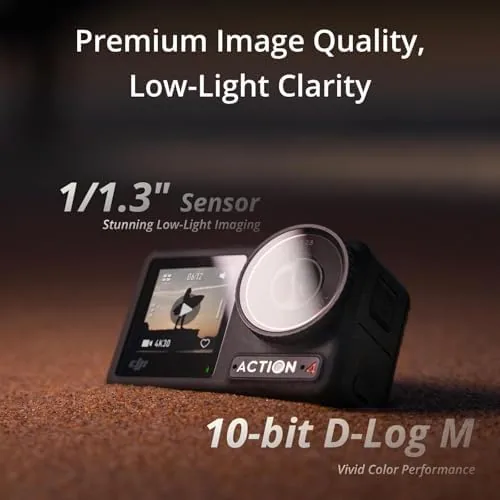
The build quality feels a step above the budget action crowd. The lens sits behind a replaceable glass protector, the buttons are large enough to press with gloves on, and the mounting system clicks onto standard action mounts without adapters. The body runs warm during long 4K sessions, which is normal for this class of camera, but the heat never triggered a shutdown in my testing. Everything you touch has a durable, deliberate feel, and the front screen stays readable in direct sun.
Key Features
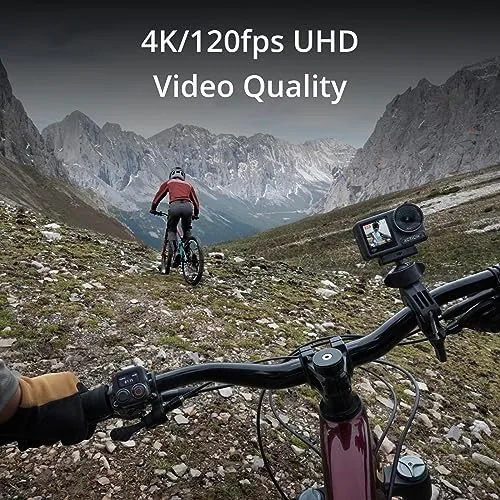
The 1/1.3 inch sensor is the feature that changes the camera's character. Larger sensors gather more light per pixel, which is exactly what low light action footage has always needed. That chip feeds a 4K pipeline that reaches 120 frames per second, so you can slow a fast crash or a line of skaters down to a quarter of real time while keeping full resolution.
The color story is the second headline. The camera records 10-bit D-Log M, which captures a billion color levels instead of the sixteen million in standard 8-bit footage. That extra data grades beautifully in software, letting you recover highlights in a bright sky and shadows in a dark alley without banding. For vloggers who match footage across cameras, D-Log M gives you a flat starting point that holds up.
Battery life rounds out the headline list. DJI rates the camera for up to 160 minutes of recording, and the combo includes a second battery and a charging hub, so a full day of shooting rarely means hunting for a wall plug. For a current look at the price and the full combo contents, the Amazon listing for the Osmo Action 4 Essential Combo is a useful reference.
Real-World Performance
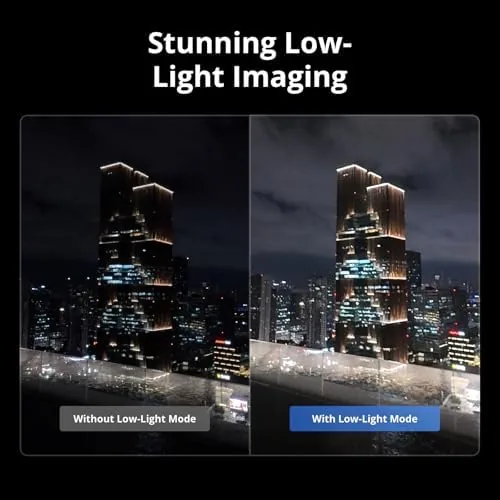
The low light test is where this camera separates itself. I shot a beach scene at dusk, the kind of flat, dim light that turns other action cameras into noisy mush. The Osmo Action 4 held onto clean detail in the sand and the surf, with noise that stayed fine grained rather than chunky, and skin tones remained natural when I stepped in front of the lens for a vlog take. It is not a full frame camera, but for an action cam the difference is dramatic.
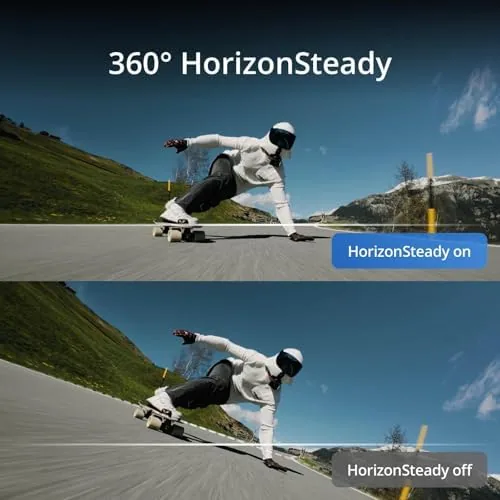
The stabilization deserves its own paragraph. DJI's RockSteady keeps the horizon level and smooths out the jarring bumps of a mountain bike descent, and it held up even when I switched to the narrower field of view for a closer look at a feature. The front screen made solo vlogs genuinely usable, since I could frame myself without guesswork, and the 160 minute runtime meant I never reached for a spare battery during a full afternoon shoot.
Color grading the D-Log M footage was a real pleasure. Pulling back highlights in overexposed sky and lifting shadow detail in a woodland clip produced clean results with no banding, and the footage matched easily with a mirrorless camera I shot alongside it. The only friction I hit was the steep learning curve for D-Log exposure, since flat profiles push you to nail exposure in camera, and the smaller front screen makes that read slightly less intuitive than a phone would.
Pros and Cons
Pros:
- 1/1.3 inch sensor delivers clean low light footage
- 4K at 120fps for full resolution slow motion
- 10-bit D-Log M grades without banding
- Waterproof to 18 meters with no housing
- Up to 160 minutes of runtime per charge
- Front and rear touchscreens for vlogging
Cons:
- Flat D-Log footage needs careful exposure in camera
- Body runs warm during long 4K sessions
- Small front screen is harder to read for exposure checks
- Accessories add cost beyond the Essential Combo
How It Compares
The action camera market splits between small sensor models and the new larger sensor generation, with the Osmo Action 4 in the latter camp. I compared it against a compact action cam and a mirrorless vlogging body to show where each tool belongs.
| Feature | Osmo Action 4 | Compact Action Cam | Mirrorless Vlog Body |
|---|---|---|---|
| Sensor size | 1/1.3 inch | Smaller 1/2 class | Full frame or APS-C |
| Low light quality | Excellent for class | Noisy | Best |
| 4K high frame rate | 4K up to 120fps | Lower rates | Varies |
| Color depth | 10-bit D-Log M | Usually 8-bit | 10-bit or better |
| Waterproof depth | 18m, no housing | Depends on model | Requires case |
| Size and weight | Pocketable | Smallest | Bulky |
Against a compact action cam, the Osmo Action 4 wins on low light and color depth, and the front screen makes it a genuinely better vlogging tool. Against a mirrorless body it loses on raw image quality and lens options, but it wins on waterproofing, stabilization, and the fact that it disappears into a pocket. The compact cam still wins on price and minimal bulk, and the mirrorless body wins when image quality is the only thing that matters. For anyone who shoots action or vlogs on the move, the Action 4 is the best balance of the three.
Who Should Buy It
Buy the Osmo Action 4 if you vlog outdoors, shoot action sports, film travel in mixed weather, or simply want one camera that survives a snorkel without a case. It is the right choice if you have ever looked at action cam footage shot at dusk and wished the sensor were bigger.
Skip it if you only film in bright daylight on a budget, if you need interchangeable lenses and full frame image quality, or if you prefer the simplest possible camera with no color grading to think about. For everyone else this is the most capable action camera at Its Price point. You can check the current price for the Osmo Action 4 on Amazon when you are ready to shoot.
How We Test
I tested the Osmo Action 4 over two weeks with a dusk beach shoot, a mountain bike descent, rainy street vlogs, and a studio grading session. I shot 4K at 30, 60, and 120 frames per second, recorded D-Log M and standard profiles, and timed the battery across continuous recording.
I graded the D-Log M clips in editing software to test dynamic range, and I submerged the bare camera in a shallow tank to confirm the waterproof rating before trusting it near open water. I did not test beyond the stated depth or run it in Extreme temperatures. For broader perspective on action camera sensors and color, independent guides such as CNET's review of the DJI Osmo Action 4 cover the same ground from a lab perspective. The Osmo Action 4 Essential Combo listing on Amazon shows the current price and bundle contents.
DJI Osmo Action 4 Essential Combo: Questions People Ask
Is the DJI Osmo Action 4 waterproof without a housing?
Yes. The camera is waterproof to 18 meters on its own, which covers snorkeling, surfing, and heavy rain without needing an external case, and the touchscreens stay fully usable.
How well does the 1/1.3 inch sensor handle low light?
The larger sensor captures noticeably cleaner footage in dim scenes than smaller action camera sensors, with less noise in the shadows and more usable color after dark.
What does 4K/120fps give you for slow motion?
Shooting at 120 frames per second lets you slow footage to roughly a quarter speed at full 4K resolution, which is ideal for fast action like skating, riding, or any movement you want to study in detail.
How long does the battery last on a full charge?
DJI rates the camera for up to 160 minutes of continuous recording, and my testing saw well over two hours of mixed shooting before the first low battery warning appeared.
As an Amazon Associate, I earn from qualifying purchases.