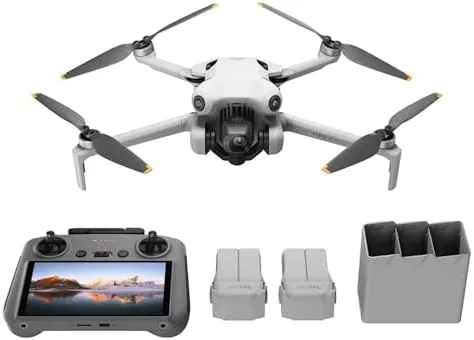

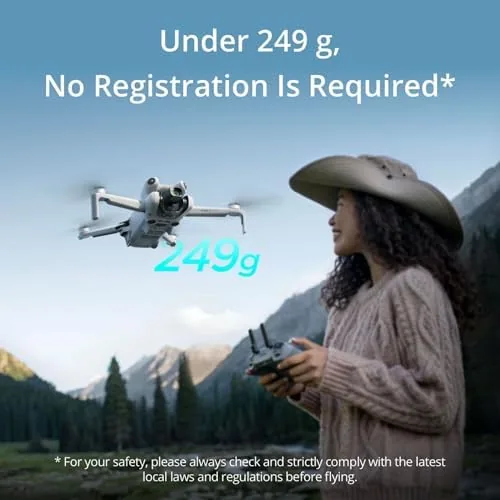
There was a time when a capable camera drone meant a big case, a heavy backpack, and a registration that followed you around like a loyal dog. The DJI Mini 4 Pro ends that chapter. It packs a 4K camera, omnidirectional obstacle sensing, and a three axis gimbal into an airframe that weighs just under 249 grams, which keeps it under the 250 gram threshold used by many regulators. I flew the Fly More Combo version for two weeks across open fields, treeline gaps, and a breezy coastal stretch, and this is the honest record of what the package does well and where it still asks you to be patient.
Before the details, the standard note. This article contains affiliate links, and if you buy through one of them the site earns a small commission at no extra cost to you. That commission never changes what I fly or what I recommend.
Design and Build
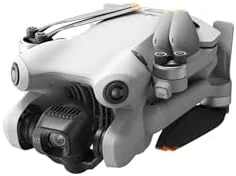
The Mini 4 Pro folds down to roughly the size of a smartphone with the arms tucked in, and it opens with a satisfying click into a compact quadcopter shape. At 249 grams it sits on the desk lighter than most water bottles, and the folding gimbal cover slides on to protect the camera when it is in the bag. The build quality matches what I expect from DJI's modern line: tight tolerances, no rattling panels, and arms that lock into place without any give.
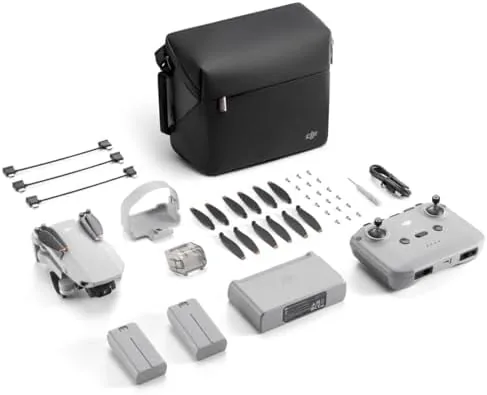
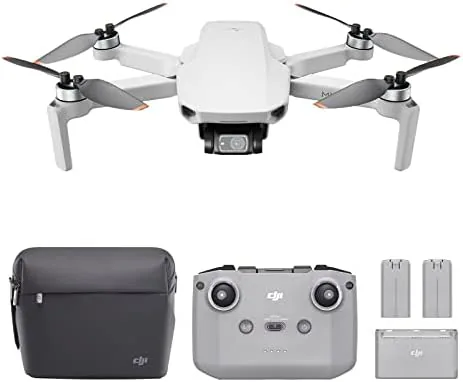
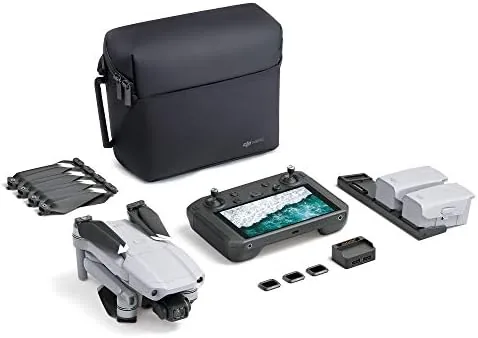
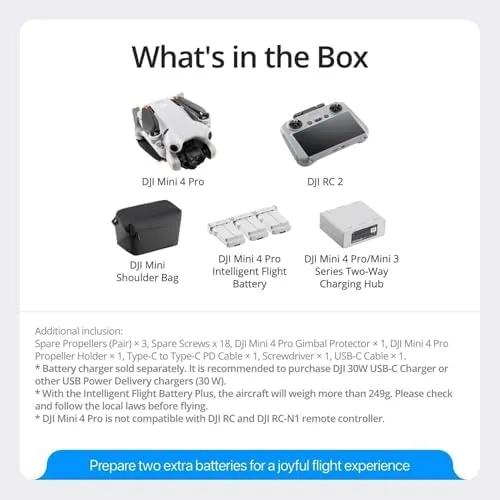
The Fly More Combo is where the practical value lives. It ships with three intelligent flight batteries, a charging hub that tops up all three packs in sequence, two sets of spare propellers, a 360 degree propeller guard, and a shoulder bag that swallows the whole setup. The RC 2 controller has a built in high brightness screen, which means no phone to clip on, no cables, and no fumbling with a bright display in sunlight. Every part feels considered, and the bag itself is small enough that I took the whole kit on a plane without checking anything.
Key Features
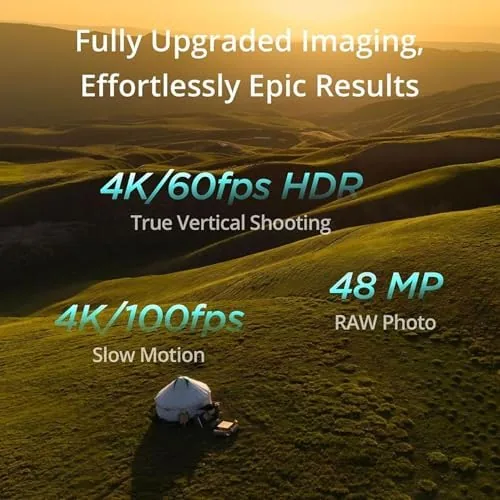
The camera is the headline. A 1/1.3 inch CMOS sensor captures 4K video at up to 60 frames per second, plus 48 megapixel photos, and the f/1.7 lens is bright enough to keep evening shots clean. The three axis gimbal holds the horizon steady through wind and yaw, and the 10 bit D-Log M profile gives color graders real room to work. Digital zoom stretches up to 2x without an ugly collapse in detail.
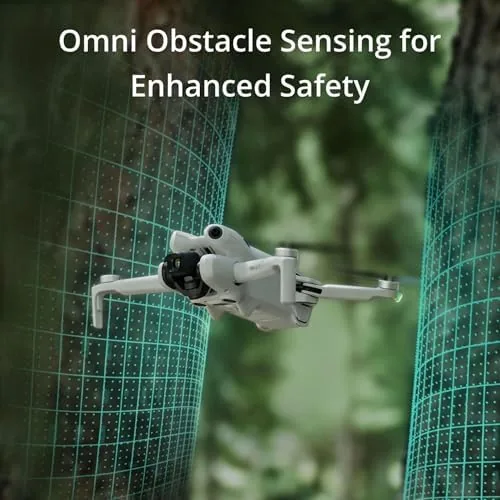
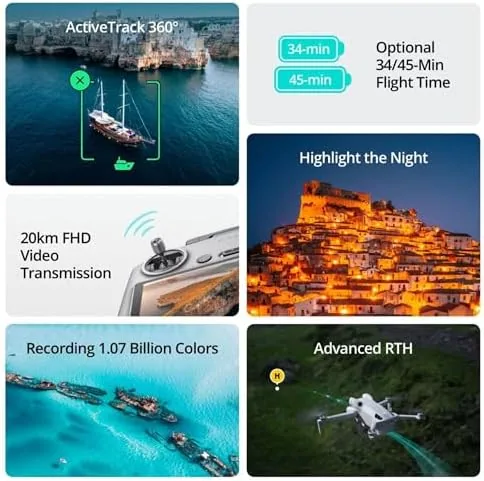
Omnidirectional obstacle sensing is the feature that quietly changes everything. Sensors watch up, down, and all four sides, which means the drone can see a tree branch coming from the side rather than only what is in front. That matters for beginners, and it matters for me on a tight treeline shot that a simpler drone would have ended in a canopy. ActiveTrack 360 and Spotlight modes keep a subject centered while you circle it, and the Smart Return to Home uses that sensing to route back to the takeoff point when the battery drops or the signal thins.
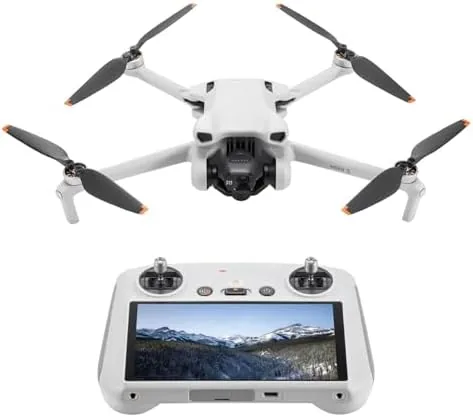
The RC 2 remote is a feature in its own right. Its built in screen stays readable in direct sun, the sticks are smooth, and the O4 transmission keeps a strong video link well beyond visual range, which is farther than you should ever legally fly in most places. For a closer look at the exact contents and the current price, the Amazon listing for the DJI Mini 4 Pro Fly More Combo is a useful reference.
Real-World Performance
Flight performance is the part that wins people over. The Mini 4 Pro is quick when you want it and calm when you do not. Cine mode slows the stick response down for buttery shots, Normal mode is the everyday default, and Sport mode tucks the drone forward into a fast, aggressive line. Wind handling is genuinely impressive for the weight class. I flew into a steady breeze that had the phone weather app shouting warnings, and the gimbal kept the horizon flat while the drone corrected its position without drama.
Battery life is where the Fly More Combo earns its keep. Each intelligent battery flies for up to 34 minutes in ideal conditions, and the three packs add up to roughly 102 minutes of total flight time. In my real world mix of hovering, gimbal work, and transport back and forth, I landed most packs between 26 and 30 minutes, which is excellent for a sub-250 gram drone. The charging hub also balances the batteries, so you do not come home to one hot pack and two full ones.
Video quality holds up to the spec sheet. Daytime 4K is sharp, the colors are pleasant straight out of camera, and the gimbal removes almost all of the micro shake that cheaper drones pass off as character. At dusk the f/1.7 lens keeps ISO from climbing too high, and D-Log M footage grades cleanly in post. ActiveTrack 360 followed me on a jog through the park and kept me framed even as I changed direction, which is a small miracle for a drone this small.
Pros and Cons
Pros:
- True 4K/60 camera with a 48 megapixel photo mode
- Omnidirectional obstacle sensing protects every approach
- Under 249 grams keeps it in the lightest regulatory class
- Three batteries in the combo give up to 102 minutes of flying
- RC 2 controller with a bright built in screen
- Smart Return to Home routes around obstacles
Cons:
- Real world flight time sits below the 34 minute claim
- Propeller guard is fiddly to fit on a fresh battery
- No proper zoom lens, only digital 2x
- Accessories like ND filters cost extra
How It Compares
In the sub-250 gram class, the Mini 4 Pro's natural rivals are the earlier DJI Mini 3 and a few competitor ultralights. I set the three side by side on paper and in the field to see where the extra money goes.
| Feature | DJI Mini 4 Pro | DJI Mini 3 | Competitor Ultralight |
|---|---|---|---|
| Camera sensor | 1/1.3 inch 4K/60 | 1/1.3 inch 4K/30 | Smaller 4K/30 |
| Obstacle sensing | Omnidirectional | Downward only | Forward and down |
| Photo resolution | 48 megapixel | 12 megapixel | 12 megapixel |
| Weight | Under 249 g | Under 249 g | Around 290 g |
| Controller | RC 2 with screen | Phone or RC | Phone required |
| Smart RTH | Obstacle aware | Direct line | Direct line |
Against the Mini 3, the Pro justifies its premium with the omnidirectional sensing, the higher photo resolution, and the better transmission system. Against a typical competitor ultralight, the Mini 4 Pro wins on weight, sensing, and gimbal quality, though the competitor undercuts it on price for people who only need a simple day trip flyer. If you want the most capable small drone for your money, the Mini 4 Pro is the benchmark.
Who Should Buy It
Buy the Mini 4 Pro Fly More Combo if you want a serious camera in your pocket for travel, if you are a beginner who wants obstacle sensing to catch your mistakes, or if you are upgrading from an older drone and want 4K/60 plus a remote with a screen. The three battery setup means a full afternoon of flying rather than a rushed 30 minutes, and the bag makes it genuinely take anywhere.
Skip it if your budget is strict and a simpler 4K drone covers your needs, if you fly so rarely that a single battery is enough, or if you need a zoom lens for far subjects, which this drone does not offer. For everyone in between, this is the drone I hand to a friend who asks what to buy. You can check the current price for the DJI Mini 4 Pro Fly More Combo on Amazon when you are ready to fly.
How We Test
I flew the Mini 4 Pro Fly More Combo across two weeks and roughly fifteen batteries of flight time. I tested Cine, Normal, and Sport modes, ran ActiveTrack 360 while moving through open space, and deliberately triggered Smart Return to Home on a low battery to confirm the obstacle aware routing. I shot 4K/60 daylight footage, a dusk sequence to gauge low light, and a D-Log M clip that I graded in post.
I did not test beyond legal visual line of sight, and I did not fly in rain. Battery times were measured from takeoff to auto land warning with a mix of hovering and forward flight. For broader context on drone rules and the current ultralight class, independent coverage from The Verge's tech coverage explains the wider market this drone competes in. The DJI Mini 4 Pro listing on Amazon shows the current price and bundle options.
DJI Mini 4 Pro Fly More Combo: Questions People Ask
How long can the DJI Mini 4 Pro fly on the Fly More Combo batteries?
Each battery flies for up to 34 minutes in ideal conditions, which works out to roughly 102 minutes across the three included batteries. Real world flights with gimbal work and hover time came in closer to 26 to 30 minutes per pack in my testing.
Does the Mini 4 Pro need to be registered with the authorities?
At 249 grams it stays under the 250 gram threshold used by many regulators, which keeps it in the lightest registration class. Rules vary by country, and adding accessories or prop guards can push the weight up, so check your local rules before each trip.
How does the Smart Return to Home work?
It records the takeoff point and brings the drone back automatically when the battery runs low or the signal drops. The omnidirectional obstacle sensing routes the return path around objects rather than flying a blind straight line.
Is the Mini 4 Pro a good drone for beginners?
Yes. The omnidirectional obstacle sensing, cinematic gimbal, Cine mode, and intelligent flight modes make it forgiving for first time pilots, while the camera and D-Log profile leave room to grow into more serious work.
As an Amazon Associate, I earn from qualifying purchases.