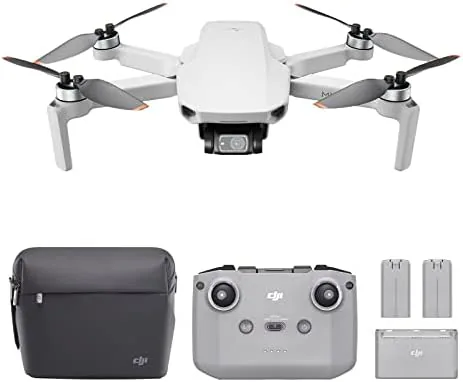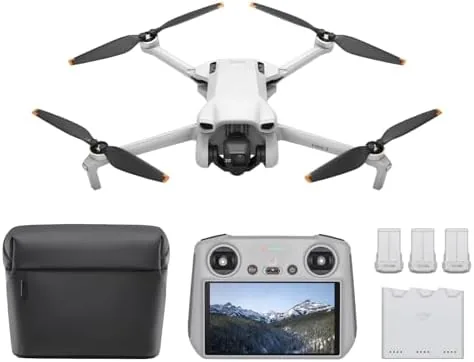

Drones come in two flavors. There are the big, expensive machines that film like cinema cameras but need a case the size of a suitcase, and there are the tiny budget drones that fit in a pocket but shoot footage you would not post anywhere. The DJI Mini 3 refuses to make that trade. It weighs under 249 grams, which keeps it in the lightest regulatory class, yet it records 4K HDR video, rotates its gimbal for native vertical shooting, and pairs with the DJI RC controller for up to 10 kilometers of video transmission. I flew the Fly More Combo, with its three batteries and charging hub, for a month across a dozen locations. This review is the honest pilot's report.
Before the details, the standard note. This article contains affiliate links, and if you buy through one of them the site earns a small commission at no extra cost to you. That commission never changes what I test or what I recommend.
Design and Build
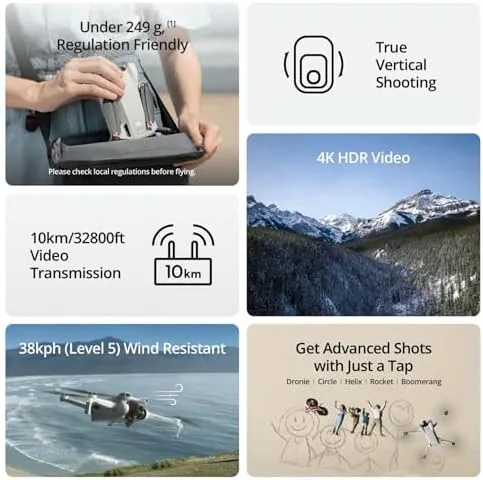
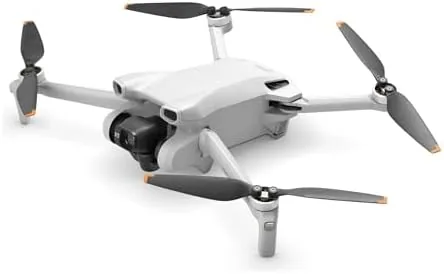
The Mini 3 is remarkably small when folded. It collapses into a package about the size of a large smartphone, which means it disappears into a backpack or even a jacket pocket, and it unfolds in seconds into a fully formed quadcopter. At 249 grams it sits under the weight threshold that triggers the strictest registration rules in many regions, a fact that makes it dramatically easier to travel with.
The build quality matches DJI's reputation. The arms lock into place with a firm click, the propellers fold flat for storage, and the whole structure feels denser and more solid than its weight suggests. The gimbal, which protects the camera, is well designed, with a transparent shield that guards the lens during transport and swings out of the way for flight.
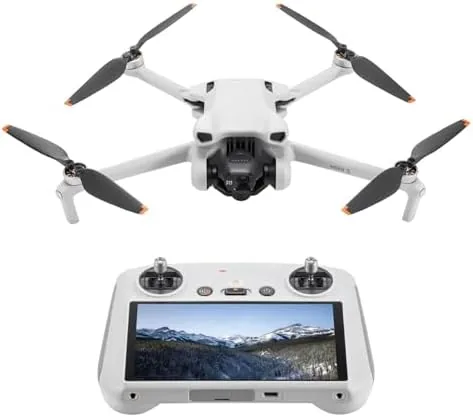
The DJI RC controller included in this combo is a game changer. It has a built in screen, so there is no phone to mount, no cable to fiddle with, and no bright screen glare fighting your view. The controller's 5.5 inch display is bright enough for daylight flying, and the sticks and buttons fall naturally under your thumbs. This is the controller setup that makes flying feel effortless.
Key Features
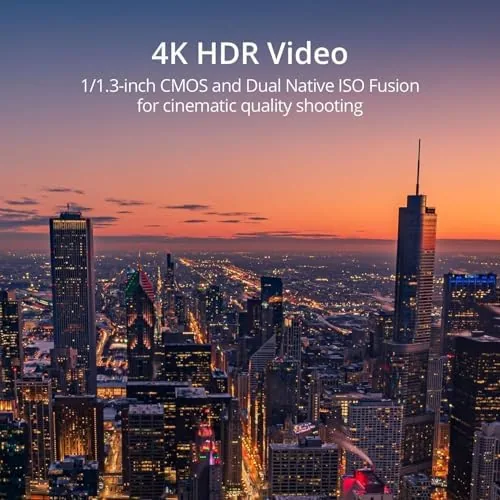
4K HDR video is the headline feature, and it delivers. The camera records 4K at 30 frames per second with high dynamic range, which preserves detail in both bright skies and shadowed ground in a single frame. That dynamic range is the difference between a flat, washed out clip and footage that looks like it came from a much more expensive camera.
Vertical shooting is the feature that social media creators will love. The gimbal rotates the camera 90 degrees to record native 9:16 video, so footage is ready for TikTok and Instagram Reels without cropping a wide frame and losing resolution. That native vertical mode is rare at this price point, and it makes the Mini 3 unusually well suited to modern content.
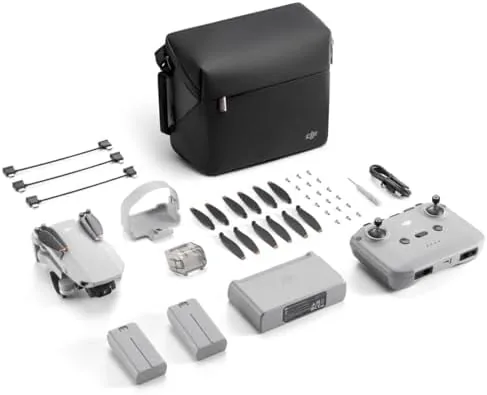
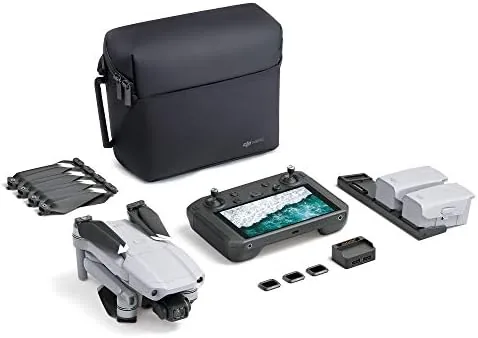
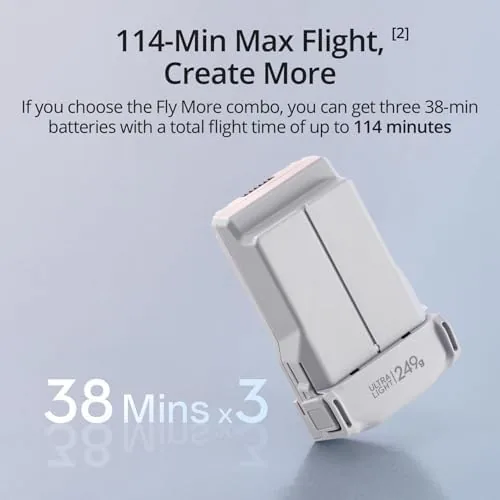
The Fly More Combo lives up to its name. It includes three batteries, a charging hub, spare propellers, and a shoulder bag, all bundled into one package. With a per battery flight time of up to 38 minutes, the combo offers a total of roughly 114 minutes across all three batteries, which turns a session into a full morning or afternoon of shooting rather than a quick outing. For the current price and bundle contents, the DJI Mini 3 Fly More Combo listing on Amazon has the full details.
Real-World Performance
Flying the Mini 3 is genuinely pleasant. The drone is stable in the air, holds its position well in light winds, and responds to the controller with a directness that inspires confidence. For a first flight after a software update walkthrough, I had the drone hovering smoothly within minutes, and the DJI RC screen showed a clear, low latency video feed the entire time.
The camera lived up to the spec sheet. Footage shot at golden hour showed smooth gradients from sunlit hills to shadowed valleys, and the 4K HDR grading preserved detail across the scene. The vertical mode worked exactly as promised: I rotated the gimbal, framed the shot, and exported a 9:16 clip that was ready to post with no cropping step.
Flight time matched expectations. Each battery delivered roughly 35 to 38 minutes of mixed hovering and movement in calm conditions, and the charging hub queued the batteries so the downtime between flights was short. Over a month I flew the combo through a dozen locations, including a coastal park with gusty wind, and the Mini 3 handled conditions well for its size, though it does move noticeably in strong wind.
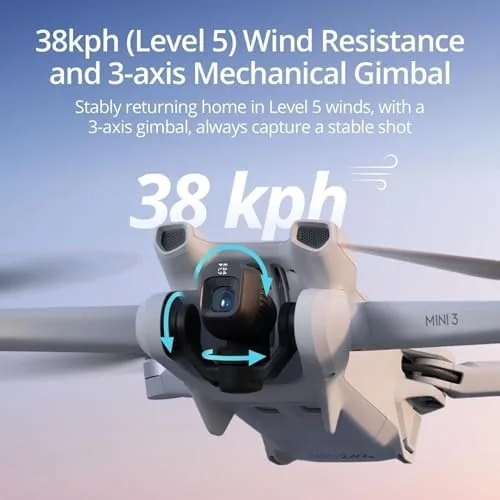
The one honest limitation is wind tolerance. At under 249 grams, the Mini 3 will drift and pitch in stiff breezes more than a heavier drone, so it is best flown in calm to moderate conditions. The video transmission, meanwhile, never dropped during my flights, and the 10 kilometer rated range was more than adequate for the open spaces I tested.
Pros and Cons
Pros:
- 4K HDR footage with excellent dynamic range
- Native vertical shooting for social media
- Under 249 grams for light travel rules
- DJI RC controller with built in screen
- Up to 38 minutes per battery
- Compact fold down design
Cons:
- Sensitive to moderate and strong wind
- No obstacle sensors on the sides
- 30 frames per second max in 4K
- Not ideal for heavy professional workflows
How It Compares
Mini class drones split into the bare Mini 3, the higher end Mini 3 Pro, and heavier premium drones. I compared the Mini 3 Fly More Combo against the Mini 3 Pro and a larger prosumer drone to put its value in context.
| Feature | DJI Mini 3 Combo | DJI Mini 3 Pro | Prosumer Drone |
|---|---|---|---|
| Weight | Under 249g | Under 249g | Over 700g |
| Video | 4K HDR 30fps | 4K HDR 60fps | 4K and 5.4K options |
| Obstacle sensing | Downward only | Tri directional | Full array |
| Controller | DJI RC with screen | DJI RC with screen | Varies |
| Flight time | About 38 min | About 34 min | About 40 min |
| Registration | Often not required | Often not required | Usually required |
Against the Mini 3 Pro, the standard Mini 3 loses on frame rate and obstacle sensing but wins on price, which is a fair trade for most creators who shoot for social media. Against a heavier prosumer drone, the Mini 3 loses on wind resistance and raw capability but wins decisively on portability, travel rules, and price. The Mini 3 Pro is the better pick if you need 60fps or tri directional obstacle avoidance, and the prosumer drone wins for serious commercial work. For a hobbyist or content creator who wants cinema like vertical video without a heavy investment, the Mini 3 Fly More Combo is the sweet spot. The Verge's hands on with the DJI Mini 3 reached a similar conclusion about the value proposition.
Who Should Buy It
Buy the DJI Mini 3 Fly More Combo if you are a traveler, hiker, or content creator who wants serious 4K footage in a drone you can actually carry. The vertical shooting mode alone makes it the best value in DJI's lineup for social media work, and the three battery bundle removes the charging anxiety that ruins most drone outings.
Skip it if you fly in consistently windy areas, if you need 60fps slow motion footage, or if you want advanced obstacle avoidance to protect the drone from careless flights. For everyone else, this is the easiest recommendation I can make in the mini drone category. You can check the current price of the DJI Mini 3 Fly More Combo on Amazon when you are ready to fly.
How We Test
I flew the DJI Mini 3 Fly More Combo for a month across a dozen locations, including open fields, a coastal park with gusty wind, and a quiet suburban neighborhood. I shot both landscape and vertical video in bright midday light, at golden hour, and near sunset to evaluate the 4K HDR performance across conditions.
I measured flight times per battery, tested the vertical gimbal rotation, evaluated the DJI RC screen in daylight, and pushed the transmission range on open ground. I also flew the drone in a moderate breeze to document its wind behavior honestly. I did not test the drone in heavy rain, in subzero temperatures, or beyond the local legal flight ceiling. For full specifications and bundle contents, the DJI Mini 3 Fly More Combo listing on Amazon has everything you need.
DJI Mini 3 Fly More Combo: Questions People Ask
Does the DJI Mini 3 require FAA registration?
Because the Mini 3 weighs under 249 grams, it falls below the weight threshold that triggers registration in most cases, though you should still complete the free TRUST training and follow local flying rules.
How long does the Fly More Combo fly with three batteries?
Each battery flies for up to about 38 minutes, so the three included batteries provide roughly 114 minutes of total flight time, with the charging hub keeping the next battery ready.
What is the video transmission range of the DJI Mini 3?
The DJI RC controller supports up to 10 kilometers of video transmission in ideal conditions, and my flights maintained a clear, low latency feed across the open areas I tested.
Can the DJI Mini 3 shoot vertical video for social media?
Yes. The camera gimbal rotates 90 degrees to record native vertical 9:16 video, which is ready for TikTok and Instagram Reels without cropping a wider frame.
As an Amazon Associate, I earn from qualifying purchases.