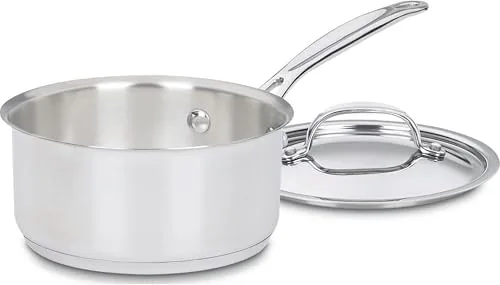

Every kitchen has one pan that does the quiet work. The one that heats a can of soup without scorching, simmers a small sauce to the right consistency, boils an egg or two, and melts butter without burning it. That pan is usually a small saucepan, and it gets used more often than any cast iron skillet or Dutch oven on the shelf. The Cuisinart 1.5 quart stainless steel saucepan, model 719-16, is built for exactly that role, with an aluminum encapsulated base, a tight fitting lid, and an oven rating that lets it move from stovetop to oven without a change of pans. I cooked with mine every day for a month, and this review is the honest record of how it performed.
Before the details, the standard note. This article contains affiliate links, and if you buy through one of them the site earns a small commission at no extra cost to you. That commission does not change what I test or what I recommend.
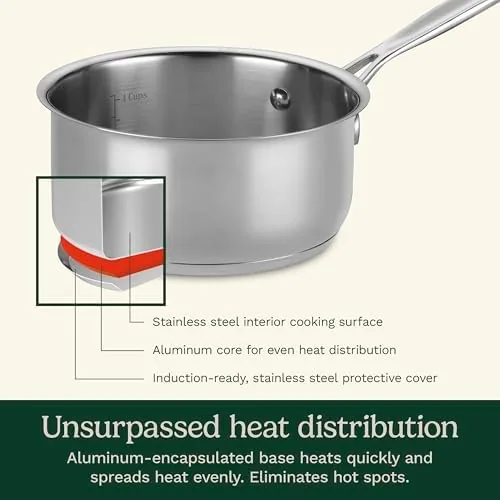
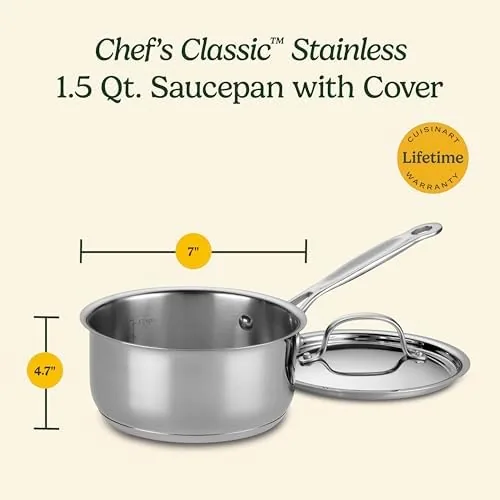
The 719-16 is a straightforward piece of cookware. It is an 18/10 stainless steel saucepan with a polished exterior, a brushed interior, and a base that sandwiches an aluminum core between layers of steel. The aluminum does the heating work, spreading heat evenly across the bottom so the center does not run hotter than the edges, and the stainless gives it a surface that does not react with acidic foods. A double riveted handle keeps the pan balanced, and the lid seals well enough to hold in steam without rattling.
Design and Build
The pan has a solid, weighty feel that comes from the encapsulated base. At 1.5 quarts it is small enough to store without rearranging everything, but the base is thick enough that the pan feels substantial in the hand rather than flimsy. The polished stainless finish shows fingerprints, which is the nature of the material, but a quick wipe restores it, and the exterior stays bright with minimal effort.
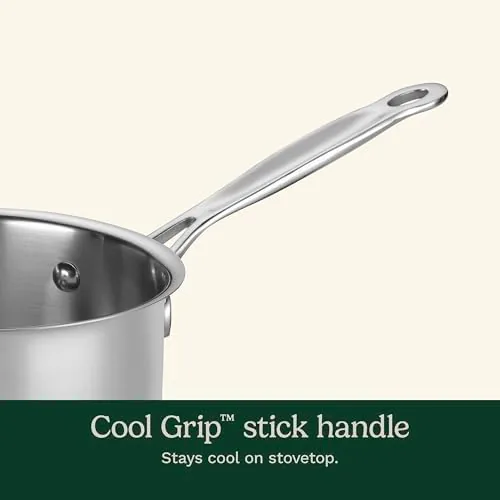
The handle is a double riveted stay cool handle that Cuisinart calls Cool Grip. It stays noticeably cooler than the pan body during stovetop cooking, so you can grip it briefly without a pot holder when you only need to tilt the pan. The two rivets hold it firmly, with no wobble even when the pan is full and being carried across the kitchen. The lid fits snugly with a small steam vent, and it sits flat enough to create a proper seal when you want to trap moisture.
The build quality holds up to daily abuse. I cooked with it on gas and electric, moved it to the oven for a finish, and put it through the dishwasher, and the construction never wavered. The rivets stayed tight, the base stayed flat, and the lid kept its seal. There are more expensive saucepans with three ply construction wrapping the sides, but for the price this two ply design with an encapsulated base covers the real demands of a small saucepan.
Key Features
The aluminum encapsulated base is the feature that defines the pan. The aluminum core pulls heat from the burner and spreads it across the bottom, which prevents the hot spot in the center that plagues cheap stainless pans. That even heating is what lets the 719-16 simmer a sauce without scorching the bottom.
Two ratings expand what the pan can do. It is oven safe to 550 degrees Fahrenheit, which means you can start a reduction on the stove and move it into a hot oven, or use it to melt butter and finish a small bake. It is also induction compatible, so it works on the magnetic induction cooktops that are becoming common in new kitchens, alongside gas, electric, and glass stoves. For A Small Pan, that flexibility is a genuine advantage, because it becomes the one pan you reach for across multiple cooking methods.
The lid deserves its own mention. It has a stainless steel rim and a small steam vent, and it seals well enough to cook grains and heat leftovers with barely any water loss. The brushed interior hides the fine scratches that stainless picks up from metal utensils, which keeps the pan looking clean long after a Nonstick pan would look worn.
Real-World Performance
The daily work started with sauces. I simmered tomato sauce, reduced a wine and stock mix for a pan sauce, and melted chocolate, and the pan handled all of it without a scorched spot. The aluminum base kept the heat even enough that I could walk away for a minute without the bottom turning brown, and the stainless surface cleaned up with a quick rinse and a sponge.
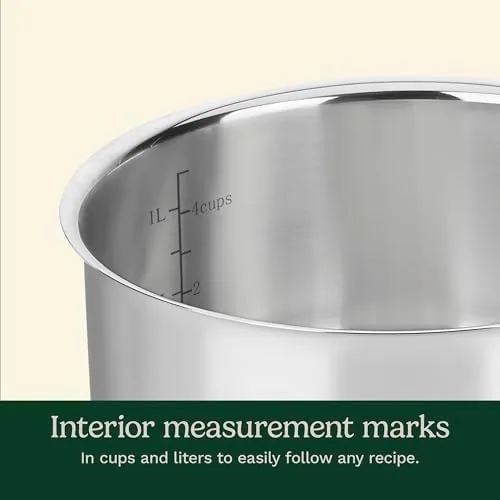
Boiling was the most common task. A couple of eggs, a serving of rice, a small batch of pasta for one person, and reheating soup all happened in the same pan. The 1.5 quart capacity is the sweet spot for cooking for one or two people. It brings water to a boil faster than a large pot because there is less to heat.
The pan moved to the oven several times, most memorably to finish a small bread pudding and to melt butter slowly without browning it. The handle stayed comfortable, the pan held the heat evenly, and the oven rating meant I never had to transfer the contents to another dish. After a month of hard use the pan still sits flat on the burner with no rocking.
There is one honest tradeoff that comes with stainless steel, and it is worth naming clearly. Stainless is not nonstick. Foods with high sugar or starch, like caramel or a rice pudding, will stick if you leave the heat too high, and eggs are not this pan's best friend. The remedy is the standard one for stainless: preheat the pan properly, use enough fat or liquid, and adjust the heat down when the food starts to sizzle hard. Stainless also shows heat marks and a mild rainbow tint over time, which is cosmetic and easily polished out, but it is part of owning this kind of cookware rather than a Teflon coated pan.
Pros and Cons
Pros:
- Aluminum encapsulated base heats evenly without hot spots
- Oven safe to 550 degrees for stove to oven cooking
- Induction, gas, electric, and glass cooktop compatible
- Double riveted stay cool handle stays firmly attached
- Brushed interior hides minor scratching over time
- Dishwasher safe and easy to keep clean
Cons:
- Stainless steel is not nonstick and needs proper technique
- 1.5 quart capacity only suits one or two servings
- Polished exterior shows fingerprints and water spots
- Heat marks and rainbow tint appear with use
How It Compares
A small stainless saucepan has three common rivals, so I lined up the Cuisinart against a nonstick saucepan, a fully clad stainless pan, and an anodized aluminum pan to see where each one earns its place.
| Feature | Cuisinart 1.5 Qt Stainless | Nonstick Saucepan | Fully Clad Stainless |
|---|---|---|---|
| Heating | Encapsulated aluminum base | Often thin base | Clad through the walls |
| Surface | 18/10 stainless | Nonstick coating | 18/10 stainless |
| Oven safe | Up to 550 F | Usually 350 F or less | Up to 500 to 600 F |
| Induction ready | Yes | Depends on model | Yes |
| Stick risk | High without technique | Very low | High without technique |
| Price | Budget friendly | Budget friendly | Premium |
Against a nonstick saucepan, the Cuisinart gives up effortless egg release and gains durability, oven safety, and the ability to build a proper fond for sauces. Nonstick coatings wear out in a few years and cap out around 350 to 400 degrees in the oven, while stainless steel lasts indefinitely. Against a fully clad pan, the Cuisinart gives up the heat distribution through the side walls but costs a fraction of the price, and for a 1.5 quart pan the side walls matter less because the cooking happens in the base. For most kitchens, the Cuisinart is the sensible buy, and it is the pan that lived on my stove after the month ended. You can check the current price of the Cuisinart 1.5 quart saucepan on Amazon.
Who Should Buy It
Buy this saucepan if you cook for one or two people and want a pan that simmers, boils, and reduces without scorching, if you use an induction cooktop and need stainless steel compatibility, or if you want a piece of cookware that will outlast the nonstick pans in your drawer. It is a natural fit for anyone learning to cook sauces and grains, because the even base makes it forgiving, and for anyone who wants an oven safe pan for small side dishes.
Skip it if you want a pan for fuss free eggs and delicate foods, where a nonstick surface is kinder, or if you regularly cook for a family and need more capacity than 1.5 quarts. For everyday cooking for one or two, this is one of the most useful pans a kitchen can hold.
How We Test
I used the saucepan daily for a month across gas and electric cooktops, simmering sauces, boiling eggs and small pasta portions, cooking rice, and finishing several dishes in the oven. I tested how evenly it heated by reducing sauces and watching for scorch, checked the handle temperature during long simmers, and ran it through the dishwasher. I also watched how the pan sat on the burner to catch any warping.
I did not cook caramel or high sugar recipes at extreme temperatures. For a broader view of how stainless cookware performs, Serious Eats has a thorough guide to stainless steel cookware that explains the technique this kind of pan rewards. The Cuisinart 1.5 quart saucepan listing on Amazon shows the current price and availability.
Cuisinart 1.5 Quart Saucepan: Questions People Ask
Can the Cuisinart 1.5 quart saucepan go in the oven?
Yes. It is oven safe up to 550 degrees Fahrenheit, which makes it useful for finishing sauces, baking small side dishes, and keeping food warm without changing pans.
Is the saucepan compatible with induction cooktops?
Yes. The aluminum encapsulated stainless steel base is fully compatible with induction, gas, electric, and glass cooktops, so it works on nearly any stove.
Will the stainless steel pan discolor over time?
Heat and hard water can leave a light film or rainbow tint on stainless steel, but it is cosmetic, and a quick clean with a stainless cleaner or vinegar restores the finish.
Can you cook pasta in a 1.5 quart saucepan?
Yes, for small amounts. The pan handles a serving of pasta, rice, and grains, though it is best suited to sauces, sides, and single servings rather than large pots.
As an Amazon Associate, I earn from qualifying purchases.