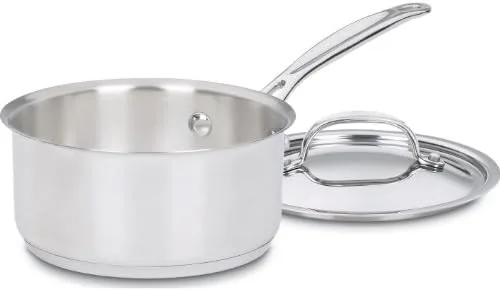

Every kitchen has a pot that handles the small jobs nobody thinks about. The morning oatmeal, the lunchtime soup, the sauce that should have been simmered in a bigger pan and stuck anyway. A proper small saucepan exists to make those jobs feel effortless, and the Cuisinart Chef's Classic 1 quart saucepan with cover is exactly that kind of pot. I spent several weeks cooking with this little pan on gas and induction burners, making sauces, reheating leftovers, and melting chocolate, and this review records how it heats, how it handles, and where its limits sit.
Before the details, the standard note. This article contains affiliate links, and if you buy through one of them the site earns a small commission at no extra cost to you. That commission does not change what I test or what I recommend, and the saucepan was used exactly the way a home cook would use it.
The Chef's Classic line has been a fixture in starter kitchens for decades, and this one quart saucepan is the smallest piece in the family. It is the pot you reach for when the dinner plan calls for a small batch, and it is also the pot most likely to sit unused at the back of a cupboard. The rest of this review covers the build, the heating behavior, the day to day cooking, and whether the one quart size deserves a place on your shelf.
Design and Build
The saucepan is made from 18/10 stainless steel, which is the same polished steel used across the Chef's Classic collection. The mirror finish is bright and smooth, and the pan has the weight of a tool that is built to last rather than a cheap import. The most important piece of the construction sits hidden under the base, a thick aluminum disc that is bonded into the bottom of the pan. Stainless steel alone heats unevenly, so Cuisinart uses this encapsulated aluminum layer to spread heat across the cooking surface before it reaches the food.
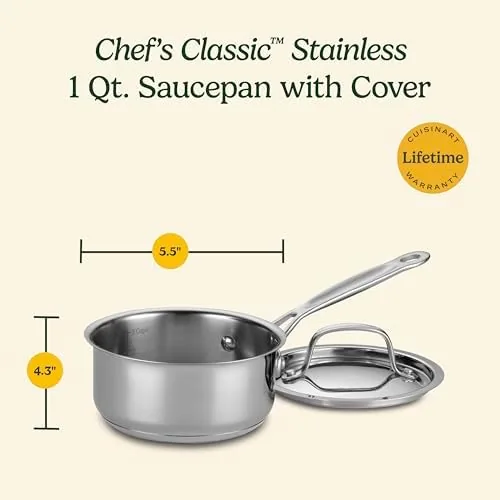
The handle deserves its own note. It is a riveted stainless handle with a rounded profile, and it stays much cooler than the pan during cooking, which matters when the pan is small enough to grab one handed. The cover is a tight fitting stainless lid with a brushed knob that does not rattle, and it seals well enough that simmering liquids stay inside instead of spitting onto the stovetop. At roughly a hand span across, the pan is genuinely small, which is either its greatest strength or its biggest limitation depending on how you cook.
Key Features
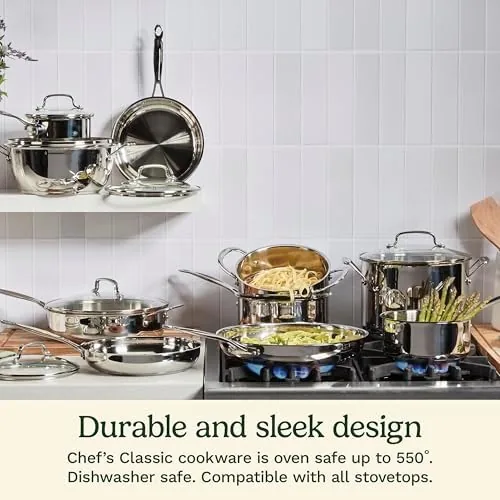
The even heating base is the headline feature. The aluminum encapsulated disc smooths out the hot spots that plague thin stainless pans, so milk, cream, and delicate sauces are far less likely to scorch at the edges. That is the difference between a saucepan that works and a saucepan that fights you, and this pan leans clearly toward the working side.
Beyond the base, the practical features pile up quickly. The pan is dishwasher safe, oven safe to 500 degrees Fahrenheit without the lid, and compatible with gas, electric, glass, and induction cooktops. The cool touch handle makes single handed stirring comfortable, and the stainless cover can double as a splatter guard when you need to reduce a sauce. The rivets on the inside are smooth and do not trap food, which keeps cleanup simple even after sticky reductions.
Real-World Performance
The real test of A Small Saucepan is whether it heats evenly at the low settings where small pots actually live. I started with milk, because milk is the most honest critic of a pan's heat distribution. At a gentle simmer the milk heated evenly with no scorched ring around the base, and the sides came up to temperature without a hot patch forming on the rim. That is the behavior you want from a pan that will handle chocolate, custard, and baby food.
Next came the sauces. A one pan hollandaise stayed smooth with steady stirring, a quick tomato reduction pulled together without sticking, and a cornstarch thickened gravy came together cleanly with no lumps at the edges of the pan. The induction test was just as good, with the base locking onto the burner quickly and responding to heat changes almost instantly, which is exactly what a saucepan should do when a recipe suddenly needs the flame turned down.
The small capacity shaped everything else. One cup of rice cooked perfectly for a single serving, and a single portion of soup reheated without waiting for a big pot to come up. The pan also did the work a larger pot cannot do well, which is reduce a small amount of liquid quickly. A pan of orange juice and zest for a glaze went from watery to syrupy in a few minutes because the concentrated heat hit a small surface area. For two people, or for anyone who cooks alone, this size is genuinely useful rather than decorative.
The limitations are honest ones. The one quart capacity means a family sized batch of soup is out of the question, and pasta that needs room to boil will not fit. The pan also needs a little more attention than a non-stick pot, because stainless steel will stick if the heat is cranked too high before oil or liquid goes in. Neither problem is a fault of the design, but both are worth knowing before you buy. Cleanup was straightforward in practice, with most food releasing after a short soak and the mirror finish coming back bright with a standard sponge.
Pros and Cons
Pros:
- Aluminum encapsulated base heats evenly without hot spots
- Cool touch handle stays comfortable during long simmers
- Oven safe and dishwasher safe for flexible use
- Induction compatible across modern cooktops
- Tight fitting cover traps steam for efficient heating
- Built from durable 18/10 stainless steel
Cons:
- One quart capacity limits it to small jobs
- Stainless steel requires proper preheating to avoid sticking
- Mirror finish shows fingerprints between washes
- Handle can get warm during extended high heat cooking
How It Compares
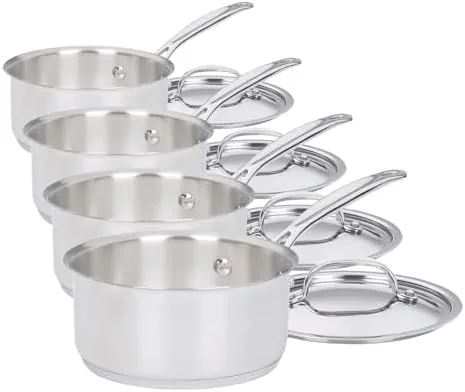
The main decision with the Chef's Classic line is which size to pick, and the one quart pan sits at the bottom of a family of saucepans. The table below lines it up against the two quart and three quart siblings.
| Feature | 1 Quart Saucepan | 2 Quart Saucepan | 3 Quart Saucepan |
|---|---|---|---|
| Best for | Single servings, sauces, melting | Two to three servings, sides | Family sides, rice, soups |
| Heating base | Aluminum encapsulated | Aluminum encapsulated | Aluminum encapsulated |
| Induction ready | Yes | Yes | Yes |
| Oven safe | Yes, to 500 F | Yes, to 500 F | Yes, to 500 F |
| Cabinet footprint | Smallest | Medium | Largest |
If you cook for one or two and constantly reheat leftovers, the one quart pan is the right starting point. If your stovetop sees family sized meals most nights, the two quart is the safer all around choice. Most serious cooks eventually own both, because the one quart pan handles the small jobs that make a bigger pan feel clumsy.
Who Should Buy It
Buy the one quart Cuisinart saucepan if you live alone or cook for two, if you make sauces and dressings with any regularity, or if you are tired of reheating a single portion of soup in a pot that is four times too big. It is also a natural fit for dorm rooms, small apartments, and RV kitchens where counter and drawer space are precious.
Skip it if you cook for a family of four or more, because the capacity will frustrate you within a week. For small households this is the pot that earns its keep quietly. You can check the current price of the Cuisinart 1 quart saucepan on Amazon when you are ready to add it to your kitchen.
How We Test
I cooked with the saucepan for three weeks on gas and induction burners, covering milk, cream sauces, reductions, single servings of rice, melted chocolate, and reheated soups. I washed it both by hand and in the dishwasher to compare how the finish held up, and I measured heat responsiveness by timing how quickly the pan came down from a boil when the flame dropped.
I did not abuse the pan beyond normal kitchen use, and I followed the manufacturer's care guidance rather than pushing it to its rated limits. For a deeper look at what makes a good saucepan, Wirecutter has a detailed guide to the best saucepans that is worth reading before you buy. The Cuisinart 1 quart saucepan listing on Amazon shows the current price and the rest of the Chef's Classic collection.
Cuisinart 1 Quart Saucepan: Questions People Ask
What can I cook in a 1 quart saucepan?
The one quart pot suits single servings of rice, heating soups, melting butter or chocolate, simmering a small sauce, and cooking eggs, which makes it a useful companion to larger pans.
Is the Cuisinart Chef's Classic saucepan dishwasher safe?
Cuisinart states the saucepan is dishwasher safe, though hand washing keeps the mirror finish bright and is the gentler choice for the aluminum encapsulated base.
Can the saucepan go in the oven?
The pan is oven safe to 500 degrees Fahrenheit without the cover, so it can move from the stovetop to the oven for a quick finish, though the lid should not go in with it.
Does the 1 quart saucepan work on induction cooktops?
The aluminum encapsulated base is compatible with induction cooktops as well as gas and electric ranges, so the small pan keeps its place in most modern kitchens.
As an Amazon Associate, I earn from qualifying purchases.