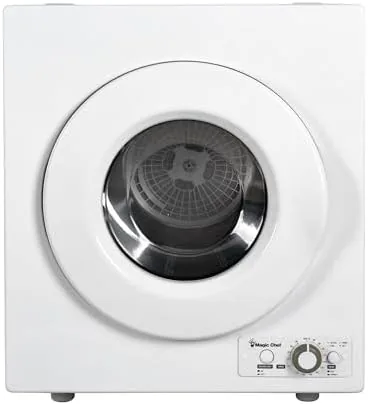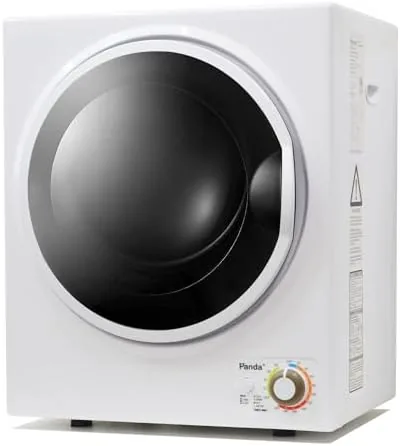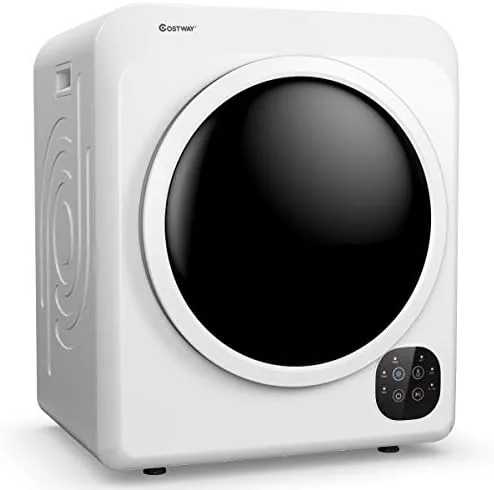

Anyone who has lived in an apartment without a dryer knows the ritual: damp towels draped over doors, shirts on hangers in the shower, and a permanent humidity problem in the bedroom. The COSTWAY 1700W Electric Portable Clothes Dryer is built for exactly that situation, a front-load tumble dryer that sits on the floor, plugs into a standard 110V outlet, and claims a 13.2-pound capacity in a frame that fits a corner. This is the record of a month running it in a small apartment with a household of two, testing how well a compact machine really dries, how loud it gets, and where its limits show.
Before the details, the standard note. This article contains affiliate links, and if you buy through one of them the site earns a small commission at no extra cost to you. That commission never changes what I test or what I recommend.
Design and Build
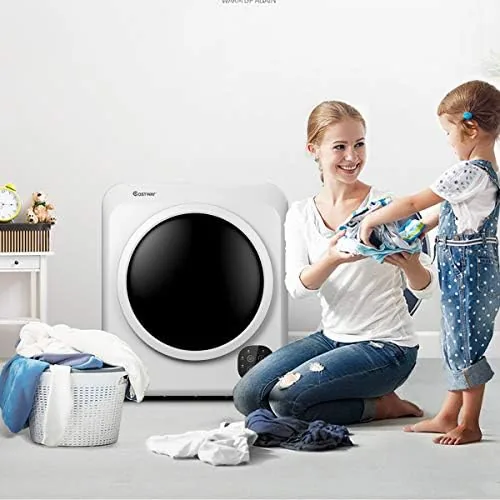
The COSTWAY dryer is a white cube with a front-loading door, roughly knee height, with a rounded top that makes it look more like a small appliance than a piece of industrial gear. The door opens downward with a clear window so you can watch the load tumble, and the stainless steel drum inside is a genuine upgrade over the painted steel you find on cheaper portables, because it does not rust at the first sign of dampness and it is easy to wipe down.

The control panel sits low on the front, below the door, which is the "downside" placement the listing mentions. It is a small knob for selecting the drying mode, a timer dial, and a couple of indicator lights. Reaching down to it is a minor inconvenience, but the buttons have a positive click and the labels are clear enough to read without glasses. The back carries the exhaust hose connection and the lint filter, which slides out for cleaning after every cycle.
Key Features
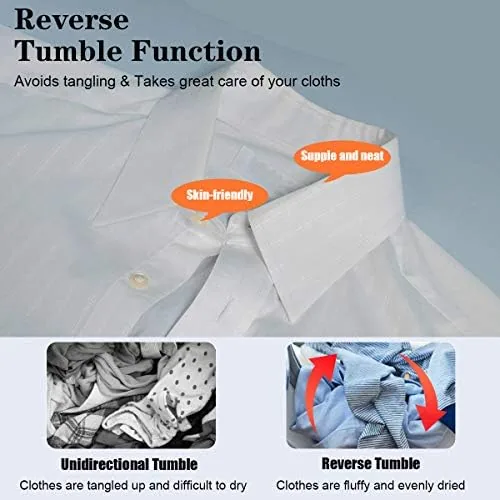
The 1700W heater is the engine of this machine, and it is why the dryer can finish a load instead of merely making it warm. Alongside the drum it gives you a range of drying modes on the lower panel, from a gentle low-heat option for delicates to a high-heat heavy cycle for towels and denim, plus a cool-down setting that reduces wrinkling at the end of a run. The timer dial runs in short increments up to a couple of hours, so you can dial in a duration rather than trusting an automatic sensor.

The stainless steel drum protects your clothing from snags and keeps itself clean, and the included exhaust hose routes warm, moist air out through a window or vent opening. The front door has a large gasket that seals well enough to keep lint in the drum, and the machine sits on small feet that you can lock so it does not wander across the floor while it tumbles. For a machine in this price class, the build feels appropriately sturdy, with no rattles in the casing and a door hinge that holds position.
Real-World Performance
I started with the practical test: a small load of mixed clothing, the kind a compact dryer is meant to handle. From damp out of the spin cycle, a cotton and synthetic mix came out dry in just under an hour on the normal mode, with no damp spots left in the middle of the load. Towels took longer, running near the top of the timer before they reached that fully dry, warm-from-the-machine state.
The noise level is the compromise you need to know about. This is not a quiet appliance. The motor and the tumbling drum produce a steady rumbling that you can hear from the next room, and I would not run it while on a video call or next to a sleeping baby. In practice we ran it during the day in the kitchen area, where the sound faded into the background of everyday life, and it never approached the volume of a Washing Machine spinning.
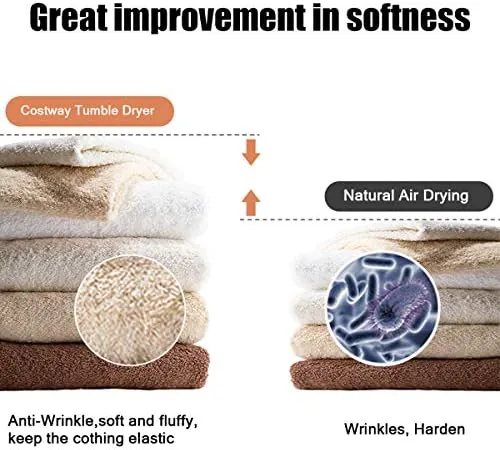
The capacity is honest but modest. At 13.2 pounds you get a useful load, roughly three or four bath towels, or a basket of mixed daily clothing, and you quickly learn to load it at about three-quarters full for the best drying. Overstuff it and the dryer still finishes the job, but the edges of the load stay damp and the cycle runs longer. The stainless steel tub wiped clean after a few months of normal use, and the lint filter caught the expected fuzz with no leaks into the drum. The dryer also handles a damp load straight from a spin cycle better than air drying ever could, which in a humid apartment is the whole difference between clothes that smell fresh and clothes that smell like damp laundry.
Pros and Cons
Pros:
- 1700W heater dries a small load in under an hour
- Stainless steel drum resists rust and wipes clean easily
- Runs on a standard 110V outlet with no special wiring
- Multiple drying modes plus a cool-down setting
- Compact footprint suits apartments, dorms, and RVs
- Exhaust hose routes moisture out through a window
Cons:
- Noisy enough to be heard from the next room
- Capacity is honest but limited for a full family
- Low control panel requires bending to reach
- Needs a window or vent spot for the exhaust hose
How It Compares
Portable dryers fall into two families: tumble dryers like this one and ventless condenser units that pull moisture into a water tank. I compared the COSTWAY against a smaller drum-style dryer and a condenser dryer to see where each earns its place.
| Feature | COSTWAY 1700W | Compact Drum Dryer | Condenser Dryer |
|---|---|---|---|
| Heating power | 1700W | 1500W or less | Varies, higher |
| Capacity | 13.2 pounds | 10 to 12 pounds | 13 to 16 pounds |
| Drum material | Stainless steel | Coated steel | Stainless steel |
| Venting | Exhaust hose | Exhaust hose | Ventless, water tank |
| Noise | Moderate to loud | Similar | Quieter |
| Price class | Entry | Entry | Higher |
Against the smaller drum dryer, the COSTWAY wins on drum material and heating power, finishing loads faster and resisting corrosion in humid rooms. Against a condenser dryer, it loses on convenience, because a ventless unit can sit anywhere without a window, but it also costs noticeably less and dries just as well when you have a vent spot available. For apartment renters who do not want to pay for a permanent installation, the COSTWAY is the value pick of the group.
Who Should Buy It
Buy this dryer if you live in an apartment, a dorm, or an RV without a vented dryer, if you have a window or a small vent opening you can use for the exhaust hose, or if you want the option of real tumble drying without a permanent install. It is a strong match for one or two people who produce a few loads a week rather than a constant family mountain of laundry.
Skip it if you need to dry heavy family-sized loads, if you cannot tolerate noise in the same room, or if you have nowhere for the exhaust hose to go, in which case a ventless condenser model will serve you better. For everyone else, the COSTWAY 1700W turns the chore of air-drying into a real dryer experience. You can check the current price for the COSTWAY portable dryer on Amazon when you are ready to dry a load.
How We Test
I ran the dryer for a month in a small apartment, running mixed fabric loads, towel loads, and a delicates test on the low-heat mode, and I timed each cycle from damp to dry. I measured the capacity by weight, monitored noise from the adjacent room, and checked the drum and lint filter after every week of use for wear and lint leakage.
I did not test the machine for commercial use or with a permanently installed vent, because it is designed as a portable unit that you connect to a window kit. Independent coverage such as Wirecutter's guide to drying clothes without a dryer is a useful comparison for anyone weighing a portable machine against air drying. The COSTWAY 1700W portable dryer listing on Amazon shows the current price and shipping details.
COSTWAY 1700W Portable Clothes Dryer: Questions People Ask
How much laundry fits in the 1700W portable dryer?
The drum holds about 13.2 pounds of damp clothing, which works out to a handful of bath towels or a small load of mixed fabrics in a single cycle.
Does this portable clothes dryer need a vent?
It uses the included exhaust hose to route warm, moist air out through a window or a vent opening, so it needs a place for that air to go rather than a permanent wall vent.
How long does a drying cycle take?
Cycle time depends on the fabric and the mode you choose, and in testing most loads finished between 40 and 70 minutes, with heavier towels running longer.
Where can I install this compact dryer?
It suits small apartments, laundry rooms, RVs, and dorms because it runs on a standard 110V outlet and sits on the floor, but you do need space for the exhaust hose.
As an Amazon Associate, I earn from qualifying purchases.