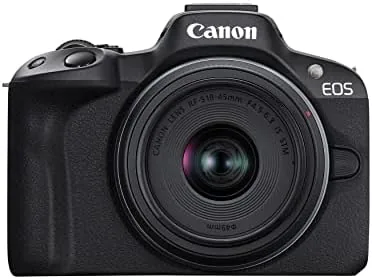

Canon has spent the past few years building a mirrorless system that newcomers can actually afford, and the EOS R50 is one of the clearest expressions of that strategy. This camera sits below the R10 and the R7, yet it keeps the 24.2 megapixel APS-C sensor, the Dual Pixel autofocus, and the 4K video that made its bigger siblings popular. I carried the R50 with the RF-S18-45mm F4.5-6.3 IS STM kit lens for two weeks of photo walks, a short documentary project, and a series of talking head videos. This review covers the build, the autofocus, the video output, and whether the kit lens is enough to start with.
A note before we begin. This article contains affiliate links, and if you make a purchase through one of them the site earns a small commission at no extra cost to you. That never changes what I test or how I score a product.
Design and Build
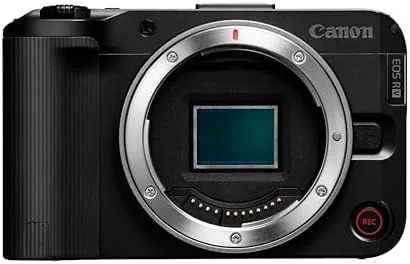
The R50 is small by any mirrorless standard. It weighs under 400 grams with the battery and the kit lens attached, which makes it one of the lightest interchangeable lens cameras Canon currently sells. Holding it for a full day of shooting caused no strain, and the compact body slipped easily into a jacket pocket with a pancake lens attached. For travelers and casual photographers, that portability is the single most persuasive argument for the R50 over a heavier model.
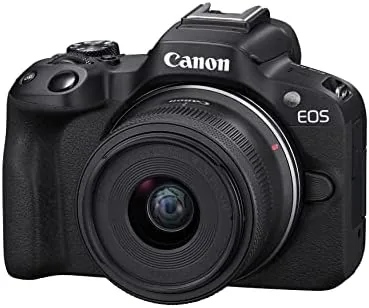
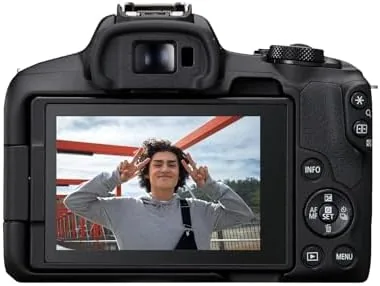
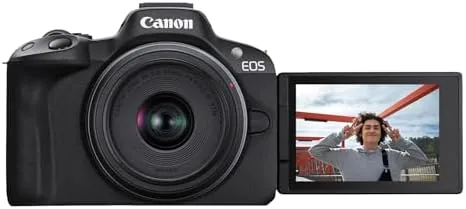
Canon wraps the body in a tough polycarbonate shell with a rubberized grip that gives the right amount of purchase for a two finger hold. The control layout is simplified compared with higher end R series bodies. You get a mode dial, a few function buttons, and the touchscreen, and that is mostly it. Purists will miss a second control dial, but beginners will appreciate that there is little to trip over. The viewfinder is a 2.36 million dot electronic unit, which is adequate rather than spectacular, and the touchscreen articulates to face forward for Vlogging.
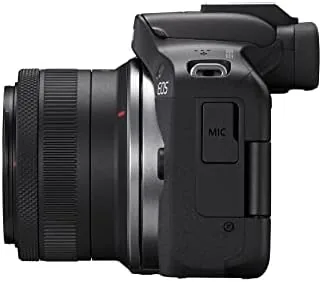
The camera uses a single UHS-I SD card slot, which is normal at this price and fine for stills and basic 4K. The USB-C port supports charging while you shoot, and the battery is the shared LP-E17 used across much of Canon's lineup. Everything feels deliberately simple, and that simplicity is a feature for the target buyer rather than a compromise.
Key Features
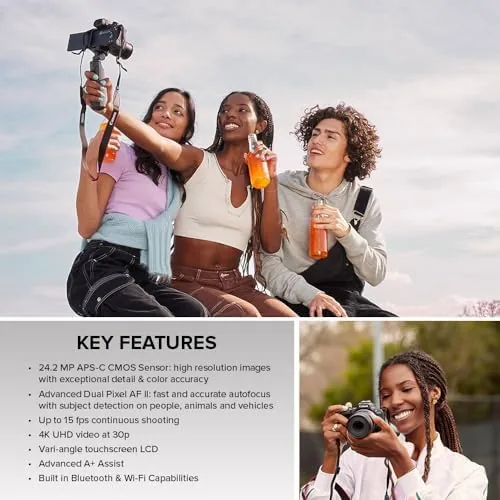
The headline spec is the 24.2 megapixel APS-C CMOS sensor. It produces detailed RAW files with good dynamic range for the class, and it handles ISO up to roughly 3200 before noise becomes obvious in print. The sensor is shared with more expensive Canon cameras, so the image quality ceiling here is genuinely high.
The Dual Pixel CMOS AF II system is the other major selling point. It covers most of the frame with phase detection points and adds subject recognition for people, animals, and vehicles. In practice the camera locked onto eyes quickly and held them even when a subject turned sideways or walked into shadow. That capability used to be reserved for flagship bodies, and its presence in a budget model is significant.
Video is a strong area for the R50. It records 4K at up to 30 frames per second from the full sensor width, and it does so without the heavy crop that plagued Canon's earlier mirrorless cameras. There is a 4K 60 crop mode, 1080p at 120 fps for slow motion, and 10 bit HLG output when you select Canon Log 3 in the menus. For a camera that sells under its rivals in the entry tier, that feature set is competitive.
Creative Assist mode deserves a mention because it is aimed squarely at beginners. It presents exposure adjustments as plain language sliders with live previews, so a new shooter can brighten an image or shift color tone without understanding histograms. It is a thoughtful on ramp into manual control.
Real-World Performance
Out in the field, the R50 behaved predictably. The 18-45mm kit lens is a slow variable aperture zoom, so at 45mm you are working with f/6.3, but its optical image stabilization pairs with the body to keep handheld shots acceptably sharp at moderate shutter speeds. In bright daylight the combination is effortless. Indoors or in the evening, you will want a faster prime lens or a willingness to raise the ISO.
Autofocus was the highlight of the testing period. Walking through a busy street, the camera tracked faces in crowds, switched cleanly between subjects, and never hunted hard on the kit lens. In low light, the focus system dropped speed but still managed to latch onto eyes down to about negative two EV, which is respectable for the price class.
Battery life deserves a caveat. Canon rates the LP-E17 at roughly 370 shots per charge through the viewfinder and less when the screen and continuous autofocus are active. I killed a full battery in an afternoon of heavy video testing, so carrying a spare is wise. The USB-C port does allow in camera charging from a power bank, which softens the blow.
For the vlogging test, I set the screen forward, enabled eye detection, and recorded talking head segments at 4K. The camera tracked my face reliably as I moved around a room, and the built in microphone produced usable if slightly thin audio. You will want an external mic, and the R50 has the 3.5mm jack to accept one, along with a hot shoe for accessories.
One limit surfaced during the documentary work. With the basic mechanical shutter, the R50 bursts at 15 frames per second in electronic mode and about 7 frames per second mechanically, which is fine for most action but not for professional sports. The rolling shutter in electronic mode is also visible during fast pans. These are expected trade-offs at this price, and they only matter if you plan serious action photography.
Pros and Cons
Pros:
- Sharp, detailed 24.2 megapixel APS-C sensor
- Reliable eye detection autofocus for people, animals, and vehicles
- Full width 4K video with 10 bit options
- Compact and light enough for daily carry
- USB-C charging and a mic jack for creators
Cons:
- Kit lens is slow in low light with a variable aperture
- Single card slot and single control dial limit advanced use
- Mediocre battery life during video work
- No built in image stabilization on the body itself
How It Compares
The R50 sits between the Sony ZV-E10 and the Nikon Z30 in price, so the comparison matters for anyone choosing an entry mirrorless camera. The differences are real and worth spelling out.
| Feature | Canon EOS R50 | Sony ZV-E10 | Nikon Z30 |
|---|---|---|---|
| Sensor | 24.2MP APS-C | 24.2MP APS-C | 20.9MP APS-C |
| Viewfinder | Electronic, included | None | None |
| 4K video | 30p full width, 60p crop | 30p full width | 30p full width |
| Flip screen | Fully articulating | Fully articulating | Fully articulating |
| Battery life (stills) | About 370 shots | About 440 shots | About 330 shots |
| Price | Mid entry tier | Budget entry tier | Budget entry tier |
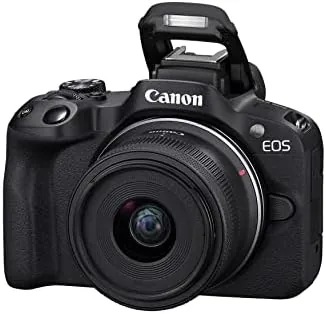
Against the Sony ZV-E10, the R50 wins on the included viewfinder and the deeper autofocus feature set, while the Sony counters with cheaper pricing and a larger lens ecosystem. Against the Nikon Z30, the R50 is simply the more complete camera thanks to the viewfinder, and Canon's dual pixel autofocus feels more confident with moving subjects. For a creator who values composition, the viewfinder alone justifies the R50's higher price. You can check current pricing on the Canon EOS R50 listing on Amazon.
Who Should Buy It
The EOS R50 is the right camera for a beginner who wants to grow. The Creative Assist mode teaches the basics, the autofocus removes the hardest technical skill, and the RF mount gives a clear upgrade path through Canon's RF-S lenses and the larger full frame RF line. Vloggers and content creators will find the flip screen, mic jack, and clean 4K output genuinely useful.
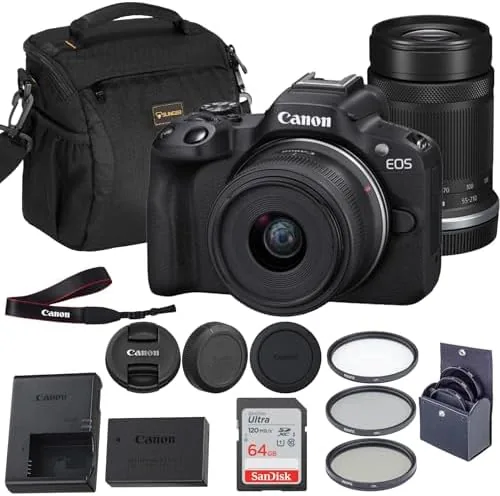
It is less ideal for working professionals or anyone who needs dual card slots and weather sealing. If your primary subject is fast action sports, the rolling shutter and buffer limits will frustrate you. But for the student, the family photographer, and the weekend YouTuber, the R50 is one of the most complete beginner cameras available. The EOS R50 kit with the RF-S18-45mm lens is on Amazon if you want current stock and pricing.
How We Test
I tested the EOS R50 over two weeks across three real world scenarios. I shot street and landscape photography at ISO 100 to 6400, filmed 4K talking head segments with the screen flipped forward, and recorded a short documentary with handheld panning shots to stress the stabilization and rolling shutter.
I evaluated autofocus by tracking moving pedestrians and animals, measured battery drain under continuous video, and examined RAW files in a photo editor to judge dynamic range and noise. For independent perspective on how Canon's R series compares, The Verge coverage of Canon's R series cameras provides useful context. The EOS R50 page on Amazon lists the full kit contents and current price.
Canon EOS R50: Questions People Ask
Is the Canon EOS R50 good for vlogging?
Yes. The R50 records clean 4K video, flips its screen around for self framing, and its eye detection autofocus keeps a moving subject sharp, which suits vlogging and interviews.
What lens comes with the EOS R50 kit?
The standard kit bundles the Canon RF-S18-45mm F4.5-6.3 IS STM zoom lens, which covers everyday wide to short telephoto framing and adds optical image stabilization.
How many megapixels does the EOS R50 have?
The camera uses a 24.2 megapixel APS-C CMOS sensor, which produces sharp stills and provides good crop room while keeping file sizes manageable for Everyday editing.
Does the EOS R50 work with EF lenses?
Yes, when you attach the Canon EF-EOS R mount adapter, the R50 accepts the large catalog of EF and EF-S lenses that Canon has sold for years.
As an Amazon Associate, I earn from qualifying purchases.