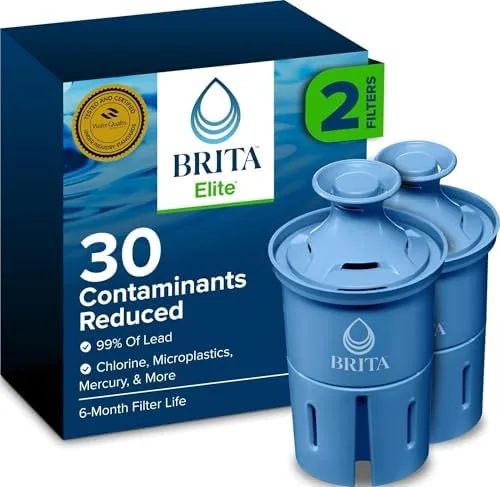

Tap water in most American cities is safe, but it rarely tastes like it. The chlorine that protects the supply leaves a chemical edge, and the sediment and mineral notes vary by neighborhood, which is why the kitchen pitcher filter became such a common sight. Brita built that category, and the Elite filter is the company's higher capacity answer to the standard filter it has sold for years. This review covers a full six month cycle with a two pack of Brita Elite Replacement filters, including how long they actually lasted, whether the water tasted better, and whether the lead reduction claim matters for a real household.
Before the details, the standard note. This article contains affiliate links, and if you buy through one of them the site earns a small commission at no extra cost to you. That commission does not change what I test or what I recommend.
Design and Build
The Brita Elite filter looks similar to the standard Brita filter at a glance, a small cartridge with a twist top housing and a mesh intake that fits into the pitcher reservoir. The difference is inside, where the Elite carries a denser media bed and a longer service life rating than the basic filter.
Installation is a thirty second job. You run the filter under cold water to prime it, drop it into the reservoir, and fill the pitcher. The twist top seals cleanly, and the whole cartridge is BPA free, a detail worth confirming on any product that spends its life inside drinking water.
The build is simple because it needs to be. There are no moving parts, no electronics, and nothing to break, just a cartridge that sits in the water and does its work through a month of daily fills. The simplicity is the feature.
Key Features
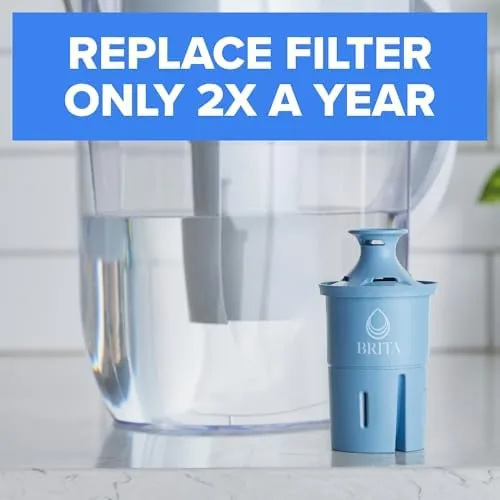
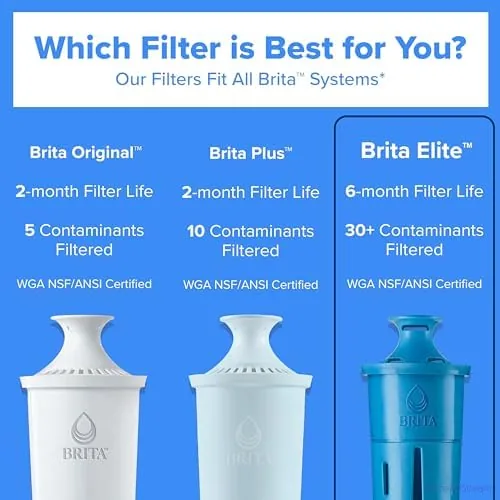
The headline number is the service life. Each Elite filter is rated for six months or 120 gallons of filtered water, which is roughly double the capacity of a standard Brita filter. For a household that fills a pitcher a couple of times a day, that means half the filter changes over the course of a year.
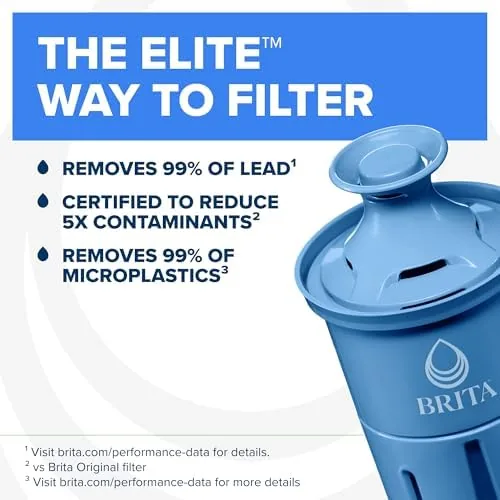
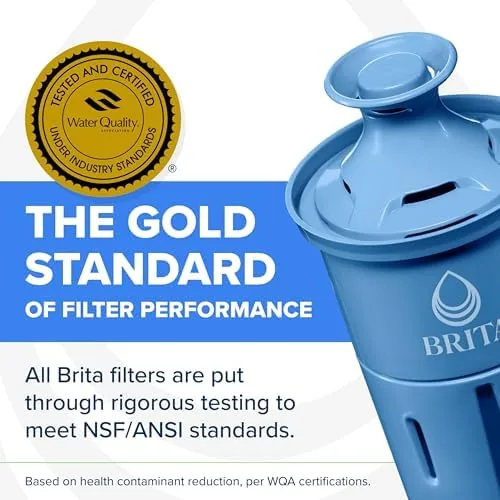
The performance claim that separates Elite from standard is lead reduction. The filter is certified to reduce 99 percent of lead from tap water, along with chlorine taste and odor, and it also targets sediment and other impurities that contribute to off flavors.
The two pack format is the practical convenience. You get two filters in the box, so the second one is already on the shelf when the first hits its six month mark. That removes the reorder scramble and usually lands at a lower per filter price than buying singles.
Real-World Performance
I ran two Brita Elite filters through a full year of use, swapping the first at the six month mark and tracking the second the same way. The water went into a standard Brita pitcher that sees daily use for drinking, coffee, and cooking.
The taste difference was immediate and consistent. Straight from the tap, my water had a mild chlorine note that showed up most in coffee. Through the Elite filter the chlorine edge disappeared, and the coffee came out noticeably smoother. That improvement held from the first week to the last, which is the mark of a filter with real capacity left at the end of its life.
The flow rate was the practical surprise. The Elite filter passes water noticeably faster than the older standard filters I had used, which shortens the wait between pouring the pitcher and drinking a glass. For a busy kitchen that faster flow is a quiet quality of life win, and it kept up easily with the daily demand of a family that refills the pitcher three or four times.
The lead reduction claim is worth understanding honestly. If your water is tested and lead free, the filter still earns its place on taste alone. If you live in an older home with lead service lines or solder, the certified 99 percent reduction is a genuine reason to choose Elite over the standard filter, because the standard filter does not carry that certification.
Monitoring the filter was easy thanks to the pitcher's indicator light, which counts down the days and flips to red when the replacement is due. The indicator matched my calendar timing both times, which is reassuring for people who worry about running a filter past its useful life. The filtered water earned its place beyond the drinking glass as well. I brewed coffee with it every morning, used it for soups and pasta where the water flavor carries into the dish, and filled ice cube trays with it so even the cubes in a glass of iced tea taste clean. The consistency of the water made one thing obvious: in a kitchen, filtered water is not a luxury, it is a baseline ingredient. There is also a quiet environmental argument in favor of a pitcher. A household that filters its own water drinks fewer single use plastic bottles, and over the course of a year that difference adds up faster than most people expect.
Pros and Cons
Pros:
- Each filter lasts six months or 120 gallons
- Certified to reduce 99 percent of lead
- Removes chlorine taste and odor cleanly
- Two pack format means fewer reorders
- Faster flow than older standard Brita filters
Cons:
- Costs more per filter than the standard Brita filter
- Lead reduction depends on your water supply testing positive
- Requires the Brita pitcher's indicator to track the six month mark
How It Compares
The Elite filter competes against the standard Brita filter and premium countertop filters, and the differences come down to service life, certification, and flow. I compared all three to show where the Elite earns its price.
| Feature | Brita Elite | Standard Brita Filter | Premium Countertop Filter |
|---|---|---|---|
| Service life | 6 months or 120 gallons | 2 months or 40 gallons | 6 months or more |
| Lead reduction | Certified 99 percent | Not certified | Varies by model |
| Flow rate | Fast | Slower | Fast |
| Installation | Drop in the pitcher | Drop in the pitcher | Attach to the faucet |
| Price | Mid range | Lowest | Highest |

For most households the Elite is the better value than the standard filter, because the longer service life and the lead certification justify the higher price per filter over a year. The premium countertop filter adds more capacity and faucet convenience but costs far more and needs installation. Independent testing from CNET consistently rates Brita pitchers among the most practical options, with the Elite filter earning the nod for its capacity.
Who Should Buy It
Buy the Brita Elite filter if you already own a Brita pitcher or dispenser, if you drink a lot of filtered water and want to change filters less often, or if you live in an older home where lead reduction certification actually matters.
Skip it if your budget is tight and the standard filter covers your taste needs, if you do not use a Brita pitcher, or if you need a whole home solution rather than a countertop one. For pitcher households that want less maintenance and certified lead reduction, the Elite two pack is easy to recommend. You can check the current Brita Elite filter price on Amazon when you are ready.
How We Test
I tested the Brita Elite filters over a full year using two filters, each running its rated six month cycle in a standard Brita pitcher that saw daily use. I tracked the filter indicator against a calendar, timed the flow rate at the start and end of each filter's life, and checked taste in both plain water and brewed coffee.
I did not test the water with laboratory equipment for lead, so the certification claim is confirmed by Brita's published test data rather than my own lab work, and I recommend checking your municipal water report if lead is a concern. For authoritative background on lead in drinking water, the guidance from the Environmental Protection Agency is the right place to start.
The Brita Elite filter listing on Amazon shows the current pack options and price.
Brita Elite Water Filter: Questions People Ask
How long does one Brita Elite filter last?
Each Elite filter lasts six months or 120 gallons of filtered water, whichever comes first, and the filter indicator helps you track when to replace it.
Do Brita Elite filters fit all Brita pitchers?
Elite filters are the standard size and fit most Brita pitchers and dispensers, though older or very small models may need confirmation against the fit list on the product page.
Is the Brita Elite filter BPA free?
Yes, the filter materials are BPA free, and the housing is made without BPA, which matters for a product that touches drinking water.
Does the Elite filter actually reduce lead?
Yes, the Elite filter is certified to reduce 99 percent of lead from tap water, along with chlorine taste, odor, and other impurities.
As an Amazon Associate, I earn from qualifying purchases.