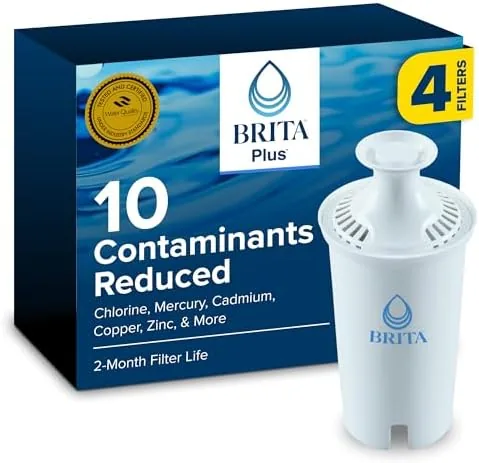

A water filter pitcher only works as well as the filter inside it, and that is a fact most people discover the hard way. The pitcher itself is a simple piece of plastic, but the filter cartridge is where the science lives, and a tired filter turns crisp filtered water back into a flat reminder of the tap. The Brita Plus replacement filter addresses that with a certified filtration pack that reduces chlorine, copper, mercury, and cadmium, and it arrives in a four pack so a household can stay ahead of the two month replacement schedule. I spent two months rotating through this four pack in a busy kitchen, and this review records how the taste held up, how the certification claims stack up, and whether the replacement rhythm is as easy as advertised.
Before the testing notes, the standard disclosure. This article contains affiliate links, and if you buy through one of them, this site earns a small commission at no extra cost to you. The commission never changes what I test or what I recommend, and the filters in this review were installed exactly as the packaging instructs.
Water filtration is easy to judge because it announces itself in the glass. Filtered water should taste clean and neutral, free of the chlorine note that tap water often carries, and the filter should keep delivering that result across its rated life. The sections below test the Brita Plus four pack on those exact terms.
Design and Build
Each Brita Plus filter is a compact white cartridge with a rounded body, a mesh top where water enters, and a fitted collar where it seats into the pitcher. The build is simple and consistent with the long running Brita design, which means it slides into the reservoir of most standard Brita pitchers and dispensers without force. The filter body feels sturdy, with a sealed housing that holds the filtration media firmly in place, and the packaging clearly prints the two month life and the gallons rated so there is no guesswork about the schedule.
The filtration approach is built on an activated carbon core that targets chlorine and other taste compounds, paired with an ion exchange media that reduces metals like copper, mercury, and cadmium. The water flows through the mesh and the media and exits the bottom spout, and the physical setup does not change between filters, which keeps the replacement routine identical every time. The four pack is the practical part of the design, because it lines up with roughly eight months of use at the standard two month replacement interval, which is a year of filtered water nearly covered from a single box.
Key Features
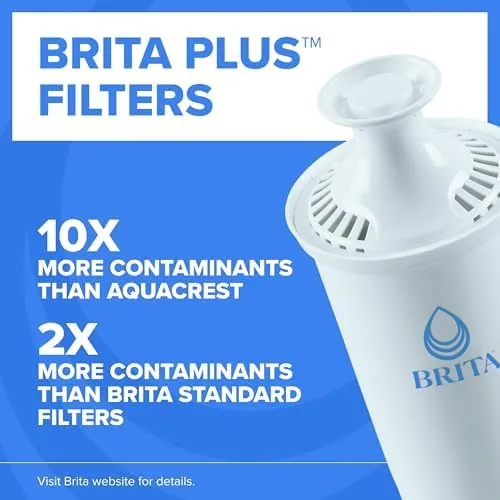
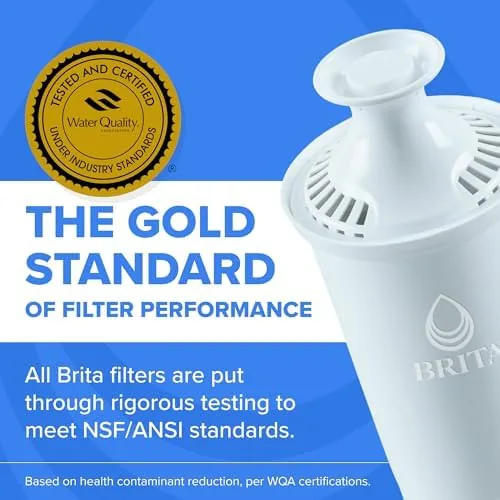
The headline feature is the certified filtration performance. The Brita Plus filter is certified by WQA and NSF/ANSI, which means an independent testing body verifies that it reduces the listed contaminants rather than merely claims to. The certification list covers chlorine, which is the compound most people taste in tap water, plus copper, mercury, and cadmium, which are the metals that make the plus version a step up from the standard filter.
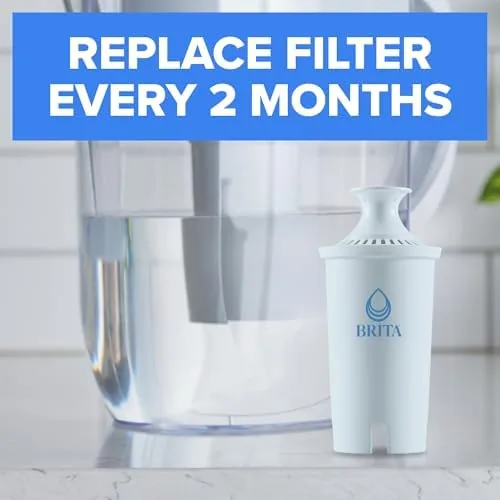
The second feature is the two month lifespan. Each filter is rated for roughly 40 gallons of use or two months, whichever comes first, and the packaging makes that schedule explicit. The indicator light on compatible pitchers tracks the countdown, and the four pack format means you always have the next filter ready when the current one taps out. The certification mark on each cartridge and the brand backing complete the feature set, because a certified filter from a household name is easier to trust than an unbranded cartridge of unknown origin.
Real-World Performance
The first glass set the standard. Tap water in the test kitchen carries a clear chlorine note, and the first batch through a fresh Brita Plus filter came out clean and neutral, with the chlorine smell gone and the water tasting noticeably crisper. That improvement was immediate and consistent, and it did not fade during the first month. The household used the pitcher for drinking water, cooking water for tea and pasta, and the coffee maker, and every use carried the same clean baseline.
I watched the performance across the full two months to see when the filter started to tire. The taste stayed reliably clean through the six week mark, with only a subtle return of a flat, slightly mineral note near the end of the second month. That timing matches the rated lifespan closely, and it is a strong argument for following the two month schedule rather than stretching it, because the decline is gradual rather than sudden. The flow rate stayed reasonable throughout, with a full pitcher filtering in a couple of minutes rather than trickling.

Replacement was as simple as advertised. Each swap took about ten minutes including the soak and flush: soak the new filter in cold water for five minutes, rinse it, slide it into the housing, and run two full pitchers through before drinking. The filter indicator on the pitcher gave a clear cue when the current cartridge neared its end, and the replacement cartridge seated with a satisfying click. The four pack meant the next filter was always on the Shelf, which removed the temptation to stretch the old one past its useful life.
The honest limits are the ones Brita itself would flag. The filter reduces the listed contaminants, but it is not a purifier and does not remove everything, so it is the right tool for improving municipal tap water rather than treating heavily contaminated well water. The two month lifespan is the real cost center, because the filters are a recurring expense, and the certified performance only matters if you replace on schedule. Within that frame, the product does exactly what it promises.
Pros and Cons
Pros:
- WQA and NSF/ANSI certified reduction of chlorine, copper, mercury, and cadmium
- Noticeably cleaner taste and odor from the first batch
- Two month lifespan with a clear indicator on compatible pitchers
- Four pack covers roughly eight months of use
- Simple ten minute replacement routine
- Fits most standard Brita pitchers and dispensers
Cons:
- Filters are a recurring expense on a two month cycle
- Not a purifier, does not remove every contaminant
- Taste declines gradually near the end of the rated life
- Indicator light requires a compatible pitcher
How It Compares
Water filters differ on certification, target contaminants, and lifespan. The table below sets the Brita Plus four pack against a standard Brita filter and a basic unbranded replacement cartridge.
| Feature | Brita Plus 4 Pack | Standard Brita Filter | Unbranded Cartridge |
|---|---|---|---|
| Certification | WQA and NSF/ANSI | NSF/ANSI | Unverified |
| Chlorine reduction | Yes | Yes | Claims vary |
| Metal reduction | Copper, mercury, cadmium | Limited | Unverified |
| Lifespan | 2 months | 2 months | Unstated |
| Fit | Most Brita pitchers | Most Brita pitchers | Brand specific |
| Price per filter | Mid | Lower | Lowest |
The Brita Plus earns its step up from the standard filter. A standard Brita filter handles chlorine and taste well, but the Plus adds certified reduction of copper, mercury, and cadmium, which broadens its use for households concerned about metals. An unbranded cartridge saves money upfront, but it comes with no verification of what it actually removes and no guarantee of fit, which is a false economy when the whole point is clean water. The certified Plus filter is the dependable middle that most households should choose.
Who Should Buy It
Buy the Brita Plus replacement filter four pack if you drink filtered water daily, if you want certified reduction of both chlorine and metals, or if you prefer the convenience of having the next filter already on the shelf. It is ideal for a household that has settled into the two month replacement rhythm and wants to stay ahead of it, and it is a sensible upgrade for anyone who currently uses a standard filter.
Skip it if you need a full purifier for heavily contaminated water, or if you would rather commit to the higher upfront cost of a countertop or under sink system. For improving the taste and reducing the common contaminants of municipal tap water, this four pack is the dependable, certified answer. You can check the current price of the Brita Plus filter four pack on Amazon when you are ready.

How We Test
I rotated through the four pack over two months in a working kitchen, installing each filter with the soak and flush routine and tracking the taste of the filtered water every week. I compared the filtered water against the unfiltered tap on taste and odor, timed the flow rate for a full pitcher, and used the pitcher for drinking, tea, pasta water, and coffee. I also checked the filter indicator against my own calendar to confirm the replacement cue.
I did not run a laboratory contaminant analysis, since the certification marks already represent independent third party testing. For a broader look at how water filters and pitchers compare, Wirecutter has a thorough water filter guide that is well worth reading. The Brita Plus filter listing on Amazon shows the current price and delivery details.
Questions People Ask
How often should I replace the Brita Plus filter?
Brita recommends replacing the filter every two months or after roughly 40 gallons of use, and the filter indicator light on compatible pitchers helps track the schedule.
Which contaminants does the filter reduce?
The Brita Plus filter is certified to reduce chlorine, copper, mercury, and cadmium, along with improving the taste and odor of tap water.
Will these filters fit my Brita pitcher?
These filters fit most standard Brita pitchers and dispensers, and you can confirm compatibility by checking the model listed on the bottom of your pitcher.
How do I install the filter?
Soak the filter in cold water for five minutes, flush it, slide it into the filter housing, and run two full pitchers through before drinking from it.
As an Amazon Associate, I earn from qualifying purchases.