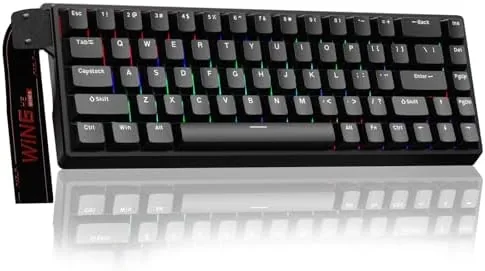

Competitive gamers chase milliseconds, and for a long time the only way to shave them was to spend a fortune on boutique keyboards. The AULA WIN68 HE takes a different route. It packs Hall effect magnetic switches, adjustable actuation, fast trigger mode, and an 8000Hz polling rate into a Compact 60 percent wired board that costs a fraction of the flagship competition. I used it as my daily gaming keyboard for two weeks, playing shooters, fighting games, and typing through a full week of work to see whether the technology lives up to the promise.
Before the details, the standard note. This article contains affiliate links, and if you buy through one of them the site earns a small commission at no extra cost to you. That commission never changes what I test or what I recommend.
Design and Build
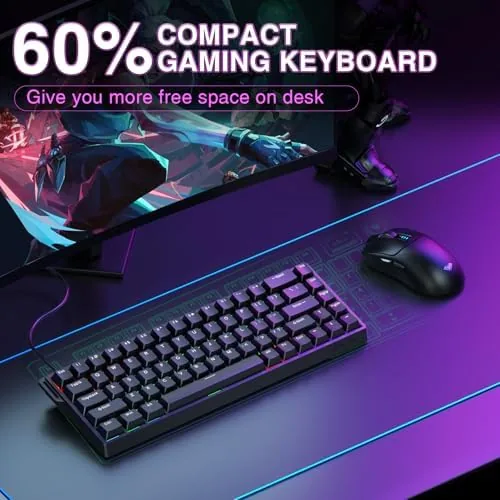
The WIN68 HE is a proper 60 percent board, meaning it drops the number pad, the arrow cluster, and the function row to keep the footprint tight for mouse space. The aluminum top plate gives it a rigid, premium feel that belies the price, and the double shot keycaps have a clean finish with legends that survive heavy use. It is a dense, solid slab of a keyboard, with no flex under aggressive typing.
The chassis is compact and low profile enough that it slides into a backpack without drama, which makes it a popular choice for LAN events and travel. The USB cable is braided and detachable through a recessed port, a small touch that protects the connection from the yanks of a frantic game. The keycaps sit on a south facing layout that supports a variety of aftermarket switches and keycap sets.
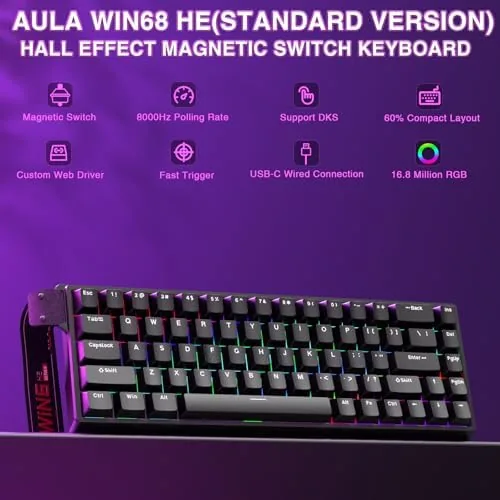
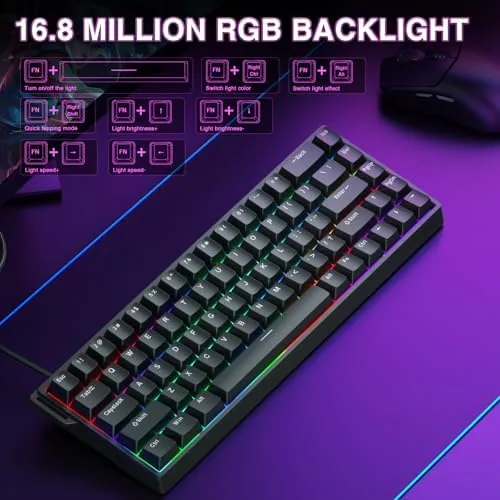
RGB lighting runs across every key with per key customization through the software. The shine through caps make the effects vivid, and the brightness is adjustable in stages down to completely off for a subdued office look. Overall the build punches above its price class, which sets a strong first impression before you even plug it into the PC.
Key Features
The defining technology here is the Hall effect switch. Instead of a physical metal contact closing a circuit, each key uses a magnet that moves past a sensor, so the keyboard can measure exactly how far the key has traveled. That measurement is what unlocks the two headline features: adjustable actuation and fast trigger mode.
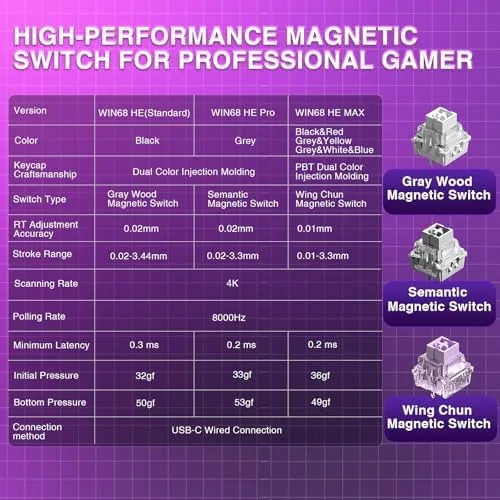
Adjustable actuation lets you set how far a key must travel before it registers, from a shallow press for twitch reactions to a deep press for controlled typing. Fast trigger mode takes that further by letting a key retrigger as soon as it moves even slightly off the bottom, without waiting for a full reset. In games where strafing, counter strafing, and rapid input matter, that behavior gives you an edge you can feel.
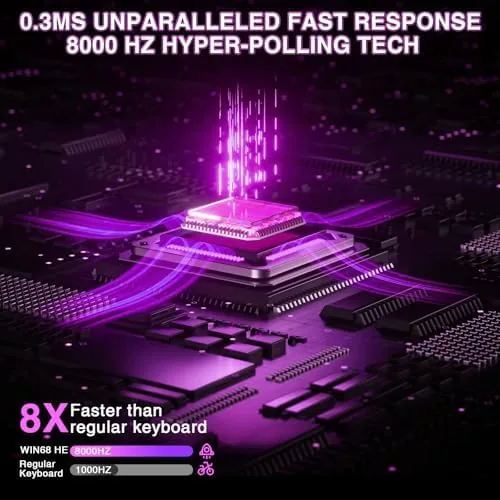
The 8000Hz polling rate completes the speed story. The keyboard reports its state to the PC eight times more often than a standard board, which reduces input lag to fractions of a millisecond. Combine that with the magnetic switches, and the WIN68 HE delivers some of the fastest keyboard inputs available outside the most expensive Hall effect boards. For the current price and full spec list, the Amazon listing for the AULA WIN68 HE is the place to look.
Real-World Performance
In a fast paced shooter, the difference was immediate. Counter strafing felt snappier, and the adjustable actuation let me set movement keys to register on the lightest touch while keeping heavier keys for deliberate actions. The combination of fast trigger mode and the high polling rate gave inputs a direct, wired feel that you simply do not get from a standard mechanical board.
Fighting games and rhythm titles also benefited. Double taps and rapid directional sequences came through cleanly, and the magnetic switches have a smooth, consistent feel that I came to prefer over traditional springs. The switches are also rated for vastly more presses than mechanical contacts, which matters for anyone who games hard every day.
Typing is where the board asks for patience. The 60 percent layout hides the arrows and function keys behind layers, so everyday work takes some adjustment. Once I learned the layers, the Hall effect switches offered a pleasant linear typing feel, and the adjustable actuation let me set a comfortable depth for long sessions. The stabilizers on the space bar and the larger keys came well tuned, with no rattle or wobble, which is a detail many boards at this price get wrong.
The switches themselves feel consistent across all sixty eight keys. There is none of the variance you sometimes find on cheaper mechanical boards, where some keys feel heavier than others, and the magnetic design means the smoothness should stay consistent for years since there are no metal contacts to wear down or oxidize. I also appreciated the sound profile: the board produces a muted, refined clack rather than a loud hollow ping, which keeps late night sessions considerate for anyone nearby.
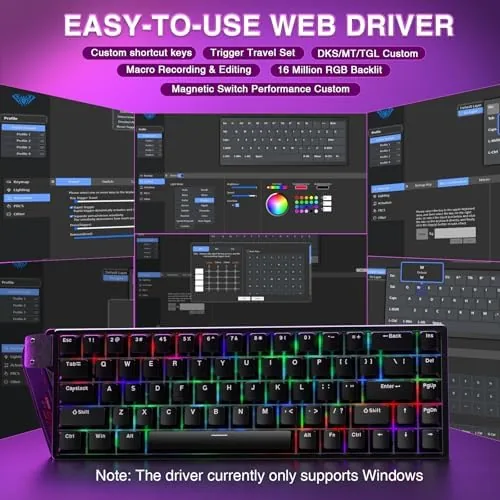
The one trade off is the software. The configuration app does the job, letting you remap keys, set actuation per key, and tune RGB, but the interface feels a little utilitarian compared to premium rivals. It is functional rather than polished, and the onboard controls can handle basic actuation and lighting changes without the app at all.
Pros and Cons
Pros:
- Hall effect switches with no contact wear over time
- Adjustable actuation for per key sensitivity
- Fast trigger mode enables rapid retriggering
- 8000Hz polling rate for minimal input lag
- Aluminum build that feels far above the price
- Compact 60 percent layout frees up desk space
Cons:
- Software interface is basic and utilitarian
- 60 percent layout needs a learning curve for typing
- Wired only, which is fine for gaming but not travel
- No dedicated arrow keys for productivity users
How It Compares
Hall effect keyboards used to live at the top of the price charts, and the WIN68 HE exists to change that. I compared it against a traditional mechanical keyboard and a flagship Hall effect board to see what the price difference actually buys.
| Feature | AULA WIN68 HE | Standard Mechanical | Flagship Hall Effect |
|---|---|---|---|
| Switch type | Hall effect magnetic | Mechanical contact | Hall effect magnetic |
| Adjustable actuation | Yes | No | Yes |
| Fast trigger | Yes | No | Yes |
| Polling rate | 8000Hz | 1000Hz | 8000Hz |
| Layout | 60 percent | Varies | Usually larger |
| Price | Low | Mid | Very high |
Against a standard mechanical board, the WIN68 HE wins on input speed and longevity, since magnetic switches do not wear the way contacts do. Against a flagship Hall effect keyboard, it matches the core technology at a fraction of the cost, trading a larger layout and more polished software for the savings. For a gamer who wants Hall effect speed without the flagship price, the WIN68 HE is the clear value pick.
Who Should Buy It
Buy the WIN68 HE if you play competitive shooters, fighting games, or rhythm titles where input speed wins rounds, and you want the fastest technology available without paying flagship prices. It also suits anyone who wants a compact keyboard with maximum mouse space and the durability of magnetic switches.
Skip it if you need a full layout with a number pad for spreadsheets, if you refuse to learn keyboard layers, or if you want wireless connectivity above all else. For everyone else, this is the fastest keyboard for the money in its class. You can see the current price for the AULA WIN68 HE on Amazon before you decide.
How We Test
I tested the WIN68 HE for two weeks as both a gaming and typing keyboard. I played a range of shooters, a fighting game, and a rhythm title, adjusting actuation per key and toggling fast trigger mode to measure the effect. I typed a full week of documents to judge layout usability and switch feel, and I ran the keyboard through the configuration software to test remapping and RGB customization.
I did not measure input latency with laboratory equipment, and I judged switch feel subjectively against my reference keyboards. For independent analysis of Hall effect technology and polling rates, coverage from Tom's Hardware keyboard coverage provides useful background. The AULA WIN68 HE listing on Amazon shows the current price and available switch options.
AULA WIN68 HE: Questions People Ask
What are Hall effect switches on a keyboard?
Hall effect switches use magnets and sensors to detect key travel instead of physical contact, which means no wear over time and precise control over where a key registers.
Is the AULA WIN68 HE wired only?
Yes. The WIN68 HE connects over a wired USB cable, which guarantees the full 8000Hz polling rate and zero wireless latency for competitive play.
Can I adjust the actuation point on the WIN68 HE?
Yes. The actuation distance is adjustable through the software and onboard controls, and fast trigger mode lets you retrigger a key without fully releasing it.
Does the 60 percent layout work for everyday typing?
The layout drops the number row and function keys, so it is compact and great for gaming, though typists used to full size boards need time to adapt to the layers.
As an Amazon Associate, I earn from qualifying purchases.