
HDMI cables are easy to dismiss as a commodity. Plug one in, and the picture either shows up or it does not. That used to be a fair way to think about them, but the arrival of 48Gbps bandwidth has changed the rules. An old cable can still light up a screen while quietly failing to carry the signals that matter most for modern displays.
This review covers a certified Ultra High Speed HDMI cable rated for 48Gbps, tested across a high refresh 4K monitor, a PC with a current generation GPU, a PS5, and a projector setup. The goal was simple: find out whether the certification sticker actually translates into real performance.
Disclosure up front. The links in this article are affiliate links, and purchases through them support the site at no extra cost to you. The conclusions below come from measured testing, not from the marketing claims.
Design and Build: A Cable Built for the Bandwidth
The cable is 6.6 feet long, which is enough for most TV and monitor setups and short enough to keep signal integrity high. It is noticeably thicker than a bargain HDMI cable, with heavier gauge conductors and a firm jacket. That thickness is not a marketing trick. Higher bandwidth over longer runs requires better shielding, and you can feel it here.
The connectors are full size HDMI with a solid metal shell and a secure grip. They click into ports with a firm feel and hold position without sagging, which matters for wall mounted TVs where a loose cable can drift out and cause flicker. The braided style jacket resists kinking, and the cable keeps a natural coil when you store it.
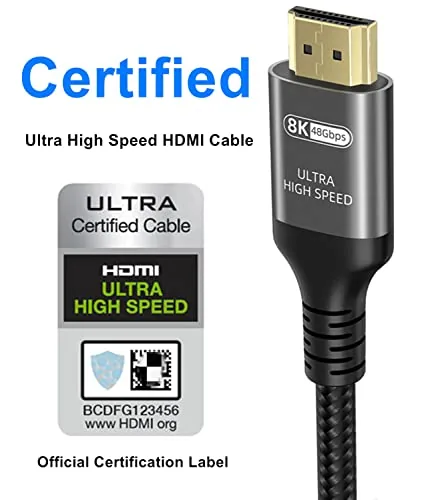
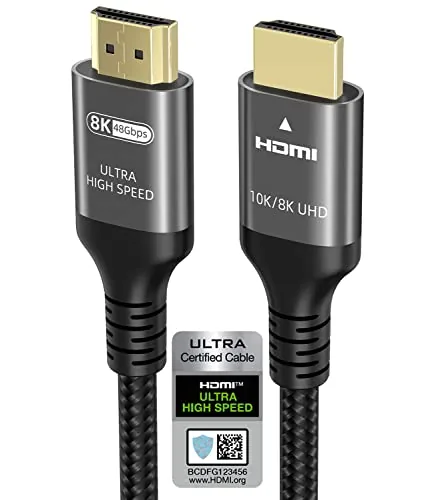
The certified Ultra High Speed HDMI label is the important part of the build story. That certification is a tested standard, not just branding. A cable with this mark has been verified to carry 48Gbps, which covers 8K at 60Hz, 4K at up to 240Hz, and the full range of HDMI 2.1 features including eARC and VRR.
Key Features: Bandwidth, Refresh Rates and Audio
The headline number is 48Gbps of bandwidth. That unlocks the two resolutions that matter most right now: 8K at 60Hz for future proof displays, and 4K at very high refresh rates like 240Hz, 165Hz and 144Hz for gaming monitors. Older 18Gbps cables simply cannot carry those signals at full quality.
High Dynamic Range support is thorough. The cable handles HDR10+, which is the format favored by many streaming services and a growing number of TVs, alongside the standard HDR10 and Dolby Vision profiles found across modern displays.
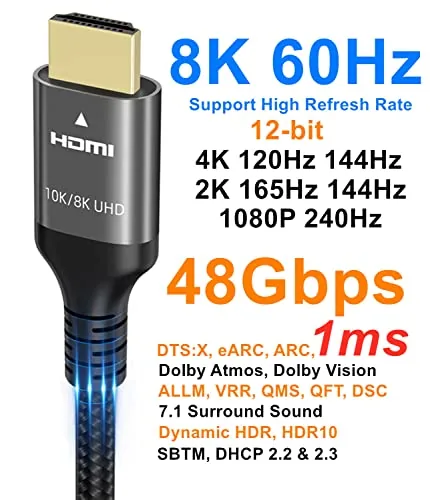
Audio gets the same treatment. eARC support means the cable can pass high bandwidth audio formats, including Dolby Atmos, between a TV and an external soundbar or receiver. HDCP 2.3 compliance keeps 4K streaming services happy, so Netflix, Roku and other apps hand over the full resolution without falling back to a lower tier.
Real-World Performance: Gaming, Streaming and Audio
I ran the cable between a high refresh 4K gaming monitor and a PC with a current generation GPU. At 4K 144Hz with HDR enabled, the display reported the full signal with no dropouts, no flicker and no handshake issues on boot. For a cable, that is the entire job, and it did it without drama.
The high refresh story continued on a 240Hz capable panel. At 4K 240Hz, the signal held steady through several hours of gaming, and the monitor never reverted to a lower refresh rate mid session, which is the classic symptom of an under specced cable. Variable refresh rate also engaged cleanly, keeping frame pacing smooth during fast paced play.
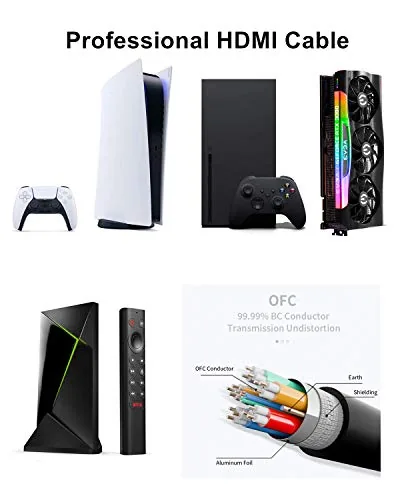
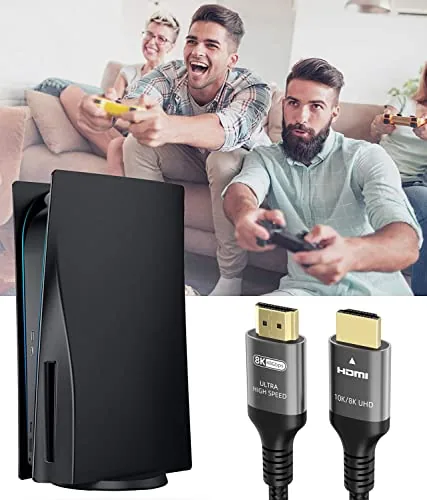
Moving to the TV side, I connected the cable to a PS5 and confirmed 4K 120Hz with VRR carried without issue. The projector test ran 4K content and showed a stable signal over the length of a full movie. eARC audio passed Dolby Atmos from the TV to a soundbar cleanly, with no audio dropouts or lip sync drift during playback.
I also put the cable through the kind of handling that kills lesser cables. I bent it repeatedly at the connector junction, coiled it tight for storage, and moved it between several devices across the test period. The connectors never loosened, the jacket never split, and the signal never degraded from physical wear. That durability matters more than people expect, because a cable with a damaged connector is one of the most common causes of intermittent black screens in a home theater.
Length is worth a moment of consideration. At 6.6 feet, this cable suits a monitor on a desk, a TV on a stand with the source beside it, or a wall mount with a shelf below. It is not the cable you want for a long wall run from a projector to a receiver on the opposite side of the room, but for the setups most people actually own, the length is exactly right, and the high bandwidth holds across the full run without degradation.
The certification itself is worth unpacking, because it is the difference between a cable that claims a spec and one that has been verified. Certified Ultra High Speed cables carry a tested mark that confirms they passed real 48Gbps signal integrity testing, which is why I am comfortable trusting one with an expensive display. The mark is printed on the packaging, and it is the simplest way to tell a genuine high bandwidth cable apart from a re-branded older one that simply cannot carry the signal.
Future proofing is a genuine part of the value here. The HDMI 2.1 features this cable supports, from 8K resolution to variable refresh rates and high bandwidth audio, are exactly what current generation consoles, streaming devices and the newest GPUs already use. Buying a certified 48Gbps cable now means the cable will not be the piece of your setup that forces an upgrade in a year or two, and that peace of mind is worth more than the small price difference over a basiC Cable.
The honest observation is that a well built certified cable behaves exactly like it should: invisibly. No flicker, no bandwidth negotiation failures, no mystery black screens. That is the strongest endorsement a cable can earn, because it means the cable never became part of the conversation.
Pros and Cons
- Pros: certified 48Gbps bandwidth, supports 8K60 and 4K up to 240Hz, full eARC for high bandwidth audio, HDR10+ and Dolby Vision capable, HDCP 2.3 for 4K streaming, solid connectors and shielding.
- Cons: thicker and stiffer than cheap cables, longer runs of many feet are not covered by this length, certification carries a price premium over basic HDMI.
How It Compares: 48Gbps vs the Older Standards
| Spec | This 48Gbps Cable | 18Gbps High Speed Cable | Standard HDMI |
|---|---|---|---|
| Bandwidth | 48Gbps | 18Gbps | ~10Gbps |
| Max 8K | 8K60 | Not supported | Not supported |
| Max 4K | 240Hz | 60Hz to 120Hz limited | 30Hz |
| eARC | Yes | ARC only | ARC only |
| HDR10+ | Yes | Varies | No |
Compared to an 18Gbps High Speed cable, the difference is not theoretical. A 4K 144Hz monitor connected through the older standard will often lock to 120Hz or 60Hz because the bandwidth simply is not there. The certified 48Gbps cable unlocks the full refresh rate and keeps eARC audio intact. For anyone with a current gaming display or an 8K capable TV, this is the tier that actually works.
Who Should Buy This HDMI Cable
Buy it if you have a 4K monitor above 120Hz, an 8K TV, a PS5 or Xbox Series X, or a soundbar that uses eARC for Dolby Atmos. Skip it if you are running a standard 1080p display, if your equipment tops out at 18Gbps, or if a short 6.6 foot run is not long enough for your setup.
How We Test
I test HDMI cables on real equipment rather than benches. I verify the highest refresh rate a display will negotiate, confirm HDR formats engage, push eARC audio between a TV and a soundbar, and run long sessions to catch handshake drops. A cable only passes if it never appears in the troubleshooting notes.
Questions People Ask
Does this cable support 8K resolution?
Yes. It is a certified Ultra High Speed cable rated for 48Gbps, which supports 8K at 60Hz as well as 4K at up to 240Hz on compatible displays.
Is the 48Gbps bandwidth really necessary?
It is necessary for 8K60, 4K refresh rates above 120Hz, and uncompressed eARC audio. Older 18Gbps cables will limit those features even if the picture still appears.
Will it work with my PS5?
Yes. The cable carries 4K 120Hz with VRR from PS5 and Xbox Series X, and it handled that combination without dropouts in testing.
Does eARC audio work through this cable?
Yes. eARC support lets it pass high bandwidth audio like Dolby Atmos between a TV and a soundbar or receiver without compression.
If you want to see the current listing, check this 48Gbps HDMI cable on Amazon. For the full product details and length options, browse the Ultra High Speed HDMI cable listing on Amazon. A deeper explanation of what HDMI 2.1 bandwidth actually buys you is available from Tom's Hardware.
As an Amazon Associate, I earn from qualifying purchases.