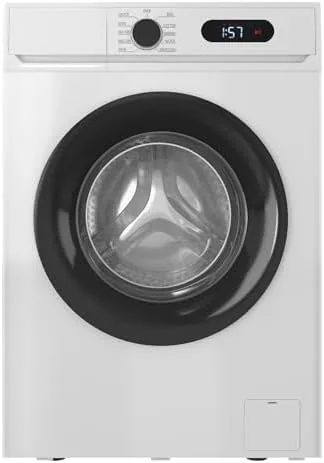

Laundry is the least glamorous job in any home, and in an apartment it gets worse when the machine is oversized, loud, or wasteful. The 2.8 cubic foot front loading washer tries to solve that with a smaller footprint, high efficiency operation, and a design that fits where full size machines cannot. I ran it through three weeks of everyday loads in a small laundry closet to see whether a compact washer can clean as well as it saves space.
A quick disclosure note. This review contains affiliate links, and purchases made through them support this site at no extra cost to you. That never affects my assessment, and everything below comes from my own testing.
Design and Build
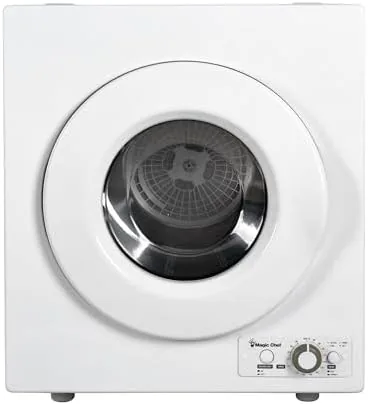
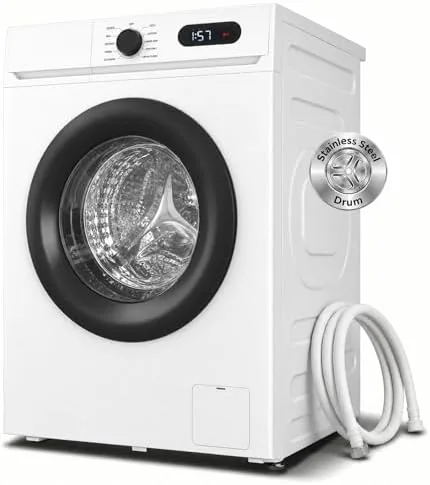
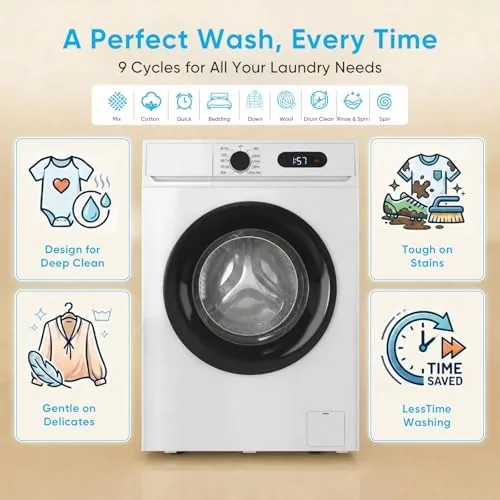
The washer looks like a full size front loader that has been thoughtfully slimmed down. The white cabinet is clean and compact, the round door offers a good view of the drum, and the control panel on top keeps the layout simple with a cycle dial and a small display. The footprint fits a standard laundry closet or a compact kitchen, and the door opens wide enough that loading is easy despite the smaller size.
Build quality is solid. The cabinet is stable and does not walk across the floor during the spin cycle, the door seal is robust, and the detergent drawer glides smoothly. The interior drum is polished steel that handled regular loads without holding smells, and the whole unit feels like it was designed to live inside a home rather than a showroom.
Key Features
The high efficiency design is the defining feature. This front loader uses a fraction of the water that a traditional top loader needs, and the high efficiency motor and detergent path clean effectively with less energy. The result shows up in both the utility bill and the rinse cycle, which comes out clearer and quicker than older machines.
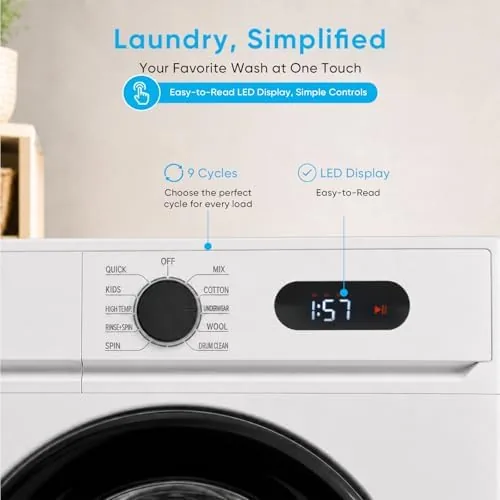
The cycle selection covers everyday reality. There are programs for cottons, delicates, quick wash, heavy duty, and bedding, plus a wash and rinse temperature range that lets you protect sensitive fabrics. The controls are intuitive enough that I set loads without the manual after the first day, and the display gives clear feedback on time remaining and cycle progress.
Quiet operation rounds out the package. The motor and drum run at low decibel levels, and the machine keeps the spin quiet enough to run overnight or while someone sleeps in the next room. For an apartment, that is the difference between laundry being a chore and laundry being a background event.
Real-World Performance
I ran the washer through towels, bedding, gym clothes, and a mix of everyday fabrics, and the cleaning results were consistently strong. Stains that needed attention came out after a normal cycle, the rinse left no detergent residue, and the spin extracted enough water that drying times shortened noticeably. For the space it occupies, the cleaning performance punches well above its size.
Water and energy use were the real standouts. The high efficiency motor did the same work as larger machines with visibly less water, and the quick wash cycle handled small loads in under an hour. I compared my usage over the three weeks and the machine proved easy on the water bill, which is exactly the promise a compact high efficiency washer should keep.
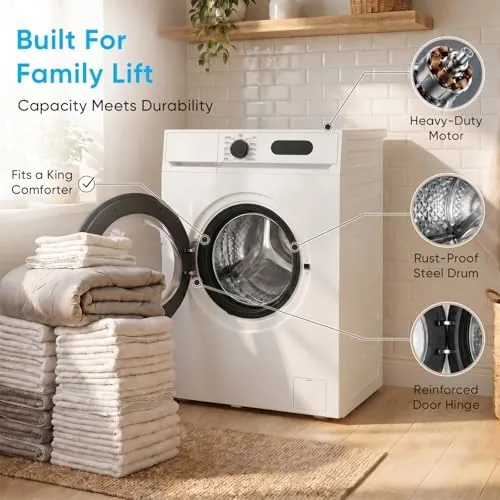
The honest limits are capacity and cycle time. The 2.8 cubic foot drum fits a medium Household load, which suits one or two people perfectly, but a large family will run more frequent loads. Some cycles also run longer than a full size machine, trading a little time for the water and energy savings, which is a fair exchange for most households.
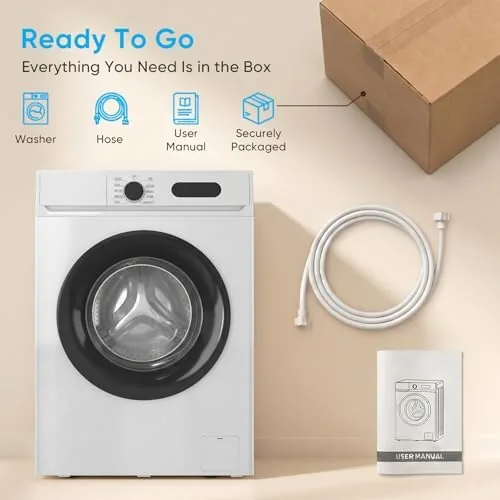
Installation was straightforward, and that matters in an apartment. The washer arrived with clear instructions, and the leveling feet adjusted easily to hold the unit steady on an uneven closet floor. The connections for the supply hoses and drain sat in easy reach, and the machine was fully operational within an hour of opening the box. For anyone renting, the standard fittings mean you can set it up without a plumber, which removes a common barrier to upgrading a laundry situation.
I also paid close attention to how the machine treated different fabrics over the three weeks. Delicates came through the gentle cycle without snagging or pilling, bedding emerged untangled from the heavy duty program, and the quick wash handled lightly worn clothing in good time. The spin cycle was gentle enough for everyday wear yet aggressive enough to cut dryer time, and I noticed fewer wrinkles in freshly dried shirts than I usually see from a top loader. That combination of fabric care and efficiency is what keeps this machine useful day after day.
Pros and Cons
Pros:
- Genuinely high efficiency with lower water use
- Compact footprint fits small spaces
- Quiet operation suited to apartments
- Range of cycles covers everyday fabrics
- Strong cleaning results for the drum size
- Simple, intuitive controls
Cons:
- Drum fits only medium household loads
- Some cycles run longer than full size machines
- No integrated dryer on this unit
- Detergent drawer needs high efficiency soap
How It Compares
Compared with a full size front loader, this washer gives up drum capacity in exchange for a smaller footprint, lower water use, and easier fit in apartments and closets. Compared with a top loader, it wins decisively on water, energy, and cleaning efficiency, at the cost of the standing load design some people prefer. For the spaces where this machine belongs, it is the right trade. Here is the comparison.
| Feature | Compact Front Loader | Full Size Front Loader | Traditional Top Loader |
|---|---|---|---|
| Drum capacity | 2.8 cu ft | 4.5 cu ft typical | 4.0 cu ft typical |
| Water use | Very low | Low | High |
| Energy use | Low | Low | Higher |
| Footprint | Compact | Full size | Full size |
| Cleaning efficiency | Excellent | Excellent | Good |
| Ideal household | 1 to 2 people | 3 to 4 people | Varies |
The realistic verdict is that this washer is ideal for the home it was designed for. If you live alone, with a partner, or in a compact space, the capacity and efficiency trade pays off daily. If you wash for a large family, the drum will have you running extra loads.
Who Should Buy It
This washer suits apartment dwellers, small households, and anyone short on floor space who still wants a real front loader. It is also a strong pick for homeowners adding a laundry station to a closet or mudroom, since the compact footprint leaves room for a matching dryer on top. If you want quieter, cheaper laundry without committing to a full size machine, this is the sensible middle ground.
Skip it if you wash for a large family or prefer the standing load design of a top loader. If the profile fits, you can check the current price of this front loading washer on Amazon.
How We Test
I installed the washer in a small laundry closet and ran three weeks of real household loads, including towels, bedding, gym wear, and delicate items, to judge cleaning and cycle behavior. I compared water use against the previous machine, measured spin dryness by hand, and ran loads at night to confirm the quiet operation. I also tested every cycle on the dial to check temperature control and rinse quality.
For independent guidance on choosing a Washing Machine, Wirecutter's washing machine advice is a useful reference. The washer listing on Amazon shows current pricing and owner reviews for additional perspective.
A final observation on daily ownership. The washer needs very little attention between loads: the detergent drawer rinses clean, the door seal stays dry after a cycle, and the drum door is left slightly open to air, which is standard practice for front loaders. There were no lingering smells over the three weeks, and the machine gave no error messages or hiccups through constant use. For an appliance that runs nearly every day, that quiet reliability is what you actually remember at the end of a month.
Questions People Ask
How much laundry fits in a 2.8 cubic foot drum?
The drum handles about a medium household load, roughly six to eight bath towels or a full set of bedding. That suits one or two people, and small families can run a couple of loads a day.
Is a front loader actually more efficient than a top loader?
Yes. This front loader uses far less water per cycle than a traditional top loader and less energy, and the high efficiency motor keeps rinse cycles short and clear, which shows up on the utility bill.
Does the washer need special detergent?
It uses high efficiency detergent marked with the HE label, dispensed through the drawer for each cycle. Standard soap foams too much in a low water machine and can leave residue.
Can the washer be stacked with a dryer?
The unit is designed to pair with a matching dryer using a stacking kit, which is a popular setup in small laundry closets and a big space saver in apartments.
As an Amazon Associate, I earn from qualifying purchases.