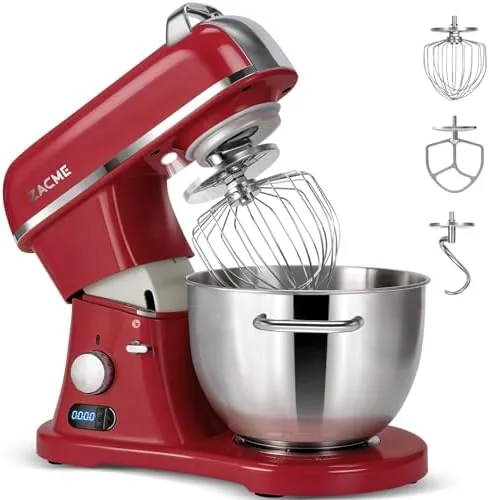

For most home bakers, the standard five quart stand mixer is a comfortable tool: it creams butter, whips cream, and kneads a single loaf of bread without complaint. The trouble starts when you multiply a recipe, bake for a crowd, or knead the kind of dense dough a bakery would consider normal. That is where the ZACME 8.4QT Commercial Stand Mixer enters the picture. It brings an 800W motor, an aluminum die cast body built to the NSF/ANSI 8-2023 standard, and a stainless steel 8L bowl to a machine designed around volume. I spent the better part of a month putting it through bread, cake, cookie, and meringue workloads, and the results tell a clear story about who should buy a mixer of this scale.
This review contains affiliate links. If you buy through one of them, the site earns a small commission at no extra cost to you, and that arrangement never influences what I test or how I score it. With that note out of the way, here is the full account of the ZACME mixer.
Design and Build
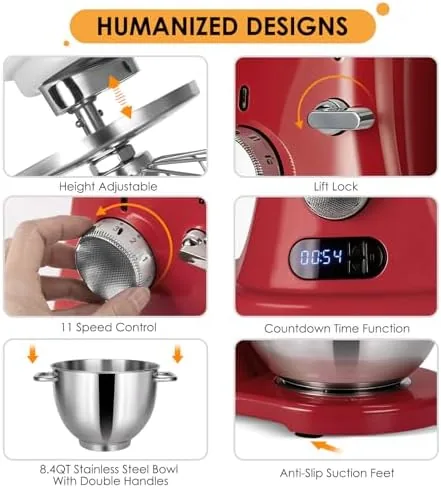
The first thing you notice is the weight. The ZACME mixer is heavy in the way that inspires confidence, because the aluminum die cast frame does not flex when the motor works hard. The base has a wide stance and grippy feet, and the head sits low over the bowl, which keeps the whole assembly stable during kneading. The exterior finish is a clean, easy to wipe powder coat, and the bowl bowl locks into place with a firm latch that releases for quick changes.
The bowl is the centerpiece of the design. At 8 liters it holds roughly eight and a half quarts, which is double the capacity of a typical home mixer. The stainless steel construction is non reactive, so it handles acidic batters and doughs without imparting flavor, and it transfers heat well enough to keep cream cold while you whip. The handles on the bowl are large enough for a gloved hand, a small detail that matters when you lift a full batch of heavy dough.
Build quality extends to the controls. The speed dial is smooth and positive, the head lift lever operates without excess play, and the attachments seat firmly onto the shaft. The machine also meets the NSF/ANSI 8-2023 standard for commercial food equipment, which in plain terms means the materials are food safe, the seams are cleanable, and the construction is rated for demanding, repeated use. Nothing on the mixer feels like a compromise made to reach a price point.
Key Features
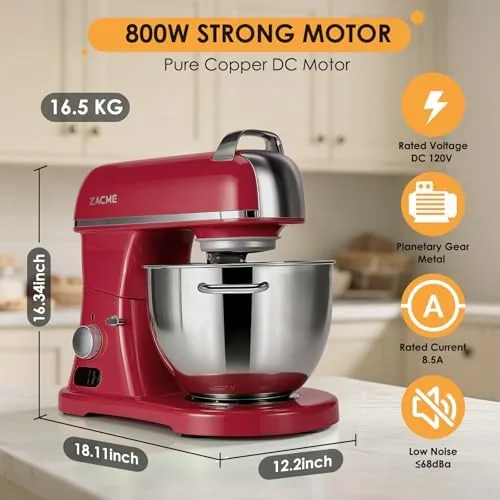
The 800W motor is the headline specification, and it shows in the way the machine handles resistance. High hydration dough, thick cookie batter, and chunky frosting all get worked with a steady, unhurried motion. The planetary action spins the attachment on its own axis while it orbits the bowl, which is how a mixer like this clears the bowl edge without leaving dry pockets of flour at the bottom.
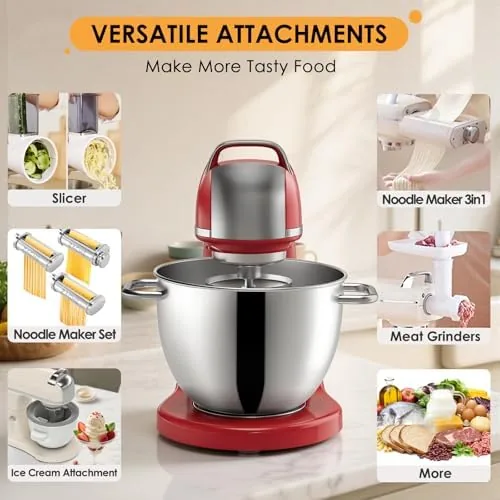
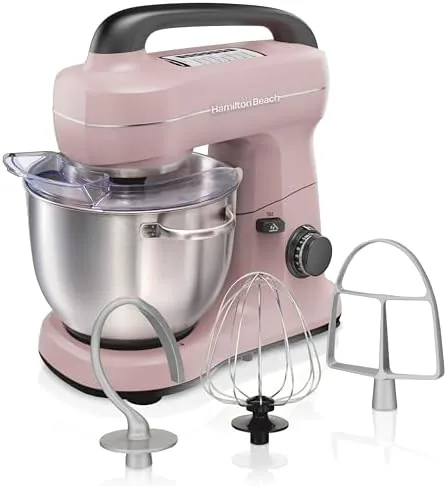
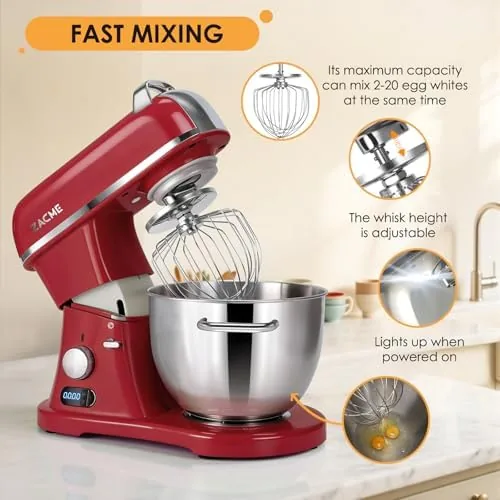
Three attachments ship in the box. The dough hook is a thick, heavy spiral that churns through dense bread dough in both directions; the wire whisk is tall enough to aerate a large bowl of cream or egg whites; and the flat beater handles batters, cookies, and mashed potatoes with a clean sweep across the bowl bottom. All three are coated in a food safe finish that washes easily by hand or in the machine, and all three attach and release without tools.
The lift mechanism is worth calling out separately. Rather than a tilting head, the ZACME uses a Bowl Lift arrangement that raises and lowers the bowl against the attachments. This is the design used by commercial machines because it keeps the head steady and allows very heavy bowl contents to be lifted into place without tilting the whole motor head forward. For anyone moving a filled bowl of bread dough, it feels safer and more deliberate than the tilt head approach. If you want to see the current price and the exact kit contents, the ZACME mixer listing on Amazon has the full details.
Real-World Performance
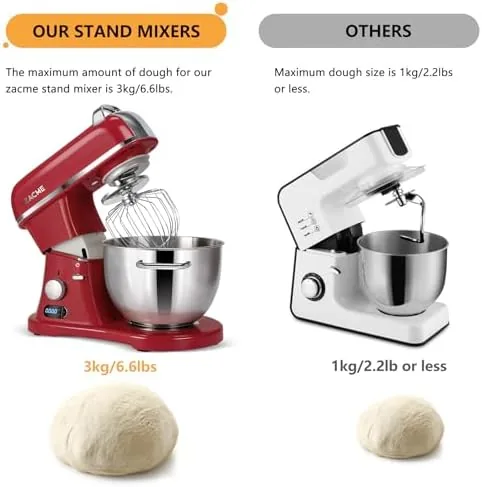
I set up a test schedule that mirrored a busy home bakery week. On Monday I kneaded two loaves of a 75 percent hydration sourdough, which is about as punishing a workload as a home mixer will ever face. The ZACME handled it without stalling, and the dough came off the hook clean with a smooth windowpane. The motor stayed cool, and the machine barely moved across the counter, which told me the die cast base was doing its job.
Midweek I made a three layer chocolate cake. The batter filled the 8L bowl to a third of its height, and the flat beater folded it without pushing ingredients up the sides. The cream cheese frosting whipped to a stiff, glossy peak in under four minutes, and the tall whisk handled the full batch without strain. On another afternoon I worked through three dozen cookies, creaming butter and sugar together in a single batch that a smaller mixer would have needed two runs for.
The one area where the machine asks for adjustment is speed control. The lower speeds are gentle enough for folding and mixing, but the transition between speeds is coarser than on some boutique home machines. For mixing tasks this does not matter at all; for very delicate folding it is worth stepping down one speed and monitoring closely. Noise levels are moderate, more of a steady hum than the whine of a smaller motor working hard.
Cleaning was straightforward throughout. The bowl and attachments went into the dishwasher after heavy use, and the wipeable exterior needed only a damp cloth. After a month of near daily use, the mixer shows no wobble in the head and no looseness in the attachments, which is the durability test that matters most.
Pros and Cons
Pros:
- 800W motor handles dense bread dough and double batches without stalling
- Large stainless steel 8L bowl suits big and small recipes alike
- Aluminum die cast body built to the NSF/ANSI 8-2023 standard
- Bowl lift design keeps the head steady under heavy loads
- Dough hook, wire whisk, and flat beater included in the box
- Dishwasher safe bowl and attachments for easy cleanup
Cons:
- Heavy and large, so it needs a permanent counter spot
- Speed transitions are coarser than premium home mixers
- Overkill for someone who bakes a single loaf once a month
How It Compares
Buyers weighing a mixer of this class usually compare three options: the ZACME 8.4QT commercial machine, a standard five quart tilt head mixer, and a premium domestic model with similar capacity. The differences matter most at the edges of performance.
| Feature | ZACME 8.4QT Commercial | Standard 5QT Tilt Head | Premium 7QT Domestic |
|---|---|---|---|
| Motor power | 800W | Around 300W | Around 500W to 600W |
| Bowl capacity | 8 liters | Around 5 quarts | Around 7 quarts |
| Head mechanism | Bowl lift | Tilt head | Bowl lift |
| Certification | NSF/ANSI 8-2023 | None | None |
| Weight and stability | Very heavy, very stable | Light, can walk on stiff dough | Heavy, stable |
| Dense dough handling | Excellent | Struggles at volume | Good |
The standard five quart mixer is fine for casual baking, but it walks across the counter on stiff dough and forces double batches into multiple runs. A premium domestic machine gets closer in capacity, yet it typically costs more and still cannot match the commercial construction rating or the sheer motor headroom of the ZACME. The tradeoff is weight and footprint, which is a fair price for buyers who actually use this much power.
Who Should Buy It
Buy the ZACME mixer if you bake in volume: regular double batches of bread, cakes for events, cookie marathons, or pasta dough for a crowd. It is also a strong choice for a home baker who has stalled a smaller mixer on a stiff dough and wants that frustration gone permanently. If you run a small bakery operation or a cottage food business, the NSF rated construction and the large bowl give it a commercial credibility that home machines lack. You can check the current price of the ZACME mixer on Amazon to compare it with the alternatives.
Skip it if you bake a single loaf every few weeks or if counter space is tight, since a lighter five quart mixer is simpler and cheaper for that pattern. If your baking consistently outgrows a small machine, this mixer closes the gap for good.
How We Test
I used the ZACME mixer almost daily for a month, working through sourdough loaves, yeasted sandwich bread, layer cakes, cookies, meringue, and whipped cream. I tracked how the motor behaved under dense dough loads, whether the bowl lift stayed firm, how the attachments cleaned, and whether any wobble or play developed over repeated use. I also measured how long it took to cream butter, whip cream, and knead a standard batch so the results compare fairly with other machines I have reviewed.
For a broader perspective on what to expect from heavy duty kitchen equipment and how to match a mixer to your baking, the Wirecutter kitchen section collects long term testing notes worth reading alongside any specific purchase. The ZACME mixer page on Amazon shows the current pricing and shipping options if you are ready to buy.
ZACME 8.4 Quart Stand Mixer: Questions People Ask
Is the ZACME 8.4 quart stand mixer too large for a home kitchen?
It is large, but manageable. The mixer footprint suits a spacious counter, and the bowl lift action keeps bowl changes comfortable even at this scale. If you bake more than once a week or use double batches, the extra capacity is worth the counter space.
What does the NSF/ANSI 8-2023 certification mean for this mixer?
The certification indicates the machine was built to a commercial food equipment standard covering materials, construction, and cleanability. In practice it means food safe finishes, durable aluminum die casting, and surfaces that hold up to frequent washing.
Can this mixer knead heavy bread dough without stalling?
Yes. The 800W motor handles dense doughs with a firm hooking action, and the planetary head keeps the hook working through the full batch. I kneaded several high hydration loaves and the motor did not bog down or overheat.
What attachments are included with the ZACME stand mixer?
The package includes a stainless steel 8L bowl, a dough hook for bread and pizza, a wire whisk for eggs and cream, and a flat beater for batters, cookies, and mashed potatoes. The aluminum die cast body provides the stable base all of them work against.
As an Amazon Associate, I earn from qualifying purchases.