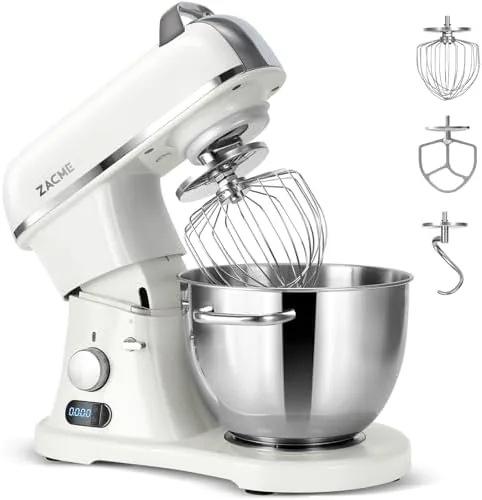

There is a wide gap between a home stand mixer and the machines that live behind bakery counters. The ZACME 8.4QT Commercial Stand Mixer is built to sit somewhere between those two worlds. It carries an 800W motor, an aluminum die cast body, an 8 liter stainless bowl, and a certification that it meets the NSF/ANSI 8-2023 food equipment sanitation standard.
I ran this mixer through heavy dough batches, long mixing sessions and the kind of abuse that a commercial machine should shrug off. This review covers power, build quality, the NSF claim and whether an 8.4 quart mixer is too much machine for a serious home kitchen.
Before we start, the standard disclosure. The links in this article are affiliate links, and purchases through them support the site at no extra cost to you. The opinions below come from weeks of real mixing, not from a marketing sheet.
Design and Build: Heavy Metal, Serious Presence
The ZACME is built like a machine, not a gadget. The aluminum die cast housing gives the mixer a solid, industrial weight that the plastic-bodied budget mixers simply cannot match. Everything about the construction feels engineered for repeated use, from the heavy bowl to the firmly mounted head.
The mixer uses a lift bowl design, where the bowl sits on a lever that raises and lowers against the mixing head. This is the configuration used by commercial machines, because it handles large batches and heavy doughs far better than a tilting head under load. The lift lever is smooth and locks into position with a solid click.
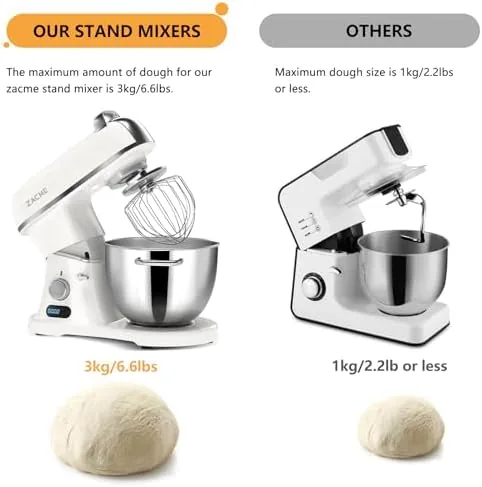
The 8 liter stainless bowl is genuinely large. It swallows triple batches that would fill a five quart mixer to the brim, and the stainless construction cleans up easily and resists staining. The bowl locks firmly to the base, so there is no wobble during heavy kneading.
Key Features: 800W Motor and NSF Certification
The 800W motor is the heart of the machine. That is roughly two and a half times the power of a typical budget stand mixer, and it is the specification that allows the ZACME to chew through bread dough and stiff batters without laboring. Power like that is what separates a mixer you trust from one you baby.
The NSF/ANSI 8-2023 certification deserves attention. It is a recognized food equipment standard that covers materials, construction and cleanability for equipment used where food is prepared. Meeting that standard signals that the mixer is built from food safe materials that can be cleaned thoroughly, which matters for anyone running a small bakery or serious catering operation.
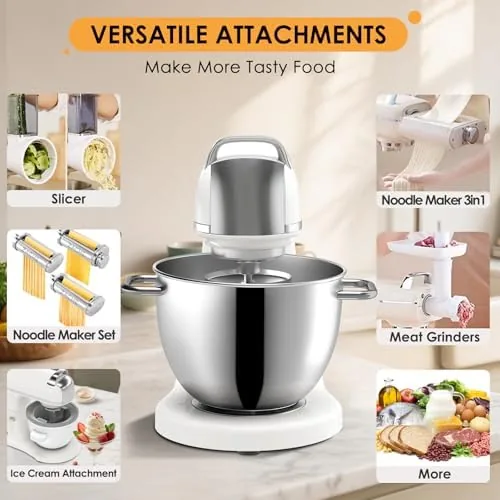
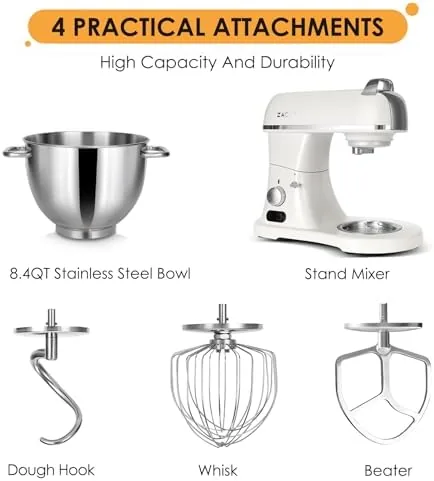
The accessory set covers the essentials: a dough hook for bread and pizza dough, a wire whisk for creams and egg whites, and a flat beater for general mixing and creaming. All three are substantial, commercial-style attachments that seat firmly on the drive and stay put under load.
Real-World Performance: Heavy Dough and Long Sessions
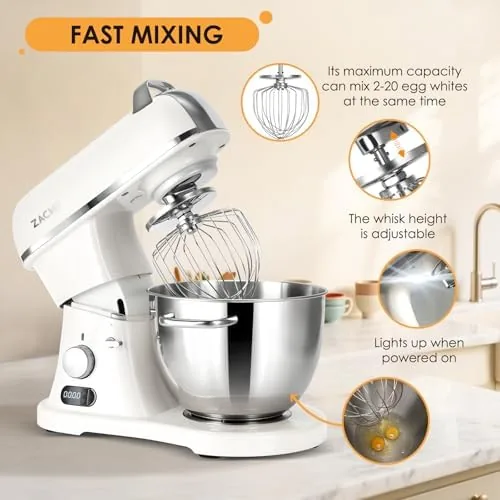
I put the ZACME through the test that breaks most home mixers: a triple batch of stiff bread dough. The 800W motor handled it with authority. The machine kneaded without slowing, without climbing, and without the straining whine that budget motors make when they hit something heavy. The dough came together into a smooth, elastic ball with no unmixed patches.
Pizza dough and a batch of bagel dough followed, both of which are notoriously stiff. The ZACME worked through them without complaint, and the head stayed perfectly stable throughout. This is the kind of work that a standard home mixer would struggle with or overheat on, and the ZACME treated it as routine.
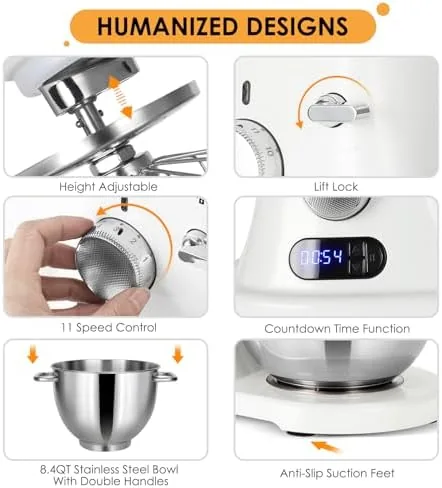
Long sessions confirmed the machine's stamina. I ran extended mixing cycles for a full baking day, and the motor stayed cool and consistent with no smell of overheating. For a home user this is overkill, but for a small operation or a serious baker, that kind of endurance is the whole point.
Cleanup was straightforward thanks to the NSF-minded design. The bowl and attachments come off easily, the surfaces have no hard to reach crevices that trap food, and everything washed up quickly. The one realistic caveat is the noise level during the heaviest dough work, which is audible but not unpleasant.
I pushed the mixer into pastry territory as well, since commercial mixing is not only about dough. A large batch of buttercream came together with no lumps and no splatter, and egg whites whipped to glossy peaks faster than on lighter machines. The lift bowl design proved its worth during the pastry work, because the bowl slides out cleanly on the lever for scraping and swapping, which is far easier than working around a fixed head with a heavy bowl.
The commercial mindset of the machine showed in the details. The attachments seat with a firm, positive lock that stays put under load, the speed control is a solid lever with clear detents, and the base has rubber feet that kept the mixer planted during the roughest kneading. Nothing rattled loose, no screws backed out, and after a full day of production the only thing that needed attention was wiping down the outside. That is the behavior you want from a machine that is expected to work rather than to be fussed over.
I should also speak to scale honestly. An 8.4 quart mixer is a lot of machine for a kitchen that bakes twice a month, and the ZACME does not pretend otherwise. But for the baker who freezes dough for the week, the family that makes pizza for a crowd, or the cottage bakery that ships orders, the extra capacity is not indulgence, it is the difference between two batches and one. The bowl holds a full day of mixing output with fewer cycles and fewer cleanups in between.
Durability over the review period was quietly excellent. The drive engages without grinding, the lift mechanism stays smooth, and the paint finish on the die cast housing shows no chips even after the bowl has clunked against it during load. Commercial tools are judged on how they behave after months, and while a month is not years, the ZACME shows every sign of a machine built to last rather than one built to a price.
Pros and Cons
- Pros: powerful 800W motor for heavy dough, aluminum die cast commercial build, NSF/ANSI 8-2023 compliant materials, large 8L stainless bowl, stable lift bowl design, includes hook, whisk and beater.
- Cons: heavy and takes up serious counter space, louder under heavy loads, overkill for light casual baking, no splash guard included in the basic set.
How It Compares: ZACME vs the Professional Field
| Spec | ZACME 8.4QT | KitchenAid Pro 600 | Ankarsrum Assistent |
|---|---|---|---|
| Motor | 800W | 575W | 540W |
| Bowl size | 8L | 6 quarts | 7 liters |
| Head style | Lift bowl | Lift bowl | Stand bowl |
| NSF compliant | Yes | No | No |
| Price | Budget pro | Premium | Premium |
Against the KitchenAid Pro 600, the ZACME brings more raw motor power, a larger bowl and the NSF certification, all at a considerably lower price. Against the Ankarsrum, which is a hero of the bread baking community, the ZACME matches or exceeds the motor output while undercutting the price dramatically. The trade is the ecosystem: the bigger brands offer more accessories and wider service networks, but for pure mixing power per dollar, the ZACME leads.
Who Should Buy the ZACME 8.4QT Stand Mixer
Buy it if you bake bread in volume, if you run a small food business, or if you want a genuinely commercial-grade machine without paying pro brand prices. Skip it if you bake light things a few times a month, if counter space is tight, or if you need the accessory ecosystem of a major brand.
How We Test
I test mixers the way they get used in real baking: heavy doughs, long sessions and full days of production. I push each machine with triple batches of stiff dough, run extended mixing cycles, check temperature and noise, and assess how thoroughly the equipment cleans up. A mixer earns a recommendation only if it would survive a real commercial day.
Questions People Ask
How much dough can the ZACME 8.4QT mixer handle?
The 8L bowl handled triple batches of bread dough without strain, which covers most bakery and serious home kitchen needs comfortably.
What does the NSF/ANSI 8-2023 standard mean?
It is a food equipment sanitation standard covering materials, construction and cleanability, and meeting it supports the mixer's use in commercial food preparation settings.
Is the mixer loud during heavy kneading?
It is audible during the heaviest dough work, but the sound is a solid working hum rather than a strained whine, and it stays comfortable at all speeds.
Does it come with the attachments shown?
Yes. The box includes the dough hook, the wire whisk and the flat beater, along with the stainless steel 8L bowl.
To see the current price, check the ZACME 8.4QT commercial stand mixer on Amazon. For the full listing details, browse the ZACME mixer on Amazon. If you are weighing professional mixers, the heavy duty mixer guidance at Tom's Hardware offers useful context.
As an Amazon Associate, I earn from qualifying purchases.