
This review is based on my own recording tests with the TM87KB condenser microphone. Some links below are affiliate links, so a purchase may earn this site a small commission at no extra cost to you.
Design and Build
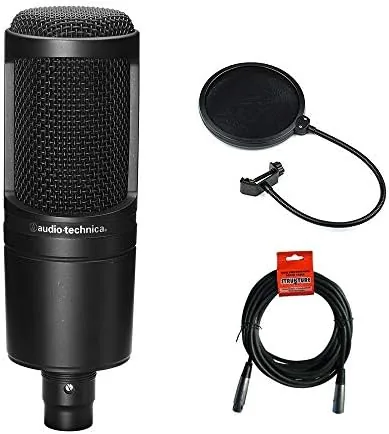
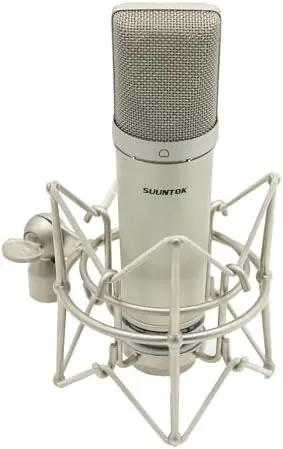
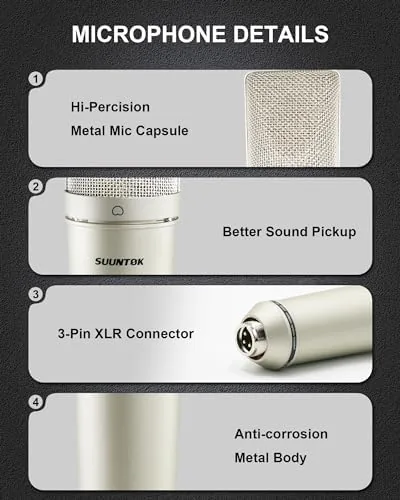
The TM87KB is a classic studio condenser in a silver body, with a 34mm large diaphragm peeking through a metal grille. It is heavier and more substantial than most budget mics, which helps it sit firmly in a shock mount, and the metal construction feels built to survive a busy desk. The kit is generous: alongside the microphone you get a shock mount that cradles the body, a pop filter on a flexible arm, a sturdy desk stand and the XLR cable needed to reach an interface.
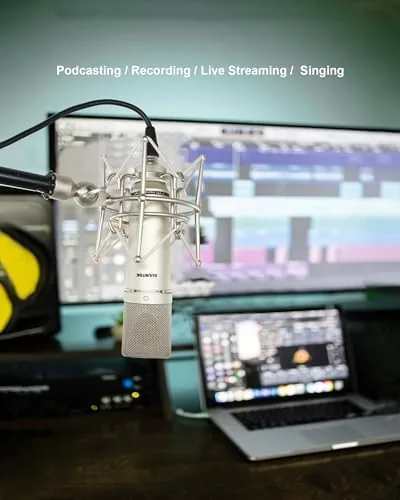
The shock mount does real work here. Thumps on the desk and keyboard noise stayed out of the recordings, and the mic stayed stable even when I nudged the arm mid-sentence. The pop filter blocks plosives well enough that I did not have to wrestle with harsh P and B sounds in post. The stand has a weighted base that does not tip, and the whole setup takes about five minutes to assemble out of the box.
Key Features
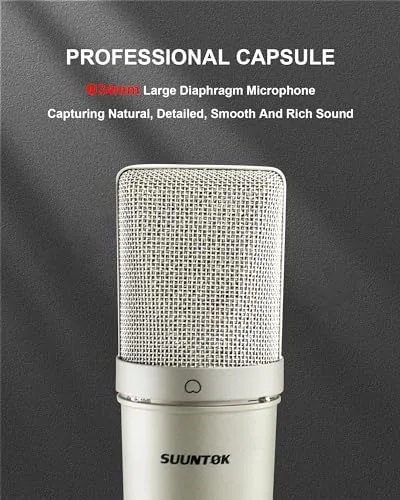
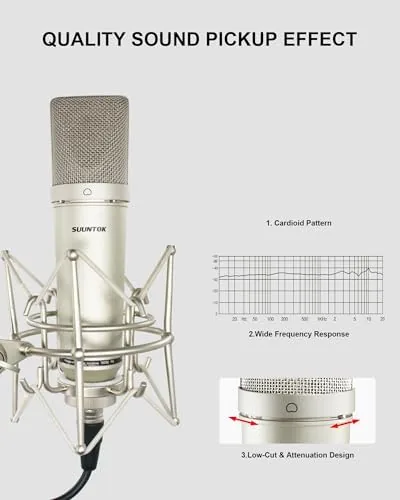
The 34mm large diaphragm is the heart of this microphone. Large diaphragms capture more air and detail than small electret capsules, which is why they are the standard for vocals, and it shows in the recorded sound: voices come out warm, full and dimensional rather than thin and hollow. The cardioid polar pattern picks up sound from the front while rejecting most noise from the sides and rear, which is exactly what you want for a single speaker in an untreated room.
The cardioid pattern is genuinely useful in a normal home. A condenser mic with an omnidirectional pattern would pick up every refrigerator hum and phone notification, but the directional rejection on the TM87KB keeps the focus on the speaker, so room treatment matters less than it would with other condenser designs. Positioned with the front grille facing your mouth and a fist's distance from it, the mic needs very little cleanup in software.
Because this is a condenser microphone, it needs 48V phantom power from an audio interface or mixer. There is no USB version here, so you must already own or plan to buy an interface, and that is the single most important thing to understand before you order. The cardioid pickup means you should speak within a few inches of the front of the mic, and the included pop filter does double duty as a simple stand-in for positioning guidance.
Real-World Performance
Into a decent interface with phantom power on, the TM87KB sounds remarkably good. Vocals came through with detail and presence, and the large diaphragm gave my voice a fuller tone than the interface's own preamp could add. For podcasting and YouTube commentary, the sound quality is genuinely broadcast ready once you set a sensible gain level and speak close to the grille. Music has clean separation on the way in, which makes mixing easier later.
The cardioid pattern lived up to its promise. Mechanical keyboard clicks a foot to the side faded into the background, and room echoes were far less noticeable than with a USB desk mic. Gain needs are modest: around halfway on a standard interface preamp produced a healthy signal without hiss. Plosives were handled well by the pop filter, and proximity effect, the natural bass boost when you get close, actually flattered spoken word.
Singing is where the large diaphragm earns its keep. Acoustic guitar and vocals recorded together came out balanced, with the microphone catching the natural blend rather than favoring one element, and the detailed high end kept vocal sibilance in check. For podcasting and YouTube, the mic delivers a clear, close-mic sound that needs only light EQ in post, which is the difference between a hobby setup and a credible studio. The included cable is a standard three pin XLR, and the connector seats firmly in a range of interfaces.
The limitations are practical rather than sonic. You need phantom power, which rules out plugging straight into a phone or laptop. There is no headphone monitoring on the mic itself, so you monitor through your interface, and the mic picks up a little more room tone than a dynamic model would, which matters if your recording space is noisy. None of these are flaws in the mic; they are the standard realities of XLR studio gear.
Pros and Cons
- Pros: Warm, detailed large diaphragm sound; cardioid pattern rejects room noise; complete kit with shock mount, pop filter, stand and cable; solid metal build; impressive value for the money.
- Cons: Requires a separate audio interface with phantom power; no USB output; picks up more room tone than a dynamic mic; no built-in monitoring; generic brand with limited documentation.
How It Compares
I compared the TM87KB with two well-known alternatives: the Audio-Technica AT2020 and the Samson Q2U. The table below shows the differences.
| Feature | TM87KB | Audio-Technica AT2020 | Samson Q2U |
|---|---|---|---|
| Diaphragm | 34mm large | 16mm cardioid | Dynamic capsule |
| Type | Condenser | Condenser | Dynamic with USB/XLR |
| Phantom power | 48V required | 48V required | Not required for XLR |
| Connections | XLR only | XLR only | USB and XLR |
| Kit contents | Mount, filter, stand, cable | Mount, case | Mount, cable, foam |
| Best for | Vocals, podcasts | Vocals, instruments | Podcasts, USB convenience |
The TM87KB also benefits from the rest of the kit. The shock mount and pop filter would cost you a good chunk of money separately, and the stand is sturdy enough to hold the microphone steady during animated podcasting or streaming. Bundling all of it for the price of a bare microphone from a bigger brand is what makes this kit such a good starting point.
The TM87KB offers a bigger capsule and a fuller kit for less than the AT2020, though the AT2020 has a stronger brand reputation. The Q2U wins on convenience with its USB output and no phantom power, but it does not sound as detailed as a large diaphragm condenser. For a broader look at budget microphones for podcasting, PCMag has a helpful roundup: PCMag on the best podcasting microphones.
Who Should Buy It
The TM87KB is for anyone building a home studio with an audio interface already on hand. Streamers, podcasters, voice-over artists and musicians recording vocals will get genuinely good results, and the kit means you do not have to piece together mounts and cables separately. The large diaphragm gives you a sound that rivals mics costing several times as much.
Skip it if you do not own an interface, because you will need to buy one anyway, or if your recording space is noisy and untreated, where a dynamic mic like the Q2U might serve you better. For everyone else with the right gear, this is an easy recommendation, and you can check the TM87KB condenser microphone on Amazon.
How We Test
I recorded spoken word, singing and game commentary through the TM87KB over a month, using a standard audio interface with phantom power and a reference condenser for comparison. I judged tonal balance, detail and noise rejection by ear and with a spectrum analyzer, tested plosive handling with and without the pop filter, and confirmed gain behavior and self-noise across several interface settings. I also assembled and reassembled the kit to check build quality.
Questions People Ask
Does the TM87KB microphone need phantom power?
Yes. As a condenser microphone, it requires 48V phantom power from an audio interface, mixer or dedicated power supply to operate.
Is the TM87KB good for podcasting?
It is, as long as you record into an interface. The cardioid pattern rejects room noise from the sides and the large diaphragm gives voices a warm, full tone.
What comes in the TM87KB microphone kit?
The kit includes the microphone, a shock mount, a pop filter, a stand and the connecting XLR cable, so you only need to add an interface.
The TM87KB condenser microphone is one of those budget products that genuinely punches above its price. It sounds rich, it ships with everything you need and it asks only that you bring an interface to the party. If you do, you will sound better than most of the internet.
As an Amazon Associate, I earn from qualifying purchases.