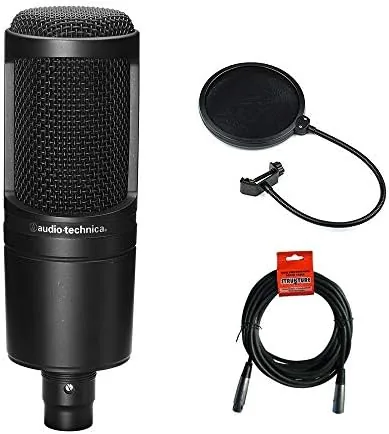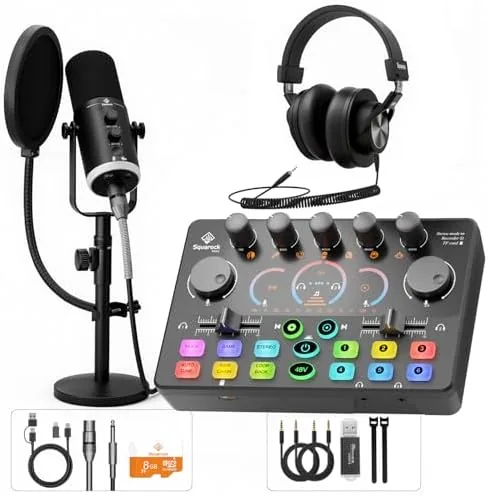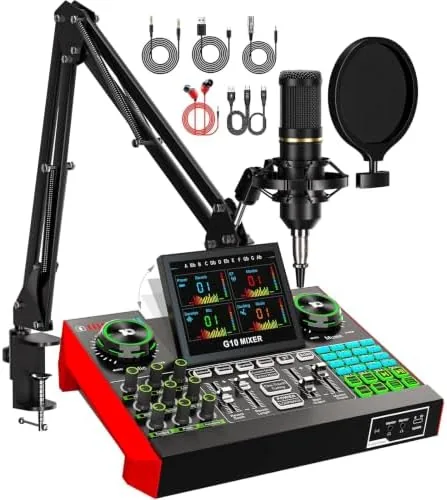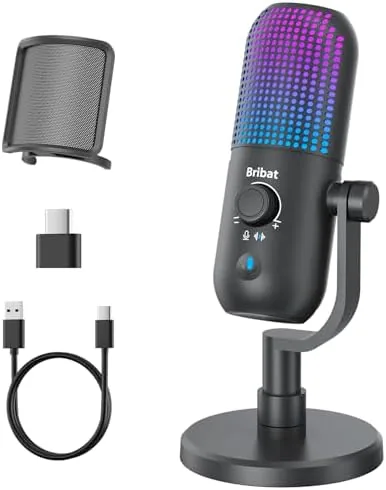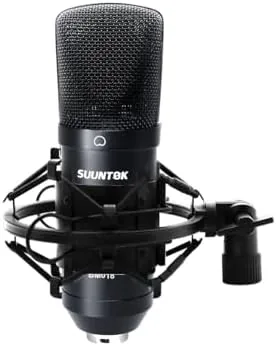

There comes a moment in every streamer's life when the USB microphone stops being enough. The sound is acceptable, but the background hiss, the thin vocal tone, and the ceiling on what better gear can do start to nag. The traditional next step is a large diaphragm condenser microphone, the kind that gives voices weight and detail, and this XLR condenser kit packages that step into one box. It arrives with the microphone, a shock mount, a pop filter, a desktop stand, and the XLR cable, everything a home studio needs except the audio interface. I spent a month recording game commentary, ASMR takes, voice over, and vocals with it to find out whether the budget condenser can sound the part.
Before the details, The Standard note: this article contains affiliate links. If you buy through one of them, the site earns a small commission at no extra cost to you, and that commission never changes what I test or recommend.
Design and Build
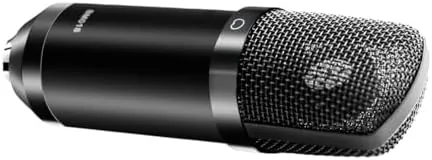
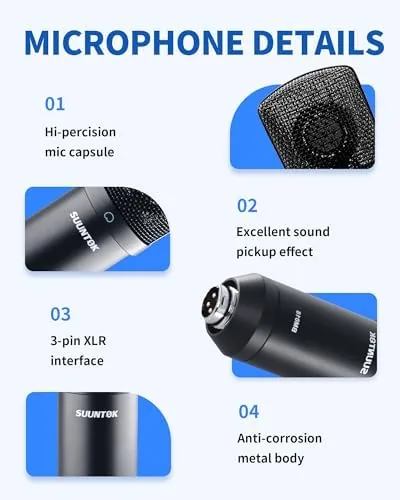
The microphone follows the classic studio condenser layout: a large metal grille over the capsule, a solid barrel body, and a black finish that disappears against most backdrops, which is exactly what a streamer wants. It is heavier and more substantial than a USB desk mic, which helps it sit steady in the shock mount, and the metal construction feels built to survive a busy desk and regular travel between sessions.
The kit is the real value here. The shock mount cradles the body on elastic bands and isolates the capsule from desk thumps and keyboard noise. The pop filter attaches on a flexible gooseneck and sits between you and the grille to tame plosive pops. The desktop stand is weighted enough that the whole assembly does not tip, and the included XLR cable reaches a nearby audio interface with room to spare. Assembly takes about five minutes out of the box.
Key Features
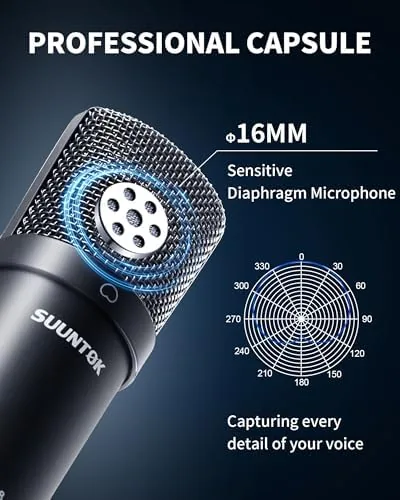
The large diaphragm capsule is the heart of this microphone. Large diaphragms capture more air and detail than small electret capsules, which is why they are the standard for vocals, and the effect is audible in the recordings: voices come out warm, full, and dimensional rather than thin and hollow. For ASMR work the extra sensitivity is a genuine advantage, because it picks up the soft details a dynamic mic would miss.
The cardioid polar pattern is exactly what a single creator needs. It captures sound from the front while rejecting most of what comes from the sides and rear, so a mechanical keyboard, a refrigerator, or a second person stays out of the track. In an untreated room the directional pickup matters more than room treatment ever does, and it kept my recordings focused on the voice.
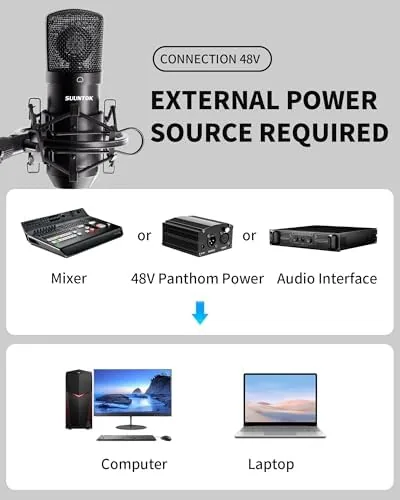
Because this is a condenser microphone, it needs 48 volt phantom power from an audio interface or mixer. There is no USB version, so the interface is a genuine requirement rather than an optional extra, and that is the single most important thing to understand before ordering. The bundle gives you everything else, but the microphone will not work plugged into a laptop jack.
Real-World Performance
Into a decent interface with phantom power on, this microphone sounds remarkably good for the price. Game commentary came through with detail and presence, and the large diaphragm gave my voice a fuller tone than the interface preamp could add on its own. For streaming and voice over, the quality is genuinely broadcast ready once you set a sensible gain level and speak within a few inches of the grille.
The cardioid pattern lived up to its promise. Mechanical keyboard clicks a foot to the side faded into the background, and room echoes were far less noticeable than with the USB condenser I compared it against. Gain needs are modest: around halfway on a standard preamp produced a healthy signal without hiss. The pop filter handled plosives well, and the proximity effect, the natural bass boost when you get close, flattered spoken word rather than making it muddy.
ASMR and soft voice work are where the condenser sensitivity earns its keep. Quiet breathing and subtle mouth sounds recorded cleanly with no audible floor, which is exactly what that niche demands. Vocals for music were detailed too, with clean separation that makes mixing easier later. The limitations are practical rather than sonic: you need phantom power, there is no headphone monitoring on the mic itself, and the microphone picks up more room tone than a dynamic model would in a noisy space. None of these are flaws in the microphone; they are the standard realities of XLR studio gear.
The kit pieces are not afterthoughts. The shock mount genuinely isolated the capsule from my desk, which was tested by an afternoon of mechanical keyboard use during a live stream. The pop filter sat at the right angle on its gooseneck and never drooped out of position. The desktop stand held the microphone steady through an energetic commentary session, and the XLR cable seated firmly in both the microphone and the interface with no crackle when I moved it. For a bundle at this price, the accessories are sturdy enough to live with daily instead of being the first thing you replace.
Pros and Cons
Pros:
- Warm, detailed large diaphragm sound for voice and vocals
- Cardioid pattern rejects background noise in untreated rooms
- Complete kit includes shock mount, pop filter, stand, and cable
- Solid metal build that handles daily use and travel
- Excellent value for the money versus separate purchases
Cons:
- Requires a separate audio interface with phantom power
- No USB output for plug and play convenience
- Picks up more room tone than a dynamic microphone
- No built in headphone monitoring jack
How It Compares
I compared this kit with two well known alternatives: the Audio-Technica AT2020 and the Samson Q2U. The table below shows the differences.
| Feature | XLR Condenser Kit | AT2020 | Samson Q2U |
|---|---|---|---|
| Capsule type | Large diaphragm condenser | Condenser cardioid | Dynamic |
| Phantom power | 48V required | 48V required | Not required |
| Connections | XLR only | XLR only | USB and XLR |
| Kit contents | Mount, filter, stand, cable | Mount, case | Mount, cable, foam |
| Room noise rejection | Moderate | Moderate | Strong |
| Best for | Vocals, ASMR, streaming | Vocals, instruments | Podcasts, USB convenience |
Against the AT2020, this kit offers a comparable large diaphragm sound for less money and with a more complete bundle, though the AT2020 has a stronger brand reputation and a slightly more neutral tone. Against the Q2U, the condenser captures more detail and better suits ASMR and soft voice work, but the Q2U wins on convenience with its USB output and phantom power free operation. Choose based on whether you already own or plan to buy an interface. For a broader look at microphones for streaming and podcasting, PCMag has a helpful guide: PCMag on the best streaming microphones.
Who Should Buy It
Buy this kit if you are building your first serious home studio, if you want a large diaphragm condenser without paying boutique prices, or if your content mix includes streaming, ASMR, voice over, or vocals. The bundled shock mount and pop filter would cost real money separately, so the package is an especially smart buy for a starting setup.
Skip it if you do not own an audio interface, because you will need one anyway, or if your recording space is noisy and untreated, where a dynamic microphone like the Q2U would serve you better. For everyone else with the right gear, this is an easy recommendation. You can check the current price of the XLR condenser microphone kit on Amazon.
How We Test
I recorded game commentary, ASMR takes, voice over, and vocals through this kit over a month, using a standard audio interface with phantom power and a reference condenser for comparison. I judged tonal balance, detail, and noise rejection by ear and with a spectrum analyzer, tested plosive handling with and without the pop filter, and confirmed gain behavior and self noise across several interface settings.
I also assembled and reassembled the kit multiple times to check build quality, the sturdiness of the stand, and the fit of the shock mount, since these are the parts that wear down on budget kits.
XLR Condenser Microphone Kit: Questions People Ask
Does this microphone need phantom power?
Yes. As a condenser microphone it requires 48 volt phantom power from an audio interface, mixer, or dedicated power supply to operate.
Is it good for gaming and streaming?
It is, once it is connected to an interface. The cardioid pattern focuses on your voice and the large diaphragm gives commentary a warm, present tone.
What does the kit include?
The kit includes the microphone, a shock mount, a pop filter, a desktop stand, and the XLR cable needed to reach an audio interface.
Can I plug it directly into a USB port?
No. The output is XLR only, so you need an audio interface or mixer with phantom power, which is the standard setup for studio condenser microphones.
If the studio path above matches your plans, the XLR condenser microphone kit listing on Amazon shows the current price and included components.
As an Amazon Associate, I earn from qualifying purchases.