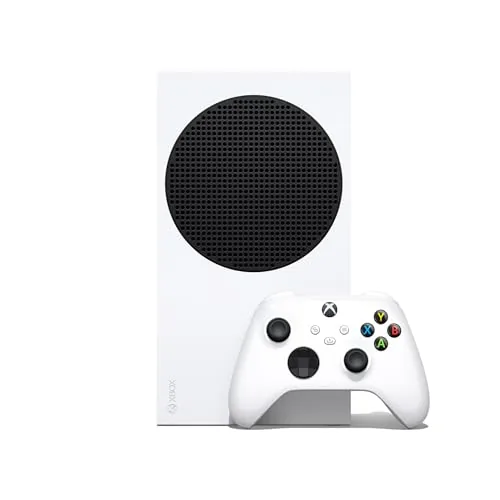

Next gen gaming usually starts with a choice, and that choice is about money. The Xbox Series S exists to answer a different question: how do you get next gen games without next gen prices. The all digital version of the console strips out the disc drive entirely, and with it goes the last reason to buy physical media. What remains is a compact white console that runs current games at up to 120 frames per second, and in renewed premium condition, it costs considerably less than a new one.
I spent a month with the Xbox Series S all digital, playing a rotating lineup of Game Pass titles, older favorites, and the occasional demanding current release. This review covers the hardware, the performance, the storage, and what the renewed premium label actually means when the box shows up at your door.
Before the details, the standard note. This article contains affiliate links, and if you buy through one of them the site earns a small commission at no extra cost to you. That commission does not change what I test or recommend, and the console reviewed here is a renewed premium unit purchased the same way a shopper would buy it.
What follows covers the design, the performance, the digital only reality, and the renewed condition, with a comparison against the bigger consoles it undercuts.
Design and Build
The Series S is the smallest next gen console on the market, a white slab with a black circular vent on top that makes it look more like a smart speaker than a gaming machine. It disappears on an entertainment center, slides into a backpack for travel, and runs cool enough to sit in a tight shelf without cooking the games. The all digital version is identical in shape, just Without the disc slot on the front.
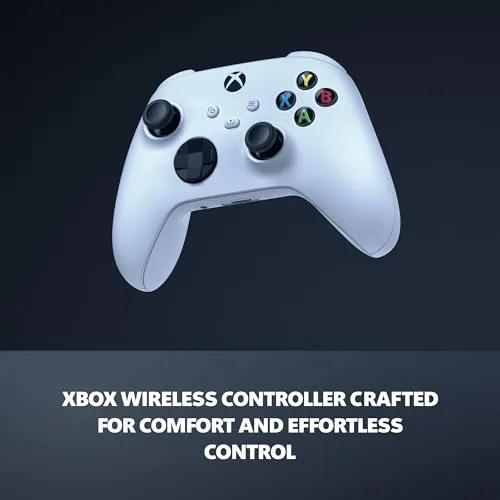
The port selection is honest and sufficient. There is an HDMI out, a USB port for accessories and external storage, an Ethernet jack for a wired connection, and the power connector. The wireless controller that ships with the unit is the modern Xbox pad, with the textured grips, the share button, and the comfortable shoulder triggers, and it pairs to the console instantly.
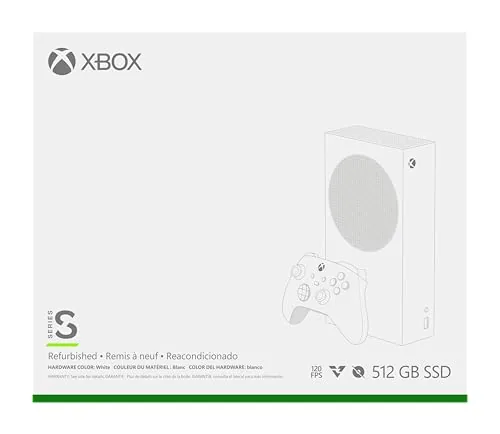
The renewed premium condition mattered here. The unit arrived clean, with no visible scuffs on the white shell, a fully functional controller, and the original power and HDMI cables. It behaved exactly like a new console through the entire test, which is the standard a renewed premium listing is supposed to meet, and this one met it.
Key Features
The headline feature is the price and the form factor together. For roughly half the cost of the flagship consoles, the Series S runs the same current generation games, and it fits in a space that a full sized tower would never occupy. That combination is the whole reason to buy one.
The 512GB SSD is the feature that does the most work and causes the most discussion. The custom SSD makes loading times short, with most games ready in seconds and the console booting to the dashboard almost instantly. The capacity is the tradeoff, because current games are large, and 512GB fills faster than anyone would like.
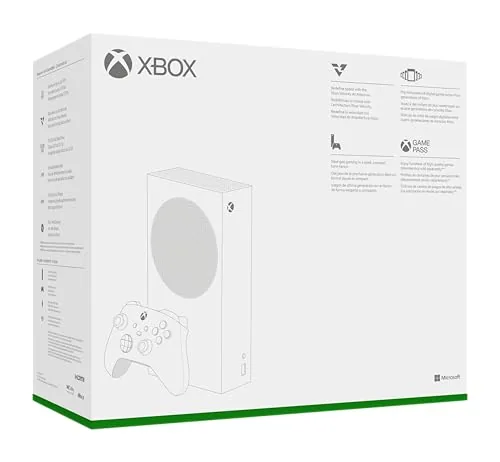
The 120fps support is the feature that gets quoted in the name, and it is real on the games that support it. Lighter titles and esports games can run at 120 frames per second on a 120Hz display, and the difference is a smoothness that the older generation cannot produce. Quick Resume rounds out the feature set, letting you suspend several games at once and jump back in seconds later, and it worked flawlessly throughout my testing.
Real-World Performance
In daily play, the Series S delivers the next gen experience at a lower resolution. Current games run at 1080p to 1440p depending on the title, and they hold their frame rates with the consistency that the solid state hardware provides. On a 1080p television, which is what most budget buyers own, the output looks excellent, and the difference from the more expensive consoles is much smaller than the price gap.
Loading was the quality of life win. Games that used to take minutes to boot now load in seconds, fast travel is nearly instant, and the pause screen to gameplay transition is seamless. The console is also quiet, with the fan barely audible during long sessions, and it runs cool even after hours of play, which matters for a machine tucked into an entertainment center.
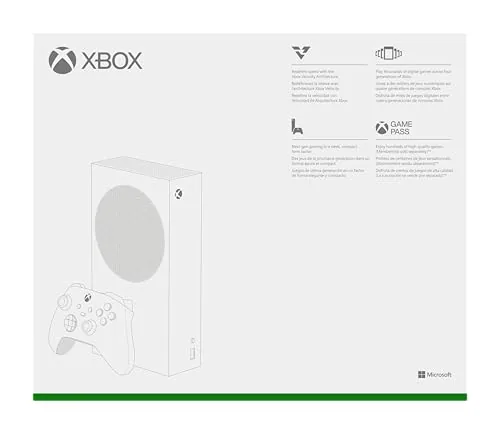
Storage management became the routine part of owning the machine. With the drive at 512GB, I kept my current rotation installed and uninstalled older games as newer ones arrived, which took a minute each time and was painless. Backward compatible games, which are generally smaller, run happily from an external USB drive, so a cheap external hard drive becomes a practical expansion for the library.
The digital only reality is the biggest adjustment. There are no disc deals, no borrowing games from friends, and no selling your library when you finish it. Every purchase is tied to the account, and the savings come from the console price and from Game Pass, which turns the subscription into the core of the experience. If you buy into the subscription, the all digital console makes strong sense. If you love physical media, this is not the machine for you.
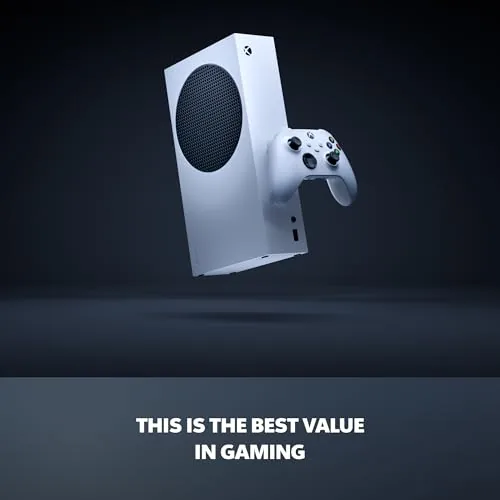
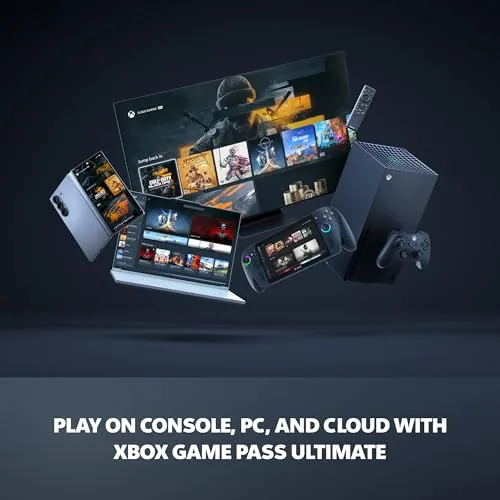
Game Pass is the feature that makes the whole package work. A subscription gives you a rotating library of hundreds of games, including day one releases, and on the Series S it is the practical answer to the 512GB drive, because you play what you want and swap freely. For a budget gamer, the subscription plus the cheap console is the best value in the industry right now.
Pros and Cons
Pros:
- Compact console that fits nearly any space
- Runs current generation games at up to 120fps
- Fast SSD with quick loading and quick resume
- Renewed premium unit arrived clean and worked flawlessly
- Game Pass makes the digital library a real value
- Quiet and cool under extended play
Cons:
- 512GB drive fills fast with large current games
- All digital design means no discs and no used market
- Lower resolution output than the flagship consoles
How It Compares
The Series S sits at the cheap end of next gen, and the table below lines it up against the machines it competes with.
| Feature | Xbox Series S All Digital | Xbox Series X | PlayStation 5 Digital |
|---|---|---|---|
| Price | Lowest | Highest | Mid |
| Storage | 512GB SSD | 1TB SSD | 1TB SSD |
| Resolution | 1080p to 1440p | Up to 4K | Up to 4K |
| Disc drive | None | Yes | None |
| Best for | Budget next gen | Full power gaming | PlayStation exclusives |
The Series X and the PlayStation 5 digital cost more and deliver sharper 4K output and more storage. The Series S delivers the same games at a lower resolution and half the price. For a 1080p television, a tight budget, and a Game Pass subscription, the Series S is the machine that makes sense, and the renewed premium version makes it an even easier call.
Who Should Buy
Buy the Xbox Series S all digital if you want to play current generation games for the lowest possible entry price, especially if your television is 1080p and you plan to lean on Game Pass. It suits casual gamers, families with a second television, students in small dorms, and anyone who wants the next gen library without the next gen expense.
Skip it if you have a 4K television and want the sharpest output, if you have a large physical game collection, or if you want maximum storage headroom. For the budget gamer who is all in on digital, this renewed premium unit is an excellent buy. You can check the current price of the renewed Xbox Series S all digital on Amazon when you are ready.
How We Test
I used the Xbox Series S all digital as my primary console for a month. I played a mix of Game Pass titles, backward compatible favorites, and demanding current releases, and I tested loading times, quick resume across several suspended games, and the 120fps modes on compatible titles. I also ran the console for multi hour sessions to check noise and heat.
I did not benchmark the console to a frame counter on every title, and I judged performance on real play across a television. For a broader look at the current console landscape, The Verge covers the Xbox and PlayStation ecosystem in depth and is worth reading. The Xbox Series S all digital listing on Amazon shows the current renewed price and condition details.
Xbox Series S All Digital: Questions People Ask
Is the Xbox Series S all digital worth buying renewed?
Yes, a renewed premium unit costs noticeably less than a new one and performed flawlessly in my month of testing, though you should confirm the warranty and the return policy before ordering.
How many games fit on the 512GB SSD?
The drive holds roughly a dozen to twenty games depending on size, so you will uninstall older titles when big current games come along, and external USB storage helps for backward compatible games.
Does the Xbox Series S really hit 120 frames per second?
It does on the games that support a 120fps mode, which tend to be lighter or esports titles, and the console will automatically run at whatever the game and your display allow.
Can I play physical disc games on the all digital console?
No, the all digital version has no disc drive, so every game must come from the Microsoft Store, which is the tradeoff for the lower price and the smaller size.
As an Amazon Associate, I earn from qualifying purchases.